A lot of advice about sexual health supplements gets one big thing wrong. It treats vitamins like fast-acting bedroom fixes.
They aren't. In real life, sexual function depends on circulation, hormones, nerve signaling, mood, energy, sleep, medication effects, and overall health. A supplement can support those systems, but it can't override them. That's why the best vitamins for sexual health are usually the ones that correct a real gap, not the ones with the loudest marketing.
That matters for both men and women. Men's products dominate this category, especially around erectile dysfunction. Women often get vague promises about libido blends with far less solid evidence. A balanced guide has to say both things clearly: some nutrients are worth attention, and the research still has important limits.
Table of Contents
- Beyond the Hype What Vitamins Can Really Do for Sex
- How Key Nutrients Fuel Your Sexual Health Engine
- The Top Vitamins and Minerals for Male Sexual Health
- Essential Nutrients for Female Sexual Health and Libido
- A Practical Guide to Choosing Quality Supplements
- Amplify Your Results with Supportive Lifestyle Habits
- Frequently Asked Questions About Sexual Health Vitamins
Beyond the Hype What Vitamins Can Really Do for Sex
If you're hoping a capsule will fix low desire, weak arousal, or ongoing erectile problems on its own, that's the part to challenge first. Even sources that discuss vitamins for ED acknowledge the limits. Hims notes that there's little research on the link between vitamins and ED in general and that supplements are not a magic fix.
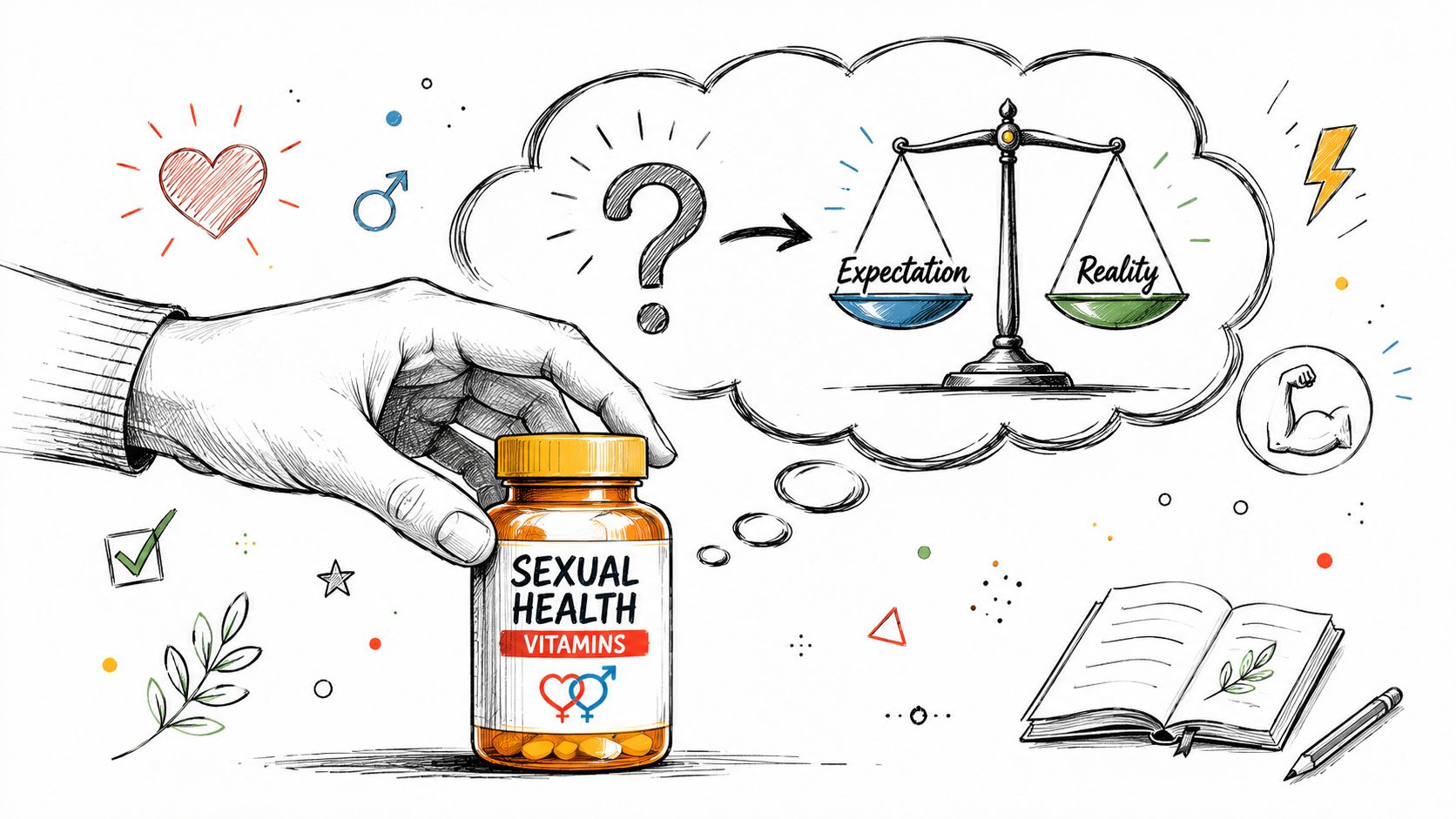
That doesn't mean vitamins are useless. It means they work best in a narrower, more realistic lane. If someone has a nutrient deficiency, mild symptoms, and is also improving sleep, movement, stress, and diet, a supplement may help support better function. If someone has severe ED, painful sex, medication side effects, uncontrolled diabetes, depression, or relationship distress, vitamins alone usually won't solve the problem.
What vitamins can support
Think of supplements as support tools, not shortcuts. They may help with systems that sexual health depends on:
- Circulation support: Some nutrients help the body make or protect nitric oxide, which helps blood vessels relax.
- Hormone support: Certain vitamins and minerals are involved in hormone production and regulation.
- Energy and nerve function: Sexual response isn't only physical. It also depends on brain signaling, mood, and energy availability.
Where people get confused
Many readers mix up three separate ideas:
- A nutrient is important for the body.
- A deficiency in that nutrient can worsen sexual function.
- Taking extra amounts will boost sexual performance in everyone.
Only the first two are reliably true. The third is where marketing often outruns evidence.
Practical rule: If a supplement claim sounds universal, be skeptical. Sexual health responses are usually strongest when a person is correcting a real deficiency or addressing an underlying barrier.
A better question isn't "What's the strongest sex vitamin?" It's "Which body system needs support, and is a nutrient gap part of the reason it's struggling?"
How Key Nutrients Fuel Your Sexual Health Engine
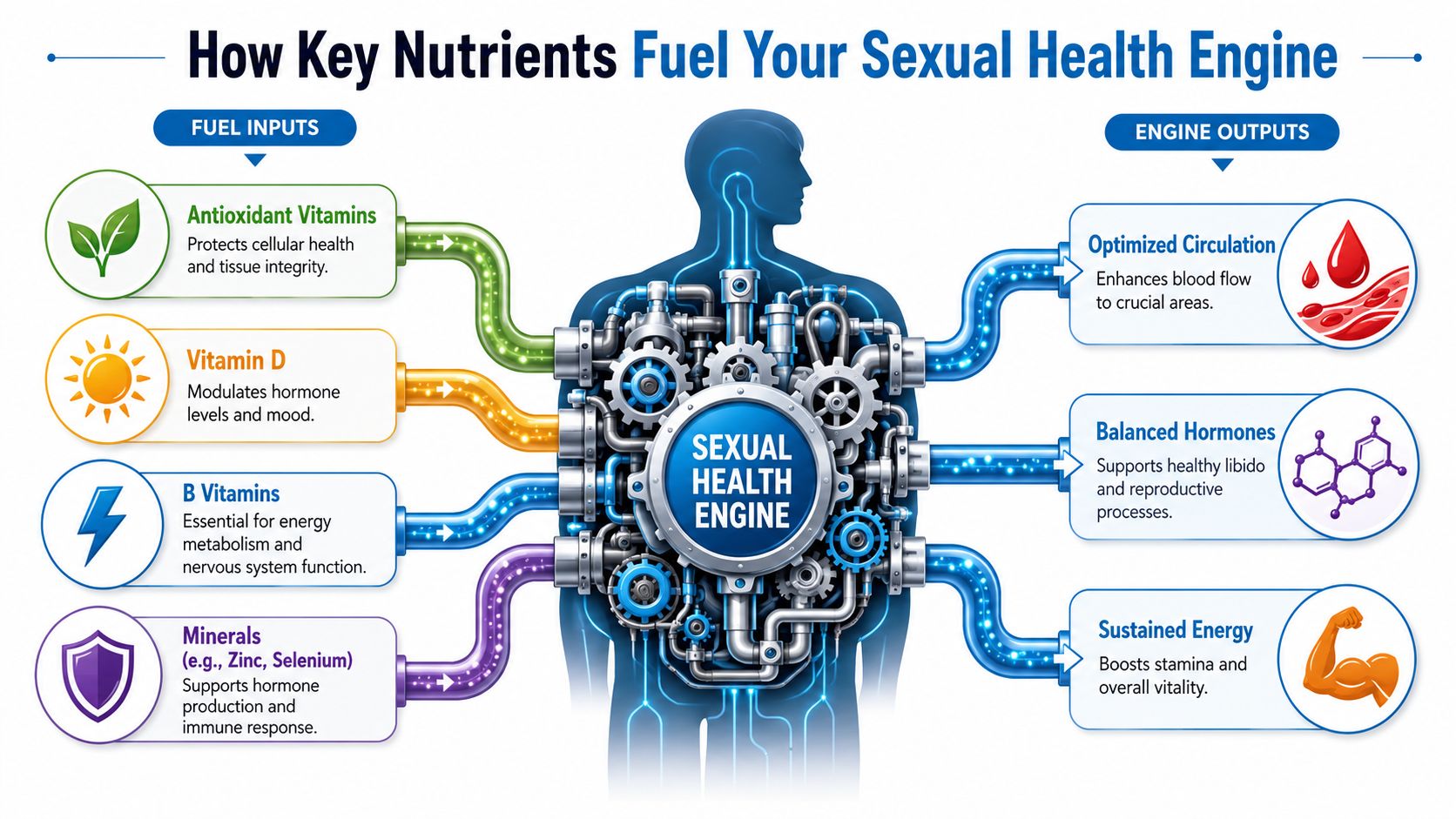
Sexual response is a coordinated body process that depends on circulation, hormones, nerve signaling, energy status, and mental state. If one of those systems is struggling, sexual function can feel off even when desire is still there.
For men, that often shows up as trouble getting or keeping an erection. For women, it may look more like lower desire, less lubrication, slower arousal, discomfort, or weaker sensation. Those differences matter. Research on male sexual function, especially erectile function, is much stronger than research on female libido and arousal, so advice for women often involves more uncertainty.
Blood flow is the pressure system
Arousal may begin in the brain, but the body still has to deliver blood to sexual tissues. That is why nutrients tied to blood vessel function get so much attention.
Vitamin D is a good example because it is involved in endothelial function. The endothelium is the inner lining of blood vessels. You can picture it as the control layer that tells vessels when to tighten and when to relax. If that signaling is off, men may notice weaker erections, and women may notice slower physical arousal or less genital fullness and lubrication.
This does not mean vitamin D works like a universal performance pill. It means poor vitamin D status can be one piece of a blood flow problem.
Hormones act more like dimmer switches than on off buttons
People often expect hormones to explain everything. Real life is messier.
Testosterone influences libido in both men and women. Estrogen helps support vaginal tissue comfort, elasticity, and lubrication in women. Nutrients do not replace hormones, but they do help the body build, regulate, and respond to them. If the body is underfed, inflamed, sleep deprived, or low in key nutrients, it often shifts resources toward basic survival tasks first.
That can show up as low interest in sex, reduced energy, or a sense that arousal takes more effort than it used to.
Nerves and brain signals carry the message
Sexual function is not only a blood flow story. The brain has to register interest, the nerves have to transmit sensation, and the body has to have enough energy to respond.
B vitamins, magnesium, and other nutrients involved in energy metabolism and nerve function can matter here. Their role is usually indirect. They support the systems that allow desire, arousal, and orgasm to happen. They do not flip a switch on command.
For women, this is one reason supplement research can get tricky. Female sexual wellbeing is influenced by hormones, stress, relationship context, pain, pelvic floor health, medications, and life stage. A formula that helps blood flow may help some women, but it may do very little if the main barrier is pain, exhaustion, or hormonal change. If you want an example of how female-focused products are discussed, this review of women's sexual health and desire supplements shows how broad the claims can be compared with the limited evidence.
A simple way to organize it is this:
- Blood flow supports the physical side of arousal.
- Hormones influence interest, comfort, and tissue response.
- Nerves and brain chemistry shape desire, sensation, and orgasm.
Sexual health is a whole-body coordination issue. The most useful nutrient support usually comes from identifying which system needs help, and whether a real deficiency or imbalance is part of the problem.
The Top Vitamins and Minerals for Male Sexual Health
Men usually get clearer supplement advice than women in this area, mainly because erectile function has been studied more often. That does not make the answers simple. It just means the strongest evidence for men tends to center on one part of sexual function: erections.
A useful way to frame male sexual health is to picture an erection as a plumbing and signaling problem at the same time. Blood vessels need to relax and fill. Nerves need to send the right message. Hormones help set the background conditions. Vitamins and minerals can support those systems if a deficiency or weak point is part of the problem. They do not force an immediate result.
Nutrients with the clearest relevance for men
Vitamin D gets attention because it is linked to both vascular health and testosterone-related pathways. Men with low vitamin D levels are more likely to report erectile difficulties, and that makes biological sense. Blood vessels rely on healthy signaling to open properly, and vitamin D appears to support that process. If levels are low, correcting the deficiency may help the system work more normally.
Niacin, or vitamin B3, is another nutrient with some supportive evidence in men with erectile concerns. Its main relevance here is circulation. Niacin has long been studied for its effects on blood lipids and blood vessel function, so it fits the part of the sexual response that depends on healthy blood flow.
Vitamin E is more of a supporting player than a headline nutrient. It works as an antioxidant, which means it helps protect cells from oxidative stress. That may matter for sperm health and for tissues involved in sexual function, but the evidence is more suggestive than definitive, especially when vitamin E is used alone rather than in a combination formula.
Vitamin C also belongs in the support category. It helps maintain nitric oxide, the signaling molecule that tells blood vessels to relax. You can think of nitric oxide as one of the body's "open the pipes" messages. If that message is weak or gets broken down too quickly, blood flow can suffer.
What these nutrients are doing, in plain language
They are mostly supporting the hardware, not creating desire out of nowhere.
- Vitamin D supports vascular signaling and hormone balance.
- Niacin supports circulation.
- Vitamin E helps protect cells from oxidative stress.
- Vitamin C helps maintain nitric oxide activity and blood vessel function.
That distinction matters. A man dealing with poor sleep, high stress, heavy drinking, medication side effects, or relationship strain may not notice much from a supplement aimed at blood flow. A man with low vitamin D status or diet-related gaps may get more benefit because the nutrient is addressing a real bottleneck.
This is also where men and women differ in the research. Male sexual supplement studies often focus on erection quality, which is easier to measure. Female sexual wellbeing involves more overlapping factors, and the research is thinner. So the evidence for men can look stronger partly because the question being studied is narrower.
If you want to compare how men's products combine these ingredients, this review of a men's vitality multivitamin formula shows the kind of blends commonly sold for sexual health support.
Bottom line for men: The most useful nutrients are the ones that support blood flow or correct a real deficiency. Marketing claims usually sound much bigger than the evidence.
Essential Nutrients for Female Sexual Health and Libido
Women often get sold the most dramatic promises and the least precise evidence. That mismatch matters, because female sexual wellbeing is rarely driven by one pathway. Desire, arousal, comfort, mood, hormones, relationship context, and energy status all interact, and research on women-specific supplement benefits is still much thinner than the research on men.
A useful way to frame this is simple. Nutrients can help the body run better, but they usually do not create desire on command. For women, that distinction is even more important than it is for men, because the causes of low libido are often more layered. Menopause, antidepressants, pelvic pain, vaginal dryness, body image concerns, stress, poor sleep, and relationship strain can all change sexual interest or comfort. A supplement may support the background biology while leaving the main cause untouched.
Why female sexual health is harder to supplement well
The evidence for women is limited, and some of the most heavily marketed ingredients are supported by small or mixed studies. GoodRx's overview of natural supplements for sex makes that point clearly. Even ingredients that show promise are not automatic fits, and study results do not mean every over-the-counter blend will work the same way.
That is one of the big research gaps in this category. Male sexual health trials often focus on erections, which are easier to define and measure. Female sexual wellbeing includes desire, arousal, lubrication, comfort, orgasm, mood, and relationship context, so the question being studied is broader from the start.
If you want to see how one women-focused product is built, this review of GNC Women's ArginMax Sexual Health Desire shows the kinds of ingredient combinations commonly marketed for libido support.
A short explainer can also be useful before you buy anything:
Nutrients that may matter most
It helps to sort female sexual health into three practical buckets.
Energy and nutrient depletion come first.
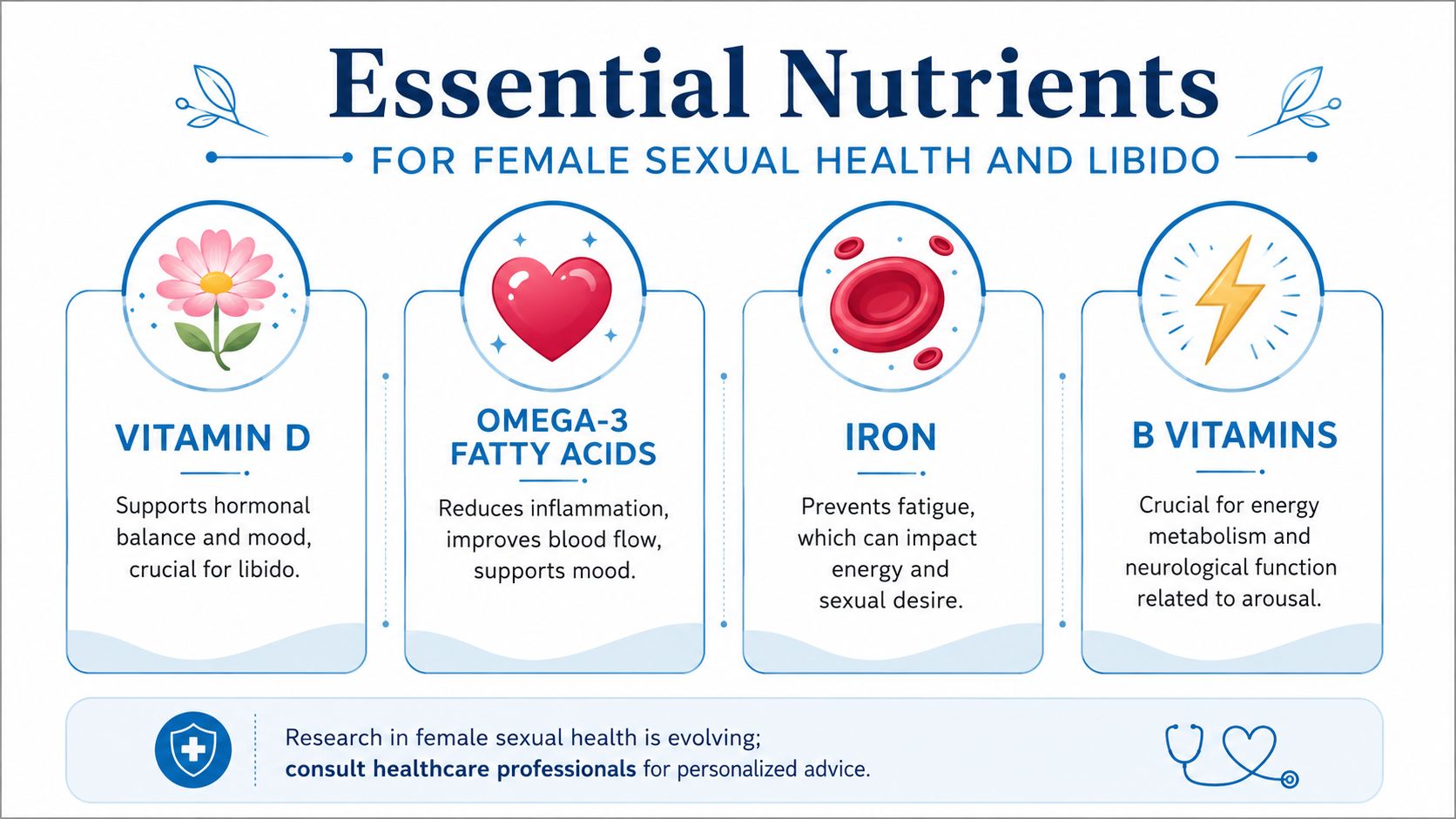
Low iron, undereating, or poor overall diet quality can leave someone too tired for desire to get traction. Sexual interest is hard to sustain when the body is busy compensating for low energy availability. B vitamins also fit here. They are not libido boosters, but they help the body convert food into usable energy and support nervous system function.
Mood and brain signaling come next.
Desire starts in the brain before it shows up in the body. Stress, anxiety, low mood, and mental fatigue can dampen interest even when hormone levels look normal. Nutrients that support general neurological and psychological health may help the foundation, especially if intake has been poor, but they are not substitutes for treating depression, medication side effects, or chronic stress.
Hormone and tissue support matter too.
Vitamin D gets attention because it is involved in mood, immune regulation, and hormone-related processes. That makes it relevant for some women, especially those with low vitamin D status, but the direct evidence for female libido is still limited. Omega-3 fats may also be useful in the bigger picture because they support cell membrane health and may help mood regulation, which can indirectly affect sexual wellbeing.
Some symptoms need a wider lens.
- Dryness or pain: vitamins are rarely the whole answer. Vaginal tissue changes, estrogen shifts, infections, or pelvic floor tension may need medical care.
- A sharp drop after starting a medication: the medication may be the main bottleneck.
- Low libido with burnout: sleep, recovery, regular meals, and stress reduction often matter more than a specialty supplement.
Female sexual health is less like flipping a switch and more like tending a garden. Nutrients help if the soil is depleted, but they cannot replace water, sunlight, or fixing a broken irrigation line.
Women deserve guidance that matches the biology. The best supplement plan starts with the real reason sex feels different, then uses nutrients to support that specific weak point.
A Practical Guide to Choosing Quality Supplements
A sex health supplement can look impressive and still tell you very little. The useful part is usually the plain black-and-white box on the back. That is where you find the dose, the ingredient form, and whether the formula is transparent enough to judge.
How to read the label without getting lost
Start with the Supplement Facts panel. The front label is advertising. The back label is the instruction manual.
Read it in this order:
- Serving size: A bottle may look potent until you notice the listed dose requires three or four pills a day.
- Exact nutrient name: "Magnesium" is not one thing. Magnesium glycinate, citrate, and oxide behave differently in the body and differ in how well they are tolerated.
- Amount per serving: This tells you what you receive, not what the marketing headline highlights.
- Percent Daily Value: Helpful for context, but not a verdict on whether the dose fits your goal, age, diet, or lab results.
- Other ingredients: Sweeteners, dyes, gelatin, and fillers matter if you have allergies, digestive sensitivity, or dietary preferences.
Form matters too. Gummies can improve consistency for someone who hates pills, but they often carry smaller doses or added sugar. Capsules usually fit more active material. Powders can work well if you already use smoothies or shakes.
A good label answers basic questions without making you hunt. If the company makes it hard to tell what is inside, treat that as a warning.
Key Nutrients for Sexual Health at a Glance
| Nutrient | Primary Sexual Health Role | Typical Daily Reference Point | Good Food Sources |
|---|---|---|---|
| Vitamin D | Supports hormone-related processes and overall vascular health | Daily needs vary by age, sun exposure, diet, and blood levels | Fatty fish, fortified dairy or plant milks, egg yolks |
| Niacin (Vitamin B3) | Helps the body convert food into energy and supports circulation-related functions | Needs depend on age and sex | Poultry, tuna, peanuts, mushrooms |
| Vitamin C | Supports blood vessel function and antioxidant defenses | Needs depend on diet, smoking status, and health context | Citrus, kiwi, strawberries, bell peppers |
| Vitamin E | Helps protect cell membranes from oxidative stress | Needs depend on total diet and supplement use | Almonds, sunflower seeds, avocado, spinach |
That table is a starting map, not a shopping list. Men often shop for products aimed at blood flow, testosterone support, or erectile performance. Women may be looking for support for energy, mood, tissue health, or desire, and the research is thinner there. That gap matters because a formula marketed for "sexual wellness" may implicitly be designed around male outcomes.
One practical filter is specificity. A targeted product for a documented need usually makes more sense than a kitchen-sink blend with twenty ingredients and tiny doses. If you want to compare formats before buying, browse vitamins, supplements, and nutrition options with the label checklist beside you so you compare ingredients, not slogans.
Quick screen: If a formula hides amounts inside a proprietary blend, you cannot tell whether the meaningful ingredients are present in useful doses.
Quality also includes expectations. Supplements can support systems involved in sexual health, but they do not override medication side effects, relationship strain, pain, hormone disorders, or poor sleep. The best product is the one that matches the primary bottleneck, uses clear labeling, and fits your biology.
Amplify Your Results with Supportive Lifestyle Habits
Supplements work better when the body has something to work with. If sleep is poor, meals are erratic, alcohol use is high, and stress is constant, even a thoughtful supplement plan can underperform.
The habits that make supplements more useful
A simple foundation beats an aggressive stack.
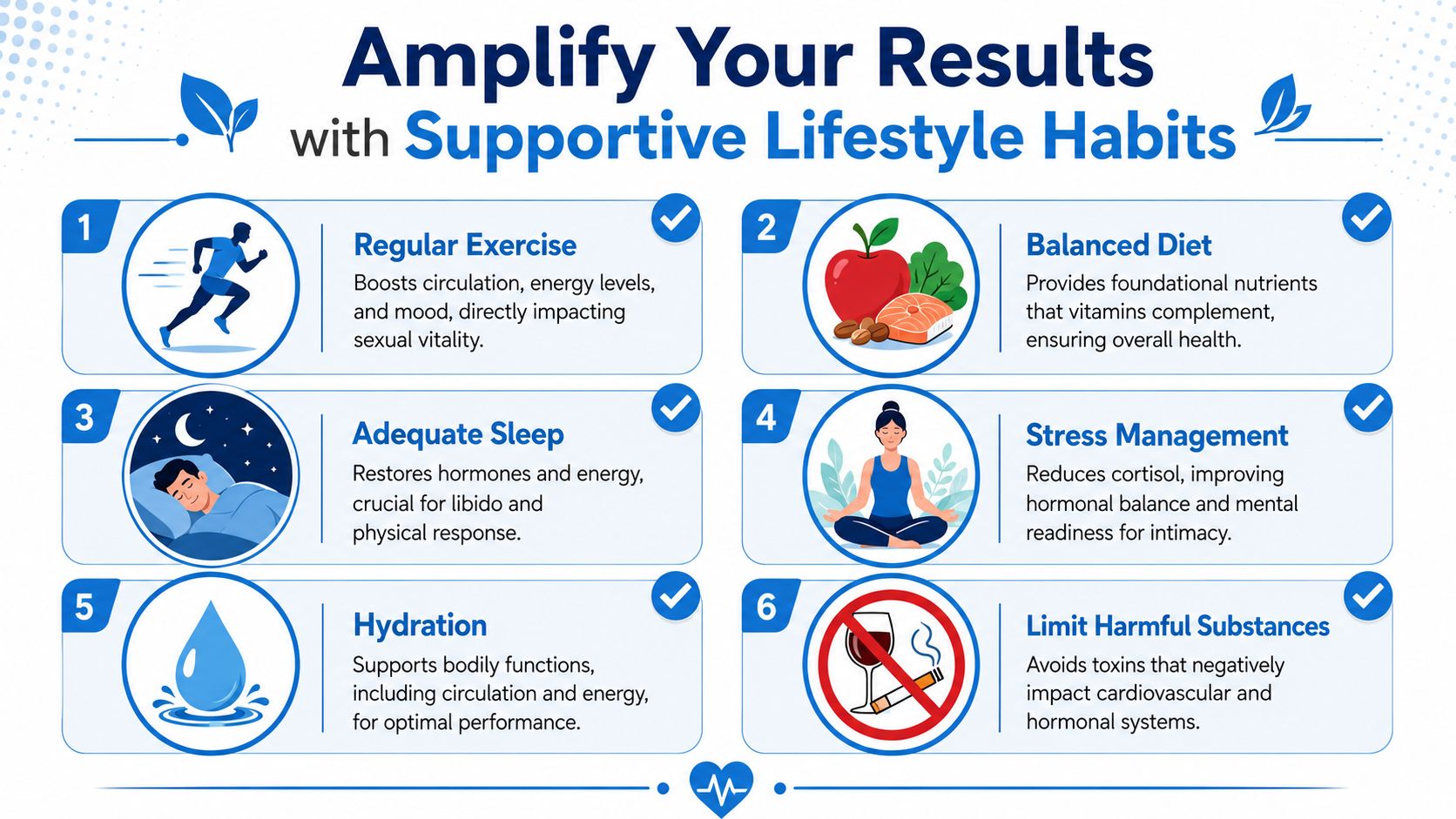
- Regular movement: Exercise supports circulation, energy, and mood. A walk, ride, or resistance session won't act like a pill, but it improves the systems sexual response depends on.
- Steady meals: Whole foods provide the base nutrients that supplements only top up. Think protein, colorful produce, legumes, nuts, seeds, and healthy fats.
- Sleep protection: Hormones and recovery don't do well on short sleep. If libido changed after your sleep changed, that's a clue worth respecting.
- Stress reduction: Chronic stress can shut down desire fast. Breathing work, therapy, meditation, or fewer late-night screens can help.
- Hydration: Poor hydration can worsen fatigue and leave you feeling flat physically.
- Limiting smoking and excess alcohol: Vascular and hormone health both suffer when these stay high.
One practical habit often gets overlooked. Track what changed first. Was it stress, a medication, menopause, a new relationship dynamic, weight loss, poor sleep, or heavy work travel? That timeline often tells you more than a supplement ad ever will.
Supplements can support the process. Lifestyle habits create the conditions for that support to matter.
Frequently Asked Questions About Sexual Health Vitamins
How long do vitamins take to work for sexual health
It depends on the issue. If a person is correcting a deficiency, changes may come gradually rather than overnight. One verified example is that a vitamin E and ginseng combination improved erectile function scores after six weeks in clinical trials, but that doesn't mean every nutrient works on the same timeline or for the same reason.
Is a daily multivitamin enough
Sometimes, especially if your goal is to cover basic gaps. But a general multivitamin may not provide the specific dose or ingredients used in research on sexual health support.
Are there risks or side effects
Yes. More isn't always better. Fat-soluble vitamins, minerals, and hormone-related supplements can all create problems if used inappropriately. If you take medications, have a health condition, or are considering DHEA or high-dose products, talk with a clinician first.
Can food alone cover these nutrients
Sometimes it can. Food should be the base whenever possible because it brings fiber and many supportive compounds that pills don't. Supplements make the most sense when food intake is limited, needs are higher, or a likely deficiency needs targeted support.
If you're comparing options for the best vitamins for sexual health, start with quality, clarity, and fit. CalVitamin offers a broad range of vitamins, minerals, herbal formulas, and sexual wellness products in multiple formats, which makes it easier to compare labels and choose a product that matches your needs and preferences.