Globally, zinc deficiency affects approximately 17.3% of populations and vitamin D deficiency affects 15.7%, according to this review on zinc deficiency and vitamin D. That statistic changes the conversation. This isn't just about two nutrients that happen to be popular. It's about a common pairing of low intake or low status that can shape how well your body functions every day.
It's common to view these nutrients separately. Vitamin D gets linked to sunshine, bones, and winter wellness. Zinc gets linked to immunity and colds. But zinc and Vitamin D work like a synergistic duo, not two unrelated helpers sitting on opposite sides of the nutrition world.
When both are available, your body can use each one more effectively. When one is low, the other may not perform as well as you expect. That's why someone can take Vitamin D and still struggle to feel the full benefit, or pay attention to zinc and still miss a bigger piece of the picture.
This article takes the science out of the lab and puts it into plain language. You'll learn what each nutrient does, why they work better together, how to spot possible deficiency risk, and how to make practical choices without getting lost in supplement jargon.
Table of Contents
- The Unseen Partnership in Your Health
- Meet the Players Zinc and Vitamin D on Their Own
- The Synergy Explained How Zinc and Vitamin D Work Together
- Key Health Benefits of the Zinc and Vitamin D Duo
- Are You Getting Enough Deficiency Risk and Testing
- Your Practical Guide to Supplementation
- How to Choose Quality Supplements on CalVitamin
- Frequently Asked Questions
The Unseen Partnership in Your Health
You can think of zinc and Vitamin D as a health partnership that works behind the scenes. One helps send important biological instructions. The other helps cells receive and use those instructions properly. If either side of the partnership is weak, the message gets fuzzy.
That matters because these nutrients influence systems people care about every day. Immune readiness. Bone strength. Muscle function. Tissue repair. Energy regulation. Even how well your body handles stress and recovery. When people say they want to feel “more balanced,” this is the kind of basic physiology they're often talking about.
What makes this duo easy to miss is that the early signs of imbalance don't always look dramatic. A person may just notice they get run down more often, take longer to bounce back, feel generally flat, or struggle with nagging issues like low resilience, poor recovery, or slow wound healing. Those signs can get blamed on age, stress, workload, sleep, or “just being busy.”
Big idea: With zinc and Vitamin D, the question isn't only “Am I getting enough of each?” It's also “Can my body use one well if the other is lagging?”
The combined action of these nutrients makes for a powerful partnership. Vitamin D often gets treated as a single fix. In reality, it works inside a broader nutrient team. Zinc is one of the key teammates because it helps support the cellular machinery that lets Vitamin D do its job.
That's why the phrase better together fits here. Not as marketing language, but as a practical biological principle. If you understand that principle, your choices around food, sunlight, testing, and supplements become much more logical.
Meet the Players Zinc and Vitamin D on Their Own
Before looking at the partnership, it helps to know what each nutrient brings to the table.
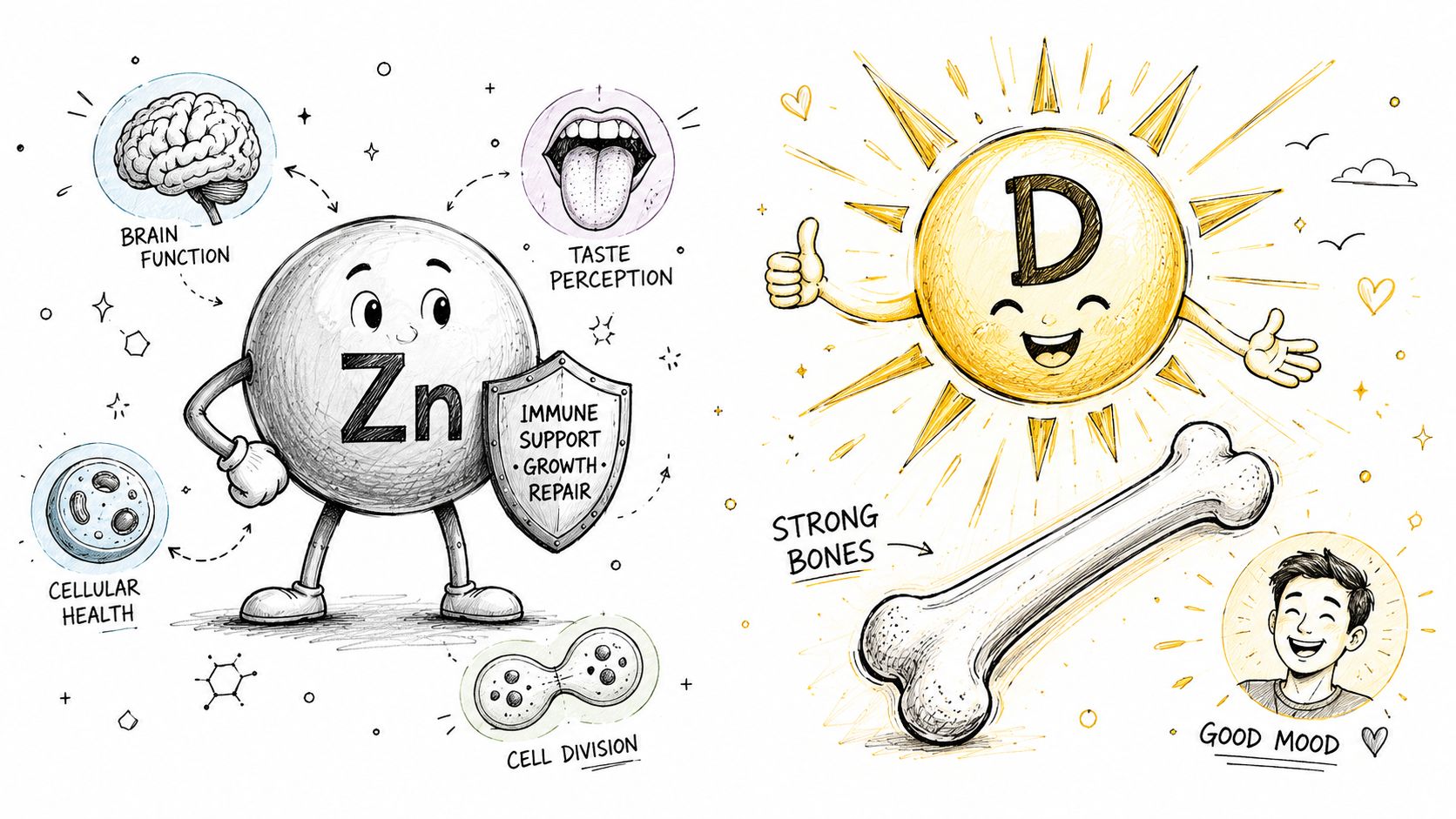
Vitamin D as a hormone-like signal
Vitamin D is often called a vitamin, but it behaves more like a hormone signal in the body. It helps regulate how cells respond, especially in tissues involved in bones, immunity, and muscle function.
Here's a simple way to think about it. Vitamin D is less like a brick that “builds” something directly, and more like a manager giving instructions. It tells cells what to do. That includes supporting calcium handling, guiding immune activity, and influencing how tissues maintain themselves.
A few key roles make this easier to understand:
- Bone support: Vitamin D helps your body use calcium properly, which is one reason it's so closely tied to skeletal health.
- Muscle function: People often associate weak bones with low Vitamin D, but muscles also depend on solid Vitamin D status.
- Immune regulation: Vitamin D helps shape immune responses rather than just “boosting” them.
- Whole-body signaling: Because receptors for Vitamin D are found widely in the body, its effects reach far beyond bones alone.
Zinc as a hands-on mineral
Zinc has a different personality. If Vitamin D is the instruction, zinc is part of the machinery that lets the instruction get carried out. It participates in many basic body processes, from repair to growth to immune defense.
In daily life, zinc is connected with jobs your body does constantly:
- Wound healing: Your body uses zinc during tissue repair.
- DNA and cell growth: Rapidly renewing tissues need zinc to do their work.
- Taste and smell: Changes here can sometimes hint that zinc status deserves attention.
- Skin and barrier health: Zinc helps maintain the integrity of tissues that separate you from the outside world.
A useful analogy is this. If your body were a house, Vitamin D would help issue the renovation plan. Zinc would be one of the main tools in the contractor's belt.
Zinc tends to show up where the body is building, repairing, defending, or adapting.
That's why zinc gets so much attention during periods of stress, frequent illness, training, recovery, and skin repair. It's practical, physical, and closely involved in what the body is doing minute by minute.
When you understand these distinct roles, the synergy starts to make sense. Vitamin D sends direction. Zinc helps the body act on it.
The Synergy Explained How Zinc and Vitamin D Work Together
A useful way to understand this pairing is to look at what happens inside the cell. Vitamin D may be present in the body, but its effects depend on whether cells can read and carry out its instructions. Zinc helps make that response possible.
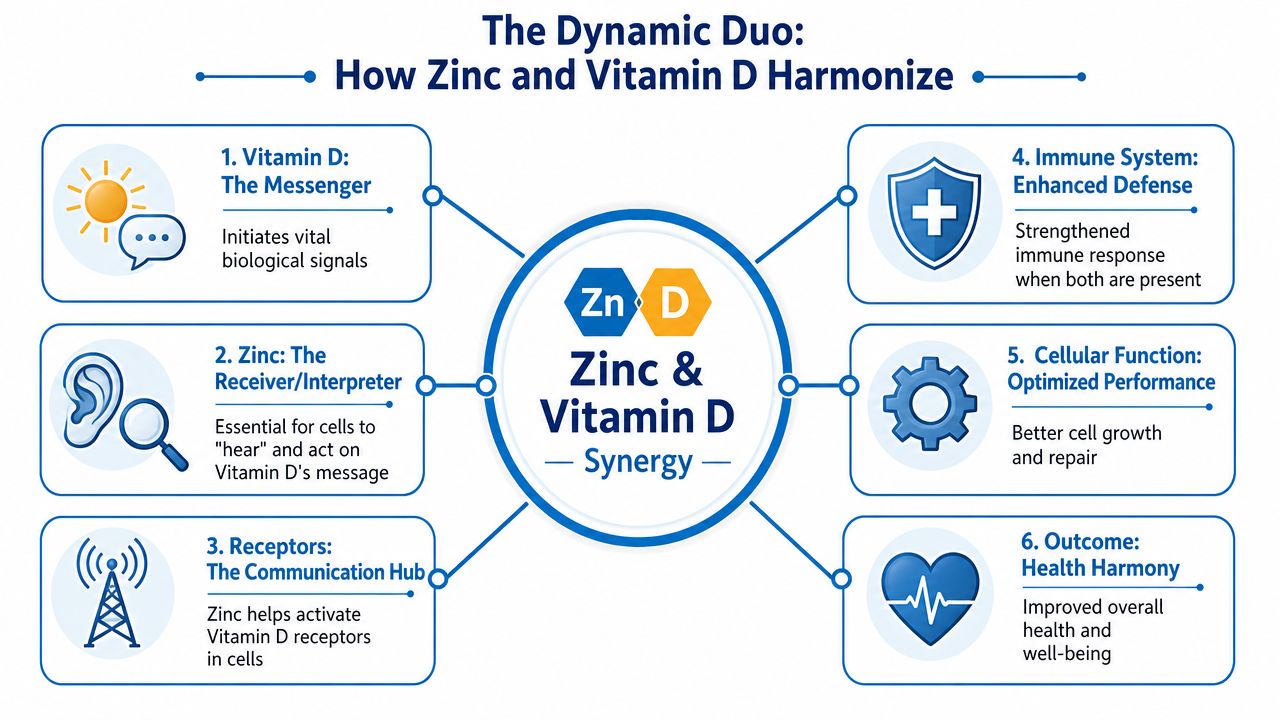
How the partnership works inside the cell
Vitamin D does much of its work by binding to a receptor called the vitamin D receptor, or VDR. That receptor then helps regulate gene activity. Zinc matters here because the receptor system relies on structures often described as zinc fingers. These are small protein shapes that use zinc to hold the right form so they can interact with DNA correctly.
Here is the simple version:
- Vitamin D reaches the cell and binds to its receptor.
- The receptor helps switch certain genes on or off.
- Zinc supports the structure and function that lets this signaling happen efficiently.
If zinc is low, Vitamin D signaling may become less effective. The nutrient is there, but the cellular response can be weaker. That is one reason this duo deserves attention as a true partnership rather than two separate items on a supplement label.
This connection may also help explain why low zinc and low vitamin D status often appear together, as noted earlier in the article. In practice, improving one piece of the system can support the performance of the other.
Why this synergy matters beyond immunity
The benefits of this relationship reach past basic immune support. Vitamin D influences gene signaling involved in growth, repair, hormone balance, and inflammatory control. Zinc is involved in many of those same body processes, especially where the body is building tissue, maintaining barriers, or responding to stress.
That overlap is what makes the pair so interesting.
For example, hormonal health depends on clear signaling and good nutrient status. Zinc is closely tied to reproductive health and normal hormone function. Vitamin D also plays a role in endocrine signaling. Together, they support systems that affect energy, recovery, mood, and overall vitality.
The duo also helps maintain barrier integrity in tissues such as the gut and respiratory tract. You can think of those barriers as the body's screening system. When they stay intact, the body is better able to separate what should stay out from what belongs in.
Practical rule: If someone focuses only on Vitamin D and ignores zinc, results may feel incomplete because part of the signaling machinery is still underpowered.
For readers looking for a simple combined option, a calcium magnesium zinc D3 complex supplement can fit into a broader plan that also includes food, testing when appropriate, and guidance on dose.
The big takeaway is clear. Vitamin D helps direct important biological decisions. Zinc helps the body carry them out. Together, they support a stronger, more coordinated effect than either nutrient usually provides alone.
Key Health Benefits of the Zinc and Vitamin D Duo
Some nutrient pairings look good on a label but do very little together in the body. Zinc and vitamin D are different. They act more like a coach and a skilled crew. One helps guide the plan, and the other helps carry it out across many systems at once.
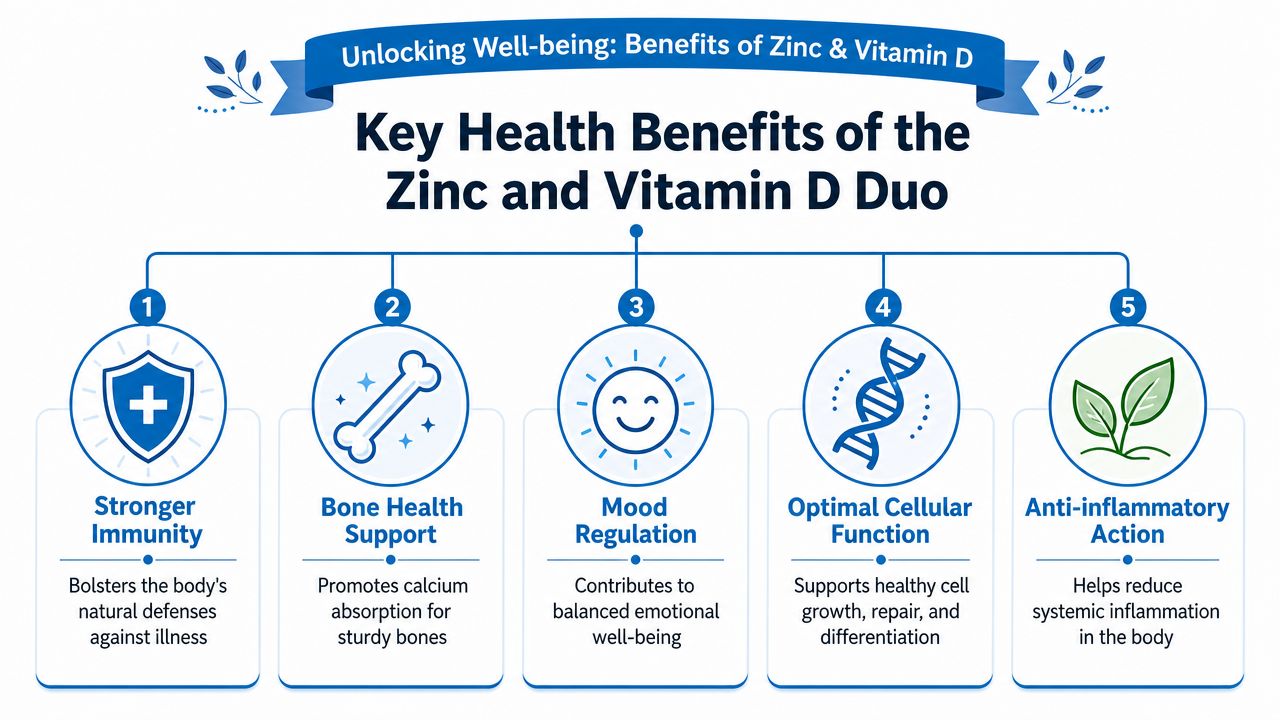
Immune defense and barrier support
Immune health is the most familiar benefit, but the key lies in coordination.
Vitamin D helps regulate immune signaling, so the body can respond with better balance. Zinc helps immune cells develop, communicate, and do their jobs well. Put those roles together and you get a more prepared response, not just a louder one.
This also matters at the body's surfaces, including the respiratory tract, gut lining, and skin. Those tissues work like a security screen. When the screen stays intact, the body has an easier time keeping irritants and microbes where they belong.
As noted earlier, research on zinc and vitamin D in immunity links each nutrient to stronger immune performance on its own. Their combined value comes from covering different parts of the same job.
For readers who want a combined option, a calcium magnesium zinc D3 complex supplement can be one practical way to include both nutrients in a broader routine built around food, testing, and appropriate dosing.
A quick visual can help connect the dots before we move on:
Bones, muscles, and physical resilience
Vitamin D is strongly associated with calcium handling and bone maintenance. Zinc adds a less obvious but very important layer. It supports cell activity involved in growth, repair, and tissue turnover.
That means the duo supports the whole construction process. Vitamin D helps direct where minerals should go and how tissues should respond. Zinc helps the workers inside the cells build, repair, and adapt.
This is why the benefit is broader than bone density alone. Muscle function, recovery from training, connective tissue upkeep, and day-to-day physical resilience all depend on good signaling plus good execution.
Hormonal balance, skin, and recovery
Hormonal health also depends on teamwork.
Vitamin D acts like a hormone in the body and influences many signaling pathways tied to mood, reproductive health, and metabolic function. Zinc supports enzyme activity and normal hormone-related processes, especially in tissues that turn over quickly or face frequent stress. Together, they help create conditions for steadier recovery, better adaptation, and a stronger sense of vitality.
People usually notice the results in practical ways. Recovery feels less sluggish. Skin looks calmer. Minor stressors feel easier to bounce back from.
Skin is a useful example because it reflects several systems at once. It needs repair capacity, balanced immune activity, and healthy cell turnover. Zinc supports rebuilding. Vitamin D supports regulation. The pair gives the body a better setup for repair than either nutrient can provide as effectively alone.
That synergistic effect is the key takeaway. Zinc and vitamin D do more than support immunity. Together, they help the body defend, rebuild, signal, and recover with better coordination.
Are You Getting Enough Deficiency Risk and Testing
Low zinc and low vitamin D are common enough that guessing is a poor strategy. What makes this pair tricky is that mild deficiency often feels vague. You may just notice that your usual resilience is missing.
That matters because zinc and vitamin D do not work in isolation. If one is running low, the partnership gets weaker. The result can show up as slower recovery, less steady immune function, or a general sense that your body is not responding the way it used to.
Who should pay closer attention
Risk is higher in a few predictable situations. The pattern is less about bad habits and more about simple biology plus daily routine.
- Limited sun exposure: Vitamin D production drops when skin gets little regular sunlight.
- Restricted or low-variety eating patterns: Zinc intake can fall short when meals regularly miss zinc-rich foods.
- Older age: Changes in appetite, digestion, time outdoors, and medication use can all affect status.
- Heavy training, chronic stress, or frequent illness: Demand can rise when the body is repairing more often.
- Plant-forward diets without planning: These can support excellent health, but zinc absorption may be lower because some plant compounds reduce how much the body takes in.
A practical example helps. Someone who works indoors, trains hard after work, and eats mostly convenience foods may be putting strain on both sides of the duo at once. Less sunlight can lower vitamin D status. Inconsistent intake can leave zinc short. The body still tries to keep up, but the teamwork becomes less efficient.
Symptoms people often overlook
The early signs are easy to wave away because they overlap with stress, poor sleep, and many other issues.
Common clues include:
- Frequent colds or feeling run down
- Slow wound healing or ongoing skin irritation
- Low mood or reduced motivation
- Fatigue that does not have an obvious explanation
- Recovery that feels slower than expected
These signs are not a diagnosis. They are more like dashboard lights. One light does not tell you exactly what is wrong, but it does tell you to look under the hood.
If you already know your diet or sunlight exposure is inconsistent, it may be worth reviewing targeted options such as a zinc picolinate supplement for low zinc intake support with your clinician.
How testing usually works
Testing gives you a clearer starting point than symptoms alone.
Healthcare professionals commonly assess vitamin D with a serum 25-hydroxyvitamin D test. Zinc is often checked with a plasma or serum zinc test, depending on the clinical setting. Results need context, because zinc levels can shift with infection, inflammation, fasting status, and time of day.
That last point confuses a lot of people. A blood test is useful, but it is not magic. It works best when paired with your symptoms, diet pattern, sun exposure, medications, and health history. In other words, the lab value is one piece of the map, not the whole map.
If the goal is to support the zinc and vitamin D duo, testing helps you choose the right next step instead of treating every tired day like a deficiency problem.
Your Practical Guide to Supplementation
Good supplementation starts with one simple rule. Use it to fill a gap, not to compensate for chaos everywhere else.
Food quality, sunlight, sleep, and overall health still matter. But supplements can be helpful when intake is inconsistent, blood levels are low, or your daily routine makes ideal habits hard to maintain.
Daily targets and safety basics
Here are the key adult reference points that are clearly supported by the verified data.
| Nutrient | RDA | Optimal Daily Intake | Tolerable Upper Limit (UL) |
|---|---|---|---|
| Vitamin D | 600 IU daily for adults | Individualized based on diet, sunlight, and testing | Not specified in the verified data provided |
| Zinc | 12 mg | Individualized based on diet, symptoms, and testing | 40 mg/day for adults |
The Vitamin D adult RDA of 600 IU daily comes from the NIH Office of Dietary Supplements zinc fact sheet, which also includes Vitamin D figures in the verified data provided. That same verified source also notes that a lack of co-factors like zinc can mean individuals require 63% more supplemental Vitamin D to achieve optimal levels. It also reports average daily zinc intake in the U.S. at 16.4 mg/day for men and 12.6 mg/day for women, often only just meeting the 12 mg adult reference point.
For zinc safety, the adult Tolerable Upper Limit is 40 mg/day, with higher chronic intake carrying a risk of copper depletion and gastrointestinal distress, based on the Frontiers in Nutrition review.
How to take them for better results
Timing and form can make supplementation feel easier and more effective.
- Take Vitamin D with food that contains fat: Vitamin D is fat-soluble, so many people absorb it better with a meal.
- Choose a well-tolerated zinc form: Many shoppers look for forms such as zinc picolinate or zinc glycinate because they're commonly favored for routine use.
- Avoid stacking too many overlapping products: A multivitamin, a mineral blend, and a single-nutrient zinc capsule can add up quickly.
- Use testing to guide changes: If you're correcting a deficiency, numbers matter more than guesswork.
If you're specifically looking for a single-ingredient zinc option, this zinc picolinate supplement is one example of the form many experienced supplement users seek out.
A simple mindset helps here. Start with the lowest amount that fits your needs, stay consistent, and reassess based on symptoms, diet, and professional guidance.
How to Choose Quality Supplements on CalVitamin
Shopping for supplements gets easier when you know what to look for on the label. You don't need to memorize advanced biochemistry. You just need a short checklist and the habit of slowing down before clicking “add to cart.”
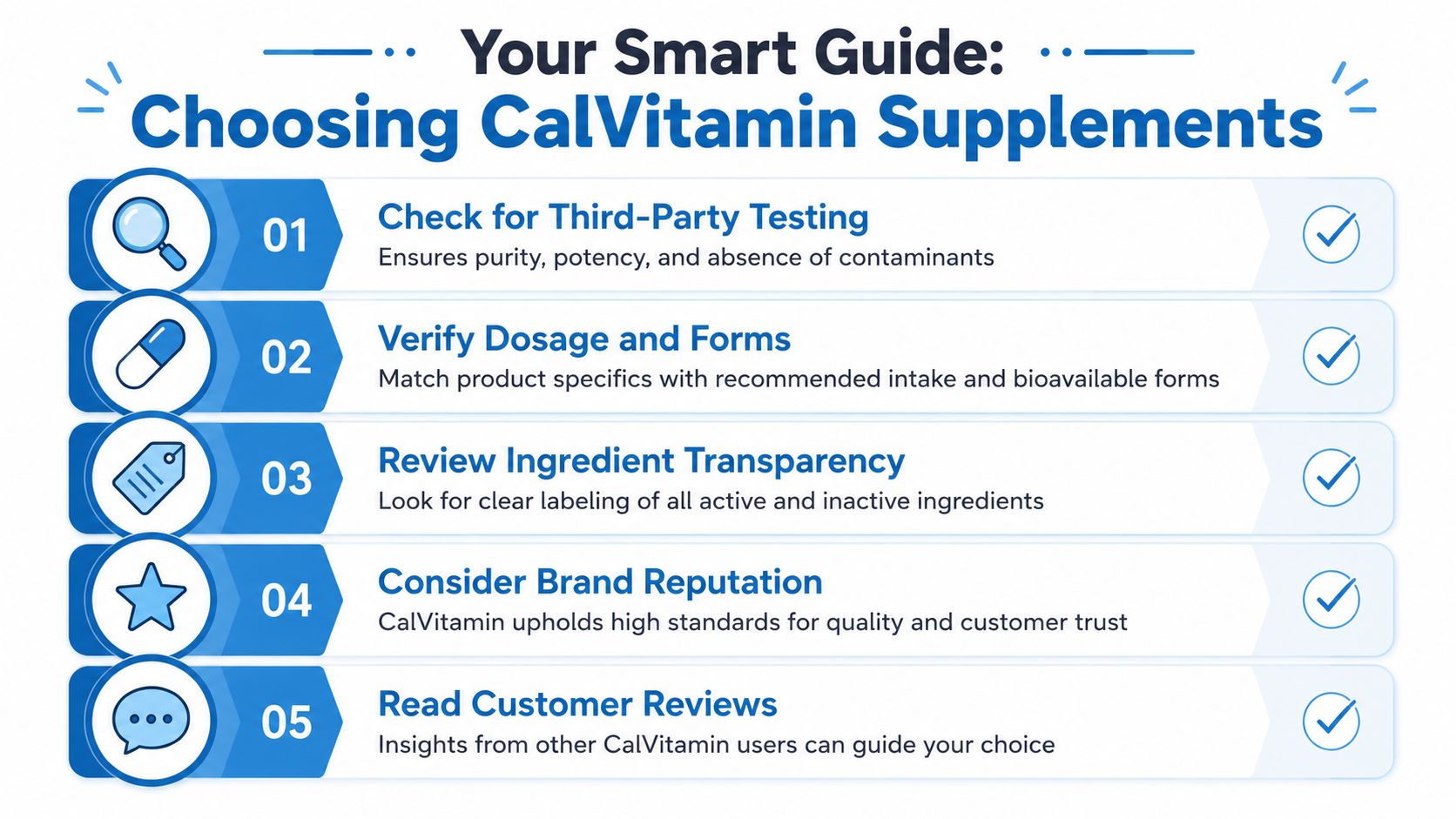
A simple label-reading checklist
Use this checklist when comparing products:
- Check the nutrient form: For Vitamin D, many shoppers prefer D3. For zinc, they often look for forms such as picolinate or glycinate.
- Review the dose per serving: Don't assume “more” is better. Match the serving size to your actual goal.
- Read the full ingredient panel: Look beyond the front label and scan inactive ingredients too.
- Look for fit with your preferences: Some shoppers want gelatin-free, halal, or other specific product attributes.
- Consider transparency and reputation: Clear labeling, straightforward descriptions, and customer reviews all help.
If you're browsing Vitamin D3 options, this Vitamin D3 softgel product shows the kind of product page where dose, format, and shopper preferences can be reviewed before purchase.
A quality supplement should answer basic questions clearly. What form is it, how much is in a serving, and what else is in the capsule or softgel?
That approach protects you from buying based on flashy promises instead of useful details. It also makes it easier to build a routine that matches your values and your body's needs.
Frequently Asked Questions
Do zinc and Vitamin D need to be taken together
Not necessarily at the exact same minute. What matters more is that your body has enough of both on a consistent basis. Many people take them at different times of day and still do well.
Is food and sunlight enough
For some people, yes. For others, no. Sun exposure varies with lifestyle, season, clothing, and skin exposure habits. Diet quality varies too. If you have symptoms, risk factors, or uncertainty, testing gives a clearer answer than assumptions.
What about medications and supplement timing
Personal guidance is essential. Supplements can interact with medications, and minerals can sometimes compete with each other depending on the combination and timing. If you take prescription medication, it's wise to ask your healthcare professional or pharmacist how to separate doses appropriately.
Why do many people prefer Vitamin D3
Vitamin D3 is generally the form many supplement users look for in daily wellness products. In practical shopping terms, it's the form you'll often see featured in common over-the-counter products and combined bone-support formulas.
The most important takeaway is simple. Zinc and Vitamin D aren't random add-ons. They're a coordinated team. When you respect that partnership, your supplement decisions become more targeted, safer, and more likely to support the outcomes that matter to you.
CalVitamin offers a broad range of wellness products for adults who want practical options across vitamins, minerals, proteins, herbs, digestive support, and lifestyle-focused categories. If you're ready to compare formats, read labels carefully, and find products that match your preferences, browse the full selection at CalVitamin.