
You've got the bottle in your hand, the label says halal, and the ingredient list looks reassuring at first glance. That's usually the moment shoppers feel safe enough to click buy. The problem is that a vitamin can look compliant on the front while hiding a non-halal capsule shell, colorant, solvent, or processing aid somewhere else on the package.
That's why halal certified vitamins need a closer read than many might initially think. The market behind them is no longer tiny, either, with one estimate placing the global Halal Supplement market at $11.2 billion in 2025 and projecting $21.4 billion by 2034, while another puts halal-certified nutritional supplements at $6.27 billion in 2025 and forecasts $16.65 billion by 2034. Both reports point in the same direction, halal vitamins are expanding fast, especially where shoppers want clearer labels and easier certification checks at purchase time. MarketIntelo's halal supplement market report
Table of Contents
- Why Halal Certification Goes Deeper Than the Label
- Understanding the Full Bill of Materials in Halal Vitamins
- Dosage Form Risks You Need to Know About
- Recognizing Trusted Halal Certifying Bodies and Their Logos
- How to Read Supplement Labels Like a Halal Auditor
- Shopping for Halal Vitamins on CalVitamin
- Common Questions About Halal Certified Vitamins
Why Halal Certification Goes Deeper Than the Label
A shopper sees a multivitamin marked halal and assumes the decision is finished. The active ingredient may be perfectly fine, but that's only one layer of the product. The capsule shell can be gelatin, the coating can use questionable materials, and the flavor system can rely on carriers that never appear in the bold marketing claims.
The label is the headline, not the whole story
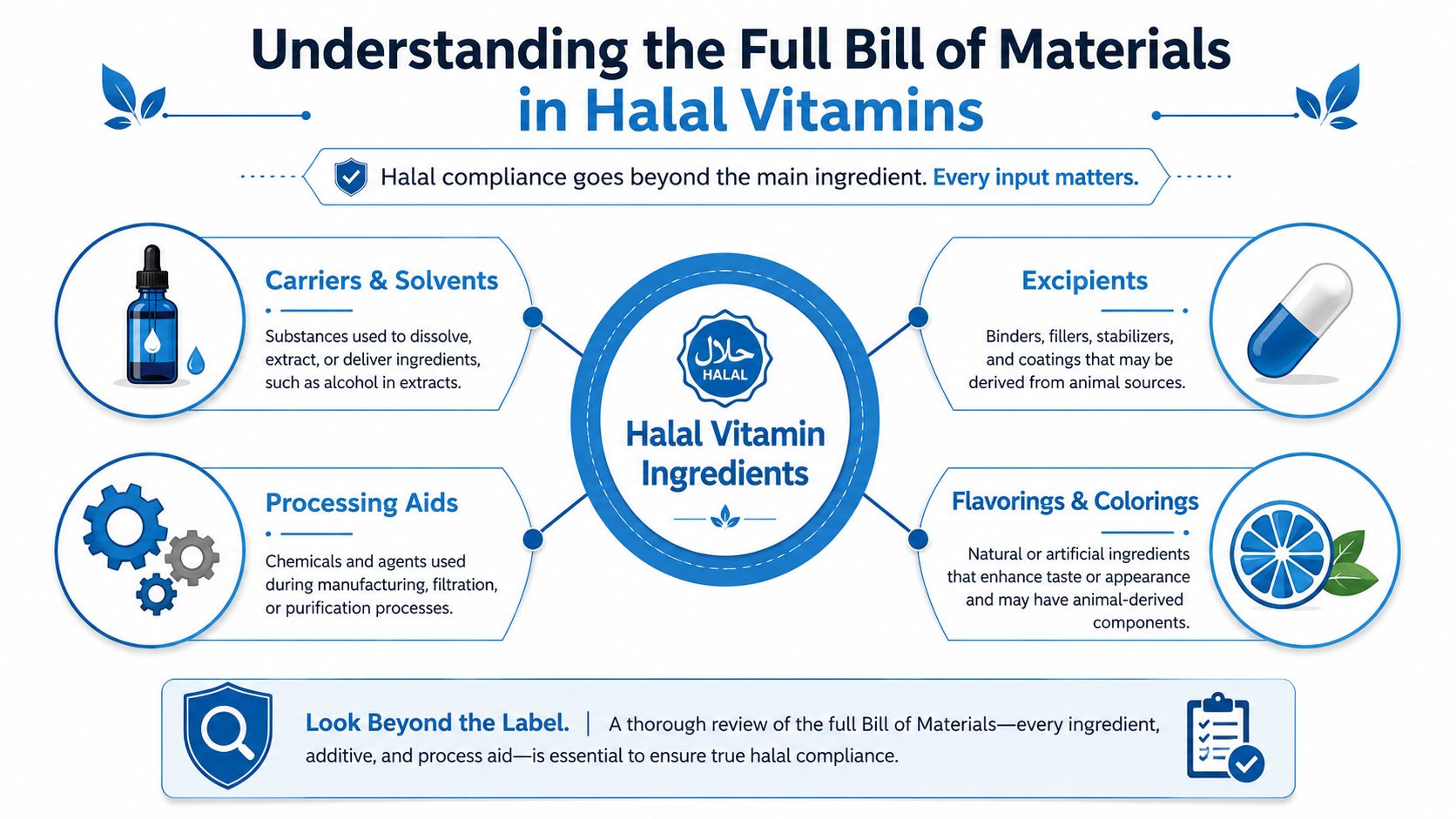
Halal certification typically covers the entire bill of materials, not just the nutrient inside the capsule. That means the shell, excipients, processing aids, flavor carriers, and colorants all matter, because any one of them can introduce a non-halal input. Guidance on halal vitamins specifically calls out porcine gelatin, non-halal animal derivatives, ethanol-based solvents, and insect-derived colorants like carmine as ingredients that can break compliance even when the vitamin itself looks innocent on paper. Halal Foundation guidance on halal vitamins and supplements
Practical rule: If the front of the bottle says halal, still inspect the capsule, coating, flavoring, and processing notes. The claim only matters if the whole formula supports it.
Many shoppers get tripped up at this point. A bottle can advertise a familiar nutrient like vitamin D or a B-complex, but the compliance question isn't about the vitamin name. It's about what was used to build the finished dosage form around it.
Understanding the Full Bill of Materials in Halal Vitamins
A bottle can say halal on the front and still leave out the details that matter. The ingredient inside may be acceptable, but the finished supplement is built from many parts, and any one of them can create a halal issue if it comes from the wrong source. A careful review starts with the full bill of materials, because that is where hidden inputs usually show up.
What to check beyond the active ingredient
Start with the capsule shell. Plant-based options like HPMC and pectin are often used when a product is made to avoid animal inputs, while gelatin always needs source verification because it can come from animals that were not halal slaughtered. The same logic applies to softgels and gummies, where gelatin often provides the shape and texture shoppers notice first.
Then review the excipients. These are the binders, fillers, and stabilizers that help a formula hold together and stay shelf-stable. They can include ingredients such as stearates, and the name alone does not tell you whether the source is halal, especially if the material is animal-derived. Halal guidance also flags processing aids like ethanol-based solvents and flavor carriers that may never appear in the bold claims on the front of the bottle. Nutrition International's technical specification on halal-certified supplements
Practical rule: If an ingredient name tells you what it does but not where it came from, treat it as a verification item, not an automatic pass.
Colorants and flavor systems deserve the same scrutiny
Color can carry compliance risk too. Carmine, sometimes called cochineal, comes from insects, so it is one of the ingredients halal-conscious shoppers should spot right away. Flavor systems deserve the same attention, because “natural flavor” does not explain what carriers or sub-ingredients were used.
This is the part many labels make hard on purpose. A gummy can look simple and fruit-based while still relying on gelatin or insect-derived color, a softgel can hide an animal-source shell or plasticizer, and a liquid can use a solvent or preservative that is easy to miss. That is why the other ingredients panel deserves the same attention as the nutrient facts panel.
Read each line as if you are checking the supply chain, not a recipe. That habit helps you catch the support materials that marketing copy often leaves out, and it is the difference between a product that merely looks clean and one that can be defended as halal certified.
Dosage Form Risks You Need to Know About
The dosage form often tells you where the risk lives. Two vitamins can contain the same active nutrient and still have very different halal profiles because one is a softgel, another is a gummy, and a third is a liquid extract. The format shapes the likely hidden ingredients.
Softgels and gummies carry the most moving parts
Softgels rely on gelatin for the shell, and they also need glycerin or another plasticizer to keep the shell flexible. Halal guidance says you shouldn't assume either one is acceptable unless the source is clearly identified, because gelatin can be bovine, porcine, or fish-derived, and glycerin can be vegetable-based or tallow-based. Some standards also call for batch-level halal certification when animal-origin materials are used. Nutrition International's technical specification on halal-certified supplements
Gummies often look friendlier because they're associated with fruit flavors and simple ingredients, but they're one of the easiest formats to misread. They commonly use gelatin as a gelling agent, and colorants can introduce carmine. That means a gummy can feel “clean” while still containing a hidden non-halal input.
Liquids and hard capsules need different checks
Liquid supplements are a different issue. They may use alcohol as a solvent or preservative, especially in herbal extracts and tinctures. That doesn't automatically make every liquid non-halal, but it does mean the ingredient list needs careful reading instead of a quick glance.
Hard capsules are usually lower risk than softgels or gummies, but they're not risk-free. The shell can still be gelatin-based, and some products use ingredients that need source verification even when the outer form looks straightforward. The smart move is to rank formats by likely risk, then inspect the top candidates first.
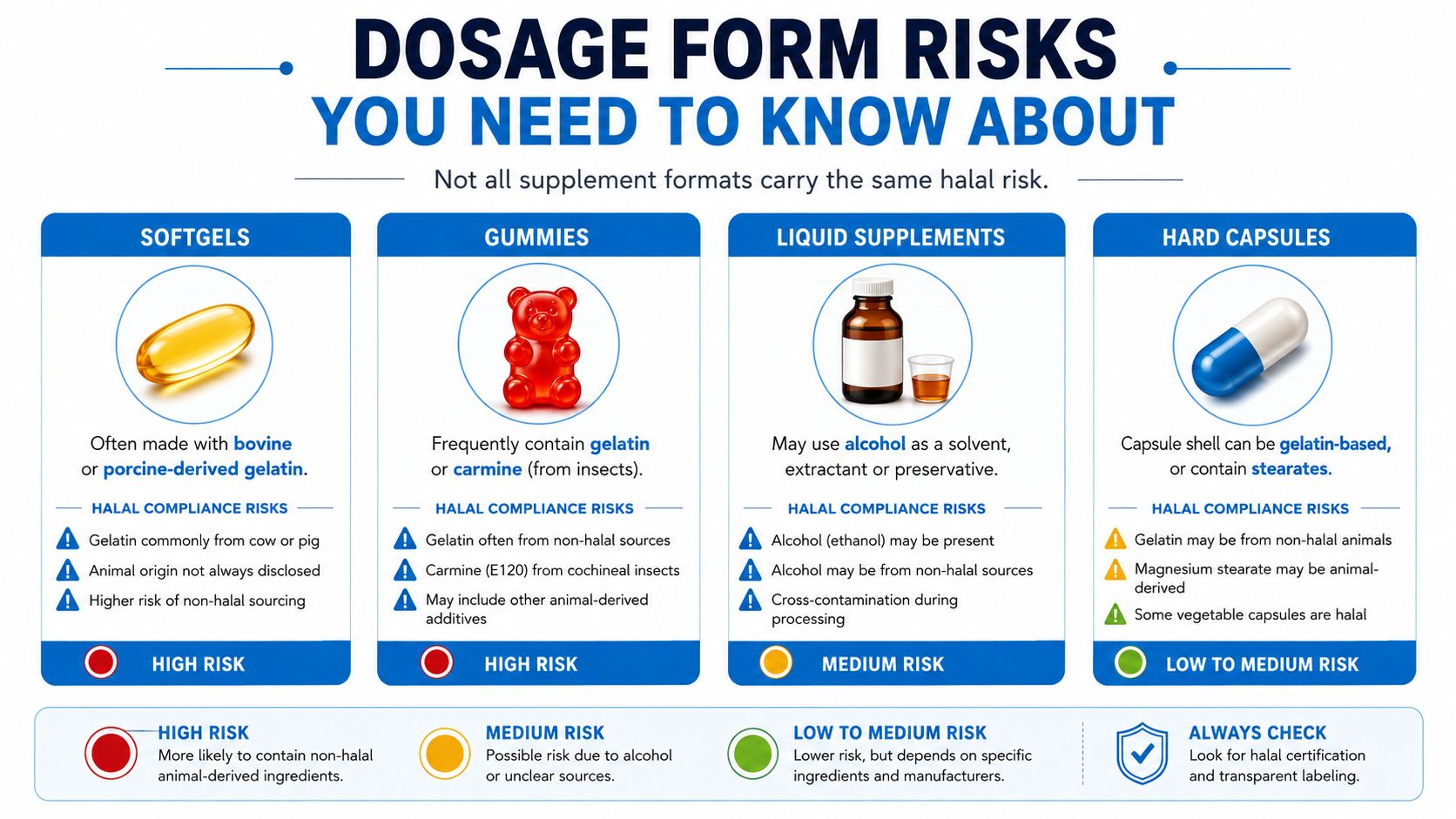
Practical rule: If you want the fastest first pass, start with gummies and softgels, then liquids, then hard capsules. The format often tells you where the hidden risk is most likely to appear.
Recognizing Trusted Halal Certifying Bodies and Their Logos
A halal logo only helps if you know who issued it. A generic stamp without a recognizable certifier can be little more than decoration, especially on product pages where certification details get squeezed into a tiny badge. The name behind the mark matters, and the fastest way to catch hidden risk is to verify that name before you trust the claim.
What the logo is actually telling you
Trusted certifiers such as IFANCA, JAKIM, HFA, and SANHA signal different levels of recognition depending on region and category. The key question is whether the logo points to a real certifying body with a public process, a searchable product record, and clear rules for approval. Recent halal-vitamins guidance emphasizes named certifiers rather than generic halal claims, because the certifier is what makes the claim checkable. 2026 halal multivitamins guidance on certifier verification
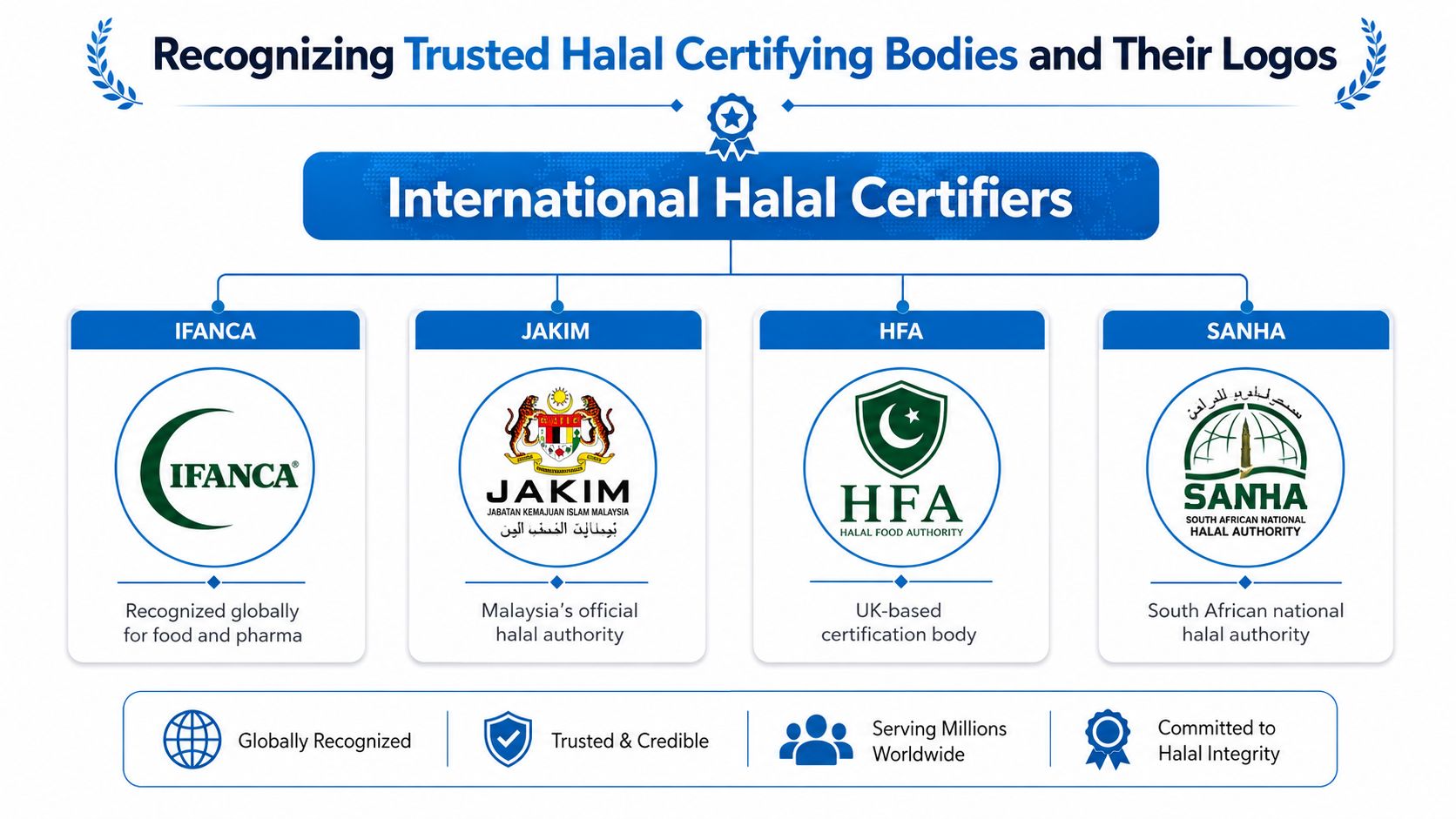
A logo by itself is only a clue. A certifier mark on a gummy bottle, a softgel carton, or a liquid supplement should line up with the product details you can verify elsewhere, because the dosage form can hide different ingredient risks even when the front label looks reassuring. For example, a shopper comparing a gelatin-free gummy such as CalVitamin's halal blueberry gummy formula still needs to confirm the certifier, since the badge matters more than the flavor name.
How to verify a certifier without guessing
Use the logo as the starting point, not the finish line. Check whether the certifier name is spelled out, look for a license number or product code, and cross-reference the product on the certifier's own database if one is available. If the brand only says “halal compliant” but won't name the certifier, that is a weak signal and deserves skepticism.
The same logic applies to products certified by smaller or regional bodies. Some may be legitimate but less widely recognized, so the burden shifts to the shopper to verify the organization, not just the brand claim. If you cannot trace the mark back to an actual certifying body, treat the logo as unconfirmed.
How to Read Supplement Labels Like a Halal Auditor
A front label can look reassuring while the details underneath tell a different story. A gummy, softgel, or liquid may all claim halal status, yet each dosage form can hide a different risk, so the safest habit is to read the label the same way every time and check the parts that usually carry the most uncertainty.
The five checkpoints that matter most
- Check the shell or capsule material. Look for gelatin, HPMC, or pectin. Gelatin needs source verification because the source can change the halal answer, while plant-based shells are usually easier to assess. If you are comparing a capsule product like CalVitamin's vegan women multivitamin with biotin and ashwagandha, the shell material still deserves a close read, even when the overall formula looks plant-forward.
- Scan the other ingredients list. Watch for magnesium stearate, stearates, binders, fillers, and coatings that need source clarity. These ingredients often do the quiet structural work in a supplement, like holding a tablet together or helping it release properly, so they can matter more than the vitamin names on the front.
- Look for alcohol-based ingredients in liquids. Extracts, tinctures, and flavor systems may use ethanol or similar carriers. A liquid can appear simple at first glance, but the carrier system is often where the halal question lives.
- Confirm the colorant source. Ingredients like carmine deserve immediate follow-up. Color is cosmetic on the outside, but the source behind it can still affect the product's status.
- Find the certifier logo and license information. A recognizable certifier mark is far more useful than a generic halal claim, because it gives you something specific to verify instead of a broad marketing phrase.
How to handle unclear wording
Some ingredients are ambiguous by design. Natural flavors can hide multiple carriers, and stearic acid can come from plant or animal sources. If the label does not say, do not assume the best-case scenario. Ask the seller, check the manufacturer's documentation, or choose a product with clearer sourcing.
Practical rule: If you can't trace a questionable ingredient to a halal source in two minutes, that product is still unverified.
A useful shortcut is to focus on the ingredients that do the structural work, not just the vitamins themselves. Shells, coatings, solvents, and colors create most of the confusion, and that is where a careful reader gets an advantage. Generic halal wording is easy to print on a label. A certifier logo with traceable details is what lets you verify the claim before you buy.
Shopping for Halal Vitamins on CalVitamin
Online shopping gets easier when you know what to filter for and what to inspect on the product page. Start with search terms that surface the right category, then use product details to confirm the claim instead of trusting the first badge you see. The more specific you are, the less time you spend sorting through irrelevant items.
Use filters as a first pass, not a final answer
On a large supplement catalog, the best first step is to search for attributes such as halal, gelatin-free, or cruelty-free. Those labels can point you toward products that are more likely to fit halal needs, but they don't replace ingredient review. Product pages should still be checked for the shell material, other ingredients, and any certification documentation that's visible.
Look for product families that often have more halal-friendly options, such as veggie capsule vitamins, plant-based proteins, and herbal supplements. Those categories are not automatically compliant, but they often reduce the number of animal-derived inputs you need to verify. If a product page has reviews, they can help you spot packaging changes or label updates that aren't obvious in the marketing copy.
What to do when the page is incomplete
If a product says halal but doesn't show a recognizable certifier logo, contact customer support and ask for the certifier name, license number, or supporting documentation. That's a normal request, not an inconvenience. A serious brand should be able to explain who certified the product and how the claim can be checked.
For repeat buys, use the wishlist or saved items tools to keep only the products you've already verified. A little structure here saves a lot of label-reading later. The result is a cleaner shopping routine, especially for households that buy the same vitamins month after month.
For a broad starting point, browse the supplement catalog and then narrow by form and label detail. CalVitamin's vitamins and supplements section is a practical place to compare categories before you dig into the ingredient panels.
Common Questions About Halal Certified Vitamins
Are vegetarian or vegan vitamins automatically halal? Not always. A vegan capsule removes some obvious animal risks, but processing aids, colorants, alcohol carriers, and shared equipment can still affect the final product. Check the certifier and the ingredient source, not just the marketing language.
Does halal certification change potency or efficacy? No. It's a sourcing and manufacturing standard, not a promise that the vitamin works better. The point is whether the product aligns with halal requirements while still delivering the same intended nutrient profile.
What if I bought a product before I knew to check certification? Use it only if you can verify the ingredients and certifier now. If you can't confirm the shell, solvents, or logo, replace it with a product that shows its sourcing more clearly.
What if a bottle claims halal but doesn't show a recognizable certifier? Treat it as unverified until the brand names the certifying body and you can cross-check the claim. A halal statement without a traceable logo is not the same as a documented certification.
If you want a simpler way to shop with confidence, start with a catalog that makes ingredient details easier to compare and verify. CalVitamin gives you a straightforward place to look for supplement options, compare labels, and narrow down products that fit halal requirements. When you're ready to buy, use the same checklist from this guide so you can spot the hidden non-halal risks before they end up in your cart.






