

You're standing in the supplement aisle or scrolling late at night, trying to answer a simple question, what is maca root benefits and is it worth buying? The label promises energy, libido support, and hormone balance, but the product can look vague, the claims can sound inflated, and the dosing directions often don't help much. Maca is a good example of a supplement that's been used for a long time, studied in small modern trials, and marketed much more broadly than the evidence really supports.
The cleanest way to understand maca is to start with what it is, then work outward to what it may help with, how much people typically take, and how to judge quality before you spend money. That's the approach most shoppers wish the label gave them. Maca can make sense as a short-term, symptom-targeted herbal option, especially for libido, sexual function, and some menopause-related concerns, but it's not a universal hormone fix.
Table of Contents
- What Maca Root Is and Where It Comes From
- Evidence-Backed Benefits You Can Actually Expect
- Maca Colors and Forms Compared
- How Much Maca to Take and When
- Hormone Myths and What Maca Actually Does
- Side Effects, Safety, and Who Should Avoid Maca
- How to Choose a Quality Maca Supplement
- Smart Ways to Use Maca and Buyer FAQs
What Maca Root Is and Where It Comes From
Maca is a traditional Peruvian root now sold worldwide in powder and capsule forms, and it sits in the same plant family as other cruciferous vegetables. It's the kind of plant that earns its reputation from where it grows as much as from what it contains. Modern product pages often call it a wellness herb, but that's a shortcut. Maca is a root, not a mushroom, not a probiotic, and not a hormone.
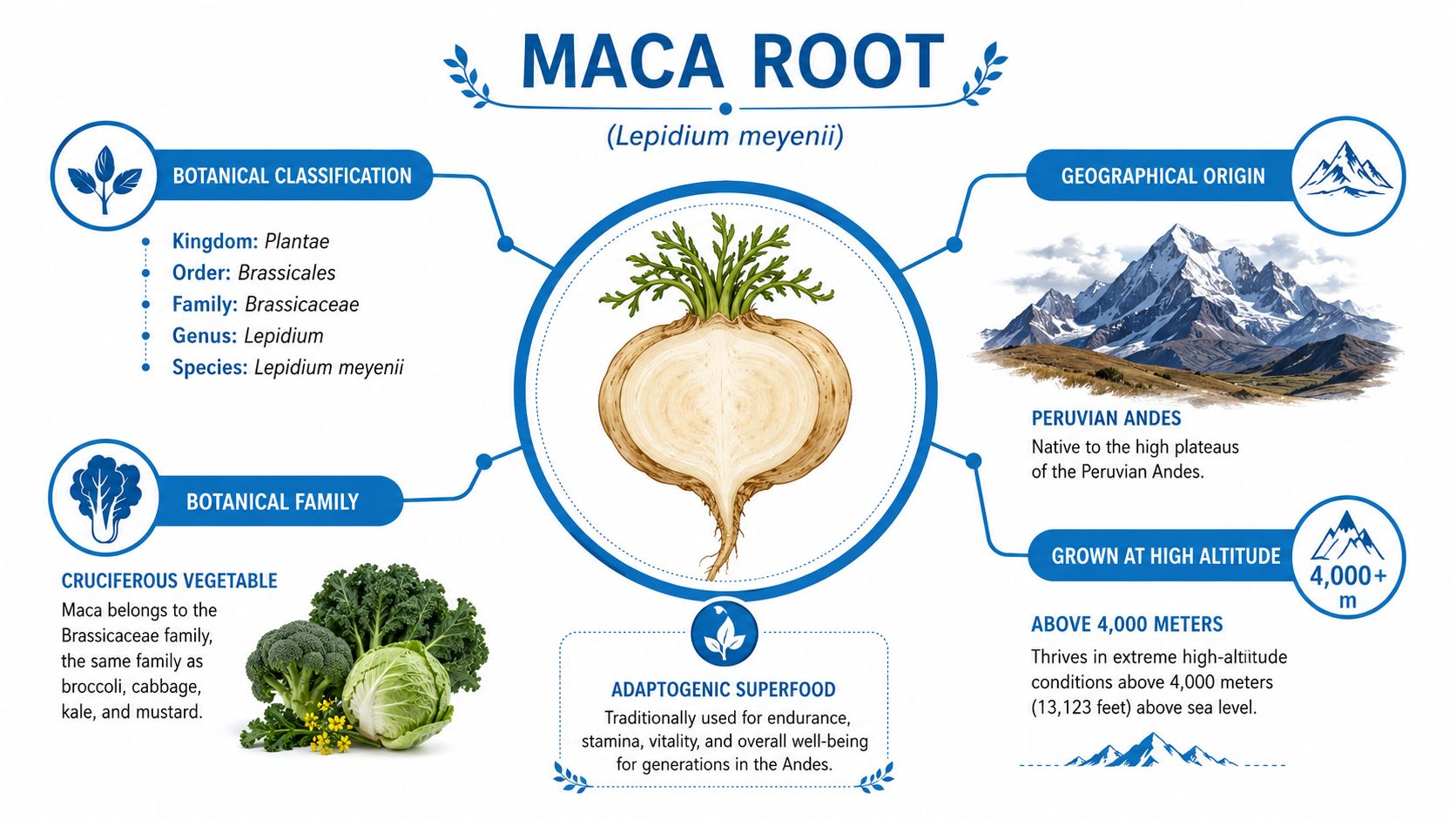
Why altitude matters
Maca's Andean background helps explain its story. The root has been cultivated in the high Andes of Peru, where few crops survive easily, and that harsh environment shaped how local communities used it for stamina, fertility, and resilience. That traditional use matters because it shows why maca became a food-plus-medicine staple, but tradition alone doesn't prove every claim you'll see on a supplement label.
Think of maca a little like a specialty coffee bean. The origin tells you something about the plant's character, but not whether a specific bag is well processed, well tested, or right for your goal. That's why modern evidence matters so much.
The three color types shoppers notice
The most common commercial colors are yellow, red, and black maca. Those colors aren't just marketing decoration, they usually reflect different phenotypes that get discussed in the research literature. Shoppers often see them as interchangeable, but they're often positioned differently, especially when brands are aiming at general vitality, fertility support, or performance-focused buyers.
Practical rule: treat maca as a food-based supplement with a long tradition, not as a miracle powder with guaranteed outcomes.
The important mental model is simple. Maca has a real cultural history, a growing modern research base, and a supplement market built around both. Once you understand that, the benefit claims become easier to sort into maybe, modest evidence, and mostly hype.
Evidence-Backed Benefits You Can Actually Expect
A practical way to judge maca is to narrow the question. Instead of asking whether it “fixes hormones,” ask what outcomes have shown up in human and preclinical research, and whether those outcomes match your goal. A 2024 NIH review found maca effects across 57 preclinical studies, with recurring findings around neuroprotective, anti-inflammatory, immunoregulatory, antioxidant, anti-fatigue, and fertility-related outcomes, and it described maca as generally safe with rare adverse effects and low toxicity in preclinical work (NIH review). That gives maca real scientific attention, while still leaving it in the category of mixed-quality evidence rather than a proven cure-all.
Libido and sexual function
This is the benefit area shoppers hear about most, and it is also the easiest one to explain in plain language. A randomized pilot dose-finding study suggested maca root may help with SSRI-induced sexual dysfunction and libido, with effects that looked dose-related instead of all-or-nothing (NIH review). That pattern matters because it points to a targeted, trial-and-see use, not a universal result for every person.
Clinical summaries also describe maca's traditional use for sexual performance in both men and women, which helps explain why it stays popular in supplement aisles. Tradition can point you toward a plausible use, but it does not guarantee the same outcome for every buyer. Libido support is one of maca's more reasonable short-term goals, especially if you are looking for symptom relief rather than a broad hormone reset.
Fertility, sperm health, mood, and menopause
Human and clinical summaries also connect maca to fertility-related outcomes, including reports involving sperm count and motility, along with studies that mention changes in depression and anxiety inventories or orgasm-related symptoms in women (Healthline review). Those findings do not mean everyone will notice the same effect, but they do explain why maca keeps showing up in reproductive wellness conversations.
For midlife shoppers, maca is also commonly used for menopause symptoms, mood, and energy. The available coverage does not always separate male, female, and older-adult data cleanly, so the clearest way to read it is as a symptom-specific herb rather than a blanket solution for everyone. That is a more useful frame for buying and use than the usual hormone-balancing claims.
Energy and anti-fatigue
“Energy” is one of the main reasons people reach for maca, but the word can mean different things in daily life. For one person, it may mean less afternoon drag. For another, it may mean better workout stamina or a steadier sense of drive.
The evidence is still limited, yet the preclinical research and long traditional use make anti-fatigue one of the more reasonable areas to test maca for yourself. A cautious shopper can treat it like a short-term support tool, especially if the goal is to see whether a food-based supplement changes how you feel during a busy stretch of life.
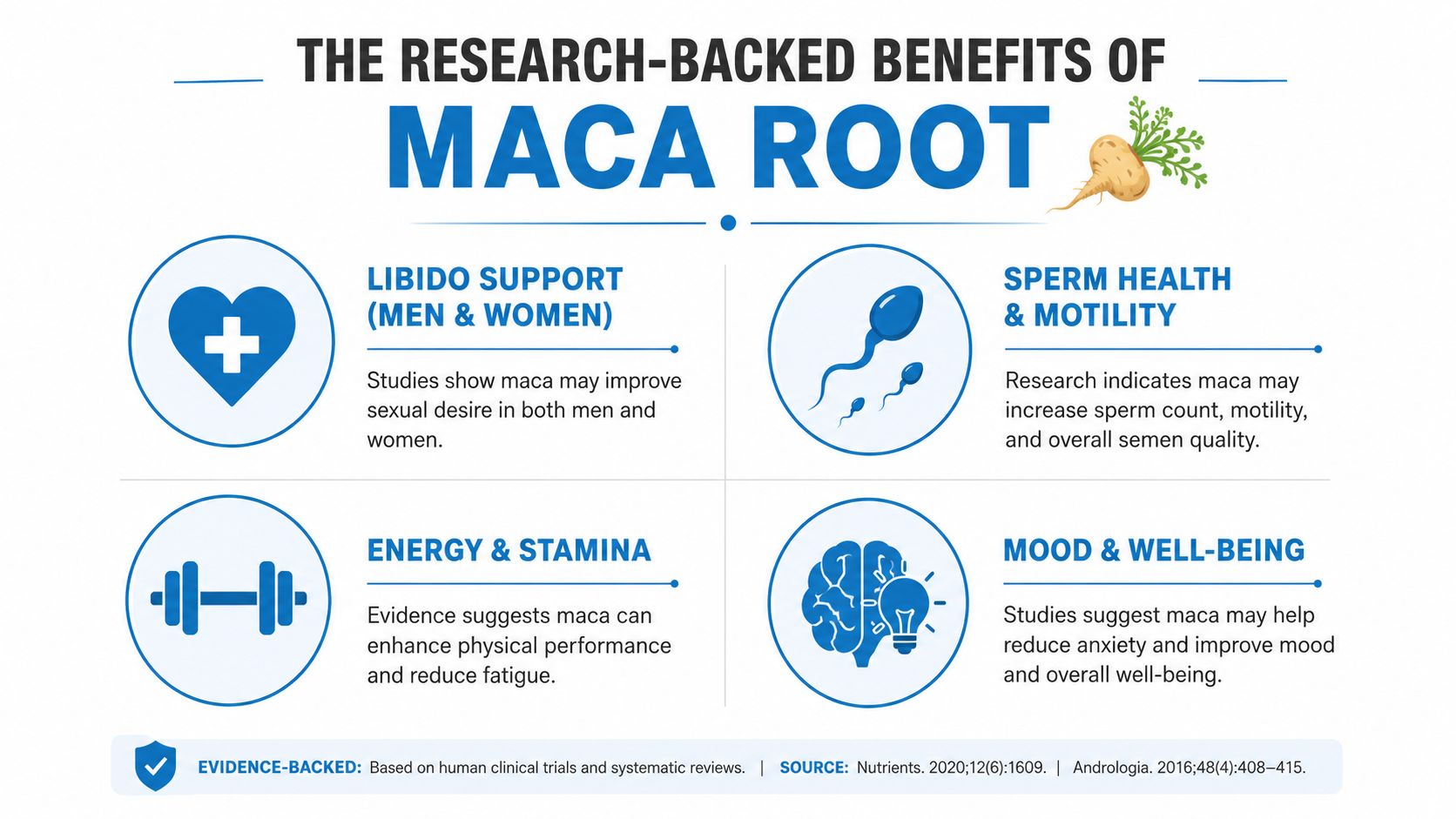
A practical conclusion is the most honest one. Maca has modest human support for libido and sexual function, a broader traditional reputation for fertility and vitality, and a larger body of preclinical research than many shoppers realize. It can make sense for a specific symptom or goal, but it is not magic.
Maca Colors and Forms Compared
The color question confuses a lot of people because brands often imply that one shade is “stronger” in every situation. That's not how the research reads. The three colors are better understood as different starting points for different goals, and the form you choose matters just as much as the color.
Color is a clue, not a guarantee
Yellow maca is the most commonly studied and the one many people use for general wellness. Black maca is often discussed in connection with performance and reproductive parameters, while red maca is usually mentioned in animal and hormone-sensitive research contexts. Those are broad associations, not hard promises. If a bottle claims every color does everything, the label is doing more selling than teaching.
The main forms buyers compare
Powder, gelatinized powder, capsules, and extracts all show up in search results, but they don't behave the same way in real life. Raw powder is the least processed, gelatinized powder is cooked in a way that makes it easier to digest, capsules make dosing simple, and extracts are more concentrated but also less straightforward to compare across brands. If your stomach is sensitive, gelatinized powder or capsules usually make more sense than raw powder.
| Form | Typical Maca Content | Digestion | Best For |
|---|---|---|---|
| Raw powder | Usually plain root powder | Harder on sensitive stomachs | Blending into food, people who tolerate root powders well |
| Gelatinized powder | Cooked, starch-reduced powder | Usually easier to digest | Shakes, oatmeal, and daily use |
| Capsules | Measured powder in capsule form | Convenient and consistent | Simple routines, travel, people who dislike taste |
| Liquid extracts or blends | Varies by product | Depends on formulation | Buyers who want convenience, but dosing can be less clear |
Gelatinization is worth paying attention to because it changes the way the powder feels in the body. It doesn't mean the product contains gelatin. It means the starch has been processed so the root is usually gentler and easier to mix into a routine.
If you're comparing products, a capsule option like this maca capsule format can be easier to fit into a daily schedule than loose powder, especially if you're just testing tolerance. The main idea is to choose the form that helps you stay consistent, not the one with the loudest label.
How Much Maca to Take and When
Maca dosing works best when you treat it like a trial, not a promise. The human-use data suggest a practical range, with maca studied at 2 to 3 grams per day and reported as safe in some reviews at up to 3 g/day for no more than 4 months. That makes serving size and how long you use it part of the decision, not just a label detail.
A simple starting framework
Start at the low end and keep the dose steady for a short period before changing anything. Morning or early afternoon usually makes more sense, since some people notice a little more alertness and do not want that near bedtime.
Practical rule: begin low, stay consistent for a few weeks, and only increase if you are tracking a clear goal like libido, energy, or cycle-related symptoms.
A trial period is often the most useful way to judge maca. Many people use it for 6 to 12 weeks, then pause long enough to see whether the change was real or just a temporary shift. That approach fits the evidence better than treating maca as something to take endlessly without checking results.
What to look for in a routine
Taking maca with food can make it easier to remember and gentler on the stomach. If you take it on an empty stomach, pay attention to whether you feel unsettled or wired, especially in the first few days. People who are sensitive to supplements usually do better with a very simple start, because the goal is to notice how maca affects them, not to stack effects from other products.
A product such as this capsule option can make daily dosing easier when you do not want to measure powder. Capsules are also useful for shoppers who want a routine that is easier to repeat day after day. The most useful choice is the one that matches your goal, your stomach, and the amount you can take consistently.
Hormone Myths and What Maca Actually Does
“Maca balances hormones” is one of the most repeated phrases in the supplement aisle, and it's also one of the least precise. Maca is often marketed like a master switch for estrogen, testosterone, and menopause symptoms, but the current evidence doesn't support that simplistic story. The safer interpretation is that maca may support energy, mood, and sexual function through indirect pathways rather than acting like a hormone replacement.
Why the hormone story gets overstated
Maca is a cruciferous root, but that doesn't make it a direct hormone mimic in the way shoppers sometimes assume. The better framing is symptom support, not endocrine repair. If someone feels less fatigued, more interested in sex, or steadier in mood, that doesn't automatically mean their hormones were “balanced” in a measurable medical sense.
This distinction matters for people who already take hormonal medication or who live with conditions where endocrine claims can be confusing. It also matters for anyone who reads “natural hormone support” and assumes that means risk-free or broadly appropriate for every body.
A more accurate way to think about maca
Maca is best treated as a short-term, symptom-targeted herbal option. That means asking a specific question before you buy it, such as whether you want help with libido, menopausal discomfort, or day-to-day energy. If the answer is vague, the product choice will probably be vague too.
Maca can be useful without being universal. The best supplement claims are the ones that stay narrow enough to test.
That narrower view also helps with expectations. If you're hoping for a dramatic endocrine reset, maca is the wrong tool. If you want a gentle, food-based supplement that may support a specific symptom cluster, it fits the evidence much better.
Side Effects, Safety, and Who Should Avoid Maca
Maca is usually well tolerated, but that does not make it universally suitable. A practical way to think about it is the same way you would approach any active botanical, as something that may be helpful for the right person, at the right dose, for the right goal. Research summaries have reported maca studied at 2 to 3 grams per day without negative side effects in some participants, and one evidence review described an upper bound of 3 g/day for no more than 4 months. Rare adverse effects have also been noted in preclinical work, so the safest reading is that maca is generally low risk for healthy adults, but still worth using thoughtfully.
Common tolerability issues
The most common complaints are fairly mild. Some people notice digestive upset, especially with raw powder, while others feel overly alert if they take it late in the day. Headaches can happen too, although they are not the usual response.
Those reactions do not automatically mean maca is a bad fit overall. They usually mean the form, amount, or timing does not suit that person well, much like a coffee drink that is fine in the morning but not at night.
Who should be cautious
People with thyroid conditions should be careful, especially with cruciferous-root products. Anyone who is pregnant or breastfeeding should avoid self-experimenting, because the evidence is too thin to make a confident recommendation. People taking medications for blood pressure or blood sugar should also check with a clinician first, since even mild effects can add to the effect of those drugs.
If you are already managing a medical condition, maca should be treated as a supplement with a purpose, not as a general wellness add-on. That keeps the decision tied to your situation instead of to broad marketing claims.
A quick safety checklist
- Start with a low dose: This helps you see whether your body reacts before you increase it.
- Use a daytime schedule: If maca feels stimulating, take it earlier rather than at night.
- Avoid guesswork with conditions: Thyroid disease, hormone-sensitive conditions, pregnancy, and breastfeeding all deserve professional guidance first.
- Watch the label closely: Blends can include other herbs that change the safety picture completely.
If you want an example of how brands package maca in a multi-ingredient format, this maca complex shows the kind of product label shoppers often need to read carefully.
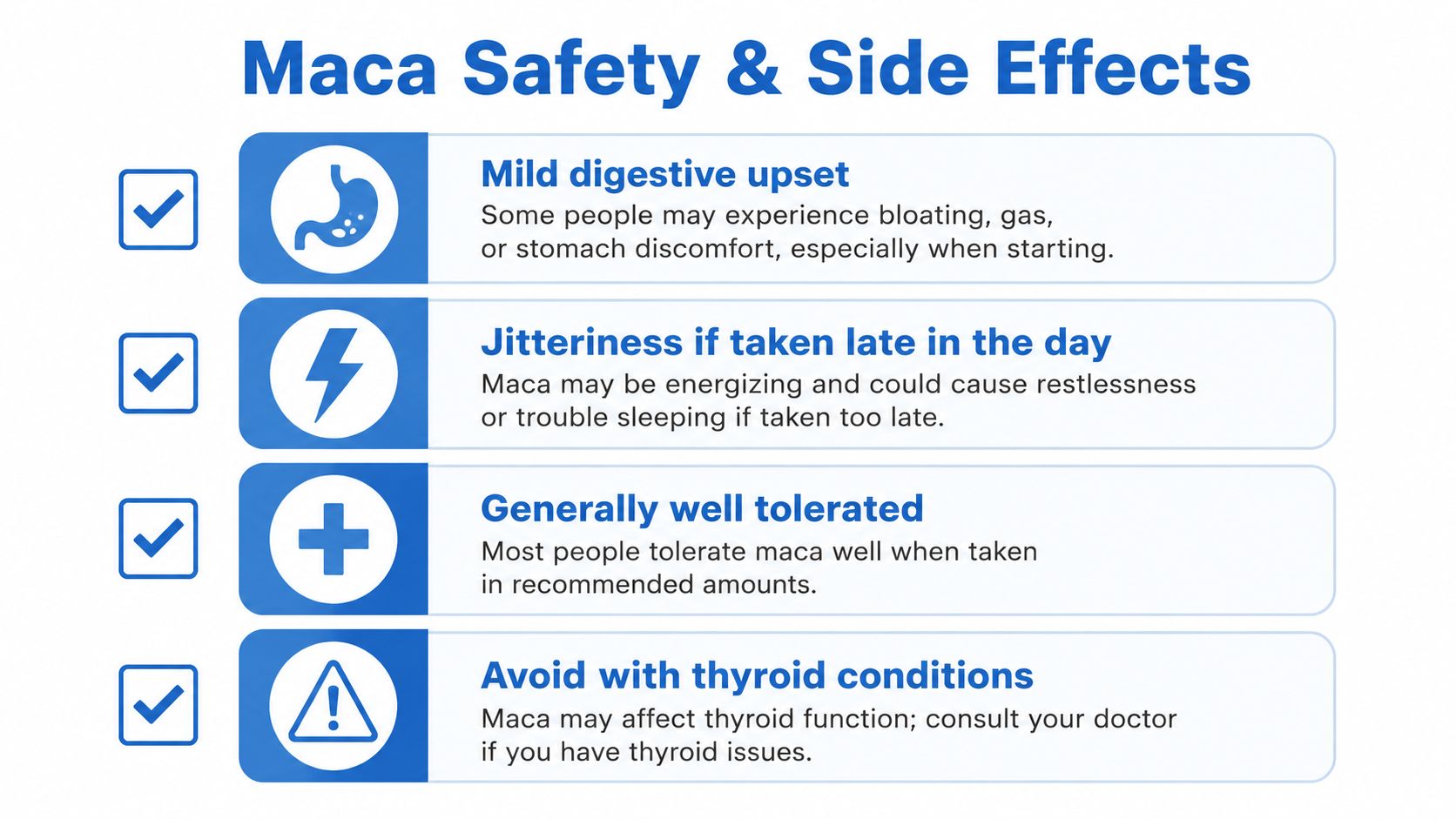
The bottom line is straightforward. Natural does not mean harmless, and maca is no exception. It is usually well tolerated, but sensible use still means matching the dose, the timing, and your health situation.
How to Choose a Quality Maca Supplement
The label tells you more than the marketing page if you know what to scan for. A quality maca product should clearly name Lepidium meyenii, disclose the form, and tell you where the root came from. Peruvian sourcing matters for authenticity, and transparent labels are usually more trustworthy than vague “root blend” language.
What a good label should show
Look for a product that gives you the species name, the color or blend, and a realistic serving size. If the dose is tiny enough to look impressive on the front of the bottle but meaningless in practice, that's a red flag. You also want some sign of quality control, like third-party testing or a clear quality seal.
The ingredient list should be short if you want pure maca. Once the bottle starts mixing maca with things like shilajit, tribulus, or other herbal add-ons, the product may be convenient, but it becomes harder to know which ingredient is doing what. That doesn't make blends useless, it just makes them harder to evaluate.
Gelatinized or raw
If you already know your stomach is sensitive, gelatinized maca is usually the safer first bet. Raw powder can work for people who tolerate it well, but the easier-to-digest version is often a more practical buy for daily use. If you want a simple example of a blended or multi-ingredient approach, this maca complex shows how brands package maca inside a broader formula, which can be convenient but also less transparent for dosing decisions.
Buying rule: choose the shortest label that still gives you the details you need, species, sourcing, form, and serving size.
If a brand won't tell you where it sourced the root or how much maca you're getting per serving, keep looking. A good supplement should make it easy to compare products in under a minute, not force you to decode a marketing puzzle.
Smart Ways to Use Maca and Buyer FAQs
A practical maca routine starts with a simple question, what are you trying to get out of it? If you want to test maca as a short-term, symptom-focused supplement, pick the form that fits your daily routine, choose a color that matches your goal, and begin with the lower end of the typical human study range. Give it time to show whether it helps before you decide to keep it in your routine, and treat it like a trial rather than a permanent fix.
That approach matters because maca is often sold as if it solves everything at once. In real use, it works better as a targeted option for specific concerns than as a universal hormone balancer. If a product seems promising, use it consistently for a short period, then check whether the change is noticeable in daily life.
Fast answers buyers usually want
How long does maca take to work?
Some people notice a difference within a few weeks, while others do not feel much at all. That spread is normal. If you have given it a fair trial and nothing has changed, the product may not be a good match for your goal.
Can you take maca with coffee?
Many people do, especially in the morning. If the combination feels too stimulating, split them up or move maca to an earlier part of the day. A supplement that feels fine on paper can still be too much once it is paired with caffeine in real life.
Can maca be combined with ashwagandha or shilajit?
Yes, people do combine supplements, but mixes make it harder to tell which ingredient is helping and which one is causing side effects. If you are trying maca for the first time, it is usually smarter to use it by itself first. That gives you a cleaner read on whether maca is doing anything useful for you.
Can vegans use maca?
Yes. Maca itself is plant-based, and vegan shoppers can also look for capsule products that use non-gelatin materials. The root and the capsule are separate questions, so it helps to check both the ingredient panel and the capsule material before buying.
A simple buying rule helps here. Start with a clean product, keep the dose modest, and pay attention to whether the result is practical, not just interesting. If a maca supplement fits your routine and supports the symptom you are trying to manage, that is useful. If it does not, you can leave it out without losing much.
A CTA for CalVitamin.






