
You've probably seen fresh turmeric root in a produce bin, paused for a second, and wondered what to do with it. It looks powerful, stains everything it touches, and gets talked about like both a kitchen spice and a wellness ingredient. The confusion is understandable, because raw turmeric root sits right at the intersection of food, tradition, and modern supplement science.
People have used turmeric for medicinal purposes for nearly 4,000 years in Ayurvedic medicine, and today it still shows up in kitchens, teas, and capsules alike, according to WebMD's turmeric guide. The challenge is that the fresh root isn't the same thing as a standardized curcumin extract, so the best choice depends on what you want it to do.
Table of Contents
- Introduction to Raw Turmeric Root
- What Is Raw Turmeric and Its Active Compounds
- The Science-Backed Health Benefits
- Choosing Storing and Preparing Fresh Turmeric Root
- Raw Root Powder or Supplement A Clear Comparison
- Safety Dosing and Potential Side Effects
- Simple Ways to Add Raw Turmeric to Your Diet
Introduction to Raw Turmeric Root
Fresh turmeric root earns its reputation from two places, its long history in kitchens and herbal traditions, and its chemistry, which can be discussed in practical terms. It is easy to focus on the “natural” appeal of the fresh root, but that appeal only tells part of the story. What matters in real use is how much of the active material you get, how you plan to use it, and whether food-level use is enough for your goal.
The root comes from Curcuma longa, a plant in the ginger family, and that family resemblance matters because both are aromatic underground stems rather than ordinary vegetables. The Linus Pauling Institute identifies turmeric as a rhizome and notes that it is generally recognized as safe in the United States as a food additive. That makes it a familiar culinary ingredient, not an odd one, and it explains why people often start with fresh root before considering capsules or extracts.
Practical rule: treat raw turmeric root first as a whole food spice, then decide whether your goal is flavor, general wellness, or more targeted support.
That distinction prevents a common mistake. Fresh root can brighten a curry, blend into a drink, or fit into a food-based wellness routine, but it is not automatically the strongest choice for every health aim. Standardized supplements are built for more predictable delivery, while the raw root offers more flexibility at the table and a more traditional way to use the plant. The rest of this guide keeps that trade-off in view so you can choose the form that fits your needs.
What Is Raw Turmeric and Its Active Compounds
The plant part you're actually buying
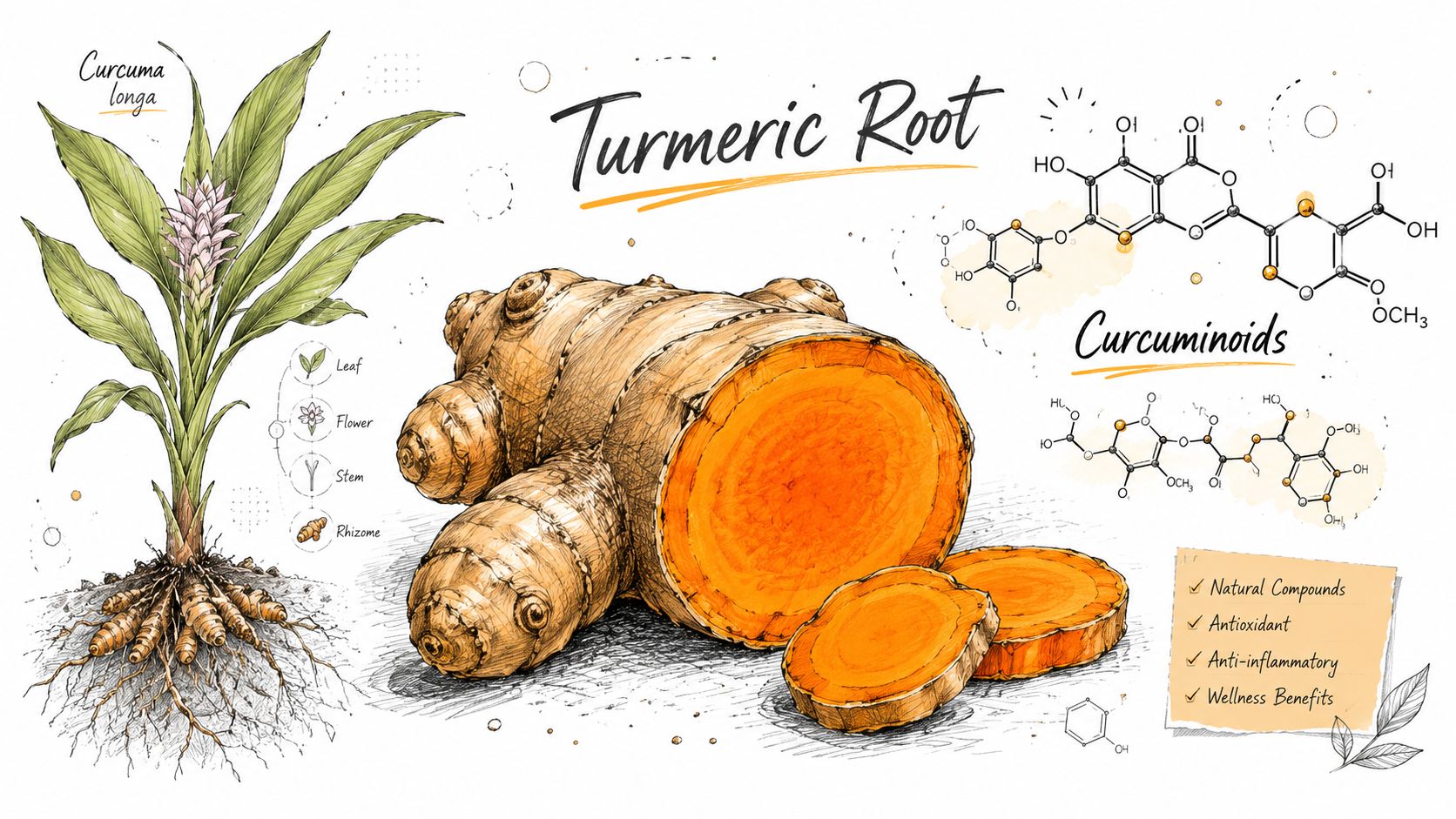
Raw turmeric root is the rhizome of Curcuma longa, which means it's the underground stem the plant uses to store energy and bioactive compounds. That matters because a rhizome isn't just “root” in the everyday sense, it's a concentrated plant structure with a dense chemical profile. The National Center for Biotechnology Information describes it as a chemically complex matrix with more than 100 isolated constituents.
A simple comparison helps here. Ginger and turmeric are cousins in the same family, and both are sold as knobby underground stems that you grate, slice, or blend. The difference is that turmeric's bright yellow-orange color and distinct aroma come from a different mix of compounds, which is why it feels more medicinal and more culinary at the same time.
The compounds that matter most
Two groups of compounds do most of the work. Curcuminoids, including curcumin, get most of the attention because they're the compounds tied to many of turmeric's wellness claims. Volatile oils, especially turmerones, shape the aroma and add to the root's overall chemical behavior, including how it performs in recipes and preparations. NCBI's review also notes that the rhizome contains both curcuminoids and essential oils as the major pharmacologically active secondary metabolites.
That's why the fresh root isn't just “a curcumin source.” It's a mixed phytochemical package. Drying, slicing, and extraction can all change the final balance of compounds, so the form you use matters as much as the plant itself.
The fresh root is best thought of as a complex ingredient, not a single isolated compound.
For readers trying to match turmeric to a specific goal, that distinction is important. The whole root offers flavor, color, and a broad natural matrix. A supplement, on the other hand, aims to isolate and standardize a smaller set of actives.
The Science-Backed Health Benefits
Raw turmeric root draws attention because it sits high on the antioxidant ladder. Nutrition and You reports a total ORAC value of 159,277 µmol TE per 100 g, placing turmeric among the highest-antioxidant herb and spice species known. That doesn't mean it's a cure-all, but it does explain why this root has stayed relevant in both folk use and modern wellness routines. Nutrition and You's turmeric profile also notes that a few grams per day can supply enough nutrients to support general health.
Why antioxidant language matters
Antioxidants help the body manage oxidative stress, which is the kind of damage linked to unstable molecules in everyday metabolism. In plain language, they act like maintenance support for cells under pressure. Turmeric's reputation comes from fitting into that conversation naturally, especially when people want a food-based way to support overall vitality.
The anti-inflammatory side matters too. Curcumin has become the best-known turmeric compound because it's studied for its role in calming inflammatory pathways, and that's why people often connect turmeric with joint comfort and recovery support. For a deeper supplement-style option, some readers compare raw root with a curcumin extract formulation, especially when they want a more concentrated product than kitchen use can provide.
What raw turmeric can and can't promise
The strongest practical takeaway is balance. Fresh root can contribute useful plant compounds, but the evidence does not support treating it like a high-powered drug. Think of it as a functional ingredient that may fit into a broader pattern of healthy eating, not as a standalone fix.
Good use case: food-first wellness routines where flavor, tradition, and moderate bioactive intake all matter.
People looking for broad health support often do better with realistic expectations. Raw turmeric root can be part of that picture, but it works best when you see it as one tool, not the whole toolkit.
Choosing Storing and Preparing Fresh Turmeric Root
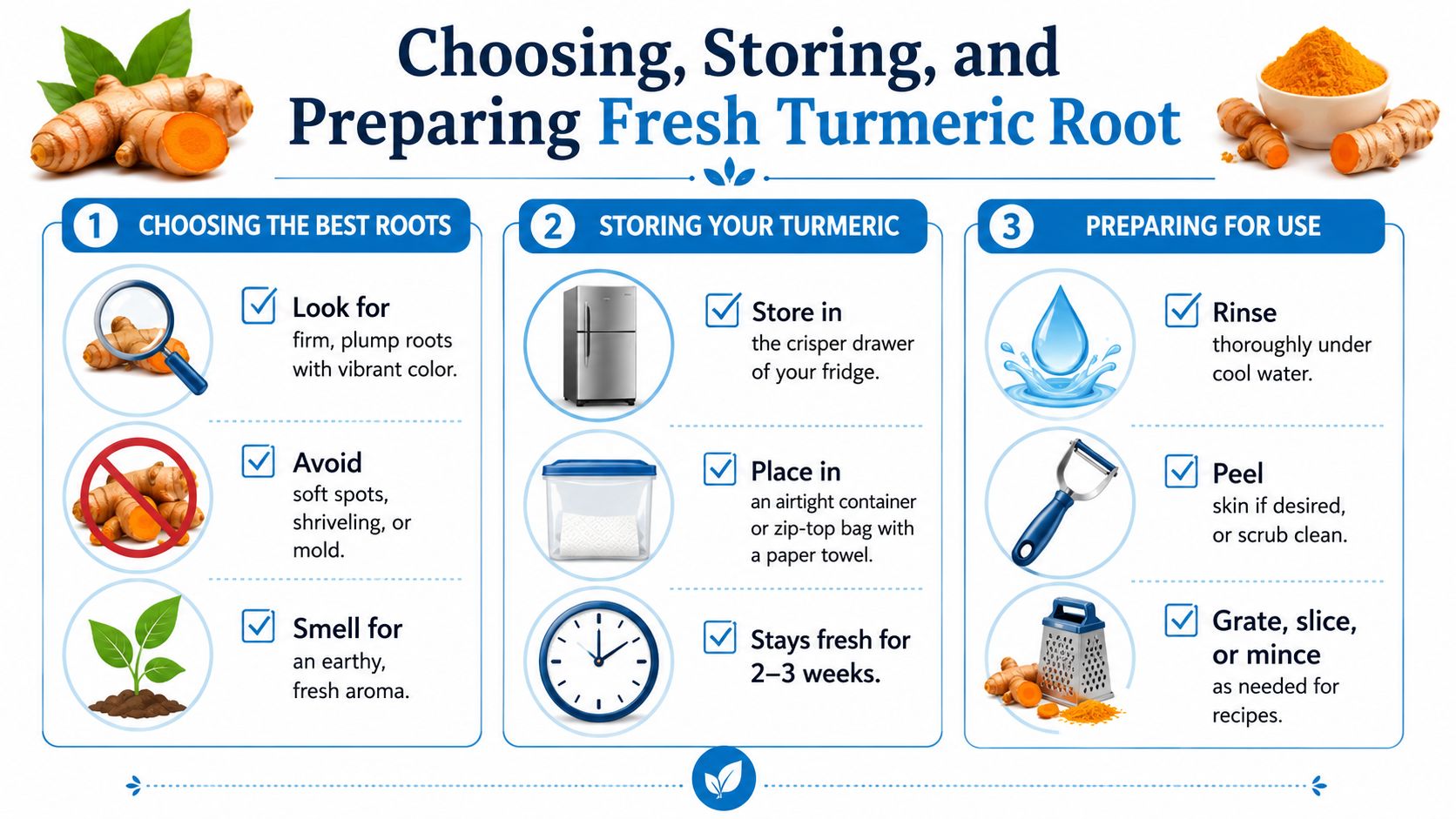
Fresh turmeric root should feel firm in your hand, with smooth skin and a clean earthy aroma. Choose plump pieces that look intact, and skip any root that feels soft, shriveled, moldy, or mushy. That quick check matters because fresh root carries the flavor, color, and scent people usually want from the whole-food form.
How to store it without wasting it
Refrigeration works well for short-term storage. Place the root in an airtight container or a zip-top bag with a paper towel inside so extra moisture does not collect. If you want to keep it longer, freezing is a practical choice, especially if you like to grate only what you need.
A loose root left in the fridge drawer dries out faster and becomes harder to use later. A closed container keeps it cleaner, slows moisture loss, and makes prep easier when you reach for it again.
If you buy a larger amount for cooking, a pantry-style option such as turmeric root powder for everyday use can help bridge the gap between fresh root and convenience, especially when you want the ingredient ready for repeat recipes.
How to prepare it for food and drinks
Start by rinsing the root under cool water. You can peel it for a smoother texture, or scrub it clean if the skin is thin. After that, grate, slice, mince, or juice it based on the recipe and the texture you want.
Fresh turmeric is often used because it brings color and aroma in a direct, kitchen-friendly way. It is also more variable than a standardized supplement, which is useful to keep in mind if you are choosing between a cooking ingredient and a more consistent capsule form. For a broader overview of supplement-style use, WebMD discusses turmeric in that context.
Be ready for staining. Turmeric can color cutting boards, cloth, and fingertips quickly, so use a dedicated board if you have one, wash tools promptly, and wear gloves if you are handling a large amount.
A small amount goes a long way in color, aroma, and mess.
If you plan to make a topical paste, test it on a small patch of skin first. Fresh turmeric is common in homemade masks, but skin reactions can vary, and bright plant ingredients deserve a little caution.
Raw Root Powder or Supplement A Clear Comparison
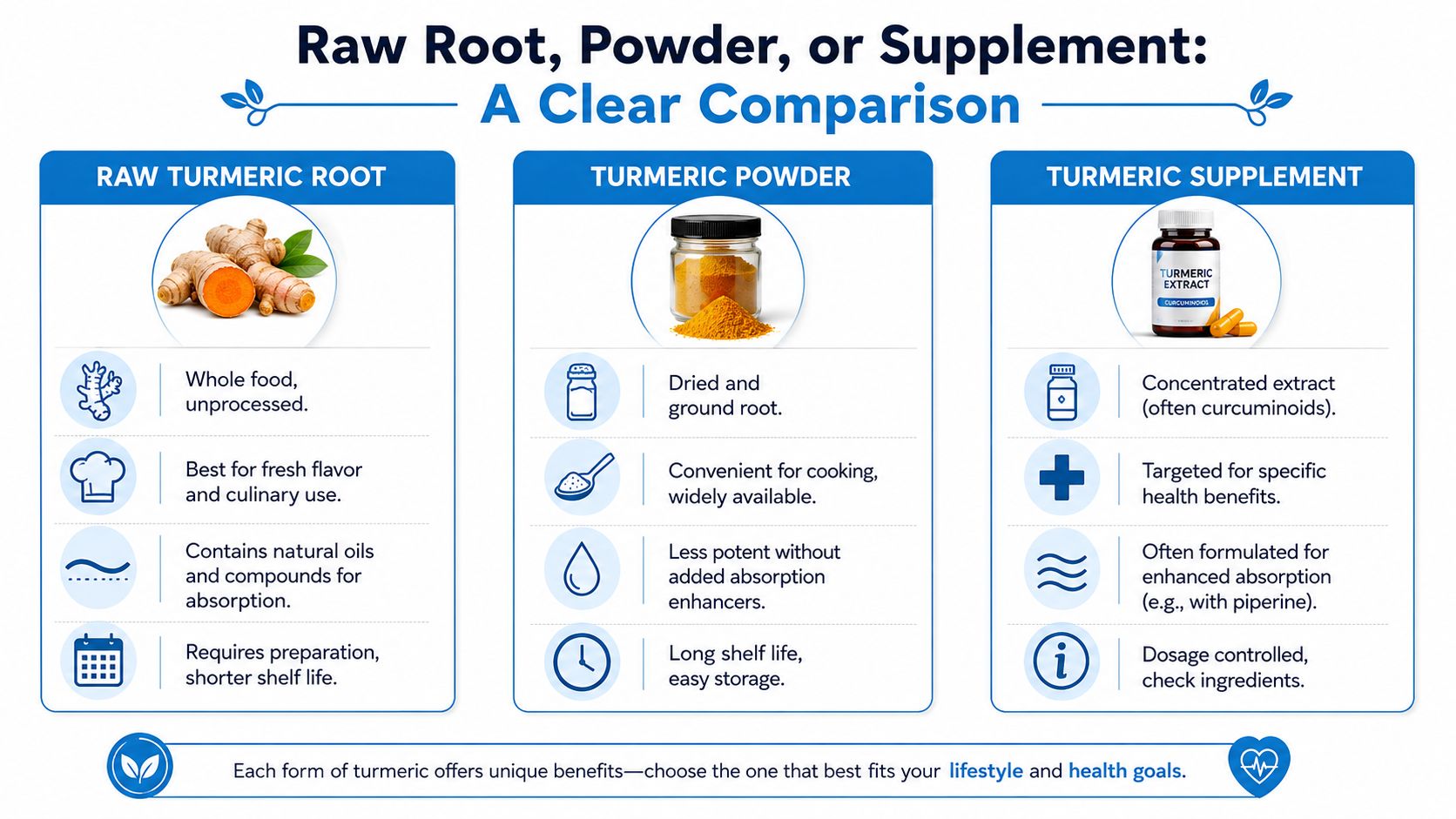
Fresh root, powder, and supplements all come from the same plant, but they solve different problems. The confusion usually starts when people expect the whole root to act like a capsule, or they expect a capsule to behave like a kitchen spice. Those are not the same job.
Raw root for food-first use
Raw turmeric root is the whole-food form. It's best when you want fresh flavor, a natural aroma, and a simple ingredient you can grate into cooking. Because it still includes the root's natural oils and compounds, it feels close to the plant, which is part of its appeal.
The trade-off is convenience. Fresh root has a shorter shelf life and needs prep work before you use it. It fits recipes well, but it's not the easiest option for people who want a consistent daily routine.
Powder for storage and routine cooking
Turmeric powder is dried and ground root, so it stores well and is easy to sprinkle into food. That makes it a practical pantry ingredient, especially for soups, rice, sauces, and spice blends. It's a step away from the fresh root, but it's still very usable in everyday cooking.
Supplements for targeted support
Curcumin supplements are different again. They're usually concentrated extracts, often designed for more controlled dosing and enhanced absorption. Johns Hopkins Medicine notes that curcumin is poorly absorbed without special formulations, which helps explain why the “more natural” choice isn't always the most effective choice for specific symptom relief. That's the key trade-off: raw root feels more natural, while supplements are built for delivery.
Decision rule: choose raw root for cooking, powder for easy pantry use, and supplements when you need more targeted, formulation-aware support.
If you're comparing forms side by side, the difference is usually intention, not just ingredient. For a pantry-friendly version of the root, you can look at this turmeric powder option, then decide whether your real need is flavor, routine use, or a more concentrated supplement approach.
Safety Dosing and Potential Side Effects
Turmeric has a strong reputation for being gentle, and that's mostly fair in food amounts. The caution starts when people shift from spice-level use to larger, concentrated intake. The National Center for Complementary and Integrative Health says turmeric is generally safe as a food spice, but there isn't definitive evidence for broad health benefits from the raw root, and higher-dose curcumin supplements can bring side effects and other concerns.
What a reasonable approach looks like
A culinary amount is the safest starting point. That means using fresh turmeric the way you'd use ginger or garlic, as part of meals, teas, or blended drinks rather than as a large daily dose taken on an empty stomach. Harvard Health says turmeric and curcumin are generally well tolerated up to 8 g per day, but higher doses can cause abdominal pain, nausea, and diarrhea.
That figure is useful because it shows the boundary between food use and heavy supplementation. It doesn't mean everyone should aim for that amount, it means the ingredient has a tolerable range when used thoughtfully.
Who should be more careful
People with sensitive digestion should pay attention to how their body responds, especially if they're new to turmeric. Anyone using it alongside other concentrated supplements should also think about total intake, not just one product at a time.
The biggest practical point is this. Food use is not the same as therapeutic use. If you want the flavor and the general wellness feel, keep it culinary. If you're trying to address a specific symptom pattern, talk with a clinician before moving into supplement territory.
Safety first: use raw turmeric root as a spice, not as a self-prescribed high-dose treatment.
That approach protects you from the common mistake of assuming “natural” always means harmless. With turmeric, dose and form matter as much as the plant itself.
Simple Ways to Add Raw Turmeric to Your Diet
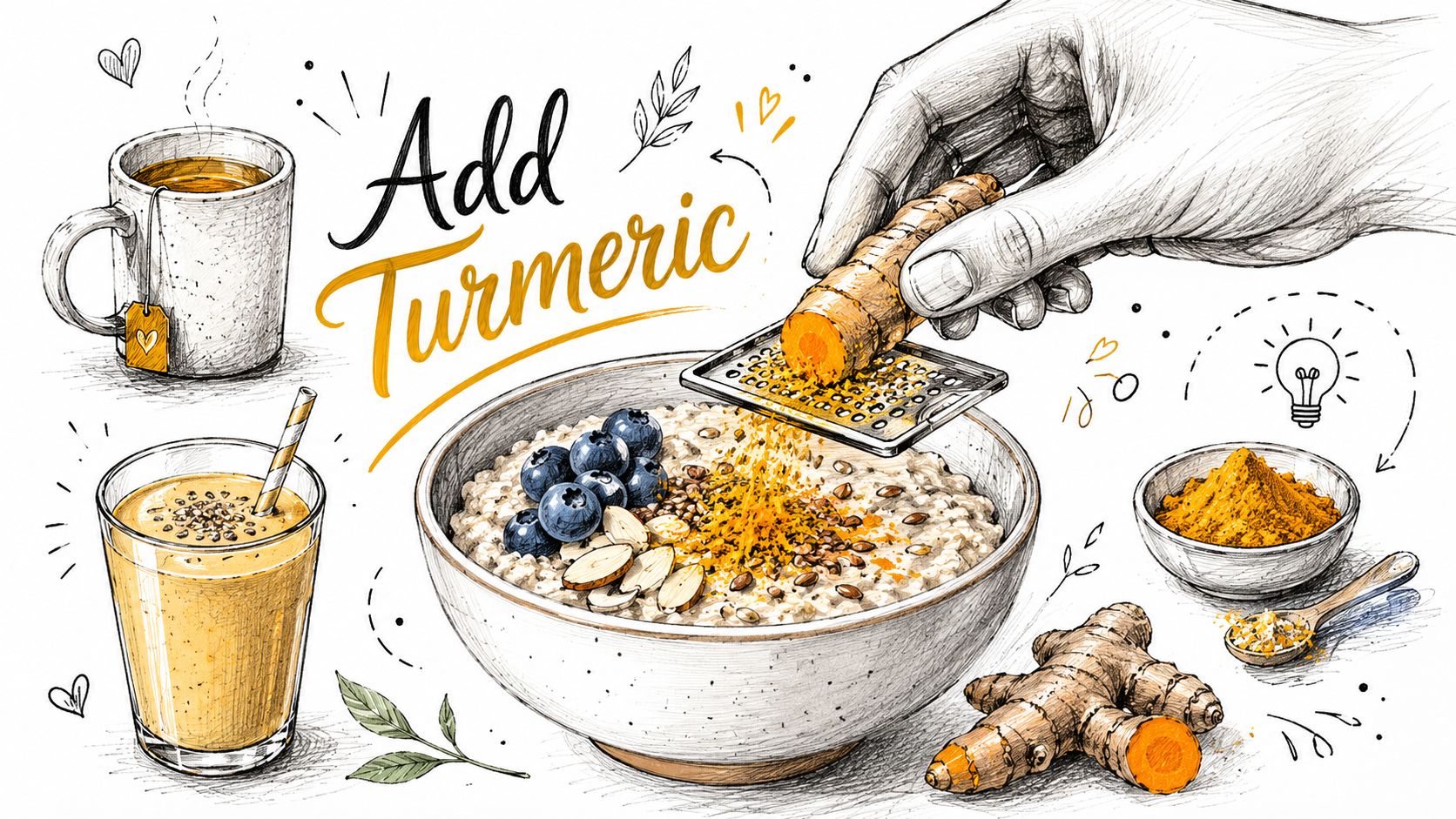
Fresh turmeric works best when you keep the first uses simple. The flavor is earthy, slightly bitter, and bright enough to stand out in small amounts, so you don't need elaborate recipes to make it useful. If you want more ideas beyond the basics, the recipe archive at CalVitamin's blog recipes page can give you a few starting points.
Easy ways to use it today
- Turmeric tea: Simmer thin slices or grated root in hot water, then strain and drink it warm. Add ginger or lemon if you want a sharper taste.
- Golden milk style drink: Blend grated turmeric with warm milk or a non-dairy milk, then stir well so the spice doesn't settle at the bottom.
- Smoothie boost: Add a small piece of peeled root to fruit smoothies, especially mango, pineapple, or banana blends, where the flavor softens naturally.
- Savory cooking: Grate it into rice, lentils, soups, or roasted vegetables for color and a deeper earthy note.
The easiest habit is the one you can repeat. Start with a small amount in food, then adjust based on taste and tolerance. Fresh turmeric tends to work best when paired with ingredients that already taste good together, not when it's forced to carry a recipe alone.
If you're the kind of person who likes a ritual, keep a small piece in the fridge and use it the way you'd use fresh ginger. Grate a little into breakfast, stir it into soup at lunch, or add it to a drink before dinner. The goal is consistency, not intensity.
If you want help choosing between fresh root, powder, and a more concentrated turmeric product, visit CalVitamin and compare the options that match your routine, your taste preferences, and the level of support you want.






