

You're probably here because you opened a probiotic label and felt like you were decoding a chemistry quiz. One bottle says Lactobacillus acidophilus. Another says Bifidobacterium bifidum. A third says both, plus a giant CFU number that sounds impressive but doesn't tell you much on its own.
That confusion is normal. Probiotics are often marketed as if more strains and bigger numbers automatically mean better results, but that's not how smart probiotic choices work. With acidophilus with bifidus, the primary value is the partnership. These are two of the best-known probiotic groups, and they're often paired because they support different parts of the gut environment in complementary ways.
Table of Contents
- Your Guide to Probiotic Combinations
- Understanding the Acidophilus and Bifidus Team
- Proven Health Benefits of This Probiotic Duo
- How to Choose a Quality Supplement
- How to Use Your Probiotic Effectively
- Understanding Safety and Side Effects
- Frequently Asked Questions
Your Guide to Probiotic Combinations
Think of the gut like a long neighborhood, not one single room. Different microbes tend to do better in different conditions, and that's why combinations often make more sense than a single-name probiotic. Acidophilus and bifidus are a classic pair because they're not redundant. They play different roles, and that “with” on the label matters.
A useful way to read probiotic labels is to separate three ideas:
The family name
This is the broad group, like Lactobacillus or Bifidobacterium.The species name
This gets more specific, like acidophilus or bifidum.The strain
This is the most detailed identifier. It's a bit like a dog breed within a species. Two probiotics can share a species name and still behave differently.
If that sounds technical, here's the easy version. A strain is like a last name plus first name plus house number. If the label only gives you part of the address, you don't know exactly who's there.
Practical rule: Don't buy a probiotic just because you recognize one word on the front of the bottle.
You'll also see CFU, which stands for colony-forming units. In plain English, that means the number of live microbes the product is designed to deliver. More CFUs aren't always better. The better question is whether the formula uses the right organisms, in a form that can survive storage and make it through digestion.
When people ask about acidophilus with bifidus, they're usually trying to solve something practical: bloating after meals, irregularity, support after antibiotics, or a general sense that digestion feels off. This combination is popular because it aims at balance rather than a one-note fix.
Understanding the Acidophilus and Bifidus Team
What acidophilus and bifidus mean
The phrase acidophilus with bifidus matters because it points to a partnership, not just a list of ingredients on the label.
Lactobacillus acidophilus is a species of probiotic bacteria that is often discussed in relation to the upper digestive tract, especially the small intestine. One of its better-known traits is producing lactic acid. That helps create an environment that favors helpful microbes and makes it harder for less-helpful ones to thrive.
Bifidus is the common shorthand for Bifidobacterium species such as B. bifidum, B. longum, and B. lactis. These bacteria are more often associated with the large intestine, where they help ferment fibers and support the balance of the gut community farther down the digestive tract.
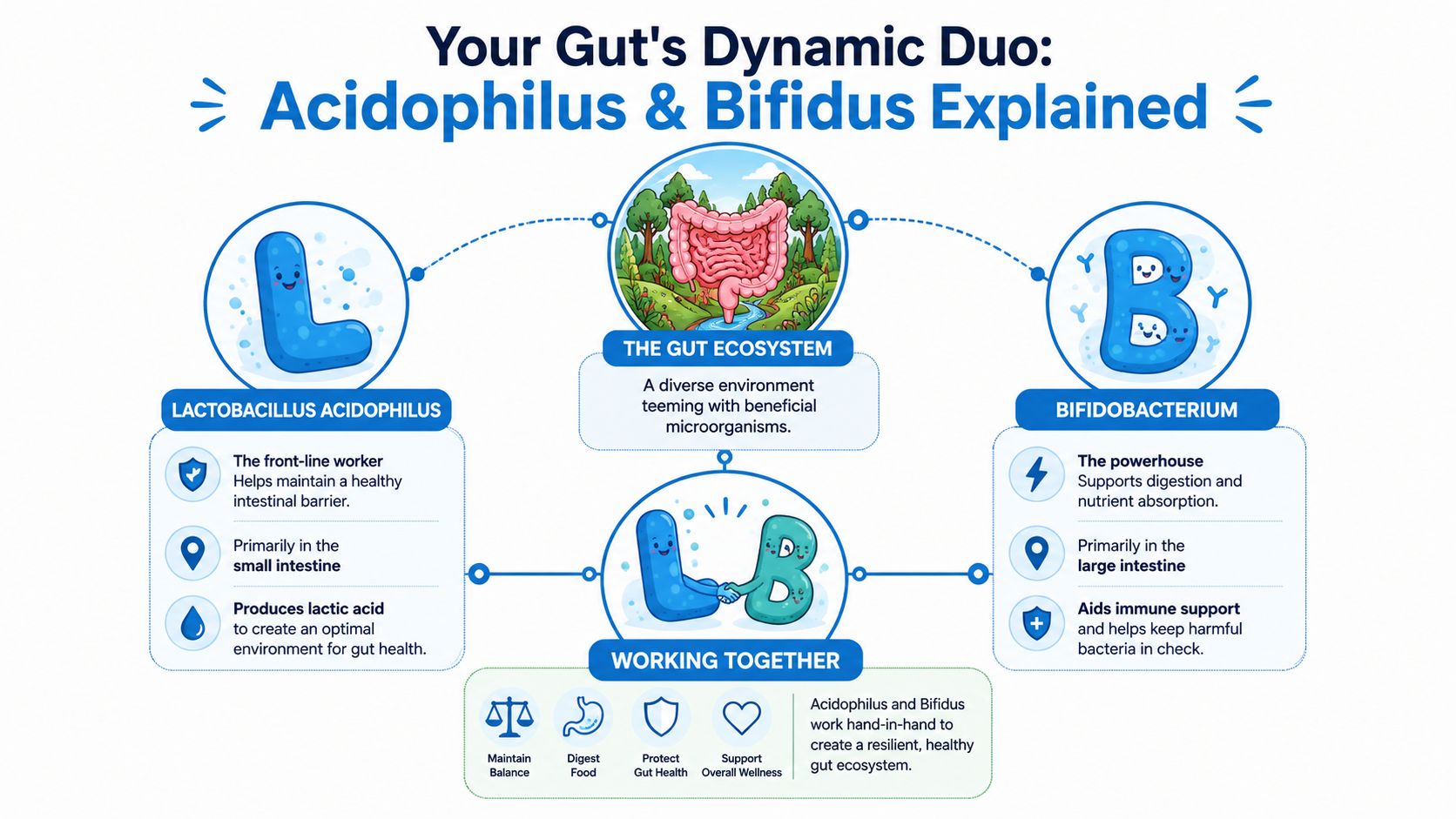
This is a point that often confuses shoppers. Acidophilus is one species name. Bifidus usually refers to a broader group of Bifidobacterium species. So you are not comparing two identical things. You are looking at two different parts of the probiotic world that often work well together.
Why the combination matters
The main advantage of combining them is coverage across different regions of the gut.
Acidophilus is often chosen for support closer to where food first moves through digestion. Bifidobacteria are often chosen for support in the colon, where fiber fermentation and stool regularity are more closely tied to daily comfort. Put those roles together, and the formula makes more sense. One group helps shape conditions earlier in digestion, while the other supports the microbial balance farther along.
That is the meaning of synergy here. The value is not that one strain does everything. The value is that different organisms can contribute in different places and in different ways.
You can see why that matters in everyday life. Someone with post-antibiotic digestive disruption may want broader support than a single organism provides. Someone dealing with irregularity, gas, or discomfort after travel may also prefer a combination that supports more than one part of the gut environment. If diarrhea is part of the picture, this guide to diarrhea relief and better gut health can help you think through the bigger picture.
A label that includes acidophilus and bifidus is often trying to create that wider range of support. The key is not just seeing both names. The key is understanding why they are paired in the first place.
Proven Health Benefits of This Probiotic Duo
Better digestive comfort through teamwork
A common real-life pattern goes like this. Someone eats a normal meal, then ends up feeling unusually full, gassy, or off for hours afterward. That is one reason combination probiotics get attention. The goal is not to force digestion. The goal is to support a gut environment that helps digestion run more smoothly.
Acidophilus and bifidus are especially interesting as a pair because they do different jobs in different neighborhoods of the gut. Acidophilus is more often associated with the small intestine, where early digestion and nutrient breakdown are happening. Bifidobacteria are more active farther down in the colon, where fermentation, stool form, and regularity matter more. Put together, they work more like a relay team than a single all-purpose player.
Research on probiotic mixtures has linked certain blends containing Lactobacillus and Bifidobacterium species with changes in digestive enzyme activity, including enzymes involved in breaking down carbohydrates, fats, and proteins, as discussed in a review in Frontiers in Microbiology. In everyday terms, that may translate to better food tolerance for some people, especially when their digestion feels inconsistent rather than severely impaired.
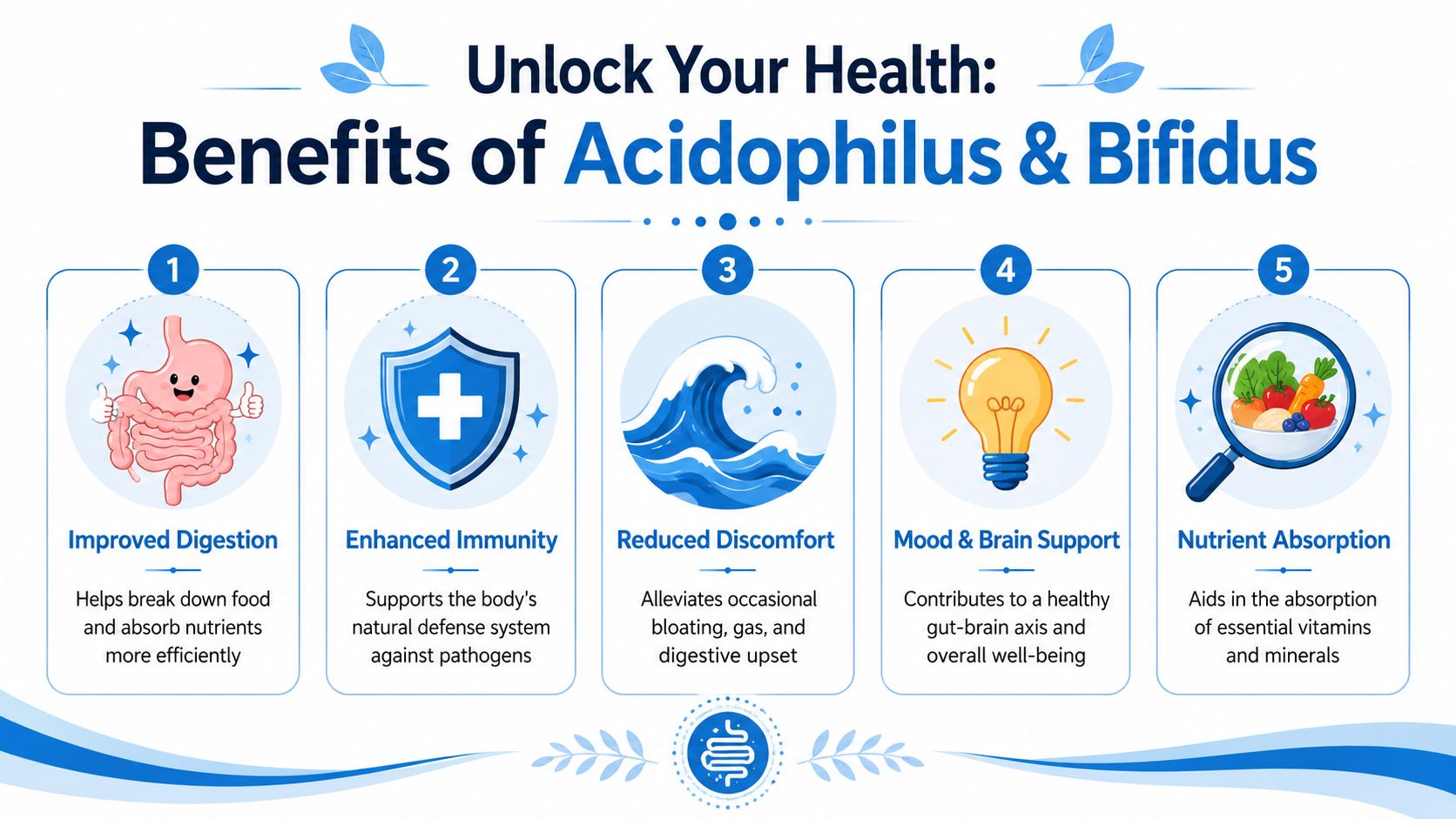
This does not mean a probiotic takes over your digestive job. A better comparison is a garden. If the soil conditions improve, the plants already there tend to do better. In the gut, a healthier microbial balance can support normal digestion rather than replace it.
If loose stools are part of the problem, this guide to diarrhea relief and better gut health can help you connect probiotics with hydration, food choices, and recovery habits.
Immune support that starts in the gut
The digestive tract is also home to a large share of the body's immune activity, so it makes sense that probiotic research often looks at colds, infections, and day-to-day resilience.
A review summarized by Healthline's overview of Lactobacillus acidophilus describes a study in children where Lactobacillus acidophilus use was associated with fewer episodes of fever, coughing, antibiotic use, and missed school days. That study centered on acidophilus rather than the acidophilus-bifidus pair by itself, but it helps explain why acidophilus is often chosen as one half of a combination formula.
Bifidobacteria add a different layer. They are closely tied to the colon environment, where they help ferment fibers and produce compounds that support the gut barrier. That matters because the immune system does not work in isolation. A calmer, better-supported gut lining can make the whole system less reactive.
So the benefit of the duo is not that both strains do the same thing twice. It is that they may support immune function from complementary angles inside the digestive tract.
Broader effects beyond bloating and regularity
Some probiotic combinations also show potential in metabolic health, which surprises people who only associate probiotics with bathroom habits.
A clinical review in Nutrients describes evidence that certain probiotic strains, including Lactobacillus acidophilus and Bifidobacterium species, may improve lipid markers such as total cholesterol, LDL cholesterol, and triglycerides in some study groups. Results vary by strain, dose, and population, so this is not a promise attached to every bottle on the shelf. Still, it broadens the picture.
Here is a practical way to read the evidence:
| Area | What the evidence suggests |
|---|---|
| Digestion | The pairing may support a healthier gut environment linked with enzyme activity and food breakdown |
| Immune function | Acidophilus-containing formulas have been associated with fewer common illness episodes in some studies |
| Metabolic markers | Some strain combinations that include acidophilus and bifidobacteria have shown improvements in cholesterol-related measures |
The main takeaway is simple. Acidophilus with bifidus is more than a label trend. It is a pairing built around complementary roles, one working higher in the digestive tract and the other contributing more strongly in the colon. That wider coverage helps explain why this duo keeps showing up in formulas aimed at whole-gut support.
How to Choose a Quality Supplement
A probiotic label can feel a little like a cereal box. The front makes big promises. The side panel tells you what you are getting.
That matters even more with acidophilus with bifidus, because the value is in the pairing. You are not just buying “good bacteria.” You are choosing two groups that tend to work in different parts of the gut, so a quality product should make that partnership easy to spot on the label.
Start with strain names, not hype
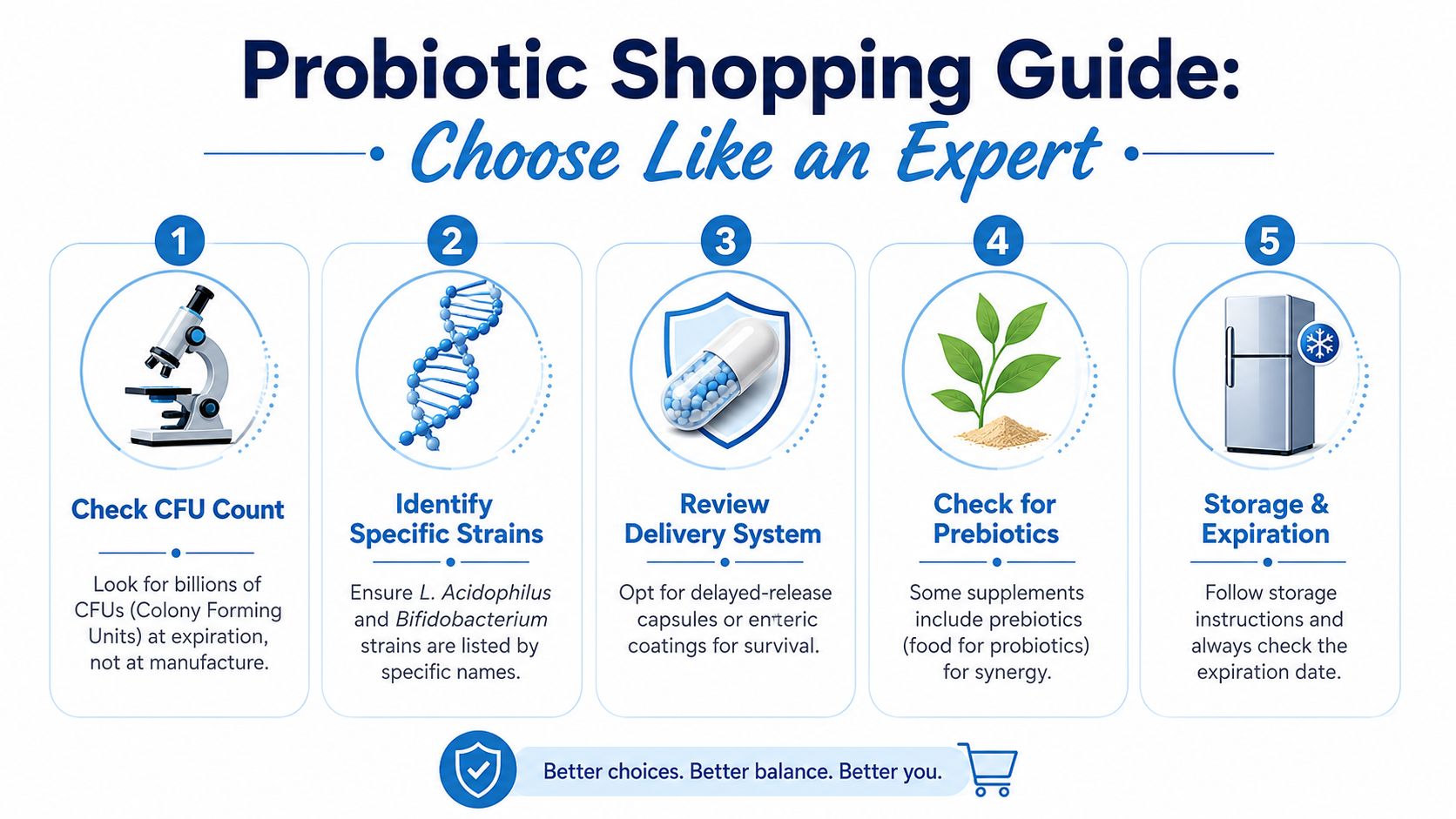
Look first for the full organism names. A better label will list Lactobacillus acidophilus and one or more Bifidobacterium species clearly, instead of hiding them inside a vague “probiotic blend.”
If the bottle includes strain details after the species name, that is even better. A strain is like a breed within a family. “Bifidobacterium” is the broad group. The strain tells you which specific member is in the formula. That level of detail gives you a clearer idea of what you are buying and suggests the company is being more transparent.
Research reviews have found that multi-strain probiotic formulas can have broader effects than single-strain products, depending on the strains used and the health goal. A review in Frontiers in Microbiology discusses how combinations may offer complementary actions, which fits well with an acidophilus plus bifidus formula built for whole-gut support.
A simple rule helps here. The more specific the label, the easier it is to judge the product.
What CFU really means
CFU stands for colony-forming units. It is a count of live microorganisms that can grow.
CFU works like a headcount at a job site. A bigger crew can help, but only if the workers are the right fit and arrive at the job. In probiotic terms, that means a huge CFU number is less useful if the strains are poorly identified, unstable, or paired without a clear purpose.
So do not shop by number alone.
Use this quick label checklist:
Check the full organism names
Look for Lactobacillus acidophilus plus one or more named Bifidobacterium species.Notice the serving size
A label may sound impressive until you see that the stated dose requires several capsules.Check whether potency is guaranteed through expiration
This tells you more than a number printed only for the day the product was made.Read storage directions
Some formulas need refrigeration. Others are designed to stay stable on the shelf.
Look for design features that support survival
A good formula also needs a good delivery system. Acidophilus tends to be discussed more for the upper digestive tract, while bifidus is known for its role deeper in the colon, so the product should be designed to help live organisms get where they need to go.
Capsule protection can help with that. Delayed-release or acid-resistant capsules may improve how many organisms make it through stomach acid. Some formulas also add prebiotics such as inulin or FOS. These ingredients work like fertilizer for the helpful bacteria you are taking.
Delivery format matters too, for a simple reason. A probiotic only helps if you take it regularly. If you want to compare capsules, powders, and chewable options, this probiotics and prebiotics collection gives a useful sense of the different formats available.
A few final details are easy to miss:
Expiration clarity
Choose products with a clear expiration date and storage instructions.Third-party testing or quality seals
These can add confidence that the contents match the label.Ingredient simplicity
If you have sensitivities, scan for sweeteners, fillers, dairy, or allergens.
A strong probiotic choice usually comes down to three things. Clear strain labeling, a sensible formula, and a format you will actually use consistently.
How to Use Your Probiotic Effectively

Build a routine your gut can count on
A probiotic works more like brushing your teeth than taking a pain reliever. You're supporting a process over time, not flipping a switch.
Optimal results are frequently observed when taking a probiotic consistently at the same time each day. With food or without food often depends on the product directions, so the label should be your first guide. If a supplement bothers your stomach on an empty stomach, taking it with a meal may feel easier.
Try a routine like this:
Pair it with an existing habit
Breakfast, brushing your teeth, or filling your water bottle all work.Give it enough time
Gut changes usually aren't instant. Quitting after a few inconsistent days doesn't tell you much.Keep your expectations realistic
You may notice digestion feels steadier before you notice anything dramatic.
If you prefer a simpler format than capsules, this review of Digestive Advantage probiotic gummies is a helpful example of how delivery style can shape consistency.
A short visual walkthrough can help if you're still sorting out timing and routine:
When higher doses matter
This is one of the most misunderstood probiotic topics. People hear that lactobacilli support vaginal health, buy a random low-dose product, and expect a therapeutic effect.
Clinical guidance from Cleveland Clinic's acidophilus overview indicates that 50 million to 100 billion CFUs daily for up to six months may be required to restore lactobacilli balance and treat bacterial vaginosis. That's a very different context from casual daily digestive support.
The takeaway is simple. The right dose depends on the goal. General wellness use and condition-specific use aren't always the same thing, so it's smart to match the product and dose to the reason you're taking it.
Understanding Safety and Side Effects
You start an acidophilus with bifidus supplement because your digestion has felt off, and two days later you notice more gas than usual. That can feel like a sign that something is wrong. In many healthy adults, it is a short adjustment period as new bacteria begin interacting with the microbes already living in the gut.
The acidophilus and bifidus combination can make that adjustment feel a little more noticeable because the two groups tend to work in different neighborhoods of the digestive tract. Acidophilus is often discussed more in relation to the small intestine, while bifidus is better known for activity in the large intestine. A simple way to picture it is a two-person cleanup team working in different rooms of the same house. As both rooms get reorganized, things may feel unsettled before they feel better.
Common early effects include mild bloating, extra gas, or a temporary shift in bowel habits. Those changes should be mild and short-lived. If symptoms are intense, keep getting worse, or do not settle after a reasonable trial, stop the supplement and talk with a healthcare professional.
Safety also depends on your situation, not just the label on the bottle.
Pregnant or breastfeeding adults, people with weakened immune systems, those with serious medical conditions, and anyone taking several medications should get individual guidance before starting a probiotic. The same caution applies if you have a history of severe illness, recent hospitalization, or a condition that affects the gut barrier.
One reason for this careful approach is that probiotics may influence more than day-to-day digestion. Research has examined whether certain strains of lactobacilli and bifidobacteria may also affect markers tied to metabolism and cholesterol, which is a good reminder that these products can have body-wide effects, not just bathroom-related ones. A review in Nutrients discusses how probiotic strains may interact with lipid metabolism and other metabolic pathways.
The key idea is simple. Mild adjustment effects can be normal. Strong symptoms or higher-risk health situations deserve professional input. That balance helps you use the acidophilus and bifidus team more confidently and more safely.
Frequently Asked Questions
Can food give you the same benefit as a supplement
Fermented foods can be a great part of a gut-friendly diet. Yogurt, kefir, and other cultured foods may provide helpful live bacteria along with nutrients. They're a strong foundation.
A supplement can make more sense when you want a specific combination, a more consistent daily dose, or a product designed for a practical goal. Food and supplements don't have to compete. Many people do best using both.
Do you need to rotate probiotics
Usually, no. Individuals don't typically need to keep switching products on a schedule.
What matters more is whether the formula matches your goal and whether you're taking it consistently long enough to judge it fairly. If a product isn't working for you, changing strains or formats may help. That's different from rotating just because you think your body will “get used to it.”
Consistency usually matters more than novelty with probiotics.
How long does it take to notice a difference
That depends on why you're taking it and how regularly you use it. Some people notice digestive changes fairly soon, especially when the issue is occasional irregularity or post-meal discomfort. Other goals take longer and are subtler.
A good way to judge is to track a few basics for yourself: comfort after meals, regularity, bloating, and how reliably you're taking the product. That gives you something concrete to review instead of relying on memory.
If you're trying acidophilus with bifidus, think in terms of steady support, not overnight transformation. The strongest results usually come from matching the product to the goal, taking it consistently, and giving your gut time to respond.
CalVitamin makes it easier to compare probiotic options in one place, whether you want capsules, gummies, or broader digestive support products. If you're ready to shop for a formula that fits your routine, browse CalVitamin and use the product filters to narrow by form, ingredient preferences, and wellness category.






