
You buy a tub of protein powder because you want something simple. Then the first shake tastes like birthday cake syrup, fake vanilla, or a sweetener packet dissolved in milk. By the fifth scoop, you dread it. You still want the protein. You just don't want your breakfast to taste like dessert every day.
That's where no taste protein powder starts to sound appealing. But this category confuses a lot of people for a very understandable reason. "No taste" sounds like "tasteless," and that usually isn't what you get. What you usually get is something more useful than that. A powder with a mild base flavor that doesn't hijack whatever you mix it into.
That difference matters. It affects whether you'll like the product, how you'll use it, and whether you'll feel disappointed when your "flavorless" shake still tastes faintly milky, creamy, or earthy. It also matters if you're trying to avoid long ingredient lists, sweeteners, or heavily flavored formulas.
The market shows why this can feel niche. In 2025, the global protein powder market was valued at USD 19 billion, and flavored products held a 69.4% share, according to Global Market Insights protein powder market data. Most shoppers still buy flavor first. A smaller group buys for control, flexibility, and ingredient simplicity.
Table of Contents
- The End of Sickly Sweet Shakes
- What No Taste Protein Powder Really Means
- Comparing Common Unflavored Protein Types
- The Undeniable Benefits and Potential Drawbacks
- How to Choose the Best Unflavored Protein Powder
- Practical Mixing Tips and Simple Recipe Ideas
- Frequently Asked Questions
The End of Sickly Sweet Shakes
A lot of people arrive at unflavored protein the same way. They don't start by wanting the purest powder on the shelf. They start by getting tired of the standard options.
Maybe you've tried chocolate and it felt too heavy for morning. Maybe vanilla tasted fine at first but became repetitive. Maybe the true issue wasn't flavor fatigue at all. It was the aftertaste from sweeteners. That lingering note can make a shake feel bigger, richer, and more artificial than you wanted.
Unflavored powder solves a different problem than flavored powder. It doesn't try to taste good all by itself. It tries to stay out of the way.
Why control matters more than variety
When people say they want a cleaner protein powder, they often mean one of three things:
- Less sweetness: They want their smoothie to taste like berries, coffee, oats, or yogurt. Not like candy.
- Fewer add-ons: They'd rather not deal with flavors, sweeteners, colors, or fillers if they don't need them.
- More flexibility: They want one tub that works in breakfast, baking, soups, sauces, and post-workout drinks.
That last point is where no taste protein powder becomes practical, not trendy. A flavored product is locked into one direction. Unflavored protein can move between sweet and savory.
Practical rule: If you're adding protein to food you already enjoy, a neutral powder usually works better than a powder that insists on tasting like dessert.
A smaller niche with a clear purpose
Flavored protein still dominates store shelves and online searches. That's not surprising. Immediate drinkability is often desired. But the smaller unflavored niche exists for a reason. Some shoppers care less about a ready-made flavor and more about ingredient control, recipe freedom, and a milder daily routine.
If that's you, the good news is simple. You don't need to love plain shakes to benefit from unflavored protein. You just need to understand what it is.
What No Taste Protein Powder Really Means
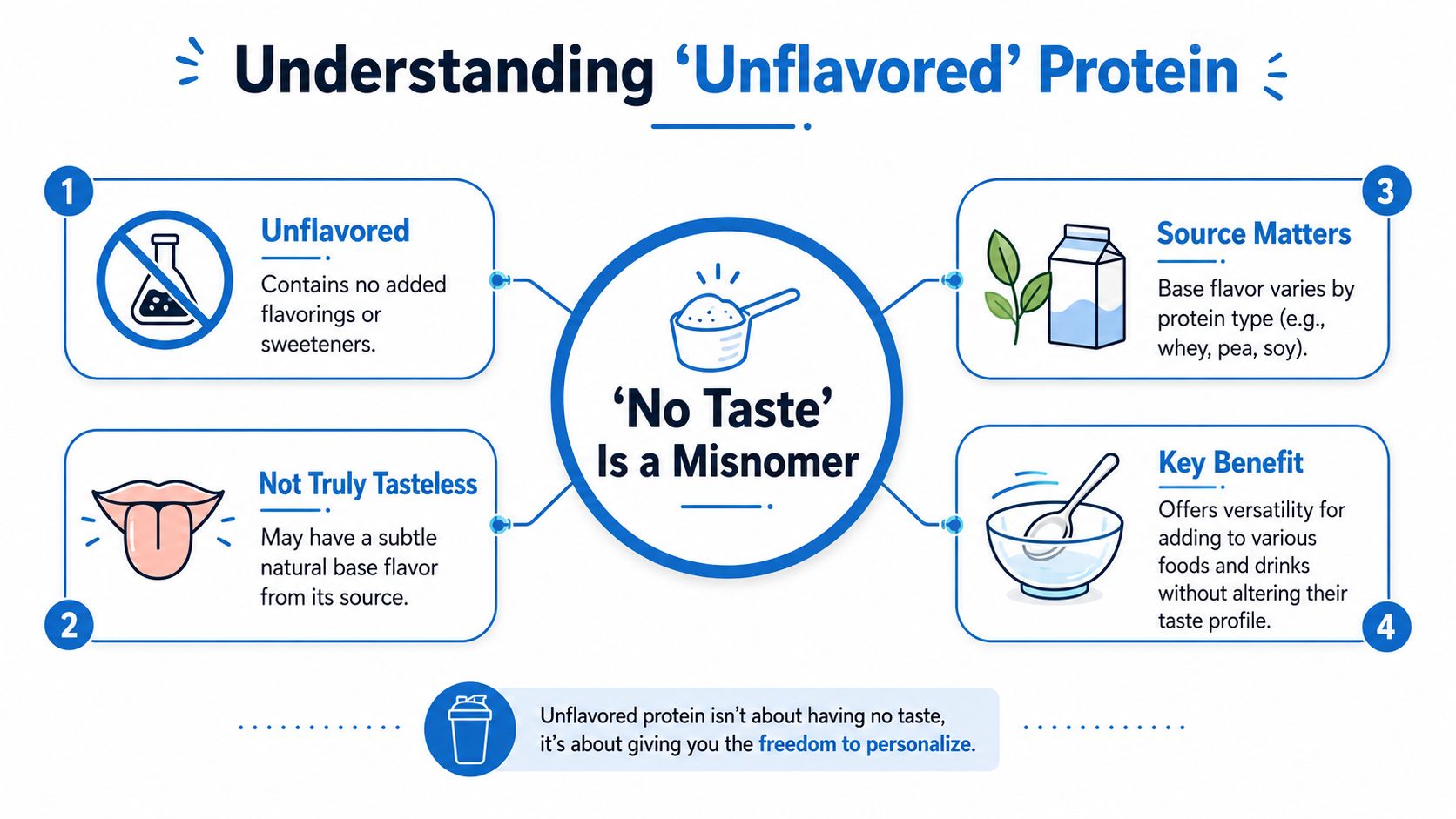
The biggest mistake shoppers make is interpreting the phrase too strictly. No taste protein powder is usually unflavored, not entirely tasteless.
High-quality unflavored protein can still have a "very neutral, slightly milky taste," as described in True Protein's guide to unflavoured protein powder. That subtle note isn't a flaw. It's the natural taste of the underlying ingredient.
Neutral is not the same as absent
Think about plain Greek yogurt. It isn't flavorless, but it doesn't overpower fruit, honey, cucumber, or herbs. Tofu works the same way. Plain oats do too. They're mild, adaptable bases.
Unflavored protein works in that same category. It usually has a background taste, but not a dominant one.
Different sources tend to bring different baseline flavors:
| Protein type | What you may notice |
|---|---|
| Whey-based | Mild dairy or slightly milky notes |
| Casein | Creamier and more obviously milky |
| Egg white | Light but distinct savory-egg nuance |
| Pea or plant-based | Earthy, grassy, nutty, or beany depending on the blend |
| Collagen peptides | Often among the most neutral in drinks |
That means a shopper can buy "no taste" protein and still say, "I can taste this." They may be right. The better question is whether the powder stays subtle enough to disappear once it's mixed into something flavorful.
Why this misunderstanding matters
Expectation drives satisfaction. If you expect complete absence of taste, even a mild dairy note can feel like a letdown. If you expect a neutral base, you'll judge the product more fairly.
This is also why mixing method matters. In plain water, even a clean unflavored powder is exposed. In oatmeal, a fruit smoothie, soup, or yogurt bowl, that same powder may become nearly unnoticeable.
Most complaints about "no taste" protein aren't really about bad quality. They're about the gap between the label promise and the real sensory experience.
The useful mindset is this. You're not buying invisibility. You're buying low interference. That makes it much easier to choose the right kind and use it in the right foods.
Comparing Common Unflavored Protein Types
If two tubs both say "unflavored," that doesn't mean they'll behave the same way. Source, processing, and texture change everything. Some disappear into a smoothie. Some thicken like pudding. Some work best in baking or coffee instead of water.
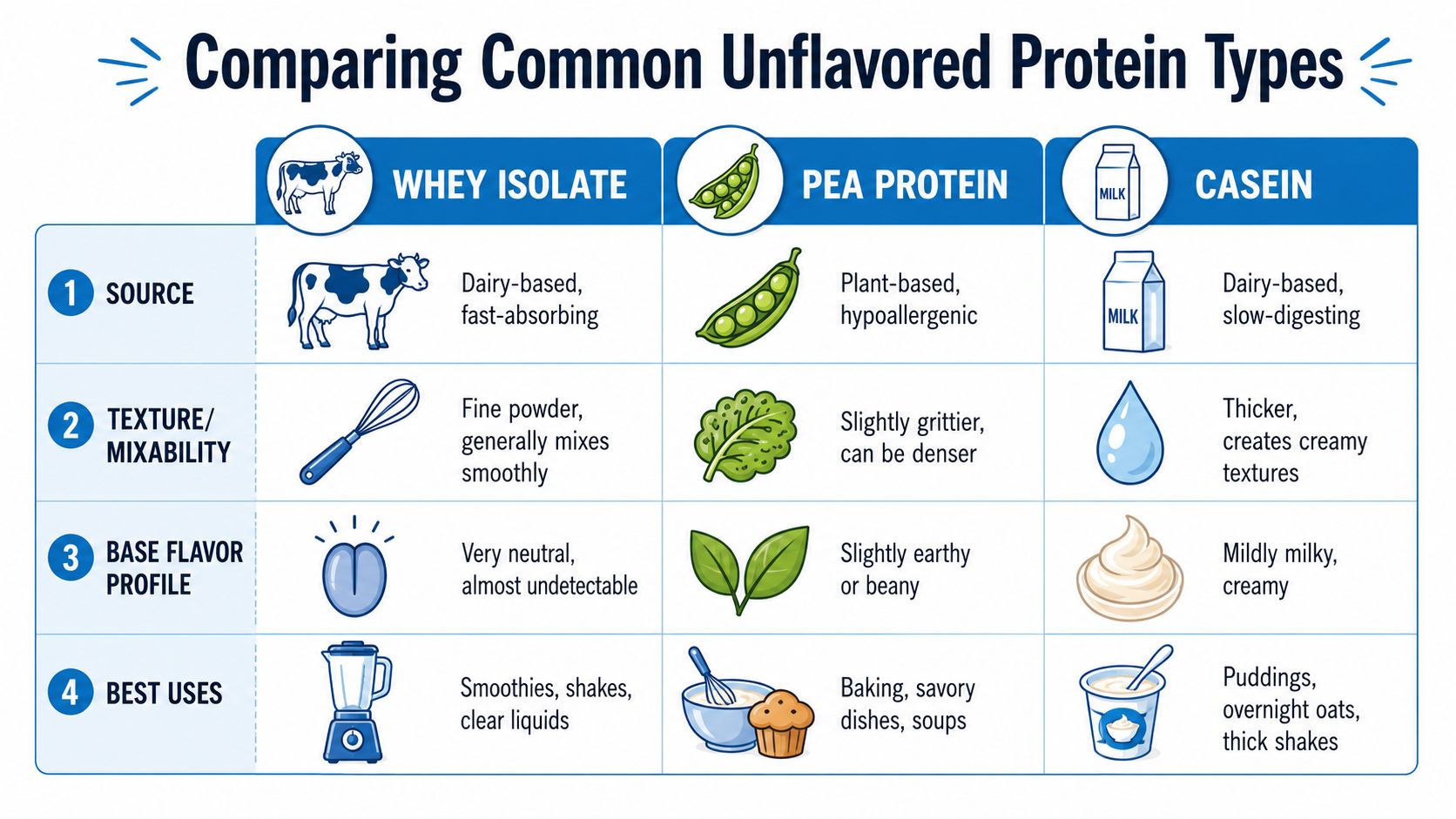
A quick side by side view
| Type | Base taste | Texture | Best use |
|---|---|---|---|
| Whey isolate | Very mild, lightly milky | Usually thin and smooth | Smoothies, shakes, yogurt |
| Whey concentrate | More dairy-forward | Creamier, sometimes heavier | Shakes, oats, baking |
| Casein | Mildly milky | Thick, pudding-like | Overnight oats, puddings |
| Egg white | Clean but distinct | Can foam | Baking, shakes |
| Soy | Mild bean note | Smooth to medium body | Smoothies, baking |
| Pea | Earthy or grassy | Denser, sometimes gritty | Smoothies with strong flavors, soups |
| Collagen peptides | Often very neutral | Dissolves easily | Coffee, tea, soups |
If you want a broad look at available options, CalVitamin has a protein category page with different protein product types.
What whey isolate feels like in real use
Unflavored whey isolate is often the easiest entry point for people who want minimal flavor. According to Isopure's unflavored whey isolate product details, this type of product is made by stripping out fat, carbohydrates, fillers, sugars, and added flavors or sweeteners to create a neutral profile. Their example product provides 25g of 100% pure whey protein isolate per scoop and is described as zero carbs and sugar free.
That matters for taste. When you remove the sweeteners and extras that usually shape flavored powders, you're left with a cleaner dairy note and less aftertaste. In practice, whey isolate tends to work well in:
- Cold smoothies: It blends into fruit, yogurt, or milk without taking over.
- Cooked oats after cooking: Stir it in once the oats are off the heat to keep the texture smoother.
- Pancake batter: It adds protein without turning the batter into dessert-flavored batter.
Whey concentrate can still be good, but it's usually a little more obviously dairy-like. Some people prefer that because it tastes more like food and less like a supplement.
What plant blends do better than many people expect
Many shoppers assume unflavored plant protein will automatically be chalky. Sometimes it is. But blends can be much better than old-school single-source powders.
Garden of Life's unflavored raw organic protein gives a useful example. Their formulation contains 22g of complete protein from 14 raw organic sprouts, plus 4g of BCAAs, and includes live probiotics and digestive enzymes. The company says this approach supports digestibility, remains stevia-free and sugar-free, and helps eliminate the chalky aftertaste that people often associate with lower-quality plant proteins.
So what does that mean in plain language?
- A single-source pea protein may taste more earthy and feel denser.
- A multi-source plant blend can taste softer and feel smoother.
- Added digestive enzymes can improve how the powder behaves in the stomach and in the glass.
Plant blends usually do best when paired with ingredients that give them a place to hide, such as banana, cocoa, cinnamon, nut butter, pumpkin soup, or a creamy sauce.
If you're plant-based and you hate chalkiness, don't judge the whole category by one basic pea protein. Blending changes a lot.
Other types you may run into
Casein isn't the most invisible option, but it creates a rich texture that's great for pudding-style recipes. If you want a thick bedtime shake or overnight oats that feel dessert-like without added flavoring, casein can work well.
Egg white protein is lean and functional, though some people notice a more distinct taste and a foamy texture when shaken. It's often more pleasant in baking than in plain drinks.
Collagen peptides sit in a category of their own. They aren't a replacement for every kind of complete protein, but many people like them because they dissolve easily and often stay close to invisible in coffee, tea, broth, or oatmeal.
The best unflavored protein isn't one universal product. It's the one whose natural flavor and texture fit the way you eat.
The Undeniable Benefits and Potential Drawbacks
Unflavored protein powders can be refreshingly simple. They can also be surprisingly unforgiving if you choose the wrong type or use them the wrong way.
Why people stick with it
The biggest benefit is control. You decide whether the final result tastes like coffee, berries, cinnamon, soup, or nothing but the meal itself. That sounds small until you've forced down one too many aggressively flavored shakes.
There's also an ingredient-list advantage. Many unflavored products avoid the sweeteners that create lingering aftertaste in flavored powders. For people with sensitive palates, that's often the difference between using protein consistently and leaving a half-full tub in the pantry.
A few practical wins stand out:
- Recipe versatility: One unflavored powder can move from smoothies to oats to sauces.
- Less flavor fatigue: You're not stuck with one taste every day.
- Easier pairing: Savory dishes are possible. That's hard with chocolate or vanilla.
- More transparency on what you're tasting: If something tastes off, it's easier to identify whether it's the protein itself.
Where it can disappoint
The downside is honesty. Unflavored powder doesn't have sweeteners and flavor systems working hard to cover its base notes. If you mix it with plain water, you're asking the product to stand alone. Some do fine. Many don't.
Texture can also make or break the experience. Lower-quality powders may clump, foam, or leave a dusty finish. A product can be nutritionally solid and still feel unpleasant in the mouth.
Here are the most common frustrations:
- Natural taste is still taste: Mildly milky or earthy may still bother you.
- Mixability varies: Some powders dissolve well. Others need a blender.
- Heating can change texture: Add the wrong powder at the wrong time and you can get lumps or a rubbery feel.
A neutral powder is often best treated like an ingredient, not a beverage on its own.
That's the mindset shift that helps most. If you need a delicious shake with water only, flavored protein may still suit you better. If you want flexibility and fewer sensory distractions, unflavored becomes much more appealing.
How to Choose the Best Unflavored Protein Powder
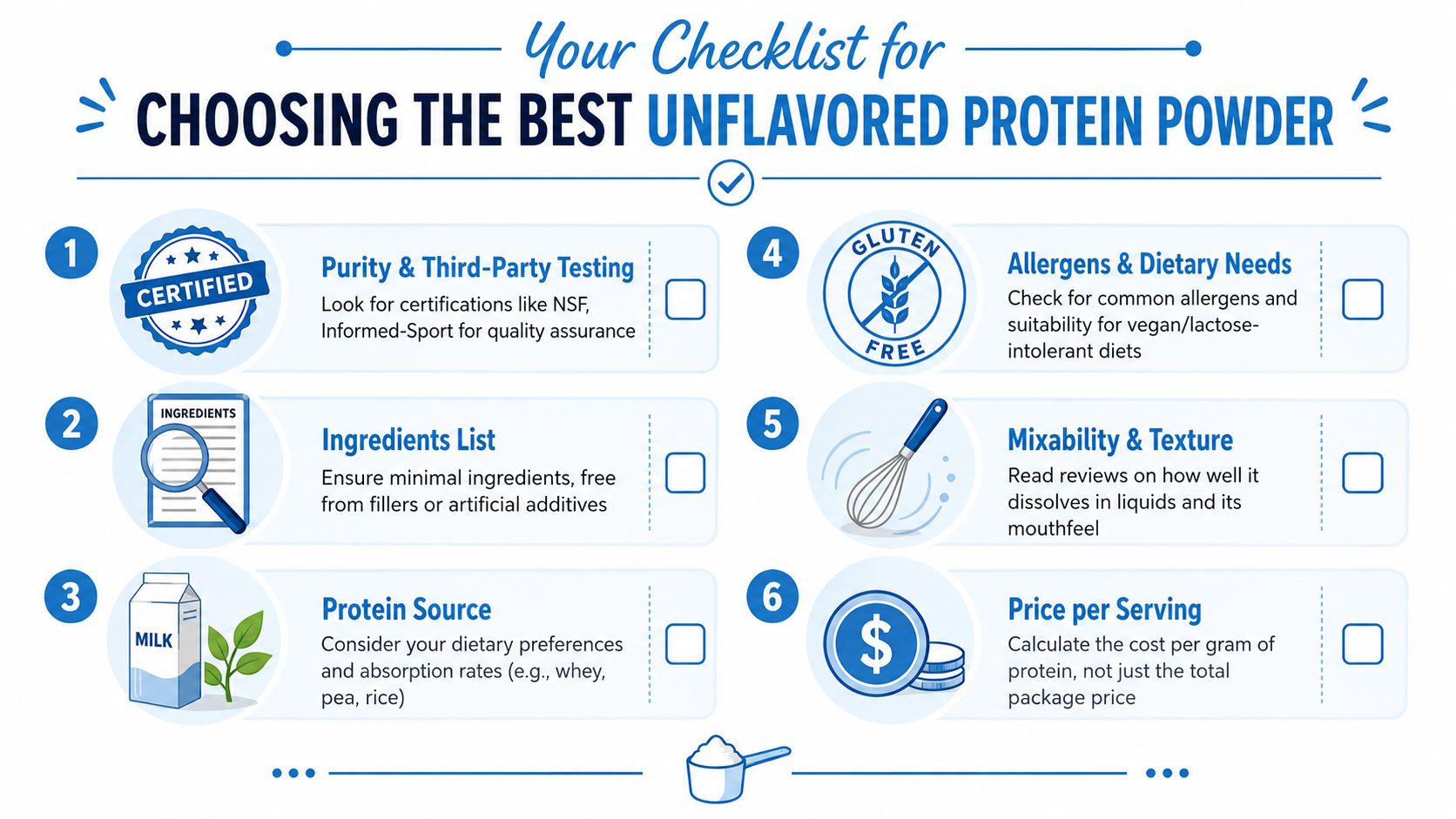
The fastest way to narrow the field is to stop thinking about marketing terms and start reading the label like a checklist. "No taste," "clean," and "natural" can all sound reassuring. They don't tell you enough by themselves.
A better approach is to judge the product by source, ingredients, testing, and how you plan to use it.
Start with the shortest label
For unflavored protein, simpler is often better. If you're buying an unflavored product, the ingredient list shouldn't read like a flavored one in disguise.
Look for products that make it easy to answer these questions:
- What is the protein source? Whey isolate, whey concentrate, collagen, pea, soy, or a plant blend.
- Are there extras you didn't expect? Gums, sweeteners, "natural flavors," colorings, or filler ingredients.
- Does the product fit your dietary needs? Dairy-free, vegan, lactose-conscious, allergen-aware, or gelatin-free where relevant.
A short label doesn't guarantee quality, but it does make the product easier to evaluate.
Think about source before brand
If your priority is neutral taste, whey isolate often appeals to omnivores who tolerate dairy well. If your priority is avoiding dairy, a blended plant protein may be easier to live with than a single-source powder.
If your priority is easy stirring into hot drinks, some people prefer collagen because it tends to dissolve with less fuss. For a simple example product, you can look at this unflavored collagen peptides option on CalVitamin.
The point isn't that one source is "best." It's that the right source depends on whether you care most about neutrality, thickness, dairy avoidance, or culinary range.
Treat safety claims cautiously
Purity matters, especially in a category people often use daily. A 2025 Clean Label Project study found that 47% of 160 top-selling protein powders exceeded heavy metal safety thresholds, and chocolate flavors were the most contaminated, according to the Clean Label Project protein study. The same summary noted that whey-based powders consistently showed lower detected contaminant levels than plant-based options.
That doesn't mean every unflavored product is automatically safer. It means you shouldn't assume flavoring improves quality, and you shouldn't assume "plant-based" or "natural" guarantees purity either.
Use a practical filter:
- Look for third-party testing language from recognized certification programs when available.
- Check the source type if heavy metal exposure is one of your main concerns.
- Be extra cautious with heavily flavored products, especially rich flavors that may need more masking ingredients.
- Choose brands that clearly explain sourcing and quality control.
Buying shortcut: If a brand hides the basics, such as source, ingredients, and testing information, move on.
You don't need a perfect product. You need one that's transparent enough for you to make a confident decision.
Practical Mixing Tips and Simple Recipe Ideas
Buying a good powder is only half the job. The other half is using it in ways that don't make you resent it after three days.
How to avoid clumps and weird texture
Most mixing problems come from technique, not just product quality. Protein powders absorb liquid differently, and heat can make some types tighten or seize.
Try these fixes:
- Whisk with a small amount first: Make a smooth paste with a little liquid before adding the rest.
- Add whey to warm foods after cooking: Stir it into oats, mashed potatoes, or soup off the heat.
- Use a blender for dense plant powders: This helps with grit and helps disperse thicker blends.
- Bloom collagen first if needed: Mix it with a little cool liquid before adding to a hotter drink if clumping has been an issue for you.
If you're experimenting with collagen in daily routines, CalVitamin also has a blog review of Bulletproof Gut Health Collagen Protein Powder 14oz Unflavored.
Easy ways to use it without making a shake
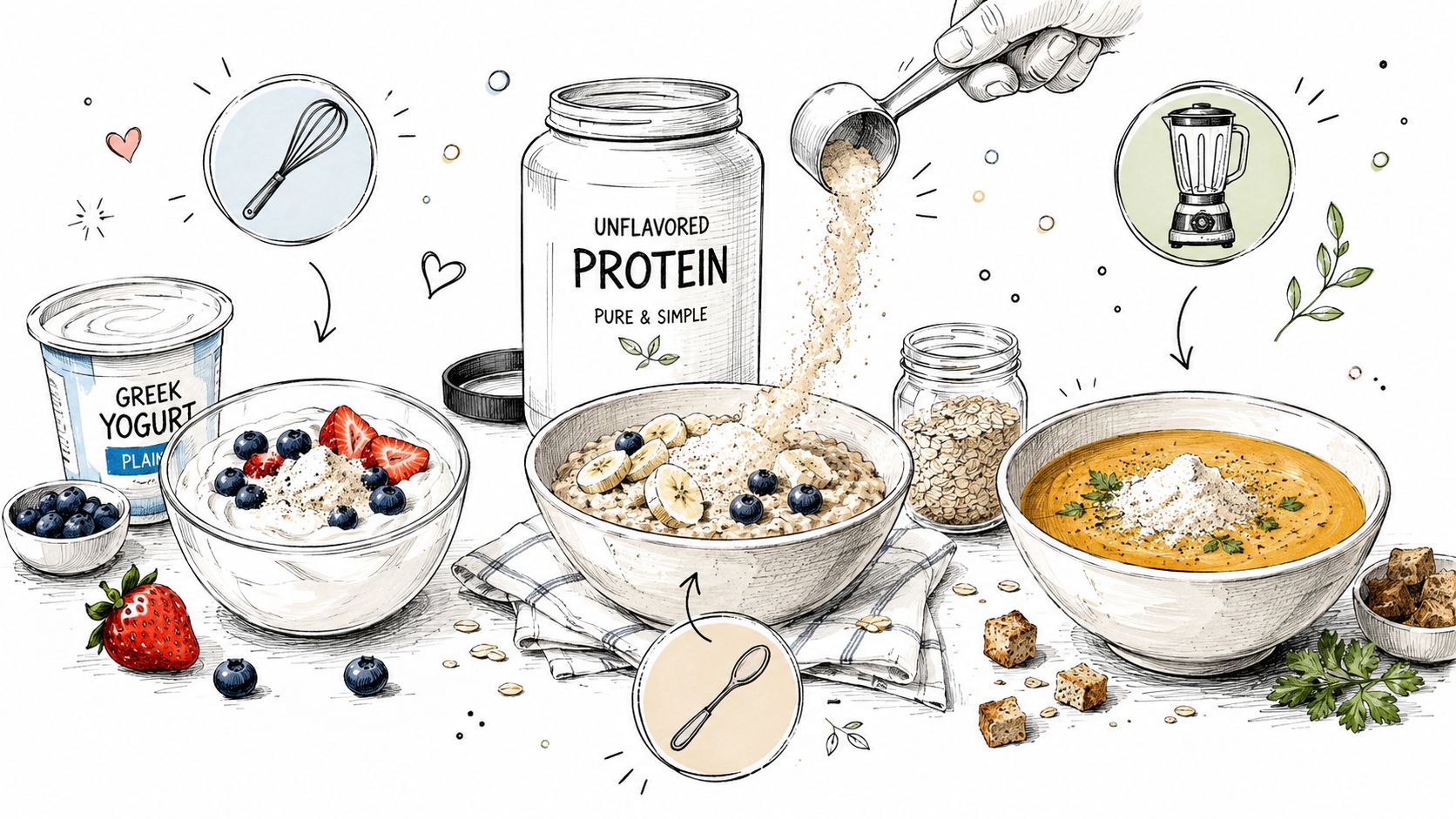
The best use for no taste protein powder often isn't a shake at all. It's a quiet upgrade to foods you're already eating.
A few easy ideas:
- Breakfast bowl: Stir unflavored whey or collagen into yogurt, oats, or overnight oats.
- Savory lunch: Add unflavored plant protein to a creamy soup or blended sauce.
- Baking: Mix it into pancake batter, muffins, waffles, or protein bites.
- Coffee or tea: Use a highly soluble option if you want a low-flavor protein addition.
- Soft snacks: Blend into cottage cheese bowls, chia pudding, or nut butter balls.
This video shows how some people work protein into everyday foods and drinks without relying on another standard shake.
A simple rule helps here. Match the powder to the dish. Thick powders suit spoonable foods. Smooth, lighter powders suit drinks. Neutral powders do best when they have some texture or flavor around them to blend into.
Frequently Asked Questions
Is no taste protein powder actually tasteless
Usually, no. The better description is unflavored. Most products still carry a mild taste from their source ingredients. Whey may seem slightly milky. Plant proteins may taste a little earthy. The goal is subtlety, not total sensory disappearance.
Is unflavored protein safer than flavored protein
Not automatically, but there are reasons to look closely. Interest in heavy metal transparency has grown, and some reporting suggests flavored powders can carry higher contamination risk in certain cases, while some unflavored plant-based products have also tested high. The key point from this discussion of contamination concerns and flavor type is that source and quality control matter most. So the smarter question isn't "unflavored or flavored?" It's "what protein source is this, and how transparent is the brand?"
Can I bake with unflavored protein powder
Yes, but texture matters. A little can blend in well. Too much can make baked goods dry, dense, or rubbery. Start modestly and use it in recipes that already have moisture, such as pancakes, muffins, or baked oats. Unflavored protein is much easier to bake with than a powder that brings a strong dessert flavor into everything.
What's the best way to store it
Keep the tub tightly closed and store it somewhere cool and dry. Use a clean, dry scoop. Moisture is what encourages clumping fastest. If your kitchen gets humid, don't leave the container open while cooking.
Does unflavored powder work with just water
It can, but that's usually not where it shines. If you're sensitive to texture or aftertaste, plain water exposes every little note in the powder. A better result is commonly achieved with milk, a milk alternative, yogurt, oats, soup, or a smoothie.
Which type is easiest for beginners
For many people, whey isolate feels easiest because the taste is mild and the texture tends to be smoother. For dairy-free users, a blended plant formula is often friendlier than a basic single-source pea powder. If you want the least flavor impact in hot drinks, collagen may be the easiest place to start.
If you're ready to find a protein powder that fits your routine instead of fighting it, browse CalVitamin for unflavored protein, collagen, vitamins, and other wellness essentials. It's a practical place to compare options by ingredient focus, dietary preferences, and everyday use.






