
Protein supplements are worth it primarily when they help you reach roughly 1.6 g/kg of protein per day that you can't conveniently obtain from whole foods. Beyond that threshold, extra protein produces diminishing returns, with a 2022 review finding only a small additional gain in lean body mass, a standardized mean difference of 0.22.
The popular advice says that more protein automatically means more muscle. The clinical evidence says something more useful: protein matters, resistance training matters, and the gap between your current intake and an adequate intake matters most. A powder can close that gap, but it can't replace progressive training, sufficient energy, recovery, or a balanced diet.
That distinction answers the question “Are protein supplements worth it?” better than a simple yes or no. They're a practical delivery system, not a muscle-building shortcut. Their value rises when appetite, schedule, dietary restrictions, or training demands make adequate intake difficult, then falls sharply once your meals already cover what you need.
Table of Contents
- The Protein Ceiling Effect
- What the Clinical Evidence Actually Shows
- Whole Foods Versus Powders and Isolates
- Optimizing Dosage and Timing for Results
- Navigating Labels and Dietary Requirements
- Final Verdict on Supplement Value
The Protein Ceiling Effect
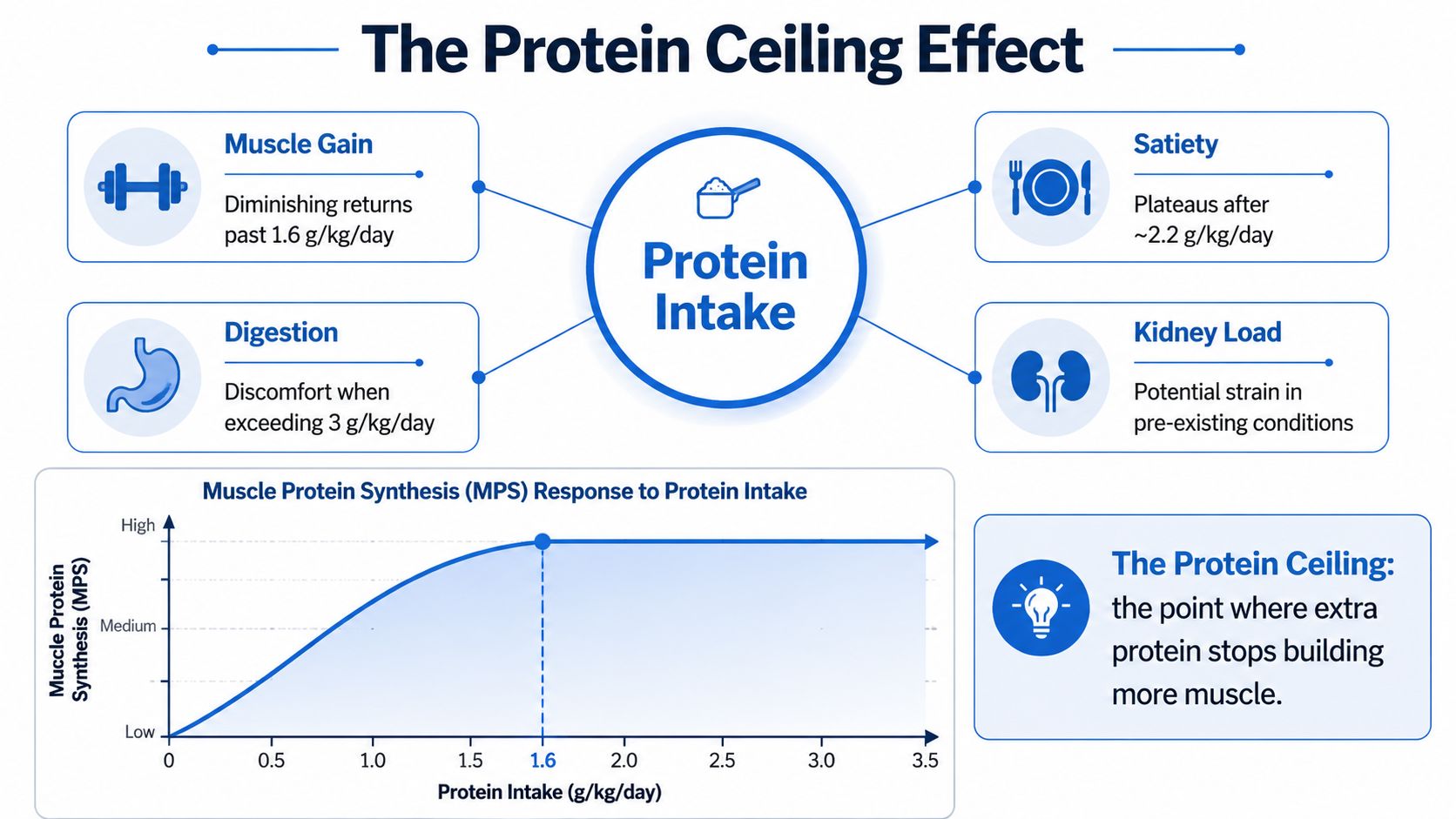
Protein does not produce muscle in a straight upward line. Muscle protein synthesis rises as amino acid availability increases, then approaches a plateau once the available remodeling stimulus has enough building material. Another scoop cannot force proportionally more tissue when that ceiling has been reached.
This protein ceiling effect does not make excess protein biologically meaningless. Amino acids can support other functions or be oxidized for energy, yet the muscle-building return shrinks after adequate intake. The useful question is therefore not how much protein you can consume, but how much your current diet consistently fails to provide.
Why the ceiling changes the buying decision
Supplement marketing often treats higher intake as automatically better. A systematic review and meta-analysis of resistance-training studies supports a narrower conclusion. Raising daily protein produced small extra gains in lean body mass, while effects on strength were modest and benefits for handgrip strength and physical function were limited.
Another meta-analysis discussed in that evidence found that protein supplementation improved muscle size and strength during prolonged resistance training. However, intake above approximately 1.6 g/kg/day did not add further gains in fat-free mass. That boundary separates a useful correction from an expensive surplus. A supplement can help when intake remains below the threshold, but it offers little additional muscle-building value once meals already reach it.
Practical rule: Buy protein to solve a demonstrated intake problem, not to exceed a target you have already reached.
Use a protein-focused nutrition resource to compare products, but calculate the gap before choosing one. Estimate what your meals provide, then assess whether the remaining shortfall is large, recurring, and inconvenient enough to justify supplementation. For someone who regularly meets the target through food, a powder mainly adds convenience, not a new physiological advantage.
What the Clinical Evidence Actually Shows
The clinical case for protein supplements is narrower than advertising suggests. Supplementation can improve resistance-training outcomes, but the average extra benefit is modest. The largest practical gain usually comes when a supplement raises intake from inadequate to adequate, not when it pushes an already sufficient diet higher.
A 2017 meta-analysis reported improved strength and muscle-size gains during prolonged resistance exercise. Its pooled strength result was a 2.49 kg gain in one-repetition maximum, and the analysis identified approximately 1.6 g/kg/day as a practical ceiling for fat-free-mass gains. Intake above that level produced no further improvement in the measured lean-mass outcome. The findings are summarized in the published meta-analysis record.
A later review gives the result useful context. Across 62 resistance-training studies, increasing daily protein produced a standardized mean difference of 0.22, with a 95% confidence interval of 0.14 to 0.30, for lean body mass. The strength effect was modest, while effects on handgrip strength and physical function were limited, according to the full systematic review and meta-analysis.
What the threshold means in practice
| Daily Protein Intake (g/kg) | Lean Mass Gain (kg) | Statistical Significance | Practical Relevance |
|---|---|---|---|
| Below an adequate target | Not specified in the verified data | Supplementation may help when it corrects a shortfall | High if meals consistently fall short |
| Around 1.6 | No single universal gain applies | Associated with the practical ceiling for fat-free-mass benefit | Strongest use case for trained adults |
| Above 1.6 | No additional fat-free-mass gain was identified in the cited meta-analysis | Additional intake showed diminishing returns | Usually low unless another clinical or dietary need exists |
The threshold is a decision point, not a prescription for one exact number. Training status, body composition, energy intake, age, and health conditions can change the value of supplementation. Older adults may experience anabolic resistance, and people dieting may use protein to help preserve lean tissue, but the evidence here does not justify assigning either group an invented higher target.
The broader nutrition context also matters. Protein deficiency remains a public-health concern, and global burden work reported 14,767,275 prevalence cases in 2019, with an age-standardized prevalence rate of 2006.4 per 100,000 population, as described in the review of protein malnutrition and global protein adequacy. Supplements can therefore serve a real purpose for people with insufficient diets, including some older adults with frailty or people managing restricted intake. For a healthy adult whose meals already provide enough protein, the remaining return is usually convenience rather than additional muscle gain.
Whole Foods Versus Powders and Isolates
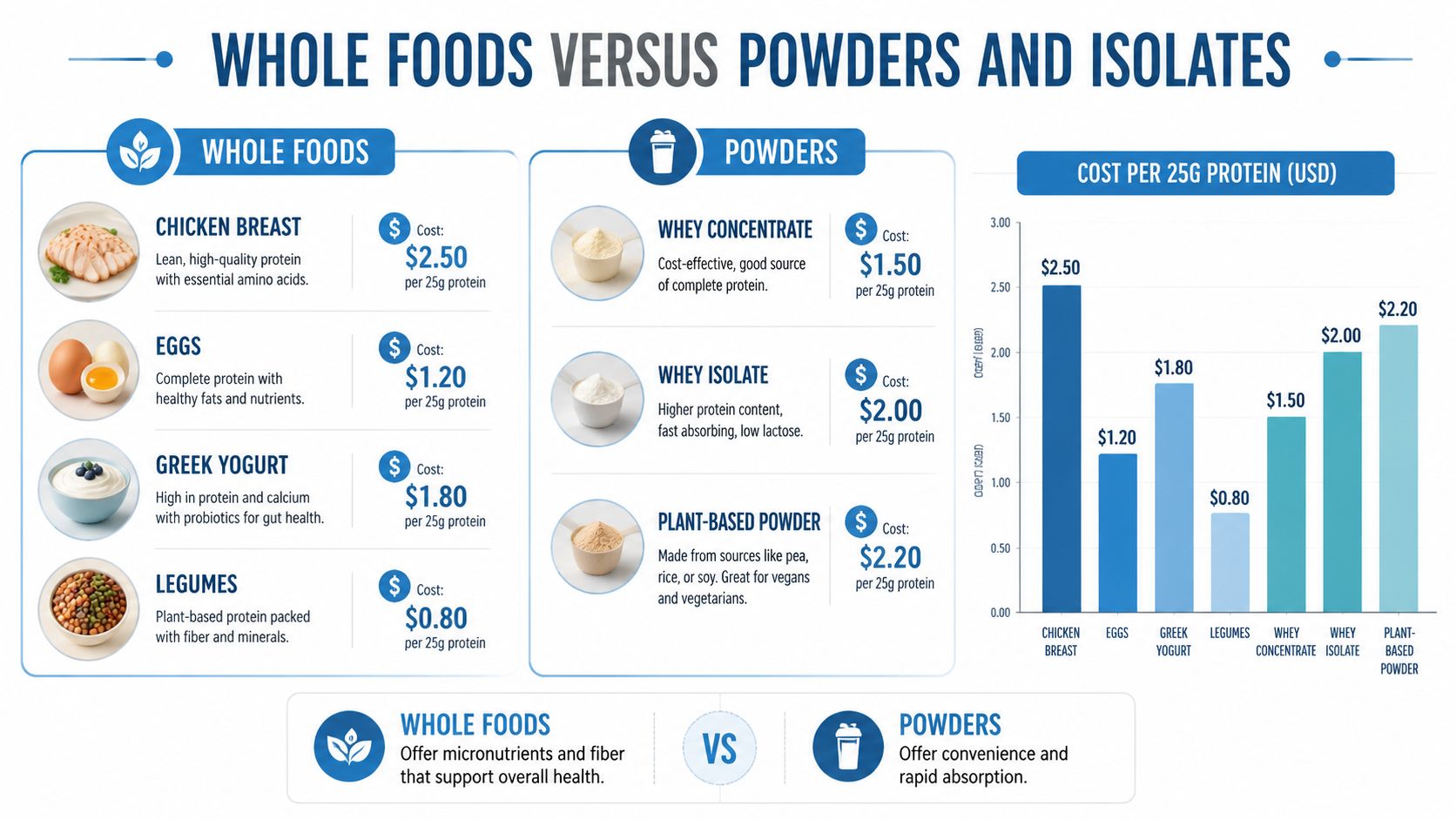
Whole foods and powders deliver protein, but they solve different problems. Chicken, eggs, Greek yogurt, and legumes bring a broader food matrix, while whey, casein, and plant-based powders provide a concentrated and portable way to increase intake.
The central comparison isn't whether one category is universally superior. It's whether you need nutrition density or protein logistics at a particular moment. A meal can contribute protein alongside other nutrients and often feels more satisfying. A shake can be consumed quickly after training, during travel, or when a full meal would be impractical.
Absorption speed isn't the same as superior results
Whey is commonly favored because it digests relatively quickly, while casein and mixed whole-food meals digest more gradually. That difference may affect the timing of amino acid availability, but it doesn't automatically translate into a meaningful long-term advantage for someone who already reaches an adequate daily intake.
The evidence reviewed above points toward total intake and resistance training as the larger levers. A fast protein source is useful when speed and convenience matter, not because rapid absorption turns an otherwise adequate diet into a dramatically more anabolic one.
Choose the format that removes your actual obstacle
- Whole foods: Choose chicken, eggs, dairy, fish, tofu, beans, lentils, or similar foods when you want protein integrated into a complete meal.
- Whey concentrate or isolate: Choose dairy-derived powder when portability, low preparation time, or a compact protein serving solves a regular scheduling problem.
- Plant-based powder: Consider products based on sources such as soy, pea, rice, or other plants when dairy doesn't fit your diet or preferences. Check the label carefully because formulations vary.
- Casein or blended products: These may suit people who prefer a slower-digesting option, but the key question remains whether the product helps meet the daily target.
A powder also introduces trade-offs. It may contain sweeteners, flavorings, thickeners, or other additions, and some people experience digestive discomfort from dairy-based products. Whole foods generally make it easier to obtain fiber and micronutrients that an isolated protein serving doesn't provide.
For a plant-based option, you can review Your Super Plant Protein Organic Superfood Mix Powder, then compare its protein contribution and ingredient list with your existing meals rather than assuming the word “plant” establishes its value.
The soundest purchasing decision is often boring. If food already covers your target, keep the food. If your schedule repeatedly leaves a gap, use the simplest powder that fills it without adding unnecessary calories or ingredients.
Optimizing Dosage and Timing for Results
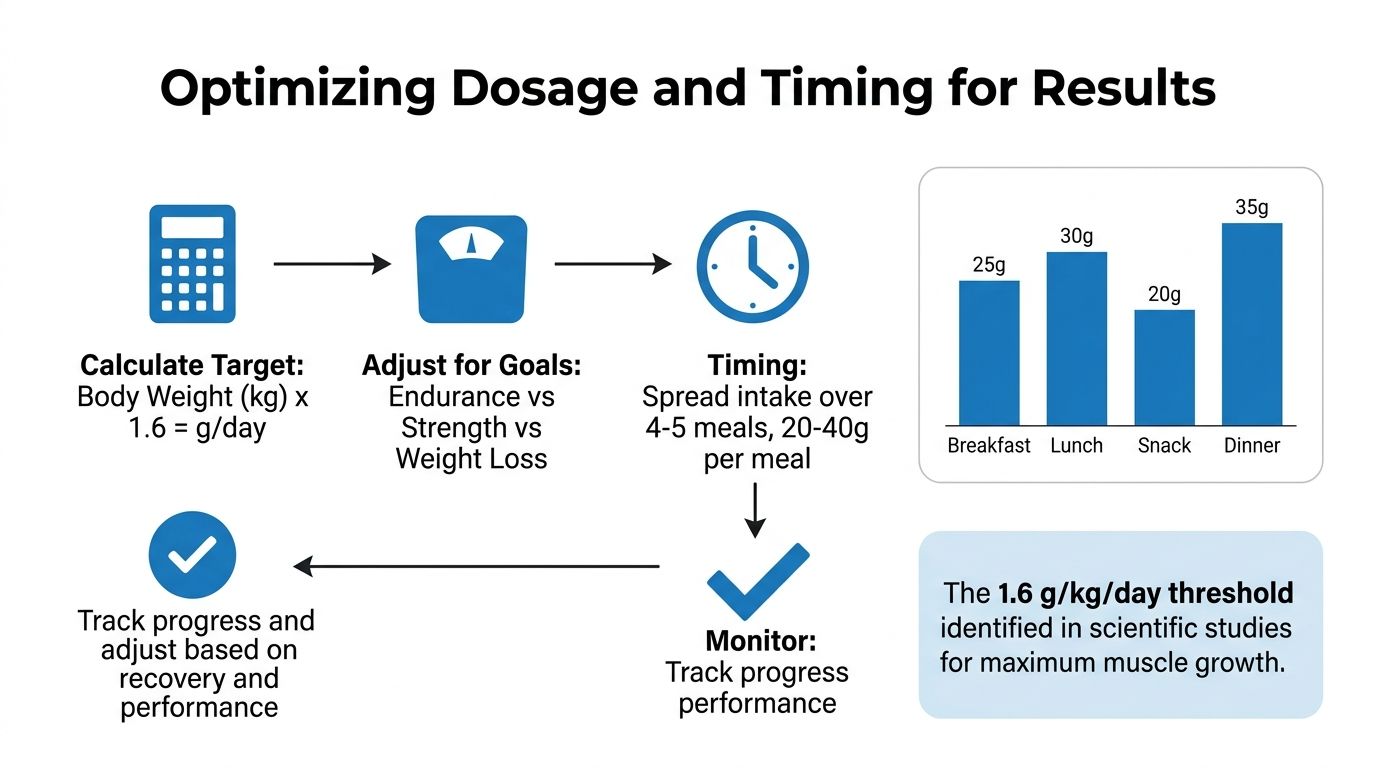
Start with the daily target, not the shaker. Multiply body weight in kilograms by 1.6 to estimate the intake associated with the practical resistance-training ceiling identified in the cited meta-analyses. This isn't a command to force-feed protein, and it shouldn't override medical advice for people with kidney disease or other relevant conditions.
A supplement becomes useful when your normal meals don't reliably reach that target. For example, if breakfast and lunch are consistently low in protein, adding a serving to one of those meals may be more rational than taking a large shake immediately after training because a label says the window is closing.
Distribute rather than accumulate
Evidence synthesized in 2023 found that post-exercise protein increased fat-free mass by 0.54 kg and skeletal muscle mass by 0.34 kg, while night-time supplementation produced larger strength effects, according to the PubMed evidence summary. Those findings support thoughtful timing, but they don't establish that a narrow post-workout window matters more than total daily intake.
Per-meal guidance also points toward moderate servings. Expert summaries cited in the verified data indicate roughly 0.4 to 0.55 g/kg per meal, or approximately 2.5 to 3 g of leucine per meal, is typically enough to maximize the acute muscle-protein-synthesis response in trained adults.
That makes distribution more sensible than saving most of the day's protein for dinner. You can structure meals around your appetite and routine:
- Anchor each main meal: Include a clear protein source at breakfast, lunch, and dinner.
- Use a snack strategically: Add yogurt, milk, eggs, tofu, legumes, or a shake where the day's intake remains short.
- Place a serving near training if convenient: Post-exercise intake is reasonable, especially when the next meal is delayed, but it isn't a substitute for adequate daily protein.
- Avoid oversized doses by default: A large serving may be convenient, but it doesn't erase the ceiling effect.
Timing helps most when it improves consistency. It matters less when it becomes an excuse to ignore the rest of the diet.
A product such as Tri-Amino 120 Capsules shouldn't be treated as interchangeable with a complete protein serving. Assess the actual amino acid and protein contribution, then decide whether it addresses your target or merely adds another supplement to the routine.
Navigating Labels and Dietary Requirements
A protein label deserves the same scrutiny as the nutrition plan behind it. Begin with the serving size, grams of protein per serving, calorie contribution, ingredient list, allergen statement, and any certification that independently verifies manufacturing or product claims.
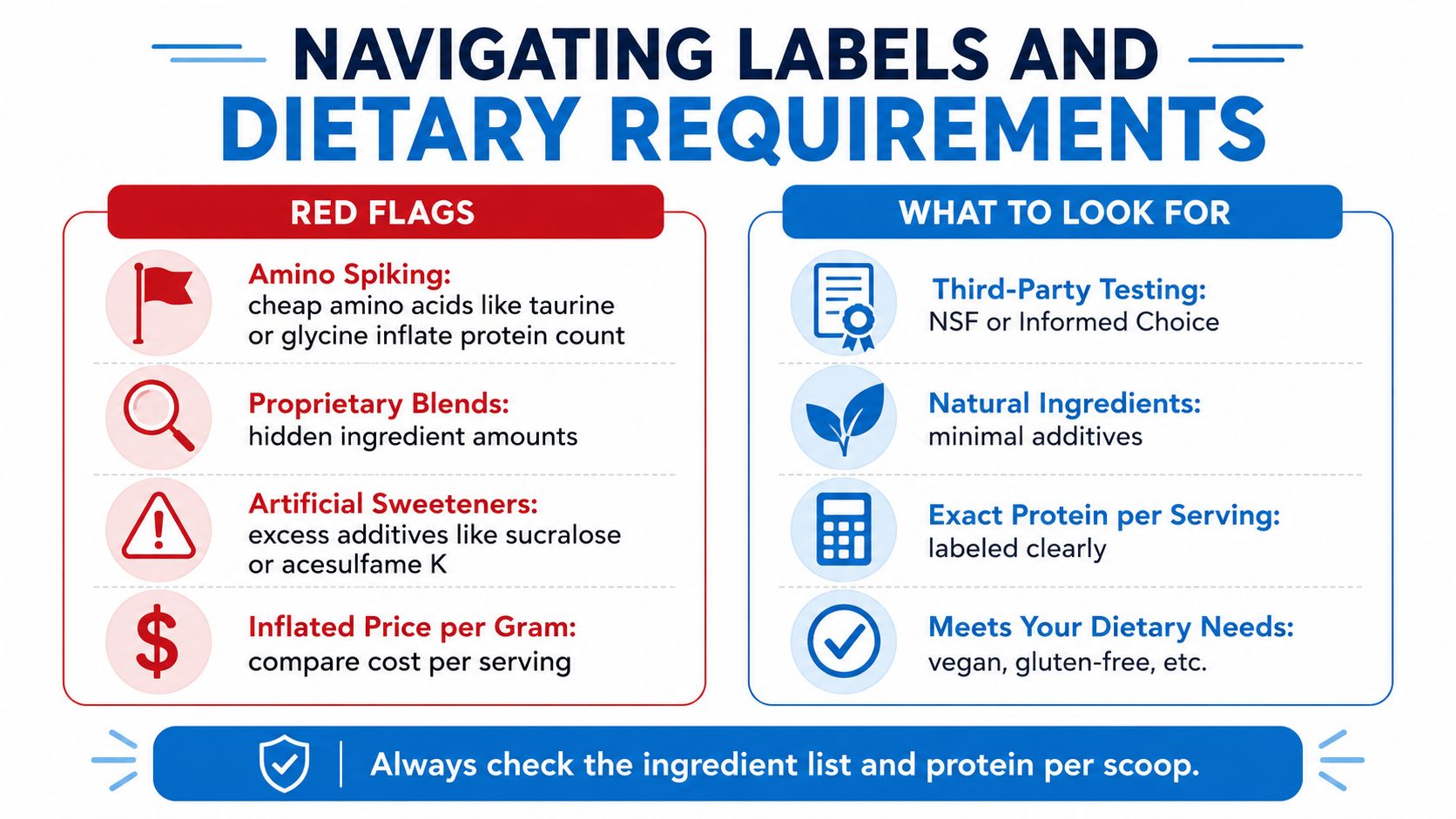
The first calculation is simple: cost per gram of actual protein. Don't compare tubs by scoop count or front-label promises. A larger serving can look impressive while providing relatively little protein, and a product with a shorter ingredient list may still fail to meet your dietary requirements if it contains milk, soy, eggs, or gelatin.
Read past the front panel
Amino spiking is a label concern because inexpensive individual amino acids can increase the apparent nitrogen content used in protein testing without providing the same value as an intact protein source. Look for a transparent ingredient list and be cautious when the formula emphasizes a long amino acid blend without clearly showing how much complete protein it contains.
Proprietary blends create a similar problem. If the label groups several ingredients under one total amount, you can't easily determine how much of each ingredient you're buying. For a protein supplement, the product should make its protein quantity and source easy to identify.
Third-party certification can provide an additional layer of confidence. Certifications such as NSF or Informed Choice are relevant examples to look for, although a certification mark should still be checked against the certifier's current database rather than accepted at face value.
Match the product to your restrictions
Dietary requirements can eliminate otherwise suitable products:
- Dairy sensitivity: Whey and casein come from milk. Isolates may differ in composition from concentrates, but the label remains the deciding reference for your tolerance.
- Vegan diets: Look for a clearly stated plant source and check whether the product uses blends designed to provide a broader amino acid profile.
- Halal requirements: Seek an explicit halal certification or product statement from a credible certifying organization.
- Gelatin-free choices: Check capsules, flavor systems, and processing aids, not just the headline protein source.
- Allergens: Review the allergen declaration for milk, soy, egg, wheat, peanuts, tree nuts, and any other personally relevant ingredient.
Keep the formula as simple as your needs allow. Added sweeteners, stimulants, and unnecessary blends can make a product less suitable, especially if you're already consuming those ingredients elsewhere. The best label is not the one with the most claims. It's the one that tells you exactly what you're getting and fits your diet without creating new problems.
Final Verdict on Supplement Value
Protein supplements are worth buying when they solve a recurring problem that food alone isn't solving efficiently. That problem may be a low-protein breakfast, limited appetite, a restrictive diet, travel, a demanding training schedule, or the simple inability to prepare another complete meal.
They're less compelling when your meals already provide adequate protein and you're buying extra servings because marketing equates quantity with progress. The clinical evidence supports a ceiling around 1.6 g/kg/day for resistance-training-related fat-free-mass gains, and the 2022 review found only a small additional lean-mass effect from higher intake. That makes a supplement a gap-filler, not a default requirement.
A practical decision matrix
| User profile | Supplement value | Reasoning |
|---|---|---|
| Competitive athlete | Potentially high | Training demands and schedule can make consistent intake difficult |
| Recreational lifter | Conditional | Useful when meals fall short, unnecessary when they already meet needs |
| Beginner | Often limited at first | Establishing regular meals and training may matter more than buying powder |
| Vegan or highly restricted eater | Conditional to high | A suitable product can simplify adequate intake when food options are limited |
| Person with illness, frailty, or poor appetite | Clinically individual | Supplementation should be discussed with a qualified healthcare professional |
| Person already meeting the target | Low | Extra servings offer diminishing returns |
The overlooked economic question is not “Is powder cheaper than chicken?” Prices and formulations vary too much for a universal answer. Ask instead whether the supplement replaces a missed protein serving or merely adds protein on top of an already adequate day. In the first case, convenience may justify the purchase. In the second, you're paying for a biological return that the evidence says becomes progressively smaller.
Final verdict: Protein powder is a useful tool when it helps you consistently reach an evidence-based intake target. It's poor value when it only pushes an already adequate diet higher.
Before buying, track your usual meals, estimate where protein is missing, and choose the smallest, clearest product that closes that gap. If you have kidney disease, a significant medical condition, or are recovering from illness, discuss supplementation with a healthcare professional rather than relying on gym advice.
CalVitamin offers protein products and other wellness supplements through its online store, including options that can be filtered around dietary preferences such as halal or gelatin-free on select products. Visit CalVitamin to compare protein formats and ingredient labels, then choose a product based on the gap in your diet rather than the size of the marketing claim.






