
The popular advice to take B6 or B12 for more energy skips the most important question: are you missing either vitamin, and why? Correcting a deficiency can help restore normal function. Taking more when your needs are already met isn't the same thing as treating fatigue, nerve symptoms, or poor concentration.
The useful B6 vs B12 comparison isn't a contest between energy boosters. It's a distinction between nutrients with different jobs, different blood tests, and very different safety considerations.
Table of Contents
- B6 vs B12 at a Glance
- Daily Amounts for Each Life Stage
- What Each Vitamin Does in the Body
- Deficiency Symptoms and How Each Is Confirmed
- Safety Limits and What Megadosing Cannot Fix
- Choosing a Supplement and Confirming B12 Status
B6 vs B12 at a Glance
Vitamin B6 and vitamin B12 do different jobs, come from different foods, and fail in different ways, so they aren't interchangeable. A supplement containing both doesn't establish that you need both.
B6 and B12 side by side
| Feature | Vitamin B6 | Vitamin B12 |
|---|---|---|
| Main biological role | Coenzyme involved in amino-acid metabolism, neurotransmitters, and hemoglobin formation | Needed for methionine synthase and methylmalonyl-CoA mutase |
| Active or common forms | Pyridoxal-5'-phosphate, an active form; pyridoxine, a supplement form | Methylcobalamin and cyanocobalamin |
| Main food sources | Poultry, fish, potatoes, non-citrus fruit | Meat, fish, eggs, dairy, fortified foods |
| Usual deficiency pattern in the U.S. | Uncommon | Can occur with dietary gaps or absorption problems |
| Typical blood test | Plasma pyridoxal-5'-phosphate, abbreviated PLP | Serum B12, with methylmalonic acid when appropriate |
| Unit on supplement labels | Milligrams, abbreviated mg | Micrograms, abbreviated mcg |
The food-source distinction matters if you avoid animal products. Potatoes and fruit can contribute B6, but they aren't substitutes for reliable B12 sources. A plant-based diet therefore raises a specific B12 question, not an automatic need for a high-dose B-complex.
The differences that change your decision
Intake and absorption are separate questions. Someone who eats animal foods can still have trouble absorbing B12. Conversely, someone following a carefully planned plant-based diet may obtain B12 through fortified foods or an appropriate supplement.
The test distinction matters just as much. Plasma PLP helps assess B6 status, while B12 assessment may require both a vitamin measurement and a marker of how effectively the body is using it. Neither deficiency can be reliably diagnosed by comparing how tired you feel.
Finally, the label units aren't a ranking system. A larger-looking B12 number doesn't necessarily mean a stronger product than a smaller-looking B6 number. Read each nutrient against its own requirement, then decide whether your diet, medical history, and test results justify supplementation.
Daily Amounts for Each Life Stage
Recommended daily intake by life stage
Daily recommendations depend on age, sex, pregnancy, and breastfeeding. The B6 amounts below are reported in the NIH Office of Dietary Supplements professional guidance. For B12, the NIH recommends 2.4 mcg daily for adults, 2.6 mcg during pregnancy, and 2.8 mcg while breastfeeding, as described in its B12 professional guidance.
| Life stage | Vitamin B6 (mg/day) | Vitamin B12 (mcg/day) |
|---|---|---|
| Adults 19–50, men | 1.3 | 2.4 |
| Adults 19–50, women | 1.3 | 2.4 |
| Men over 50 | 1.7 | 2.4 |
| Women over 50 | 1.5 | 2.4 |
| Pregnancy | 1.9 | 2.6 |
| Breastfeeding | 2.0 | 2.8 |
These figures describe total daily intake, not the amount that must come from a pill. Food, fortified products, and supplements all contribute. Needs during pregnancy and breastfeeding differ from the standard adult target, so use the life-stage value rather than carrying over the ordinary adult recommendation.
A recommended intake is not a treatment prescription. If a clinician confirms a deficiency, the replacement approach may differ from the amount intended to maintain adequate nutrition in a healthy person.
Read the unit before the number
B6 is usually listed in milligrams, while B12 is usually listed in micrograms. A microgram is a smaller unit, so comparing the printed numbers without checking the units can make one dose look larger than it is.
The different amounts reflect each vitamin's requirements. B12 is not less important because the recommended mass is smaller, and a higher B6 number does not make B6 more powerful.
Label-reading rule: Compare each vitamin with its own recommended intake and Daily Value, never with the raw number printed beside another vitamin.
The percentage Daily Value is a label reference, not a personal diagnosis. Needs vary by life stage, and a high percentage does not show whether you will absorb the full amount or benefit from taking more.
Use diet to identify a real gap
Population intake averages cannot determine whether your own intake is adequate. Start with a realistic record of what you eat, including fortified foods, before assuming a supplement is needed.
For B6, check whether your meals regularly include foods such as poultry, fish, or potatoes. For B12, identify a dependable animal-food, fortified-food, or supplemental source, then consider whether absorption could be an issue.
If you are assessing a standalone product, this guide to B12 supplement strength can help frame the label as a dose decision, rather than a contest between larger numbers.
What Each Vitamin Does in the Body
B vitamins help enzymes carry out chemical reactions. They don't supply calories themselves, and their involvement in metabolism doesn't establish that an extra dose will improve energy in someone whose needs are already met.
The NIH professional fact sheet describes B6 as a coenzyme in more than 100 enzymatic reactions, while B12 is required for methionine synthase and methylmalonyl-CoA mutase activity.
B6 supports a broad network of enzyme reactions. B12 supports specific reactions whose disruption can produce a recognizable biochemical pattern.
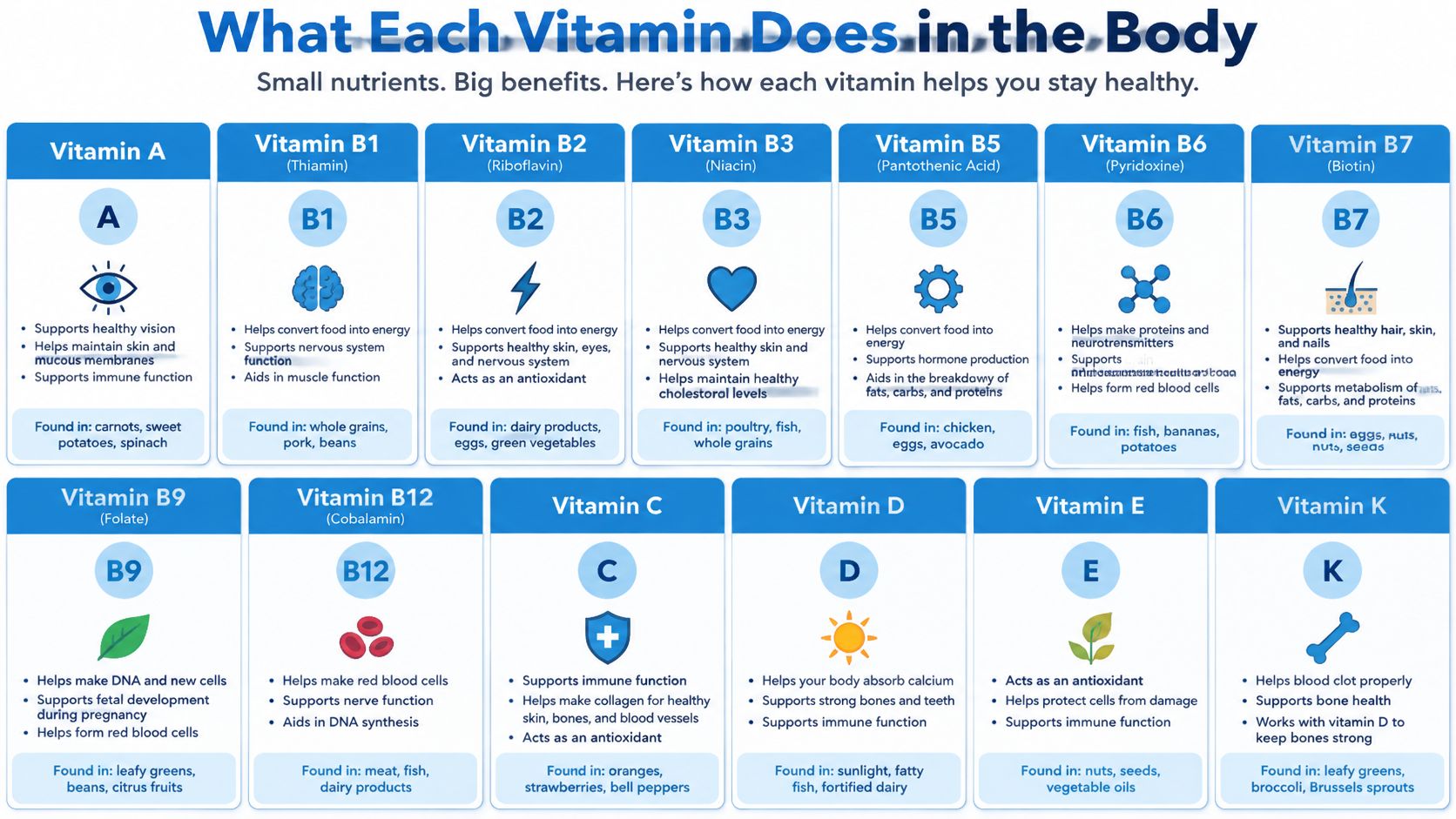
B6 helps process fuel and build essential molecules
The active B6 form pyridoxal-5'-phosphate, or PLP, helps enzymes handle amino acids. These are the building blocks the body uses to make proteins and other molecules.
B6 also participates in glycogen breakdown. Glycogen is stored carbohydrate, and the relevant enzymes help make that stored fuel available when needed.
Its other roles connect metabolism with blood, nerves, and immune function:
- Neurotransmitter synthesis: B6 participates in pathways that make chemical messengers, including serotonin.
- Hemoglobin formation: It helps the body make the oxygen-carrying component of red blood cells.
- Immune function: B6 supports reactions needed for normal immune activity.
- Homocysteine metabolism: It helps process this amino acid through pathways that also involve other nutrients.
These roles explain why an actual deficiency can affect several systems. They don't establish B6 as a treatment for low mood, poor immunity, or unexplained fatigue without an assessment of the cause.
The visual below groups the main functions and food sources.
B12 supports methylation and specific metabolic reactions
Methionine synthase connects B12 to methylation, the transfer of small chemical groups used in normal cellular processes. This pathway also links B12 with folate and processes needed for normal DNA synthesis and red-blood-cell development.
Methylmalonyl-CoA mutase helps process compounds derived from certain fatty acids and amino acids. When B12 availability is inadequate, methylmalonic acid can accumulate, making it useful as a functional marker.
That distinction is clinically useful. A serum B12 test measures circulating vitamin, whereas methylmalonic acid helps a clinician investigate whether a B12-dependent reaction is being disrupted.
B6's participation in hemoglobin formation and B12's involvement in normal cell development also explain why both matter to blood health. However, one cannot replace the other merely because both contribute to healthy red blood cells.
Our explanation of B-complex benefits provides broader context for how these nutrients work together. Shared participation in metabolism doesn't make their individual deficiencies or treatment plans interchangeable.
Deficiency Symptoms and How Each Is Confirmed
Deficiency signs and which vitamin they point to
| Sign | Points more to B6 | Points more to B12 |
|---|---|---|
| Cracked lips or sore tongue | Recognized feature | Recognized feature |
| Skin rash around eyes, nose, or mouth | More suggestive | Less characteristic |
| Confusion or low mood | Reported | Reported |
| Numbness or tingling in hands and feet | Consider excess supplementation as well as other causes | Recognized neurological feature |
| Fatigue, pale skin, anemia | Possible; not specific | Recognized feature, sometimes with large red cells |
| Balance or walking problems | Consider excess intake and other causes | Can occur with neurological involvement |
This table helps organize a discussion, not establish a diagnosis. Cracked lips can have non-nutritional causes, fatigue has many explanations, and tingling doesn't tell you which vitamin to buy.
Neurological symptoms deserve particular care. B12 deficiency and excessive B6 intake can both enter the differential diagnosis, so adding a high-dose B-complex without reviewing your current products can be the wrong response.
Start with serum B12, then resolve uncertainty
The NIH B12 professional guidance states that serum B12 values below roughly 200–250 pg/mL are generally considered subnormal, and that methylmalonic acid, or MMA, can help confirm deficiency when serum B12 falls between 150 and 399 pg/mL.
Those ranges overlap because a clearly low result and a result needing further investigation aren't mutually exclusive categories. Laboratories and clinical circumstances also affect interpretation. Don't treat a borderline result as reassuring just because it isn't flagged prominently.
A clinician may also review a complete blood count for anemia or changes in red-cell size. However, a blood count doesn't replace assessment of B12 status when neurological symptoms or meaningful risk factors are present.
For suspected B6 deficiency, plasma PLP is the usual status marker. Testing is generally targeted to a clinical concern rather than ordered because a supplement advertises metabolism support.
Find the cause before choosing treatment
Diet is only part of the assessment. Metformin can reduce B12 absorption and lower serum concentrations, making clinician-guided monitoring more useful than automatically adding B6.
Acid-reducing medication and previous stomach or intestinal surgery also belong in the history. Don't stop a prescribed medicine yourself. Ask whether it changes your need for testing or the choice of replacement treatment.
Bring the following information to the appointment:
- Diet pattern: Whether you eat animal foods or use B12-fortified alternatives consistently.
- Medication history: Include metformin and medicines that reduce stomach acid.
- Digestive history: Mention surgery, ongoing digestive problems, or known absorption disorders.
- Supplement exposure: Bring labels for multivitamins, B-complexes, sports blends, and standalone vitamins.
Once deficiency is confirmed, the clinician chooses the dose, delivery method, and follow-up according to the cause and severity. A treatment plan should address both the low vitamin status and the reason it developed.
Don't wait for anemia to appear before seeking assessment for persistent tingling, changing balance, or cognitive symptoms.
Safety Limits and What Megadosing Cannot Fix
The assumption that water-soluble vitamins are harmless at any dose is wrong. B6 requires particular attention because prolonged high intake can injure sensory nerves and impair movement.
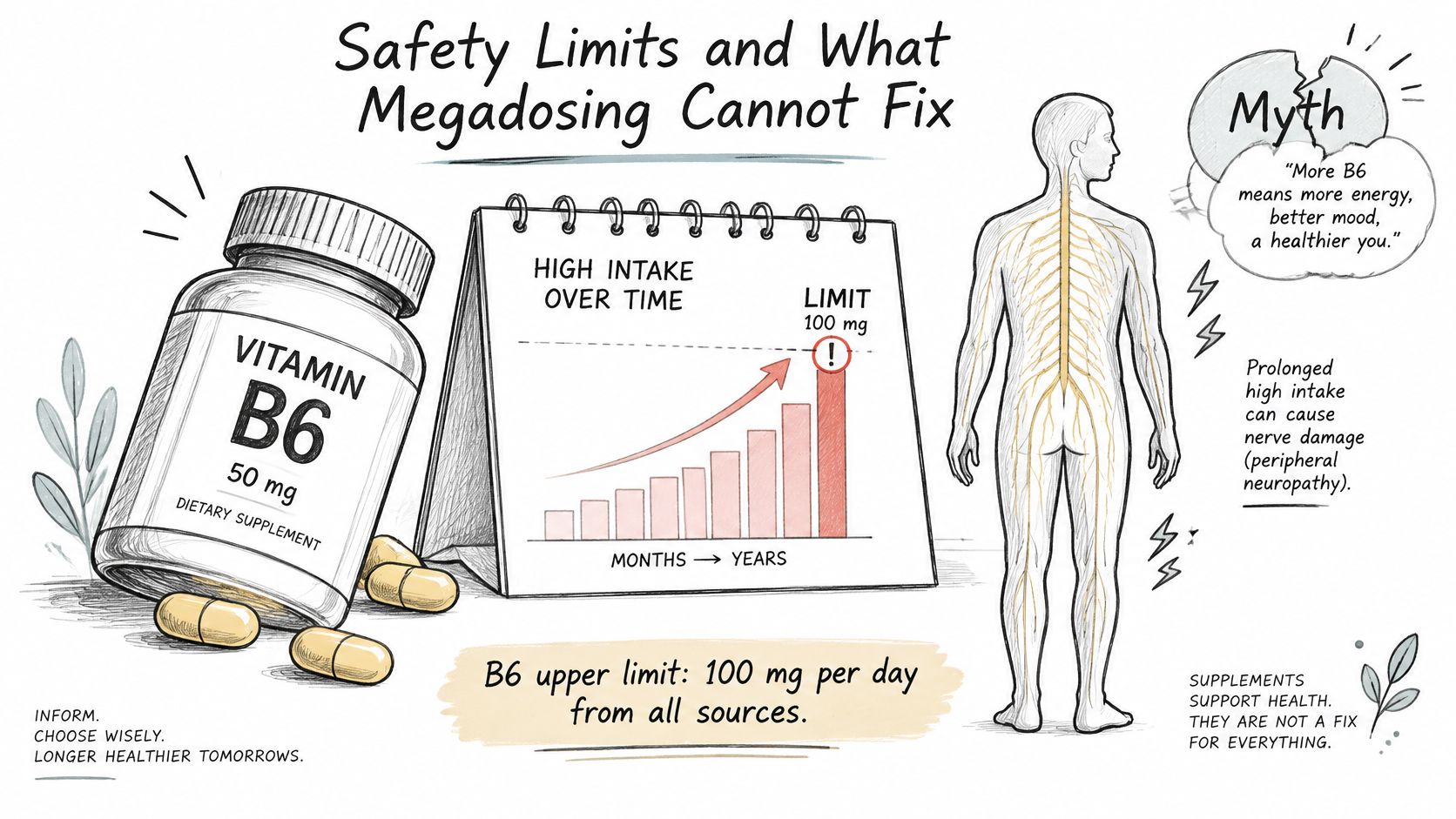
The NIH consumer fact sheet reports the U.S. National Academies' adult B6 upper limit of 100 mg daily from all sources. An upper limit is a safety boundary, not an intake target or a guarantee that a particular long-term regimen is appropriate for you.
The visual below highlights the main B6 safety concern.
Count overlapping products
A multivitamin, sports blend, standalone B6 capsule, and fortified protein powder can all contribute to the same daily exposure. The fact that they're marketed for different purposes doesn't keep their ingredients separate inside your body.
Check the amount per serving and the servings you take. Include occasional products if you use them frequently enough to become part of your routine.
Safety checkpoint: New tingling while taking supplements isn't a reason to add another B vitamin. Review the products and seek clinical advice.
B12 has no established tolerable upper intake level because of its low toxicity profile. That doesn't make megadosing necessary or demonstrate that a larger dose will improve concentration, exercise performance, or vitality.
A better biomarker isn't automatically a better outcome
B6, B12, and folic acid can lower homocysteine in combination. However, lowering a laboratory marker doesn't by itself prove that taking either vitamin alone prevents cardiovascular disease.
Combination trials also can't automatically identify which ingredient produced an outcome. A result involving several nutrients is not evidence that a standalone B6 capsule provides the same benefit.
This video offers additional context for the B6 and B12 comparison.
For everyday decisions, separate deficiency treatment from performance marketing. Correcting an established deficiency has a clear nutritional purpose; buying escalating doses for energy without investigating symptoms doesn't.
If fatigue persists despite an adequate diet, a clinician can investigate other explanations rather than treating every symptom as a B-vitamin problem. The practical priorities are controlling total B6 exposure and detecting and correcting B12 deficiency when indicated.
Choosing a Supplement and Confirming B12 Status
Which priority fits which situation
| Situation | Likely priority | Label or next step |
|---|---|---|
| Regular animal foods, no risk factors | Usually neither; diet often covers needs | Add up B6 across all products |
| Vegan or vegetarian eating | B12 deserves attention first | Assess reliable sources; discuss serum B12 testing |
| Older adult | Consider B12 absorption | Ask whether serum B12 and MMA are appropriate |
| Long-term metformin use | B12 monitoring | Seek clinician-guided testing before adding B6 or a B-complex |
| Pregnant or breastfeeding | Life-stage nutrition | Follow prenatal guidance; total combined B6 intake |
| Already taking a B-complex | Review total B6 | Check every overlapping product and serving |
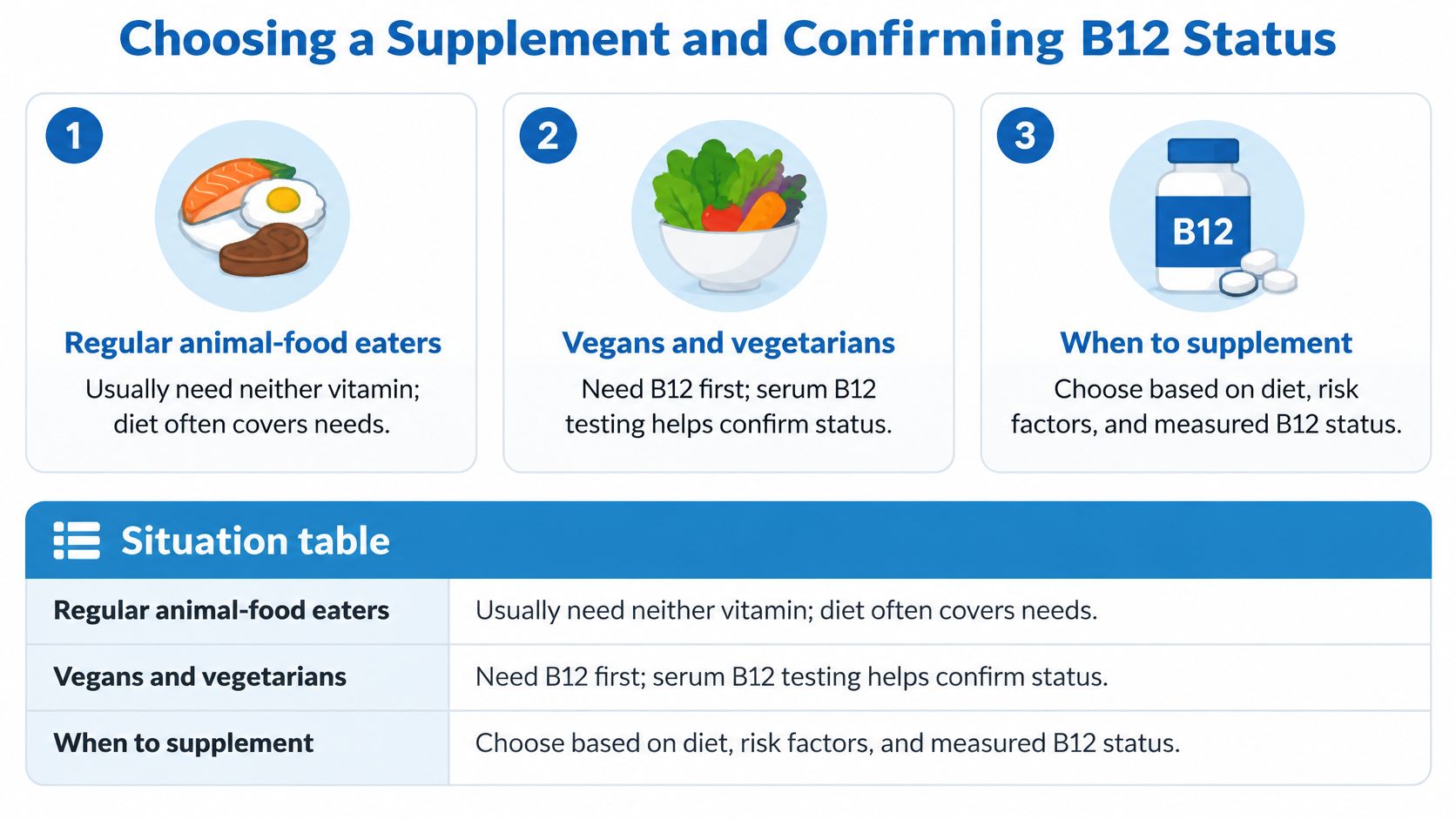
Use the table to identify your next action, not to diagnose yourself. A vegetarian who regularly consumes dairy, eggs, and fortified foods has a different intake pattern from someone who avoids all animal foods and rarely uses fortified alternatives.
Likewise, someone eating animal foods doesn't automatically have adequate B12 status if absorption is impaired. The best choice follows the reason for supplementation, not just the ingredient name on the front of the bottle.
Read an actual serving before buying
At CalVitamin, the serving information for this example lists 120 mcg of B12 as methylcobalamin, labeled as 2000% of the Daily Value, and 10 mg of B6 as pyridoxine hydrochloride, labeled as 500% of the Daily Value.
Those percentages describe the stated label information. They don't establish an individualized treatment dose, prove superior absorption, or predict how you'll feel.
Our guide to reading a supplement label can help you distinguish the serving size, nutrient amount, chemical form, and percentage Daily Value. Read those fields together rather than choosing from the product's front-panel claims.
A useful label review includes:
- Serving size: Check whether the listed amount applies to a capsule, several capsules, or a measured liquid serving.
- Actual use: Record how often you take the product, not merely what the suggested-use panel says.
- Duplicate ingredients: Search other labels for B6, pyridoxine, pyridoxine hydrochloride, and PLP.
- Purpose: Decide whether you're maintaining intake, addressing a dietary gap, or following a treatment plan.
Form doesn't answer the dose question. Methylcobalamin and cyanocobalamin are common B12 forms, but a familiar or appealing form name doesn't tell you whether the product fits your circumstances.
A B-complex may be convenient when several nutrients are needed. If B12 alone is the concern, however, a targeted product avoids adding B6 merely because the vitamins are often packaged together.
This checklist summarizes the diet and status questions that should guide selection.
Follow a testing and follow-up sequence
Write down your risk factors. Include restricted animal-food intake, older age, metformin, acid-reducing medication, and stomach or intestinal surgery. Note symptoms and when they began.
Ask whether serum B12 testing is appropriate. Testing is particularly relevant when symptoms or absorption risks make a simple dietary explanation incomplete. Tell the clinician about supplements you're already taking so they can interpret the result in context.
Clarify an uncertain result. Ask whether MMA would help resolve a borderline serum B12 finding. A result requires clinical interpretation, not a purchase based solely on a laboratory flag.
Match correction to the cause. Dietary insufficiency and impaired absorption may require different approaches. Let the clinician set a treatment dose and decide whether oral replacement or another delivery method is appropriate.
Review B6 before adding anything. Bring every relevant label to the discussion, including sports and vitality blends. A B12 treatment plan doesn't automatically justify additional B6.
Arrange follow-up. Confirm when to recheck symptoms and laboratory findings. If improvement doesn't occur, the next step is reassessment of the diagnosis, absorption, and treatment, not just a stronger supplement.
Seek prompt medical assessment for spreading numbness, loss of balance, or new confusion or memory changes. Sudden neurological symptoms warrant urgent care rather than a supplement trial.
For prevention, you don't need to postpone reliable B12 intake while waiting for symptoms, particularly if your diet excludes dependable sources. For suspected deficiency, testing and clinical review help distinguish a nutritional gap from an absorption problem or another medical condition.
The final decision is specific: investigate B12 status when indicated, and make B6 supplementation a separate decision. Neither a large percentage Daily Value nor a promise of energy can replace that distinction.
CalVitamin offers vitamins and other dietary supplements, along with educational guides to help you compare ingredients and serving amounts. Visit CalVitamin to review supplement options, and use your diet, medication history, and clinician's recommendations to choose between targeted B12 support and a broader formula.


