

You're probably looking at two fish oil bottles that seem almost identical. Both say “omega-3.” Both use words like pure, triple strength, and heart health. One is cheaper, one looks more premium, and neither makes it easy to tell what you're buying.
That's the challenge when shopping for the best omega 3 fish oil. Many consumers focus on the front label, where marketing lives. The better move is to learn how to read the back label, where the product tells the truth about potency, form, serving size, and quality clues.
A good fish oil isn't just “high mg.” It's a supplement that gives you meaningful amounts of EPA and DHA, uses a form your body can absorb well, and shows signs of careful manufacturing. Once you know how to decode those pieces, you can judge almost any product on your own.
| What to check | What matters most | What to watch for |
|---|---|---|
| Total fish oil | Only a starting point | Big front-label numbers can be misleading |
| EPA + DHA per serving | The most useful potency signal | Low active omega-3 content hidden behind “fish oil” total |
| Serving size | Tells you real daily intake | Needing many softgels to reach a useful dose |
| Form | Affects absorption | Unclear wording around triglyceride or ethyl ester form |
| Other ingredients | Reveals fillers and capsule components | Unwanted additives, allergens, unnecessary colorants |
| Freshness and testing | Helps assess quality | No clear testing information, vague quality claims |
Table of Contents
- Navigating the Crowded World of Omega-3 Supplements
- Why Omega-3s Are a Non-Negotiable Health Investment
- How to Decode Any Fish Oil Supplement Label
- Formulation Wars Triglyceride vs Ethyl Ester vs Krill Oil
- Gauging Purity Sustainability and Freshness
- Personalized Recommendations for Your Health Goals
- Your Omega-3 Shopping Checklist and FAQs
Navigating the Crowded World of Omega-3 Supplements
The omega-3 aisle is crowded because brands know shoppers tend to scan for one shortcut. Usually it's the biggest number on the front, the lowest price, or a phrase like pharmaceutical grade. That shortcut often leads to disappointment, because fish oil quality is rarely obvious at first glance.
A bottle can look strong while delivering modest EPA and DHA. Another can look plain but offer a more concentrated formula in a better molecular form. That's why product roundups only get you so far. What helps more is a repeatable buying skill.
If you browse CalVitamin's omega-3 fish oil blog category, you'll see the topic quickly branches into dosage, forms, and product comparisons. That's useful, but the bigger advantage comes when you can inspect any label yourself and know what each line means.
The label tells a story
The front label sells aspiration. The back label shows math.
When I evaluate fish oil, I want four answers fast:
- How much EPA and DHA am I getting
- What form is the oil in
- How many capsules does it take to reach that amount
- Does the brand show real signs of quality control
Those four checks eliminate a surprising number of mediocre products.
Practical rule: Never choose a fish oil based on the total fish oil number alone. The active story is in EPA and DHA.
What works and what usually doesn't
What works is comparing supplements by active omega-3 content per serving, not by bottle size or flashy wording. What doesn't work is assuming “triple strength” means one product is automatically better than another.
A smart buyer reads fish oil labels the way a careful grocery shopper reads ingredient lists. Once you know the difference between fish oil amount, omega-3 amount, and EPA/DHA amount, the market gets much less confusing.
Why Omega-3s Are a Non-Negotiable Health Investment
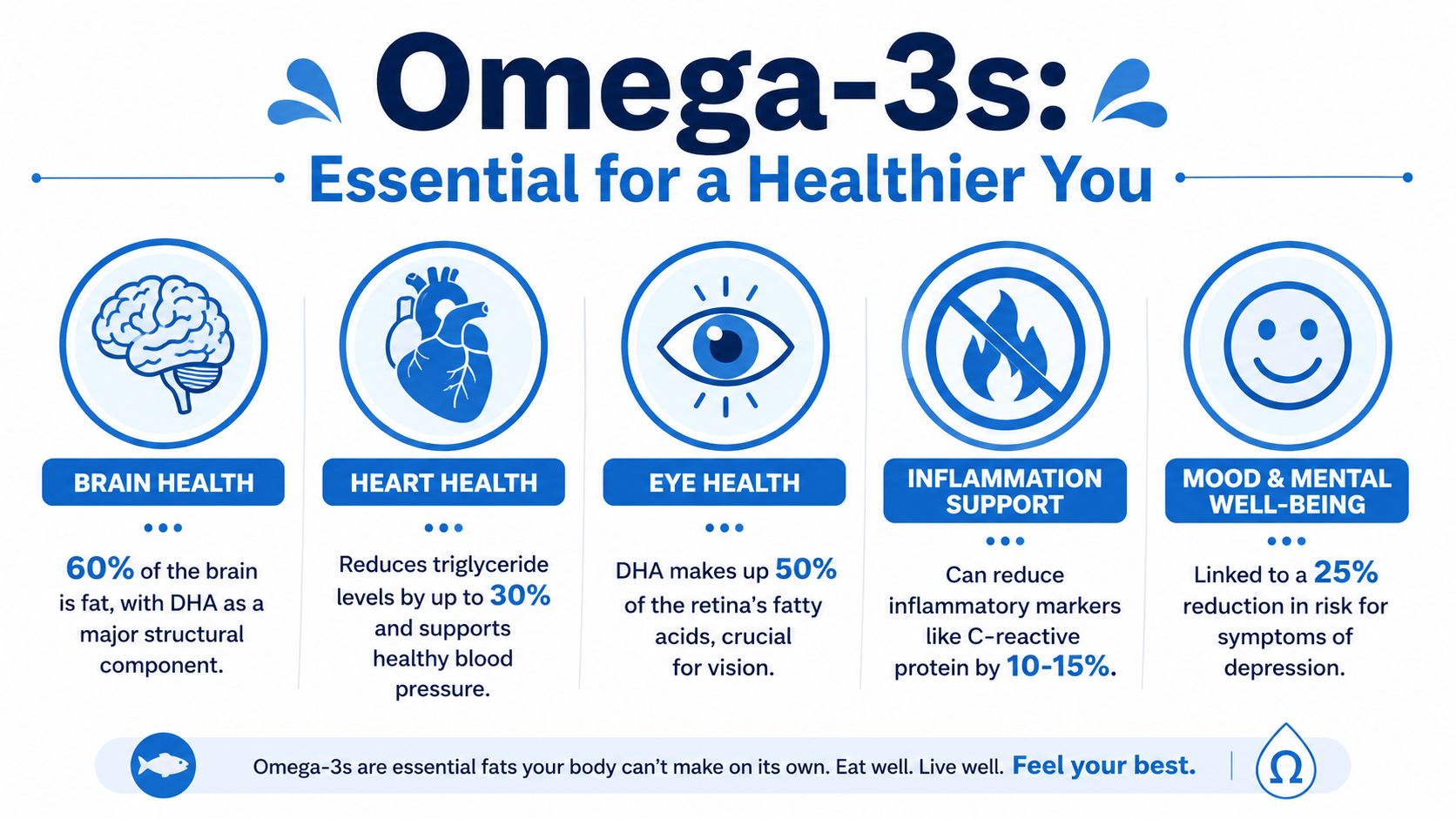
Omega-3s matter because they aren't decorative nutrients. EPA and DHA are biologically active fats with meaningful roles in cardiovascular health and broader cell function. If you're going to take a daily supplement, fish oil is one of the categories where label quality can substantially change the value you get.
The strongest practical reason to care is that benefit appears tied to actual dose, not just casual exposure. A meta-analysis discussed by Lab Manager's coverage of the Harvard and Brigham research found that daily omega-3 fish oil supplementation reduced the risk of heart attack and death from coronary heart disease by 8% compared to placebo, with the association especially evident at higher doses exceeding 1 gram of EPA and DHA combined. The same report noted no significant benefit for stroke prevention.
Why dose matters more than hype
Many buyers get misled. They assume any fish oil capsule puts them in the same category as the products used in meaningful clinical research. That isn't always true.
Some softgels deliver a modest amount of EPA and DHA per serving. Others are concentrated enough to make therapeutic dosing more realistic. The difference matters because the clinical picture improves when the active omega-3 intake is high enough.
A bottle can be expensive and still underdeliver if most of the weight comes from filler oil rather than the omega-3s you're trying to buy.
What the evidence changes in practice
The practical takeaway isn't that everyone needs the same dose. It's that low-information shopping leads people to overestimate what they're taking.
Fish oil only looks simple until you compare “1000 mg fish oil” with the actual EPA and DHA underneath it.
That's why I treat omega-3 supplements less like a commodity and more like a formulation category. The best omega 3 fish oil isn't the bottle with the loudest claims. It's the one that makes the active dose, form, and serving size clear enough that you can judge whether it fits your goal.
How to Decode Any Fish Oil Supplement Label
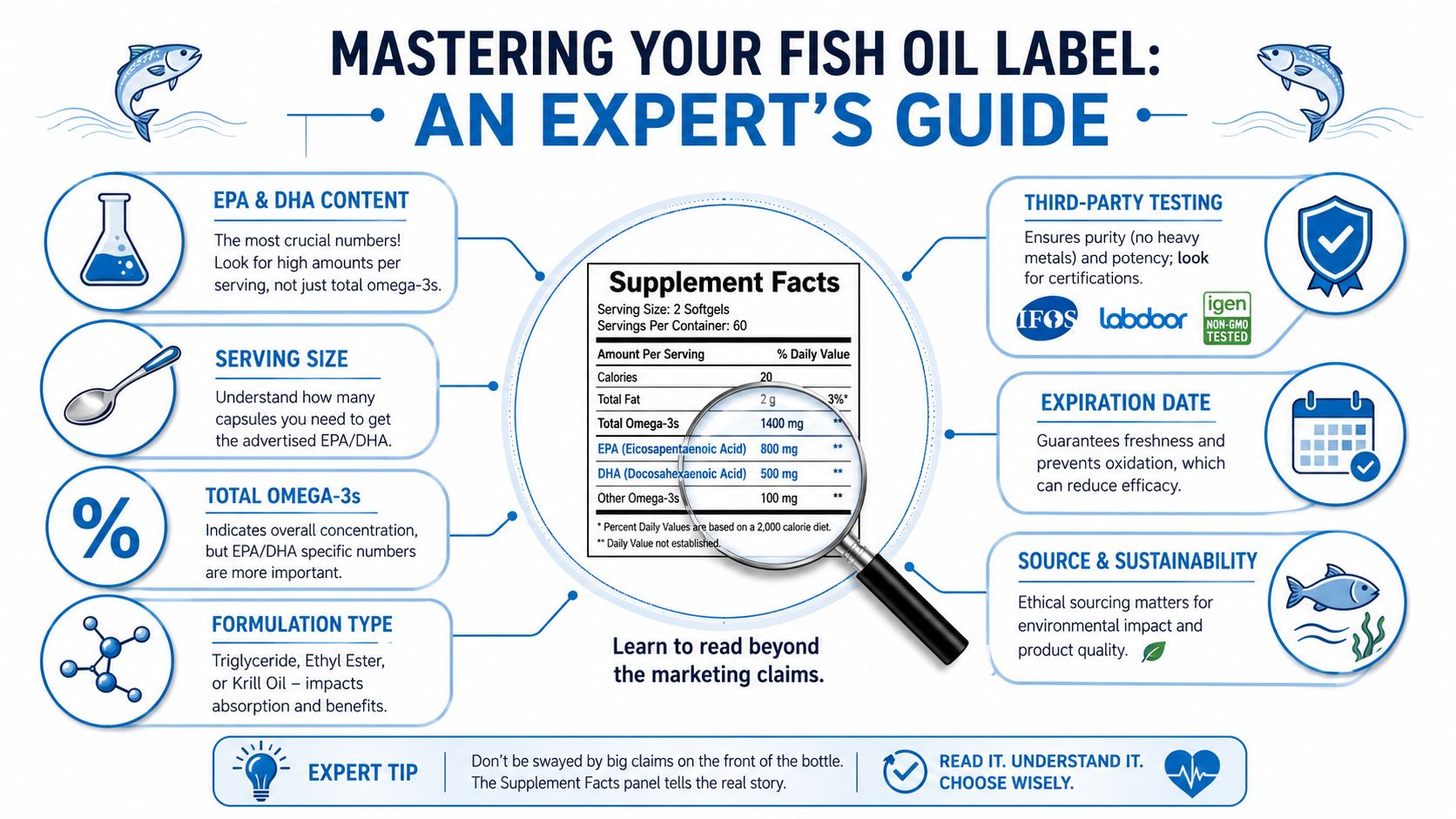
Most fish oil labels become easy to read once you know the order of importance. Start with the Supplement Facts panel. Ignore the adjectives on the front until the back panel checks out.
First find EPA and DHA
This is the most important step. Brands often print a large “fish oil” number on the front, but that number includes the whole oil, not just the key omega-3s.
Look for separate lines listing EPA and DHA. Then add them together. That combined number is usually the clearest snapshot of what the product is doing for you.
If the label only emphasizes total fish oil and makes the EPA/DHA breakdown hard to spot, I get cautious. A strong product usually makes those numbers easy to find.
Then check serving size
Serving size changes everything. A label may look concentrated until you realize the listed EPA and DHA require multiple softgels.
That doesn't make the product bad. It just affects convenience, cost per day, and adherence. If you won't realistically take that many capsules, the label is telling you the product doesn't fit your routine.
A useful reality check:
| Label question | Why it matters |
|---|---|
| How many softgels equal one serving | Shows the real daily commitment |
| Are EPA and DHA listed per capsule or per serving | Prevents accidental underdosing |
| Is the serving size practical for long-term use | Helps you stay consistent |
Later in your shopping process, it can help to compare product-specific writeups such as this NatureWise omega-3 fish oil review, because seeing a label interpreted line by line trains your eye quickly.
Here's a video walkthrough that complements the label-reading process:
Read the other ingredients list like a skeptic
A fish oil formula isn't just oil. The capsule shell and added ingredients matter too.
Check for:
- Capsule material: Gelatin is common. That may matter if you have dietary or religious restrictions.
- Added flavors or coatings: These can help with aftertaste, but they shouldn't distract from a weak core formula.
- Extra oils or fillers: Not always a dealbreaker, but they should make sense in the formula.
- Allergen flags: Fish is obvious, but some specialty products may raise shellfish questions.
Watch for vague language
Some labels use broad terms like “omega blend” or “marine lipids” without making the EPA and DHA content prominent. That's marketing fog. A clean label is specific.
The back panel should answer your questions quickly. If it creates new questions, keep shopping.
What the front label gets wrong
Words like pure, premium, and ultra don't tell you enough. Even “high potency” means little if the concentration is low or the serving size is awkward. The back label is where you decide whether the best omega 3 fish oil claim holds up.
Formulation Wars Triglyceride vs Ethyl Ester vs Krill Oil
Once potency is clear, the next question is form. Fish oil isn't sold in one universal structure, and that detail can affect absorption.
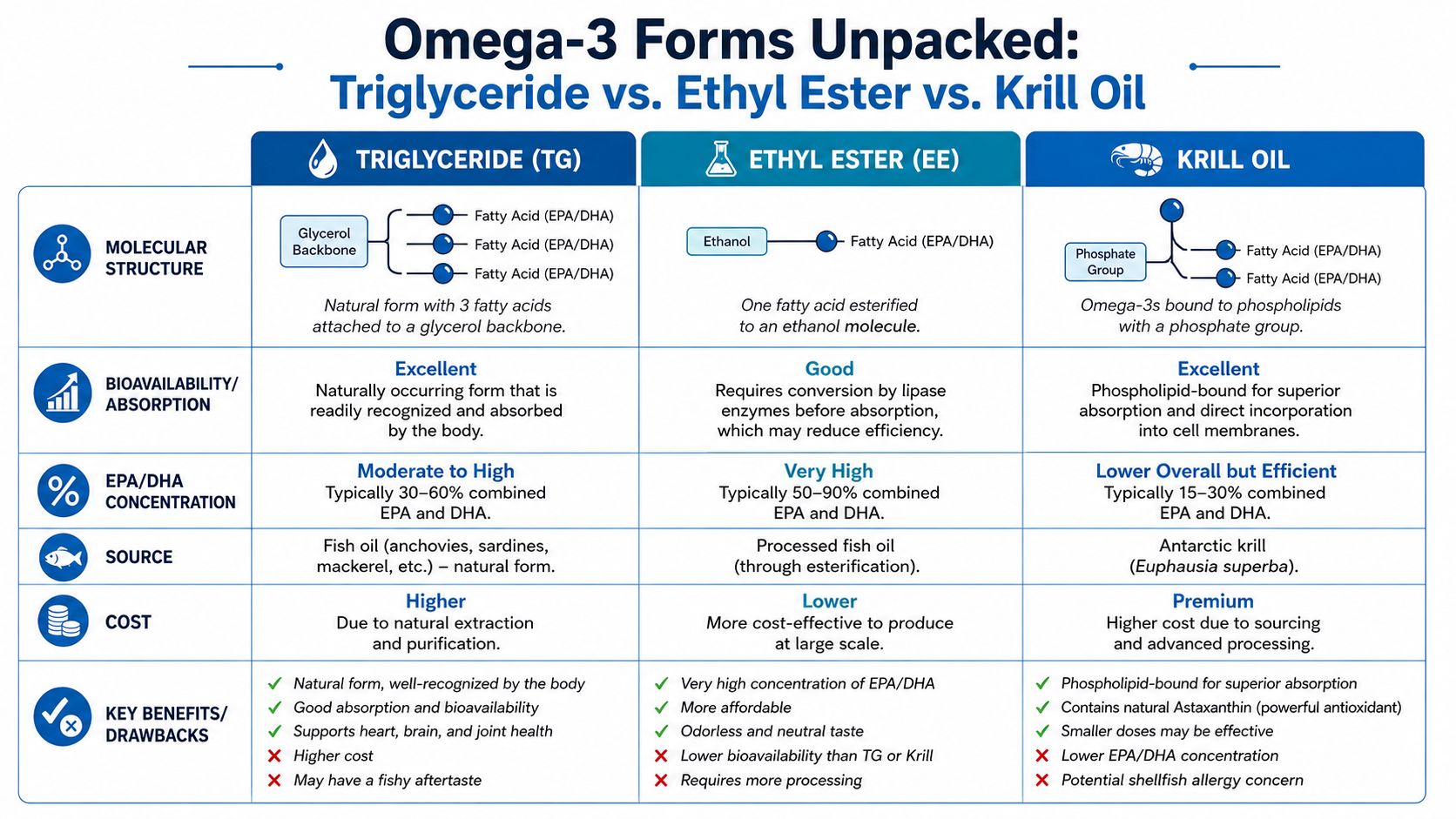
A clinical study available through PubMed Central found that concentrated re-esterified triglyceride (rTG) fish oil produced a statistically greater increase in whole blood omega-3 fatty acid levels than ethyl ester (EE) fish oil, triglyceride salmon oil, and krill oil phospholipids at prescribed dosages. The study also reported that the concentrated rTG product achieved a greater reduction in risk elements for cardiovascular disease than the other forms tested.
Triglyceride and re-esterified triglyceride
Triglyceride is the natural form found in fish. Re-esterified triglyceride is a processed form designed to bring the fatty acids back into a triglyceride structure after concentration. On labels, brands may mention TG or rTG.
For many careful shoppers, this is the sweet spot. You get concentration plus a form that has performed well in absorption research.
Ethyl ester
Ethyl ester fish oil is common because it can be used to create concentrated products at competitive pricing. That makes it relevant for budget-conscious buyers.
Still, form matters. If two labels look similar in EPA and DHA, and one is a strong triglyceride-based formula while the other is ethyl ester, I'd generally view the triglyceride-based option more favorably if the price difference is reasonable.
Krill oil
Krill oil has a different identity in the market. It's often positioned as premium, with smaller softgels and a phospholipid structure. Some people prefer it for tolerance or capsule size.
The trade-off is usually concentration. Krill products often don't compete with concentrated fish oil on total EPA and DHA delivered per serving. If your goal is pushing intake higher, standard fish oil often makes that easier.
If you're comparing categories, a product page like Onnit Krill Oil Pure Essential Fats 60 Softgels can be useful as a reference point for how krill is positioned differently from conventional fish oil.
A practical verdict
Not every shopper needs the same form. But if you want a simple hierarchy based on label-reading logic and the clinical comparison above, this is a sensible approach:
- Best fit for absorption-focused buyers: rTG fish oil
- Often strongest value play: EE fish oil from a transparent brand
- Often chosen for capsule experience or preference: Krill oil
- Most common mistake: Paying premium pricing without checking actual EPA and DHA delivery
Gauging Purity Sustainability and Freshness
After potency and form, quality control becomes the deciding layer, separating many decent-looking products into “carefully made” and “not convincing enough.”
Purity is not a bonus feature
Fish oil comes from marine sources, so shoppers should care about contaminant control. A serious brand usually says something concrete about testing, purification, or batch verification. What you don't want is a bottle full of polished claims with no meaningful evidence of oversight.
Third-party testing seals can help, but the label still needs to be read carefully. A logo is useful only if the brand makes clear what's being verified, such as purity, potency, or oxidation standards. If the packaging is vague, I don't give it much credit.
A fish oil can have strong EPA and DHA numbers and still be a poor choice if the brand is careless about testing.
Freshness matters more than many buyers realize
Fish oil is vulnerable to oxidation. Once oil goes rancid, you're no longer dealing with the product you thought you bought. Freshness issues can show up as a harsh smell, a sharp aftertaste, or those notorious fishy repeats after swallowing.
Check for:
- Expiration date: A basic but necessary first screen.
- Packaging quality: Darker, well-sealed bottles often signal better protection than casual packaging.
- Added antioxidants: Some formulas include stabilizing ingredients to help protect the oil.
- Storage instructions: Brands that care about freshness usually tell you how to handle the product.
Sustainability deserves a place in the decision
Sourcing also matters. Ethical and well-managed fisheries don't automatically guarantee a superior supplement, but they do show the company is thinking beyond the cheapest possible raw material.
I treat sustainability as a tie-breaker after potency, form, and testing. If two products are otherwise well matched, the one with clearer sourcing practices usually earns the edge.
The easy mistakes to avoid
Many shoppers overfocus on one variable. They chase the biggest EPA number and ignore freshness. Or they buy the prettiest bottle and never verify purity language. Better decisions come from stacking the basics:
- Potency that fits your goal
- A form you're comfortable paying for
- Testing signals that are specific
- Freshness details that look credible
- Sourcing that isn't hidden
That combination is what makes a fish oil feel trustworthy, not a single flashy claim.
Personalized Recommendations for Your Health Goals
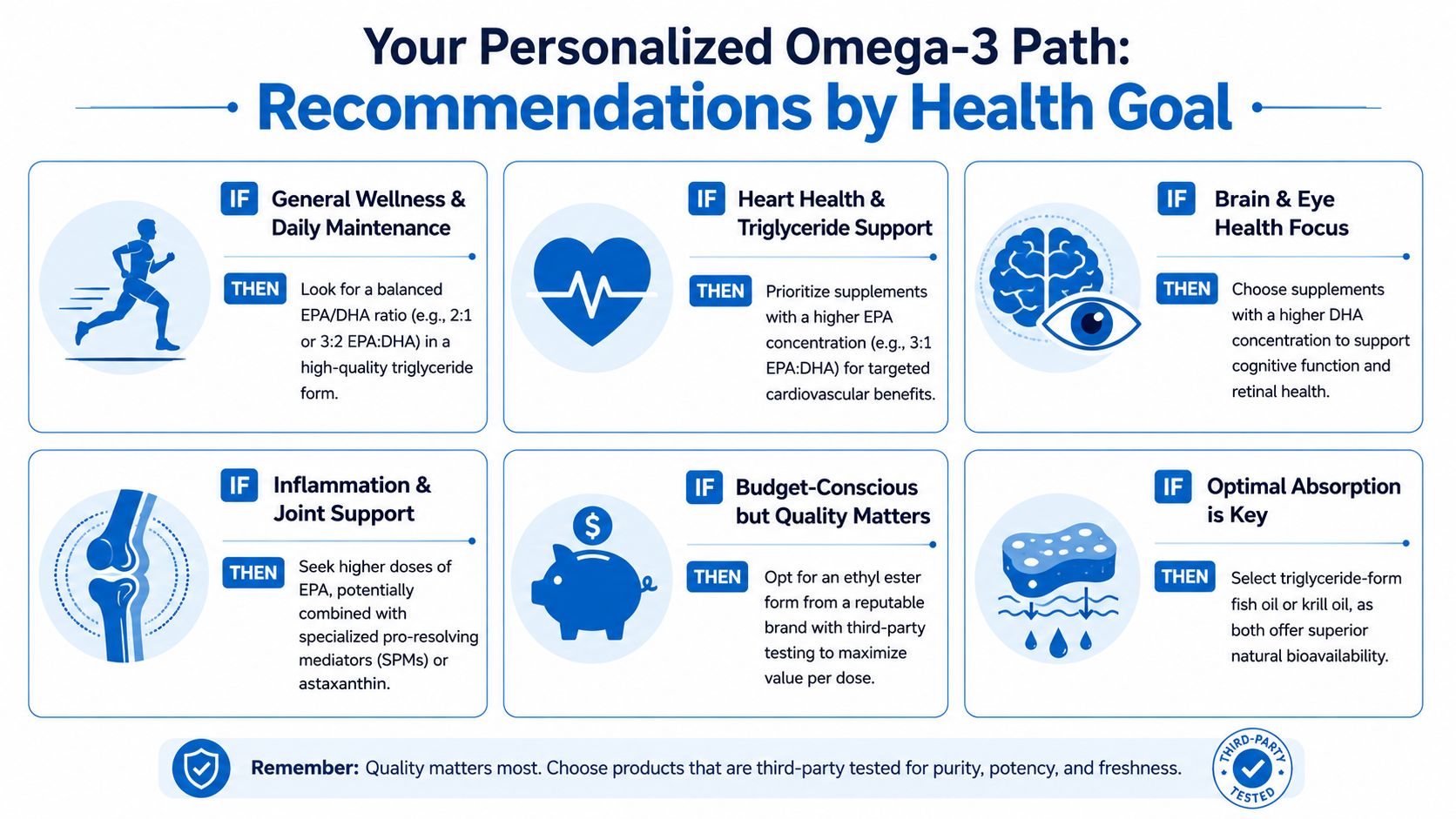
Buying the best omega 3 fish oil gets easier when you stop asking, “What's the top product?” and start asking, “What label profile fits my goal?”
General wellness buyers
For everyday use, look for a balanced EPA and DHA profile and a serving size you'll maintain. This is the category where people often overspend on “elite” branding when a well-made, transparent formula would do the job.
A practical label target is clarity, not complexity. You want EPA and DHA listed plainly, a manageable capsule count, and quality cues that don't feel hidden.
Heart-focused shoppers
Concentration starts to matter more, as the earlier cardiovascular research discussed in this article supports the idea that meaningful omega-3 effects are tied to actual intake, especially above a modest threshold.
If your priority is heart support, favor products that make it easier to reach a higher combined EPA and DHA intake without swallowing a pile of capsules. Form also matters here, so concentrated triglyceride-based products deserve a close look.
Brain and eye support priorities
In this category, I'd pay more attention to DHA presence. Labels vary a lot here. Some fish oils skew heavily toward EPA, while others are more balanced.
That doesn't mean EPA is irrelevant. It means buyers with cognitive or visual priorities should make sure DHA isn't treated as an afterthought.
For brain-oriented shopping, don't buy a fish oil just because it says “supports cognition.” Check whether the DHA line actually backs that up.
Joint support and inflammation-minded use
People shopping for joint comfort often do better with labels that lean more heavily toward EPA. In practice, this means reading the EPA line first and then deciding whether the overall concentration justifies the price.
This is also one of the few cases where some shoppers consider krill oil because of preference, tolerance, or capsule style. But if label efficiency is the main goal, concentrated fish oil often wins the comparison.
Pregnancy and nursing considerations
This group should read labels more carefully than almost anyone else. DHA content, ingredient simplicity, and quality controls become especially important. It also makes sense to avoid casual self-experimentation with high-dose products.
Use these filters:
- Keep the formula simple: Cleaner labels are easier to assess.
- Prioritize DHA visibility: Don't assume it's there in meaningful amounts.
- Check quality language closely: Purity and freshness matter.
- Review the capsule ingredients: This is often overlooked.
If you want one concrete example of a retail product format to inspect, CalVitamin carries Viva Naturals Triple Strength Omega 3 Fish Oil 2200mg 180 Softgels, which is relevant here mainly as a label-reading exercise. The useful question isn't whether a product name sounds strong. It's whether the EPA, DHA, serving size, form, and testing details justify that strength claim.
Your Omega-3 Shopping Checklist and FAQs
A good fish oil purchase rarely comes from one magical feature. It comes from several solid signals lining up at once.
Shopping checklist
Use this when you're in a store, comparing tabs online, or trying to decide whether a bottle is worth the price.
- Find EPA and DHA first: Ignore the front-label fish oil total until you've seen the active omega-3 breakdown.
- Check the serving size carefully: Make sure the advertised potency doesn't require more capsules than you're willing to take.
- Identify the form: Triglyceride, re-esterified triglyceride, ethyl ester, or krill should be clear enough to understand.
- Read other ingredients: Look for capsule materials, flavors, fillers, and allergens that matter to you.
- Inspect freshness signals: Expiration date, packaging, and storage guidance all matter.
- Look for testing transparency: Vague quality language isn't enough.
- Compare cost by useful serving, not bottle size: The cheaper bottle can be more expensive in practice if the active content is low.
- Match the label to your goal: A general wellness formula and a heart-focused formula don't always look the same.
FAQs
Can I get enough omega-3s from food alone
Some people can, especially if they regularly eat fatty fish. But many buyers shop for supplements because their diet is inconsistent, they dislike fish, or they want a more reliable intake. A supplement works best when it fills a clear gap rather than serving as a blind insurance policy.
What side effects should I watch for
The most common issues are usually practical ones such as unpleasant aftertaste, repeat burps, or digestive discomfort. Taking fish oil with food often helps. If a product repeatedly tastes harsh or smells off, I'd question freshness rather than trying to force yourself to use it.
How long does it take to notice anything
That varies by goal and by what you mean by “notice.” Fish oil isn't like caffeine. Some people judge it by routine consistency and lab-based follow-up with a clinician, while others pay attention to general tolerance and how easy the product is to take daily.
Is more always better
No. Better shopping starts with enough active EPA and DHA for your goal, not with chasing the biggest number you can find. Extremely concentrated products can be useful, but only if the label, form, and purpose justify them.
What's the single biggest mistake people make
They buy based on the front label. The best omega 3 fish oil choice usually becomes obvious only after you compare EPA, DHA, serving size, form, and quality signals together.
CalVitamin offers a broad supplement catalog, including omega-3 products, along with category pages and blog content that can help shoppers compare formats and label details before buying. If you want a place to browse fish oil alongside other wellness products, visit CalVitamin.






