You're standing in the aisle, or staring at a product grid online, holding two tubs that both look “high protein.” One says 30 grams per scoop. The other says 25. One has a ripped model on the label. The other has an “organic” badge and a long list of superfoods. Most shoppers end up buying the one with the loudest label, then hoping they guessed right.
That's backward.
The best protein supplements aren't the ones with the biggest protein number on the front. They're the ones that match your goal, give you usable amino acids, and don't make you play roulette with low-grade ingredients and weak testing. The protein category is huge now, not some tiny gym-bro corner. Grand View Research valued the global protein supplements market at about USD 29.8 billion in 2025 and projects USD 63.2 billion by 2033, with 10.3% CAGR from 2026 to 2033. It also identified North America as the largest regional market in 2025 and Asia-Pacific as the fastest-growing region. The U.S. market alone was about USD 10.2 billion in 2025 and is projected to reach USD 20.4 billion by 2033 according to Grand View Research's protein supplements market analysis.
That size is exactly why this category got messy. More brands, more blends, more flavor systems, more filler, more fake “premium” positioning.
I've talked to enough buyers to know this: if you don't have a filter, you'll overpay for flavor and underbuy for results.
Table of Contents
- Why Choosing a Protein Supplement Feels Overwhelming
- What Makes One Protein Better Than Another
- Comparing the Main Protein Types
- Matching Protein to Your Real Goal
- Dosing and Timing That Actually Work
- The Contamination Question Most Buyers Skip
- Reading Labels Like a Pro
- Your Protein Buying Checklist
Why Choosing a Protein Supplement Feels Overwhelming
A regular buyer walks in looking for something simple. They want a protein that helps after workouts, or keeps them full, or plugs a gap on busy days. Ten minutes later they're comparing isolate, concentrate, hydrolysate, grass-fed, vegan, keto-friendly, digestive enzymes, probiotics, cookie crumble flavor, and a label that reads like a chemistry worksheet.
That confusion isn't your fault. The shelf is built to blur the difference between what matters and what sells.
Too many labels, not enough signal
Most tubs are marketed around one flashy detail. Usually it's total protein grams. Sometimes it's the flavor. Sometimes it's a lifestyle badge. But those front-label claims don't tell you if the protein is high quality, whether the amino acid profile is strong enough to support muscle recovery, or whether the product has clean third-party testing.
A lot of shoppers also assume the most expensive option must be better. Sometimes it is. Plenty of times it isn't. A plain whey isolate with solid testing can be a much smarter buy than a loaded “performance blend” stuffed with extras you didn't ask for.
What actually matters: protein type, amino-acid quality, contaminant risk, serving size that fits your goal, and what you're paying for each useful serving.
The shopping mistake I see most
People compare scoops instead of outcomes.
That's how someone buys a plant blend because it says 30 grams, then wonders why it doesn't hit the same way as a lower-gram dairy protein. Or they buy a giant bargain tub, then quit using it because the sweetener wrecks their stomach. Or they choose the prettiest “natural” label and never once check for testing.
Use a better filter:
- Start with your goal. Muscle gain, meal replacement, weight loss support, or just topping off daily intake.
- Check the protein source. Whey, casein, egg, soy, pea, or a blend.
- Look for proof of quality. Not just claims.
- Read the ingredient list. Long doesn't mean better.
- Judge value by results per serving. Not by hype per container.
That's how you find the best protein supplements for real life, not for Instagram.
What Makes One Protein Better Than Another
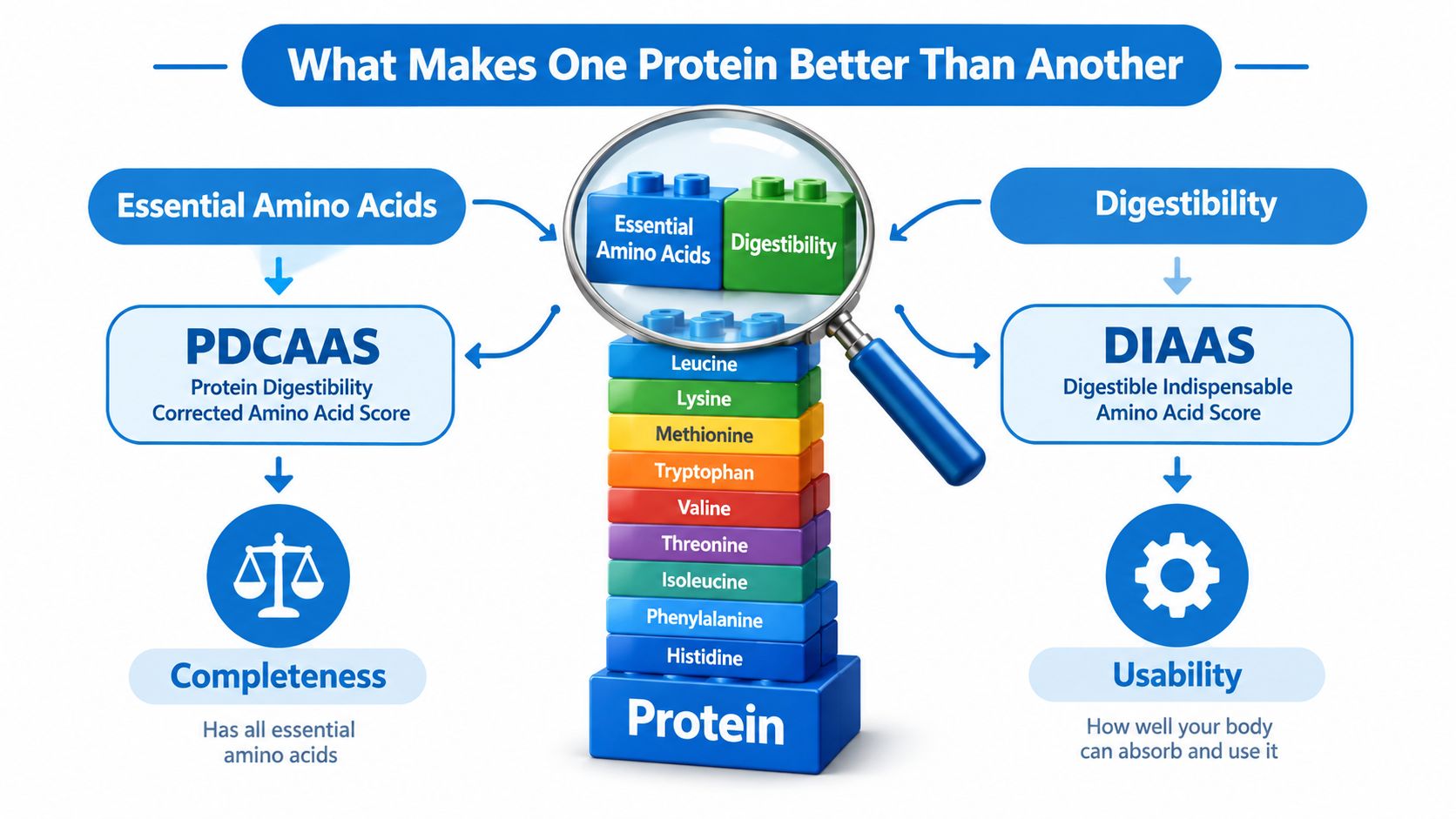
A good protein earns its spot in your cart three ways. It gives you amino acids your body can use, it avoids junk you do not need, and it comes from a brand willing to prove what is in the tub.
That last part gets skipped too often.
A lot of labels can hit 25 grams. Fewer can show clean sourcing, solid digestibility, and testing that backs the claim. If you only compare protein grams, you miss the part that affects results and the part that affects trust.
Start with quality, not flavor names and front-label hype.
First, check how usable the protein is. Digestibility and amino-acid profile matter more than a flashy serving size. A whey isolate usually gives a more efficient amino-acid hit than a weaker single-source plant powder with the same listed grams.
Then check leucine. Leucine helps trigger muscle protein synthesis. Many brands do not list it. That omission matters. As noted in this review on protein quality and leucine content, dairy-based supplements tended to provide more leucine per serving than vegan products, and many tested products did not reach the commonly recommended 3 grams per serving when used as directed.
Then ask the question buyers avoid: who verified this powder? A label can promise purity all day. Independent testing is what separates a serious product from a pretty tub.
Here is the fastest way to judge one protein against another on a retailer shelf:
- Best pick: clear protein source, simple formula, third-party verification, no proprietary blend language
- Fine for many buyers: a basic whey concentrate or blended plant protein with transparent labeling and a price that makes sense per serving
- Put it back: vague “protein matrix” formulas, pixie-dust add-ons, or labels that say a lot without showing proof
One more thing. Purity is not only about what helps muscle recovery. It is also about what should not be there. Heavy metals, inaccurate protein counts, and contamination are real buying issues, especially in bargain products and poorly vetted plant formulas. That is why a plain product with verification often beats a stuffed formula with a longer ingredient list.
If you want to sort options by source and format before you read every label, CalVitamin's protein supplements category is a straightforward way to narrow the field.
A better protein is not the one with the loudest label. It is the one that gives you usable amino acids, fewer surprises, and proof to back it up.
Comparing the Main Protein Types
Start at a big retailer shelf and the tubs blur together fast. The smart shortcut is to sort by protein type first, because that tells you more about digestion, amino-acid profile, and how likely the product is to fit your goal without wasting money.
Here is the practical breakdown.
| Protein Type | Digestion Speed | Amino-Acid Quality | Best-Use Case |
|---|---|---|---|
| Whey concentrate | Fast | High | Everyday post-workout use, value buy |
| Whey isolate | Fast | Very high | Lean post-workout option, lower lactose |
| Casein | Slow | High | Before bed, meal gap support, satiety |
| Soy | Medium | Best of the common plant options | Vegan daily driver |
| Pea | Medium | Lower alone, better in blends | Dairy-free support when blended well |
| Egg | Medium | High | Dairy-free complete protein |
| Blended plant proteins | Medium | Better than many single-source plants | Vegan option with broader amino coverage |
Three types do most of the heavy lifting for most buyers.
Whey isolate is the cleanest pick for gym-goers who want high protein with fewer extras. It is usually lower in lactose, mixes easily, and gives you a strong amino-acid profile without much label clutter.
Whey concentrate is the better buy for plenty of people. If dairy sits fine with you, concentrate often gets you close to the same real-world result for less money per serving.
Casein earns its shelf space because it slows things down. That makes it useful before bed, during long gaps between meals, or anytime hunger control matters as much as muscle recovery.
Plant proteins need a harder look. The label may say 20 or 25 grams of protein, but source and formulation matter more here than in dairy-based products.
For practical selection, the evidence base ranks whey and milk proteins above most plant proteins on amino-acid density and digestibility, while soy, pea, and rice isolates were lower for several amino acids according to Nutrition Reviews on protein quality and meal dosing. The same review notes that plant-protein meals usually need more total protein than animal-protein meals to make up for lower leucine density and digestibility.
That matters on a store shelf. If you want a single-source plant powder, soy is usually the strongest pick. If soy is off the table, a pea and rice blend usually makes more sense than pea alone. Egg white protein is the clean fallback for dairy-free buyers who still want a complete animal protein.
For a worked example of judging a plant formula by use case, ingredients, and tradeoffs, see this KOS Organic Plant Protein vanilla review.
Matching Protein to Your Real Goal
Shop in the wrong order by picking a trendy powder first, then trying to force it into the job you need done. Flip that.
Choose the outcome first. Then buy the protein that makes that outcome easier.
Goal-to-Protein Matching Matrix
| Goal | Best Protein Type | Daily Protein Target | Form Factor | Key Filter |
|---|---|---|---|---|
| Muscle gain | Whey isolate or whey concentrate | Personal daily intake target based on body weight and training | Powder or ready-to-drink | Fast digestion, complete amino profile |
| Weight loss | Whey or a solid pea blend | Personal daily intake target that protects lean mass | Powder, shake, or bar | Satiety, tolerable sweetener system |
| Meal replacement | Casein or a balanced blend | Product should fit meal context, not just snack use | Shake or blend | Fullness, ingredient simplicity |
| General wellness | Any complete protein you'll use consistently | Enough to close the gap in your normal diet | Powder, RTD, or bar | Digestibility and convenience |
Four common buyers
You want muscle gain.
Get whey isolate if your budget allows. Whey concentrate is also perfectly respectable if digestion is fine. Use it around training or whenever you need an easy complete-protein meal addition.
You want weight-loss support.
You don't need the fanciest powder on the shelf. You need a protein that helps protect lean mass and keeps calories under control. A moderate serving of whey often does that well. A decent pea blend can work if you avoid dairy.
You need meal support, not just a gym shake.
Casein shines here. It's slower, more filling, and better suited to times when you're trying not to raid the pantry an hour later.
You just want to cover the basics.
Then stop shopping like a bodybuilder. A smaller serving of a complete, tolerable protein is enough for many adults who need a convenient way to top off intake during busy days.
Buy for the job. Post-workout recovery, hunger control, and all-purpose convenience are not the same job.
Form matters more than people admit
Powder is usually the value play. Ready-to-drink bottles are convenient, but you pay for that convenience. Bars are portable, but many eat more like candy with protein added.
If you're disciplined and budget-conscious, tubs usually win. If your life is chaotic and you skip meals, ready-to-drink may be the better real-world tool because you'll use it.
Dosing and Timing That Actually Work
You bought the tub. Now don't waste it by treating dosing like a guess.
The loudest timing claims are usually the weakest ones. Claims about a 30-minute anabolic window, for instance, matter far less than hitting your daily protein total and getting enough protein in each meal to do the job.
The useful dose logic
A 2025 systematic review found protein supplements can improve strength and endurance, but the effects were limited and depended on the person, the training, and the full diet. The review's strongest setup was roughly 1 g/kg/day of supplemental protein on top of about 2 g/kg/day total daily intake, for 40 to 65 days, with long-term supplementation beating one-off use according to this systematic review on protein supplementation and performance.
Here's the practical takeaway. Random scoops do not fix a low-protein diet. Consistent daily intake does.
For many active adults, a smart working range is 1.6 to 2.2 g/kg/day total protein. Then split that across 3 to 5 feedings that each give you enough complete protein to count.
Protein Dosing and Timing Reference
| Body Weight (kg) | Daily Target (g) | Per Meal (g) | Leucine Goal (g) | Best Timing Window |
|---|---|---|---|---|
| 60 | 96 to 132 | 24 to 33 across 4 meals | 2 to 3 | After training, with meals, or before bed if dinner was light |
| 75 | 120 to 165 | 30 to 41 across 4 meals | 2 to 3 | After training, with meals, or before bed if you need coverage overnight |
| 90 | 144 to 198 | 36 to 50 across 4 meals | 2 to 3 | After training, with meals, or before bed if long gaps hurt recovery or hunger control |
If you only remember one formula, remember this one: body weight in kilograms x 1.6 to 2.2 = your daily protein target in grams.
What to do in practice
Start with your day, not the clock.
If breakfast is weak, put protein there. If training lands between meals, put a shake after training. If late-night hunger wrecks your calories, use casein before bed. Timing works best when it solves an actual problem.
A simple setup works for a lot of buyers:
- 3 to 5 protein feedings per day
- 20 to 40 grams per feeding for many adults
- Post-workout protein within a couple of hours, not a panic sprint to the shaker bottle
- Before-bed protein if you train hard, run long gaps between meals, or need better fullness
One more point that gets missed. Bigger people usually need bigger servings. A 90 kg lifter using a 20 gram scoop all day is probably underdosed. A 60 kg office worker trying to force down giant shakes four times a day is probably overdoing it.
Practical rule: hit your daily total, spread it across the day, and use timing where it fixes a real gap.
The Contamination Question Most Buyers Skip
Most “best protein supplements” lists fail. They rank flavor, mixability, and grams. They barely touch contamination risk.
That's nonsense. If a product has weak testing, I don't care how good the macros look.
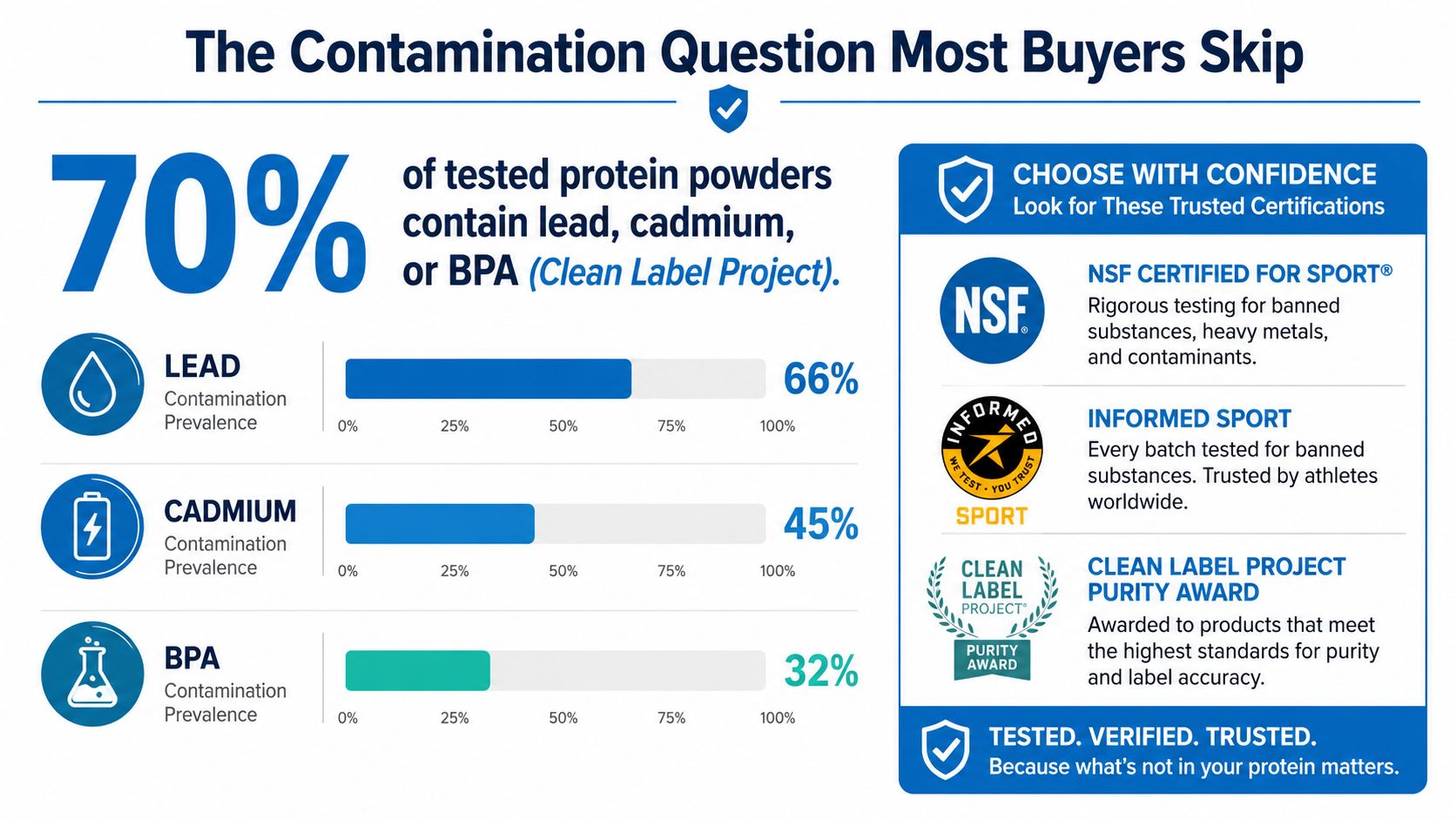
A 2025 testing wave reported by CNN said 47% of 160 protein powder samples exceeded California Proposition 65 lead thresholds, with plant-based powders showing about three times more lead than whey-based products, and chocolate-flavored powders tending to test worse than vanilla according to CNN's report on heavy metals in protein powder.
That should change how you shop immediately.
What I trust more than marketing badges
Third-party verification matters more than buzzwords. If I'm choosing between a slick “organic performance superblend” and a plain vanilla whey isolate with strong verification, I'm taking the boring tub.
Look for:
- NSF Certified for Sport
- Informed Sport
- A posted Certificate of Analysis
- Clear manufacturer testing language
What doesn't impress me by itself:
- Organic
- Vegan
- Grass-fed
- Proprietary blend
- Celebrity branding
Those aren't useless. They're just nowhere near enough.
For a product-level example of how a retailer review can frame a tested whey option, this Life Extension Wellness Code Whey Protein Isolate vanilla review shows the kind of plain-English product context shoppers should look for.
Here's a quick visual explainer before you buy anything else:
My default safety bias
If you have no dietary restriction, a whey- or egg-based vanilla product is often the safer default than many plant-based or chocolate powders, based on the contaminant pattern noted above.
Also, simpler products tend to make auditing easier. A shorter ingredient list gives you fewer places for junk to hide.
Reading Labels Like a Pro
Good label reading isn't about memorizing science terms. It's about spotting the tells fast.
Most buyers can scan a protein in under a minute if they know where to look.
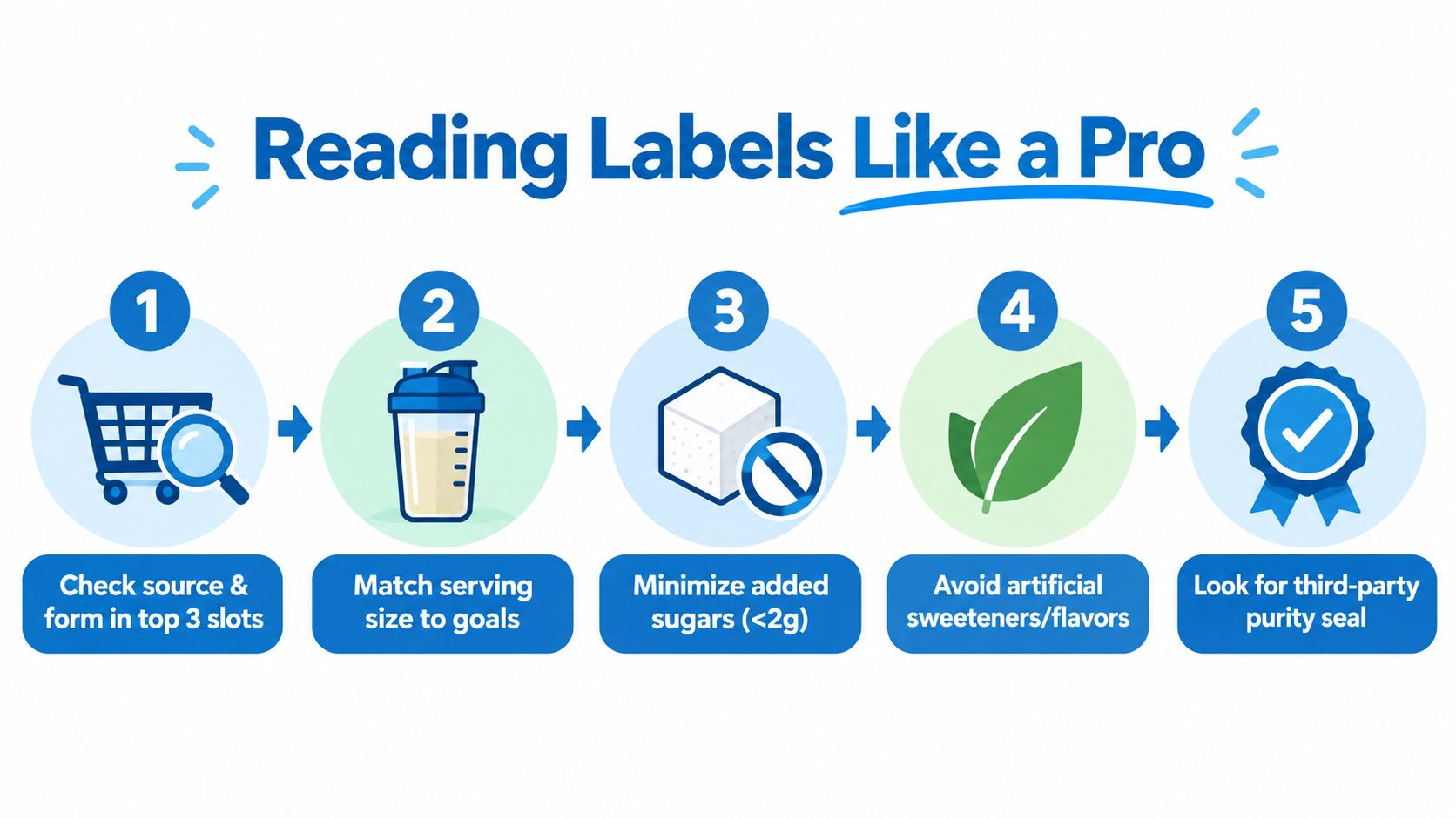
The five checkpoints
Check the source and form
Start with the ingredient list, not the front label.
If it says whey isolate, whey concentrate, micellar casein, egg white, soy isolate, or pea protein, good. If the first thing you see is a murky “protein matrix” with no clear proportions, that's weaker.
Audit the formula, not just the headline
A big protein number can hide a messy formula. Fillers, gums, creamers, and long flavor systems don't always make a product bad, but they can make it overpriced or harder to tolerate.
Watch for products where the scoop gets huge but the useful protein doesn't feel proportionate.
Look for amino spiking tells
Some brands pad nitrogen numbers with extra amino acids. If you see separate free-form amino acids like glycine or taurine added in a way that feels more cosmetic than functional, slow down and inspect harder.
The question is simple: is this a real protein-forward formula, or a label-engineering trick?
Then check the part buyers ignore
Sweeteners matter. So do dietary badges.
- If sugar alcohols wreck your stomach, don't talk yourself into them because the flavor sounds good.
- If you need halal, kosher, vegan, or gelatin-free products, verify the badge on the actual label, not just the search result.
- If there's no testing seal and no proof available, treat that as useful information.
If the ingredient list reads like dessert chemistry and the testing story is vague, put it back.
Your Protein Buying Checklist
You don't need another top-ten list. You need a screen that works whether you're in a supplement shop, on your phone at midnight, or tossing a tub into your cart between errands.
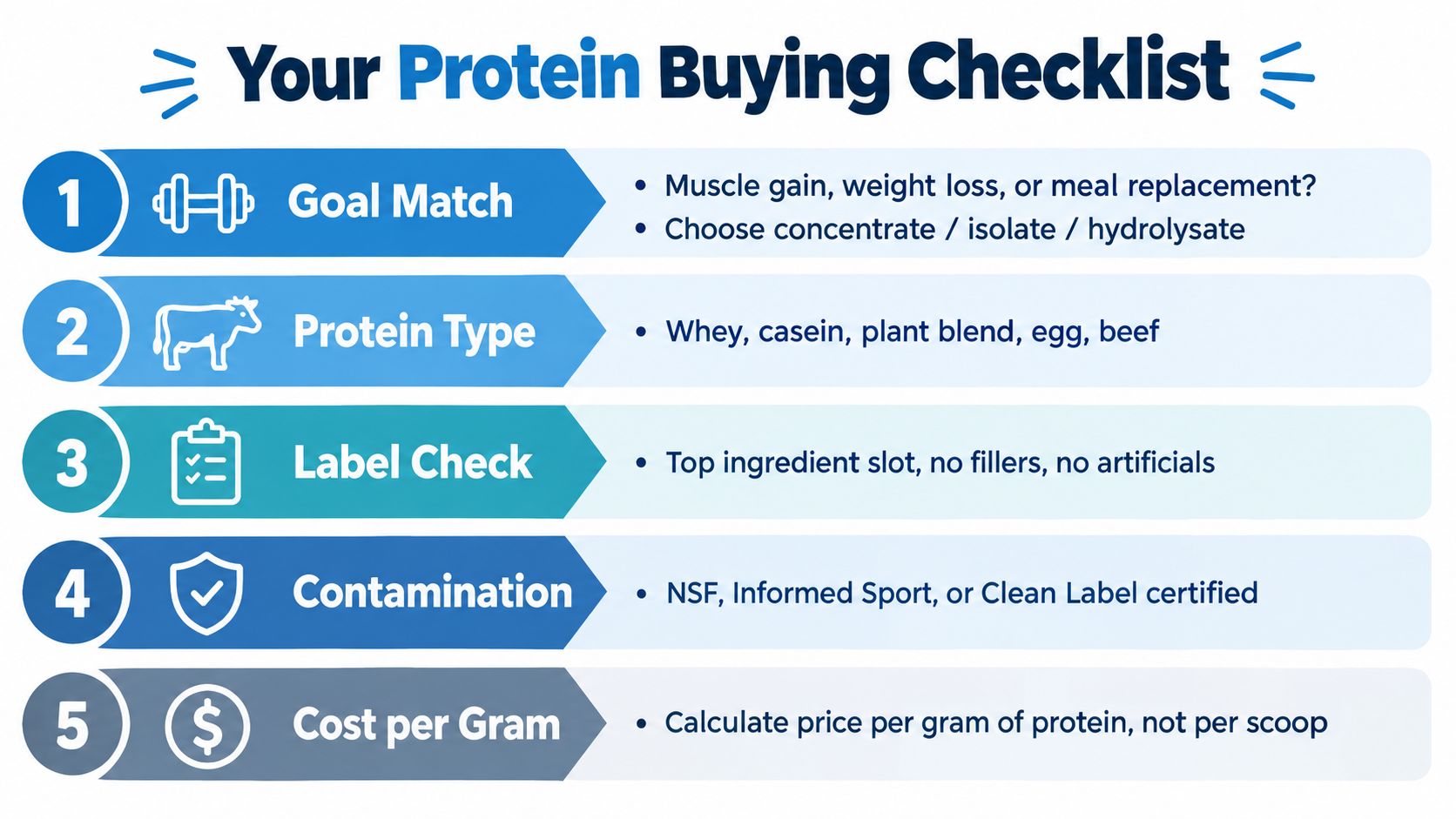
The fast checklist
Goal match
Are you buying for muscle gain, hunger control, meal support, or basic convenience?Protein type fit
Does whey, casein, egg, soy, or a plant blend fit your digestion and diet rules?Dose realism
Will you use a serving size that makes sense in your routine, or are you buying a product that only works on paper?Safety verification
Is there third-party testing, a posted Certificate of Analysis, or a meaningful certification?Budget honesty
Are you paying for useful protein, or for packaging, branding, and trendy extras?
Three shelf-ready buying archetypes
The value buyer
Get a basic whey concentrate from a brand with a clean label and real testing. Vanilla is often the smartest default. This is the workhorse choice for most gym-goers.
The lean-performance buyer
Choose whey isolate if you want fast digestion, a simpler macro profile, and usually lower lactose. Best fit for training-focused buyers who want less fluff.
The dairy-free buyer
Pick soy if you want a stronger single-source plant option. If soy isn't for you, buy a well-built pea-and-rice blend with clear testing, not just a pretty vegan label.
The one yes-or-no question that settles it
Ask this before checkout:
Would I still buy this if the front label were covered and I could only judge the source, testing, ingredients, and fit for my goal?
If the answer is no, keep shopping.
The best protein supplements are usually the boring, reliable ones. Clean source. Appropriate type. Strong verification. No nonsense.
If you want a straightforward place to compare protein powders, shakes, and mixes without bouncing across random marketplaces, CalVitamin offers a dedicated protein category alongside labeled wellness products and product review content that helps shoppers match form, source, and use case. If you already know your goal and just need to narrow the field fast, it's a practical place to start.