Stop buying “energy” supplements as if one pill can fix every kind of fatigue. That advice is lazy marketing, and it wastes money because fatigue has different causes, including nutrient deficiency, exercise demand, and stress or sleep debt. The right supplement depends on which problem you have, not on which bottle shouts the loudest.
The evidence-based way to think about best supplements for energy is simple. If you're low in something like iron, vitamin B12, vitamin D, or magnesium, replacement can help. If your issue is repeated sprints, lifting, or other high-intensity work, creatine and caffeine belong in the conversation. If stress or poor sleep is dragging you down, adaptogens may fit better than a stimulant, but they're not magic.
Table of Contents
- Why Most Energy Pills Do Not Work the Way You Think
- Vitamin and Mineral Replacements for Genuine Deficiencies
- Comparing the Main Energy Supplement Categories
- Performance Ingredients That Are Not General Fatigue Fixes
- Adaptogens and Stress Related Fatigue
- Choosing the Right Product Form and Label Attributes
- How to Read Labels and Avoid Wasted Money
- Building Your Own Energy Plan and Knowing When to Skip Supplements
Why Most Energy Pills Do Not Work the Way You Think
The biggest mistake shoppers make is treating tiredness like one problem. It isn't. Deficiency fatigue comes from missing nutrients. Performance fatigue shows up when exercise demand outruns what your body can supply. Stress fatigue is different again, because sleep loss and chronic strain make you feel flat even when your diet is fine.
That's why the strongest evidence has kept circling back to correcting deficiencies, not creating a universal energy boost. A peer-reviewed review found that supplementing people who are low in key nutrients is highly likely to improve mental fatigue, physical fatigue, and cognition (PMC review on vitamins and minerals for fatigue and cognition). The same review-backed clinical guidance points to iron, vitamin B12, vitamin D, and magnesium as the most common deficiency-linked causes of tiredness, while supplements often do little when levels are already normal.
Practical rule: if you feel tired all the time, ask first whether you're deficient, overtrained, or under-slept. The supplement choice comes after that answer, not before it.
B vitamins are a perfect example of the hype problem. They're useful when deficiency exists, but multiple clinical summaries note minimal or no measurable effect in people who are already replete (PMC review on vitamins and minerals for fatigue and cognition). That's why “energy” products often work better on the label than in real life.
The clean way to shop is to match the product to the fatigue type. The rest of this article follows that logic, so you can stop buying broad blends and start buying what fits the problem.
Vitamin and Mineral Replacements for Genuine Deficiencies
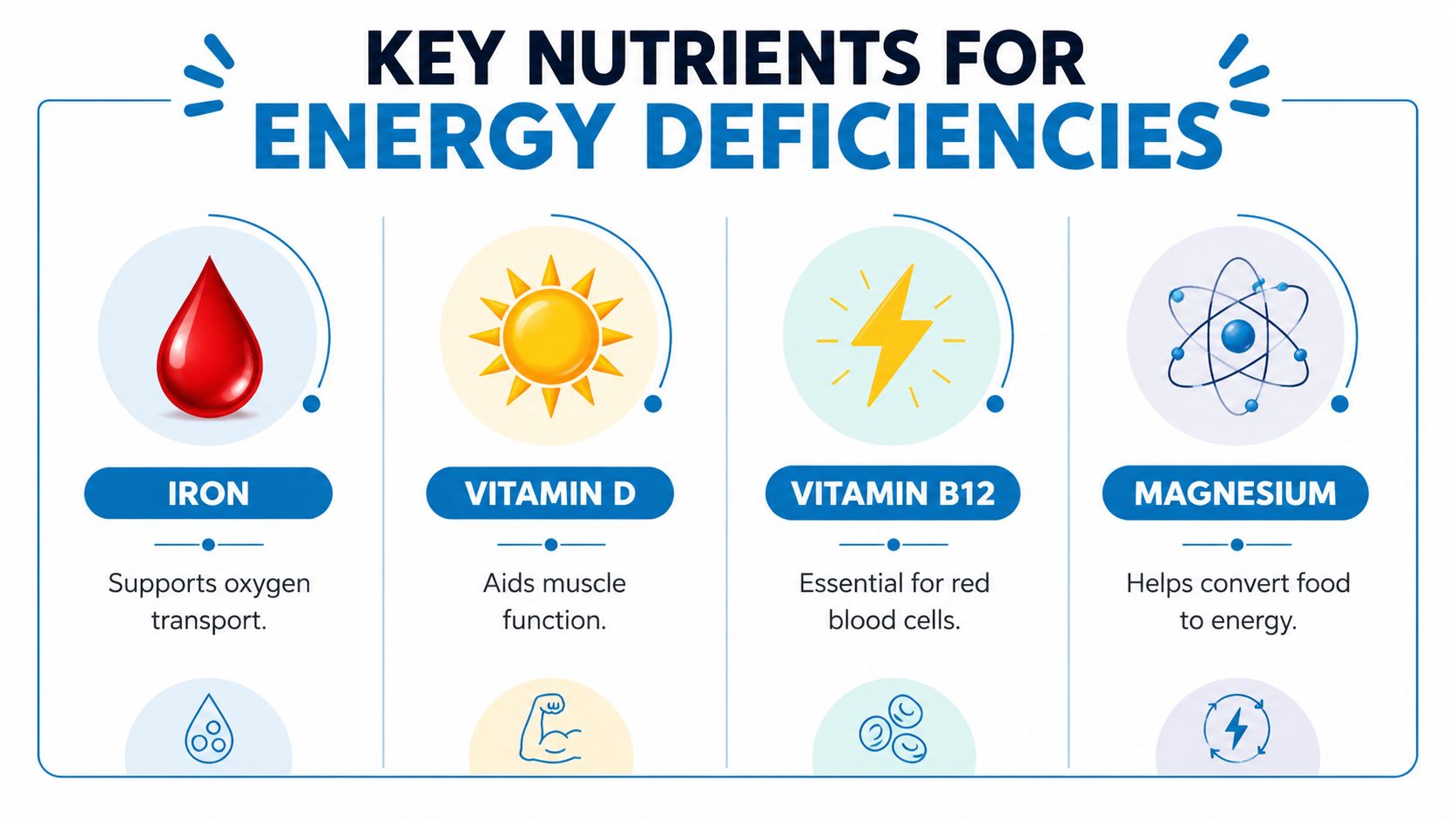
Iron and why low ferritin feels like dragging a weight
Iron deficiency usually shows up as exhaustion, weakness, reduced exercise tolerance, and pale skin, because iron helps make hemoglobin, which carries oxygen. A ferritin or iron panel is the right place to start, not guesswork, because iron overload can be harmful when you take it without a real need (Harvard Health on best vitamins and minerals for energy, NHLBI iron-deficiency anemia). If a clinician confirms deficiency, iron is usually the supplement that matters most.
Vitamin B12 and the nerve-energy connection
B12 deficiency is a classic cause of fatigue, especially in people who eat little or no animal food, older adults, or anyone with absorption issues. A serum B12 test is the obvious starting point, and B12 shots or oral supplements only make sense when deficiency is present (Harvard Health on best vitamins and minerals for energy). If you're choosing a product, methylcobalamin and cyanocobalamin are the two common forms to look for, and the label should make the dose obvious. For a focused B12 product example, see this B12 product page from CalVitamin.
Vitamin D and magnesium when weakness is the clue
Vitamin D deficiency often feels less like “sleepy” and more like weakness, low muscle function, and low mood, which can still read as fatigue in daily life. Magnesium is different again, because it helps break down glucose into energy and low intake is common enough that it deserves attention (Harvard Health on best vitamins and minerals for energy). For vitamin D, D3 is the form commonly preferred in deficiency correction. For magnesium, magnesium glycinate is usually the more comfortable choice for people who want less stomach upset than magnesium oxide.
My take: if your labs are normal, don't expect a vitamin bottle to rescue you. These are replacement tools, not lifestyle upgrades.
The dose matters, but so does the reason you're taking it. Vitamin and mineral supplements are the right first move when a test shows a real gap. They're a waste of money when you're chasing generic tiredness with normal lab values.
Comparing the Main Energy Supplement Categories
This is the quick map shoppers need before they get lost in marketing. The categories below split cleanly into replacement, performance support, and stress support. That's the difference between a useful purchase and a random one.
| Category | Best For | Typical Dose | Evidence Level | Main Safety Note |
|---|---|---|---|---|
| B vitamins | Correcting deficiency-related fatigue | Use label-directed amounts | Best when deficient, weak when levels are normal (PMC review on vitamins and minerals for fatigue and cognition) | Can be pointless if you're already replete |
| Iron | Low ferritin or iron-deficiency anemia | Use clinician-guided dosing | Strong for true deficiency (Harvard Health on best vitamins and minerals for energy) | Too much iron can cause harm |
| Vitamin D | Low vitamin D with weakness or low mood | 600 IU daily for adults up to 70, 800 IU for 71 and older in the RDA cited by Harvard Health (Harvard Health on best vitamins and minerals for energy) | Useful when low | Don't assume more is better |
| Magnesium | Low intake, cramps, sleep-related fatigue | Use label-directed amounts | Helpful when intake is low (Harvard Health on best vitamins and minerals for energy) | Excess can upset the stomach |
| Adaptogens | Stress-related fatigue | Product-dependent | Mixed, more targeted than universal | Interactions matter |
| Caffeine | Fast alertness | Product-dependent | Strong for alertness | Can disrupt sleep |
The table only works if you read it accurately. Iron, B12, D, and magnesium are replacement tools. Caffeine is an alertness tool. Adaptogens are a stress-response tool. They are not interchangeable, and buying them as if they are is how shoppers end up disappointed.
For a broad category example that combines herbal energy ingredients, see this energizing coffee-maca-guarana-cordyceps product listing. Read it as a performance-style blend, not a cure for deficiency.
Performance Ingredients That Are Not General Fatigue Fixes
Creatine is for output, not for “I feel tired”
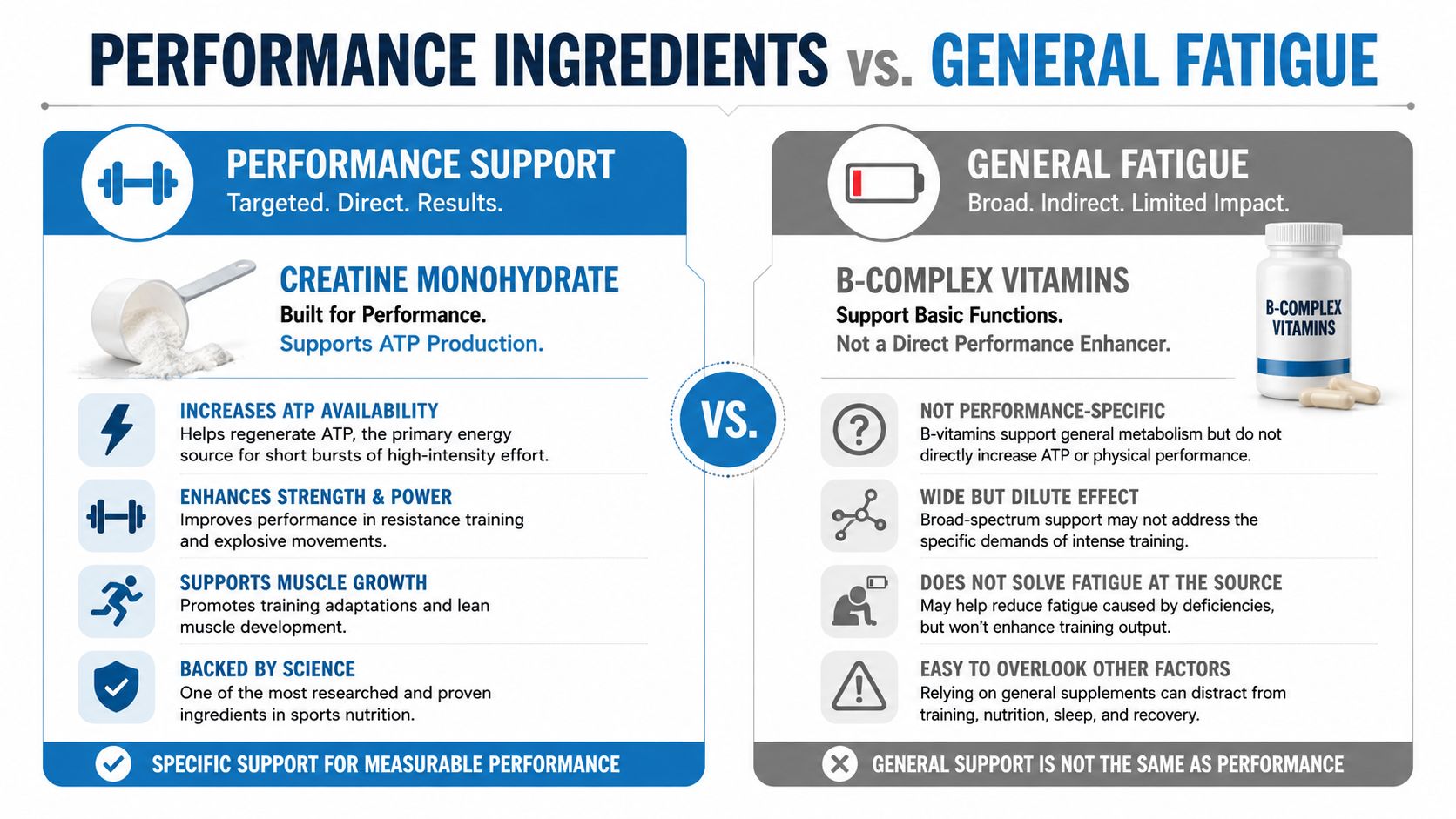
The NIH Office of Dietary Supplements lists creatine, protein, amino acids, and caffeine as common ingredients in supplements for exercise and athletic performance (NIH ODS Exercise and Athletic Performance fact sheet). Creatine monohydrate is the one with the cleanest reputation here, because the NIH describes it as the most effective nutritional supplement currently available for improving capacity for high-intensity exercise and lean body mass (NIH ODS Exercise and Athletic Performance fact sheet).
That doesn't make it a general fatigue fix. Creatine works by increasing phosphocreatine availability, which helps regenerate ATP during short, explosive efforts. In plain English, it helps when you need repeated sprints, hard sets, or brief recovery between bursts. It is a performance supplement, not a “wake up better” pill.
Caffeine and CoQ10 belong in different buckets
Caffeine has the strongest overall evidence among energy supplements for alertness, but its effect comes from central nervous system stimulation rather than nutrient correction (NIH ODS Exercise and Athletic Performance fact sheet). That makes it useful when you need to be awake, not when you need to fix a deficiency. The tradeoff is obvious. If it keeps you up later, it can backfire.
CoQ10 is more selective. Reviews place it in the 100 to 300 mg/day range, and effects may take 4 to 8 weeks to show up (NIH ODS Exercise and Athletic Performance fact sheet). It makes the most sense in older adults or people with impaired mitochondrial function, not as a default pick for healthy people who just want more pep.
Creatine helps the engine run harder. Caffeine helps you feel more awake. CoQ10 is a niche support ingredient, not a broad fix.
If you want a sharp recommendation, here it is. Choose creatine monohydrate for training performance, caffeine for short-term alertness, and CoQ10 only when the situation makes biological sense. Don't buy any of them expecting a universal cure for everyday tiredness.
Adaptogens and Stress Related Fatigue
Rhodiola and ashwagandha work indirectly, and that matters
Stress fatigue is not the same as nutrient deficiency. You feel mentally worn down, your sleep is off, and your energy drops even when you're technically eating enough. That's the space where adaptogens like rhodiola and ashwagandha get marketed as energy supplements, but they're better understood as stress modulators than stimulants (NIH ODS Exercise and Athletic Performance fact sheet).
That distinction matters because adaptogens usually work best with consistent daily use, not one dramatic dose. They're meant to support resilience over time, which is a very different promise from caffeine. If your problem is nervous-system overload, they may help you feel steadier. If your problem is a missing nutrient, they won't replace it.
Magnesium gets sold as energy, but that's not the whole story
Magnesium is widely marketed for energy, but it's more accurate to think of it as a muscle and nerve relaxant that may support energy by improving sleep or correcting an imbalance. Excess magnesium can also cause nausea and diarrhea, so the “more is better” mindset is a mistake. That's why magnesium belongs in the deficiency or sleep-support bucket, not in the stimulant bucket.
The best move here is to match the product to the problem. If your fatigue starts with stress, sleep disruption, or a feeling that your body never fully downshifts, adaptogens and magnesium can be reasonable. If you're expecting a stimulant rush, you'll be disappointed.
For a closer look at a popular adaptogen product, see this ashwagandha review from CalVitamin. It's a better lens than the usual hype because it treats the herb as a stress-support ingredient, not magic in capsule form.
Choosing the Right Product Form and Label Attributes
Pick the format that fits your routine
Capsules and veggie capsules are the simplest choice when you care about dose accuracy and portability. Gummies are easier to remember, but they usually come with more sugar and less serious dosing discipline. Liquid shots are convenient for people who hate swallowing pills, while powders make sense when you want flexibility or a larger serving.
The format matters because compliance matters. If you won't take it, the “best” formula is useless. That's why the right form is the one you can use every day without annoyance.

Look at the label attributes that match your diet
If you follow halal, vegan, or gelatin-free standards, the label should say so plainly. Gelatin-free and veggie capsule matter if you avoid animal-derived ingredients. Cruelty-free is a separate ethical claim, and it should be clear on the listing if the brand is making it.
A lot of supplement shoppers ignore this part and then end up with a bottle they can't use. Don't do that. If you need a specific format for religious, ethical, or digestive reasons, choose that first and the ingredient stack second.
The video is useful only if you want a visual walk-through
That said, the label still matters more than the format. A well-made capsule with the wrong ingredient for your fatigue type is still the wrong purchase. The form should support the plan, not distract from it.
How to Read Labels and Avoid Wasted Money
Most energy supplement labels try to impress you before they inform you. Ignore that. Start with the actual ingredient list, then check whether the product uses a proprietary blend, which hides individual amounts and makes it impossible to know if the dose is meaningful.
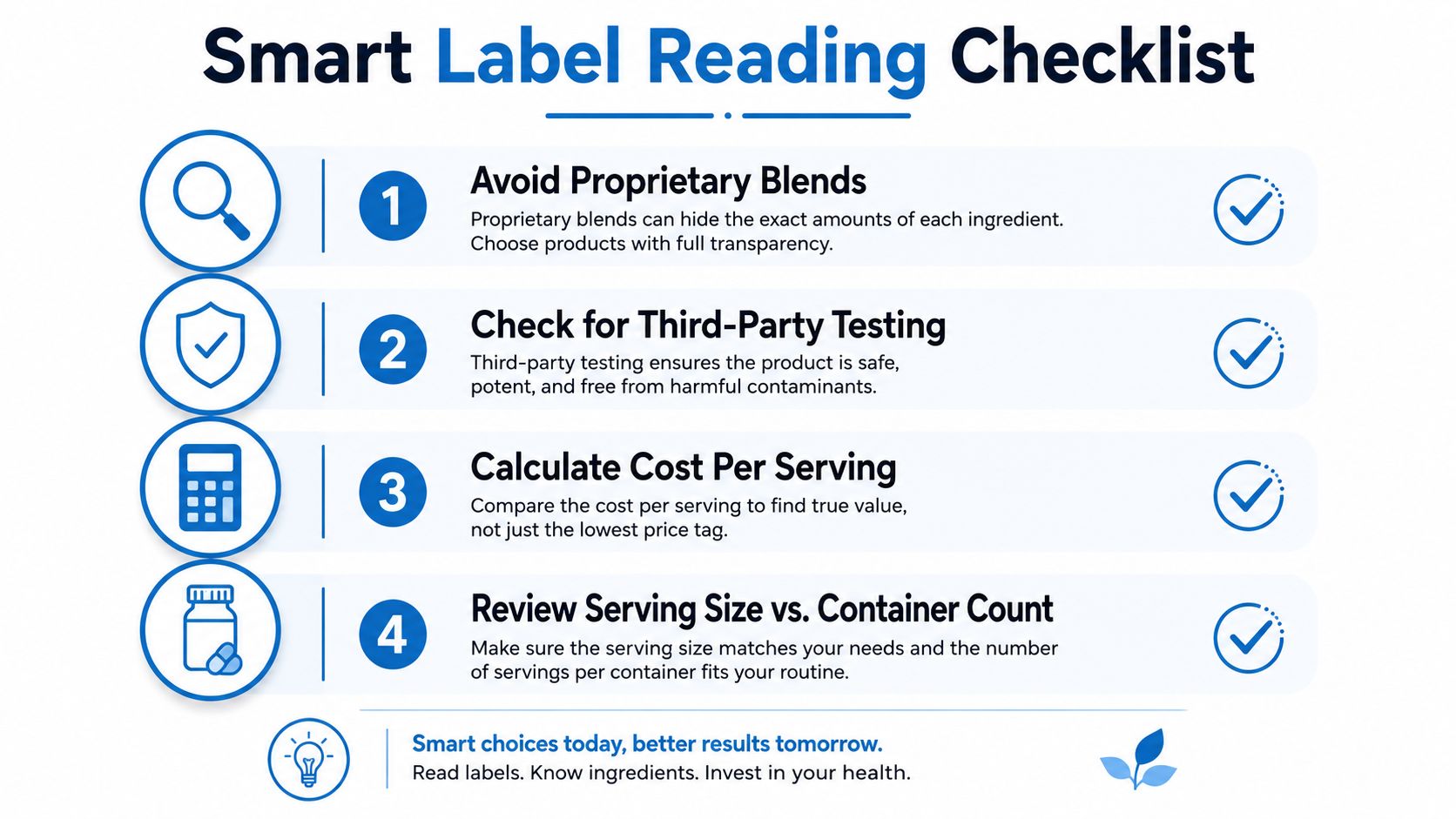
Use a simple buying filter
- Avoid proprietary blends: If the label hides amounts, treat the product as vague by design.
- Check for third-party testing: Look for quality verification before you trust the bottle.
- Calculate cost per serving: A cheap bottle can be expensive if the serving size is tiny.
- Compare serving size with container count: Big containers sometimes hide very small daily doses.
Customer reviews are useful as a sanity check, not as proof. A product with high ratings can still be the wrong fit for your fatigue type. Read the comments for clues about stomach upset, taste, convenience, and whether people noticed anything useful.
The biggest red flags are easy to spot. Avoid extreme “energy boost” claims, hidden stimulant loads, and labels that look flashy but say very little. If a product promises a dramatic effect and won't tell you what's inside, it's selling excitement, not clarity.
Building Your Own Energy Plan and Knowing When to Skip Supplements
Start with the question nobody wants to ask. Is this deficiency fatigue, performance fatigue, or stress fatigue? If you don't know, testing and basic lifestyle fixes beat blind supplement shopping every time.
Use the basics before the bottle. Sleep, regular meals, hydration, and movement solve more tiredness than most products ever will. If you already know your labs are off, replace the missing nutrient. If you train hard, use a performance ingredient. If stress is the underlying problem, a stimulant probably isn't the answer.
See a clinician instead of self-supplementing if fatigue is persistent, unexplained, or paired with other symptoms that don't feel normal for you. That's especially true when you suspect iron, B12, vitamin D, or magnesium issues, because the right test tells you far more than a random energy blend ever will.
My recommendation is blunt. First choice: replacement nutrients for documented deficiency. Second choice: creatine or caffeine for performance and alertness. Third choice: adaptogens or magnesium when stress and sleep are the main issue. Anything else is usually marketing with a label on it.
If you want a cleaner way to shop for energy support, visit CalVitamin and look for the form, label attributes, and ingredient type that match your fatigue pattern. You'll find a broad supplement range, including capsules, veggie capsules, gummies, and liquid options, so you can choose based on the problem instead of the packaging.