A shelf full of women's multivitamins can make the choice look simple: pick the bottle marketed for your age, take one capsule, and assume the job is done. That advice misses the most important question, which is what your body, diet, menstrual pattern, sun exposure, and pregnancy intentions require.
The best vitamins for women in their 20s aren't a universal stack. A vegetarian runner with heavy periods may need a very different plan from someone who eats fish regularly, spends time outdoors, and has no confirmed nutrient gaps. The goal is to use food as the foundation, then add a targeted supplement or broader multivitamin only when it solves a clearly defined problem.
Table of Contents
- Why Women in Their 20s Need a Different Supplement Strategy
- The Seven Nutrients That Matter Most in Your 20s
- Recommended Daily Intakes Without the Jargon
- Real Foods That Deliver These Nutrients
- Everyday Signs Your Body May Be Running Low
- Food First, Targeted Supplement, or Full Multivitamin
- Choosing the Right Supplement Form and Dosage
- Your Simple Seven-Day Action Plan
Why Women in Their 20s Need a Different Supplement Strategy
Your 20s can include intense training, irregular meals, long workdays, hormonal contraception, heavy menstrual bleeding, changing relationships, and decisions about pregnancy. Each factor changes the nutritional picture. A single multivitamin can't automatically account for all of them.
Menstrual losses make iron especially relevant. Pregnancy intentions make folate important even when pregnancy isn't part of your immediate plan. Limited sunlight can affect vitamin D status, while a vegan diet can make B12 a priority. Your eating pattern also matters. Someone who regularly eats dairy, tofu, leafy greens, seafood, beans, and fortified foods may need less supplementation than someone relying on convenience meals.
Public-health guidance illustrates why iron and folate receive so much attention. Women aged 19 to 50 are advised to obtain 18 mg of iron daily, and women who may become pregnant are advised to take 400 mcg of folic acid daily. Several national guidelines also recommend 10 mcg, or 400 IU, of vitamin D daily. You can review the broader nutrient guidance in this vitamin education library.
Practical rule: Don't choose a supplement because the label says “for women.” Choose it because it matches a gap, a risk factor, or a verified deficiency.
Think in terms of changing needs
The decade also supports long-term foundations. Bone tissue continues to respond to calcium, vitamin D, protein, and resistance exercise. Menstruation can create recurring iron demands. Folate supports cell division and becomes especially important if pregnancy occurs or could occur.
That doesn't mean every woman needs seven separate products. Iron, folate, vitamin D, B12, calcium, omega-3s, and magnesium are useful nutrients to understand, but your personal plan may involve only one of them, several through food, or none as a supplement.
A U.S. review found iron inadequacy in 13.2% of nonpregnant women of childbearing age aged 20 to 49, while CDC reporting found that folate insufficiency and iron deficiency each increased by nearly 6 percentage points in women of reproductive age. In Mexico, survey data among women aged 20 to 49 found iron deficiency at 29.4%, vitamin B12 deficiency at 8.5%, and folate deficiency at 1.9%. These figures don't diagnose you, but they explain why a context-based strategy is more useful than a generic beauty or energy formula. The figures and guidance are summarized in this public-health nutrition resource.
The Seven Nutrients That Matter Most in Your 20s
There isn't one nutrient that wins for everyone. These seven rise to the top because they connect with common features of this life stage, including menstruation, bone development, plant-based eating, active lifestyles, and possible pregnancy.
| Nutrient | Primary Role in Your 20s |
|---|---|
| Iron | Supports hemoglobin and oxygen transport, especially relevant with menstrual losses |
| Folate | Supports cell division and preconception health |
| Vitamin D | Helps maintain bones and supports calcium use |
| B12 | Supports nerve function and red blood cell formation |
| Calcium | Provides a building material for bones and normal muscle function |
| Omega-3s | Supply essential fats involved in brain and cardiovascular health |
| Magnesium | Supports muscle function, relaxation, and energy metabolism |
Iron and folate deserve early attention
Iron helps carry oxygen through your blood. Low stores can make ordinary activities, workouts, or climbing stairs feel unusually difficult. Menstrual flow is one reason women in this age group can have higher risk, but diet and absorption also matter.
Folate supports DNA production and cell division. That's why it matters before conception, not only after a positive pregnancy test. The NIH Office of Dietary Supplements lists the adult female folate RDA as 400 mcg DFE per day, while guidance for women who may become pregnant emphasizes 400 mcg of folic acid daily. The distinction between dietary folate equivalents and folic acid on a label can be confusing, so the NIH folate fact sheet is a useful reference.
Vitamin D, calcium, and magnesium support the physical basics
Vitamin D helps your body use calcium and maintain bone health. Calcium is the structural material, while vitamin D helps regulate how your body handles it. Magnesium supports normal muscle and nerve function, making it relevant to training, recovery, and menstrual comfort, although a symptom alone can't prove deficiency.
B12 and omega-3s fill different gaps
B12 is especially important to assess if you eat little or no animal food. It supports nerves and red blood cell formation, so low intake can affect more than energy.
Omega-3s are fats, not vitamins, but they belong in the conversation because fatty fish, seeds, and walnuts can contribute to a nutrient-dense eating pattern. Salmon and sardines supply EPA and DHA, while flax, chia, and walnuts provide ALA. A vitamin D product such as Phytoral Vitamin D3 Gummies may be convenient for someone whose diet and sun exposure leave a vitamin D gap, but the right choice still depends on the label and your circumstances.
Recommended Daily Intakes Without the Jargon
Daily recommendations are starting points, not personal prescriptions. They help you compare your usual food intake with a reasonable target, then a clinician can refine the plan using symptoms, dietary history, and laboratory results.
For women in their 20s, the most clearly defined figures include 18 mg of iron daily for ages 19 to 50, 400 mcg of folic acid daily for anyone who may become pregnant, and 10 mcg, or 400 IU, of vitamin D daily in several national guidelines. During pregnancy, iron needs rise to 27 mg daily, and folate needs rise to 600 mcg DFE daily according to the NIH folate guidance.
| Nutrient | Practical daily reference |
|---|---|
| Iron | 18 mg for women aged 19 to 50, with higher needs during pregnancy |
| Folate | 400 mcg DFE for adult women, with pregnancy needs at 600 mcg DFE |
| Folic acid | 400 mcg daily when pregnancy is possible |
| Vitamin D | 10 mcg, or 400 IU, in several national guidelines |
| B12 | Use the product label and dietary pattern as a guide, especially with vegan eating |
| Calcium | Build intake from regular calcium-rich foods rather than assuming a supplement is needed |
| Omega-3s | Include fatty fish or plant sources according to your eating pattern |
| Magnesium | Prioritize nuts, seeds, beans, greens, and whole grains before supplementing |
Translate the numbers into meals
Iron doesn't have to mean a tablet. Lentils, tofu, beans, pumpkin seeds, meat, and fortified cereal can all contribute. Pair plant sources with vitamin C foods, such as citrus, peppers, or tomatoes, to support non-heme iron absorption.
Folate is abundant in leafy greens, beans, asparagus, and avocado. Vitamin D is harder to obtain consistently from food, so fortified products, eggs, and fatty fish can help. Calcium needs also depend heavily on whether you regularly eat yogurt, milk, fortified plant milk, tofu prepared with calcium, or bony fish.
A laboratory result can change the plan. Low ferritin or hemoglobin, a restricted diet, heavy bleeding, digestive disease, or pregnancy planning may justify a more specific recommendation. Avoid treating an RDA like a dose you should exceed automatically.
Real Foods That Deliver These Nutrients
A useful grocery list makes nutrition easier than memorizing supplement claims. Look for foods that cover several nutrients at once, then use preparation and pairing to improve the overall meal.
| Nutrient | Top Food Sources | Absorption Tip |
|---|---|---|
| Iron | Beef, lentils, tofu, beans, pumpkin seeds, fortified cereal | Pair plant sources with vitamin C foods |
| Folate | Leafy greens, black-eyed peas, asparagus, avocado | Add greens to meals regularly instead of relying on one food |
| Vitamin D | Fatty fish, fortified milk or plant milk, eggs | Check the fortification panel on packaged foods |
| Calcium | Yogurt, sardines with bones, fortified oat milk, bok choy | Spread calcium-rich foods across meals |
| B12 | Clams, beef, dairy, fortified cereal, fortified nutritional yeast | Vegans often need a reliable fortified food or supplement source |
| Omega-3s | Salmon, sardines, walnuts, flax, chia | Use fish for EPA and DHA, seeds for ALA |
| Magnesium | Pumpkin seeds, dark chocolate, almonds, black beans, leafy greens | Add seeds and beans to meals rather than treating them as garnish |
Build meals around combinations
A lentil bowl with roasted peppers, lemon, greens, and tofu gives you a practical iron and folate foundation. Yogurt with chia and walnuts adds calcium, magnesium, and plant omega-3s. Salmon with bok choy and fortified rice or oat milk can support vitamin D, calcium, and omega-3 intake.
Cast-iron cooking may contribute iron to some foods, but it shouldn't replace medical evaluation when deficiency is suspected. Lemon juice on greens makes a meal brighter and adds vitamin C, while soaking and cooking beans can make them easier to digest.
A realistic sample day
Breakfast could be fortified cereal with fortified plant milk, berries, and chia seeds. Lunch might be a black bean and tofu bowl with spinach, tomatoes, avocado, and lemon. Dinner could feature salmon, bok choy, brown rice, and yogurt with walnuts for dessert.
That pattern doesn't guarantee that every person meets every need. It does show why food quality matters before you reach for a broad stack. A supplement can fill a gap, but it can't provide the fiber, protein, texture, and variety that whole foods bring to the meal.
Everyday Signs Your Body May Be Running Low
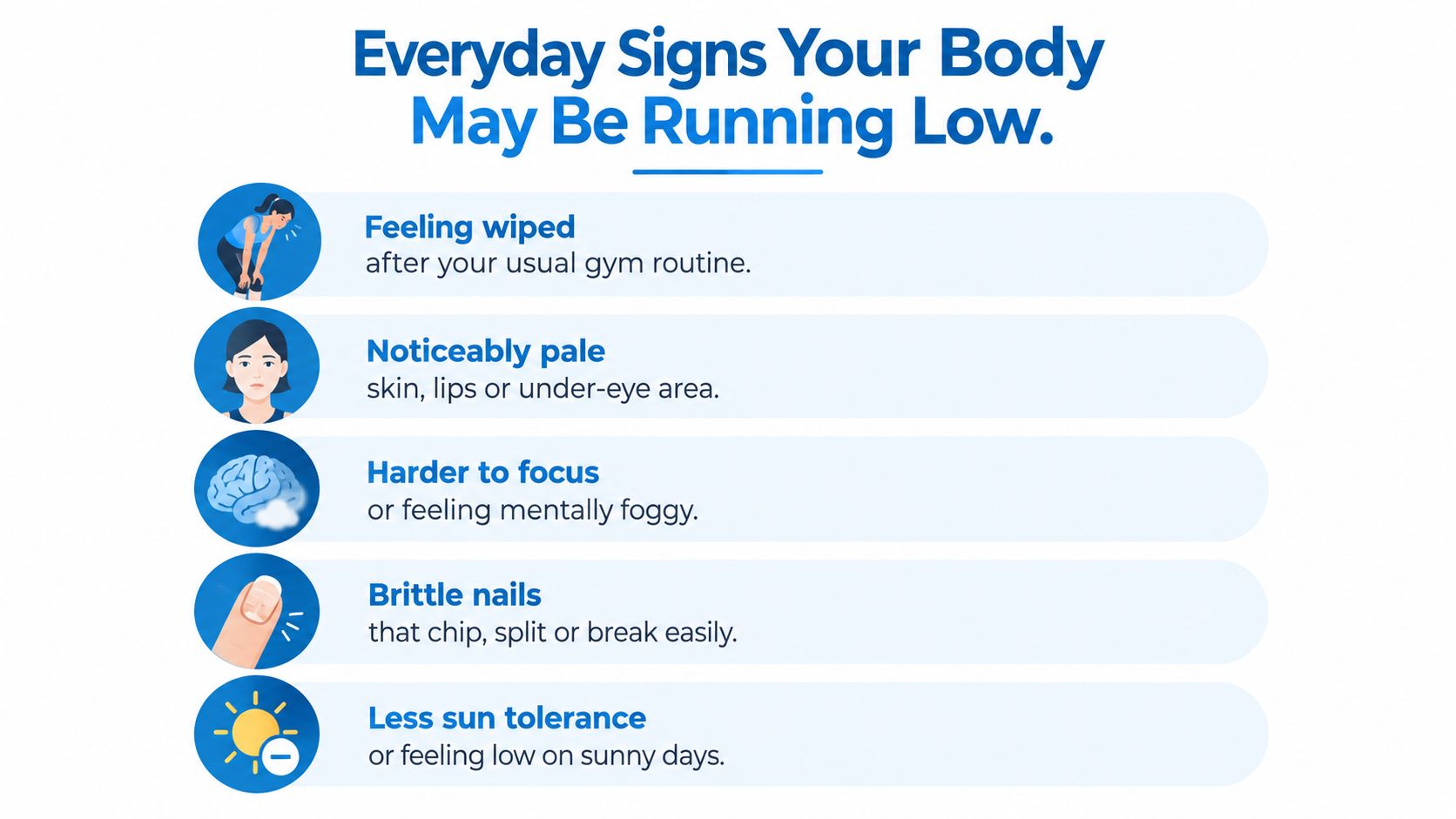
You finish a familiar workout and feel wiped out for the rest of the day. Your periods are heavy, your face looks paler than usual, or you feel foggy even after sleeping. Those experiences can occur with nutrient deficiencies, but they can also result from stress, inadequate calories, thyroid conditions, infection, medication effects, or poor sleep.
Iron is a common consideration when fatigue appears alongside heavy menstrual bleeding, reduced exercise tolerance, or paleness. Folate and B12 can also affect blood-cell production, while B12 deficiency may involve tingling or pins-and-needles. Vitamin D status can be relevant when low mood, limited sun exposure, or muscle aches occur together, but symptoms alone can't identify the cause.
Notice patterns, not isolated sensations
Calcium deficiency may develop without a clear daily warning sign, which is why a diet review matters more than waiting for pain. Omega-3 intake is harder to assess from appearance. Dry skin or hair can have many explanations and shouldn't be used as proof that you need fish oil.
Magnesium is similarly easy to overinterpret. Tension headaches, muscle tightness, cramps, or restless sleep may prompt you to review your intake, but these symptoms don't confirm a magnesium deficiency.
A symptom is a reason to investigate, not a reason to megadose.
Ask a clinician about appropriate testing if fatigue persists, periods are unusually heavy, tingling develops, or your diet excludes major food groups. Iron studies, a complete blood count, B12 testing, and vitamin D testing may be considered based on your history. Don't start high-dose iron because you feel tired, since iron can be harmful when taken unnecessarily and fatigue has many possible causes.
Food First, Targeted Supplement, or Full Multivitamin
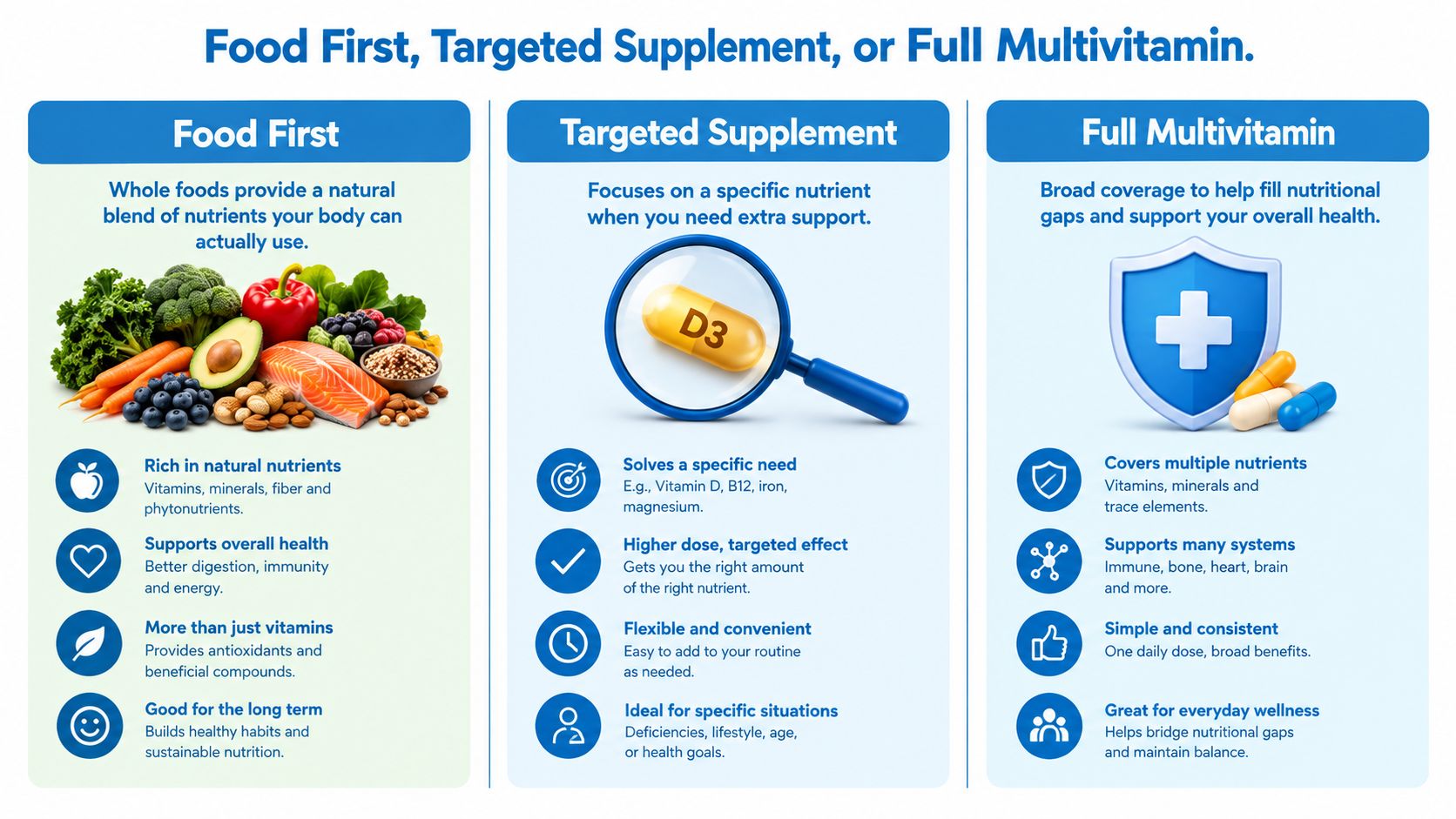
Three women of the same age can reasonably choose three different strategies. A varied diet may be enough for one person, a single nutrient may be appropriate for another, and a broad multivitamin may provide practical coverage for someone with a chaotic eating schedule.
| Strategy | Best fit | What to watch |
|---|---|---|
| Food first | Varied diet, regular meals, no known deficiency | Review recurring gaps rather than assuming food is automatically complete |
| Targeted supplement | Confirmed deficiency, vegan B12 need, pregnancy preparation, or a defined risk | Match the dose to testing and clinician guidance |
| Full multivitamin | Erratic eating, frequent travel, or difficulty maintaining variety | Check for unnecessary high doses and overlapping products |
Let the scenario guide the choice
A vegetarian runner with heavy periods might focus on iron-rich meals, vitamin C pairings, and a blood test before choosing an iron supplement. B12 deserves attention if animal foods are limited. The priority isn't a fashionable “energy” blend. It's identifying whether iron stores or B12 intake are low.
A student living on instant noodles and occasional takeout may benefit from improving meal structure first. A basic multivitamin could act as a temporary safety net, but it shouldn't disguise a consistently low intake of protein, fruits, vegetables, or calcium-rich foods. A woman preparing for pregnancy should make folic acid a deliberate priority, even if she otherwise eats well.
The U.S. Office on Women's Health says most women don't need a vitamin or mineral supplement routinely, while also emphasizing that specific circumstances can change the decision. That supports a targeted approach rather than automatic daily supplementation.
If you want to compare a women's daily multivitamin with other options, Opti-Women Daily Multivitamin is one product category to evaluate. Read its Supplement Facts panel and compare the ingredients with your actual needs, especially if you already take separate vitamin D, iron, or magnesium.
Choosing the Right Supplement Form and Dosage
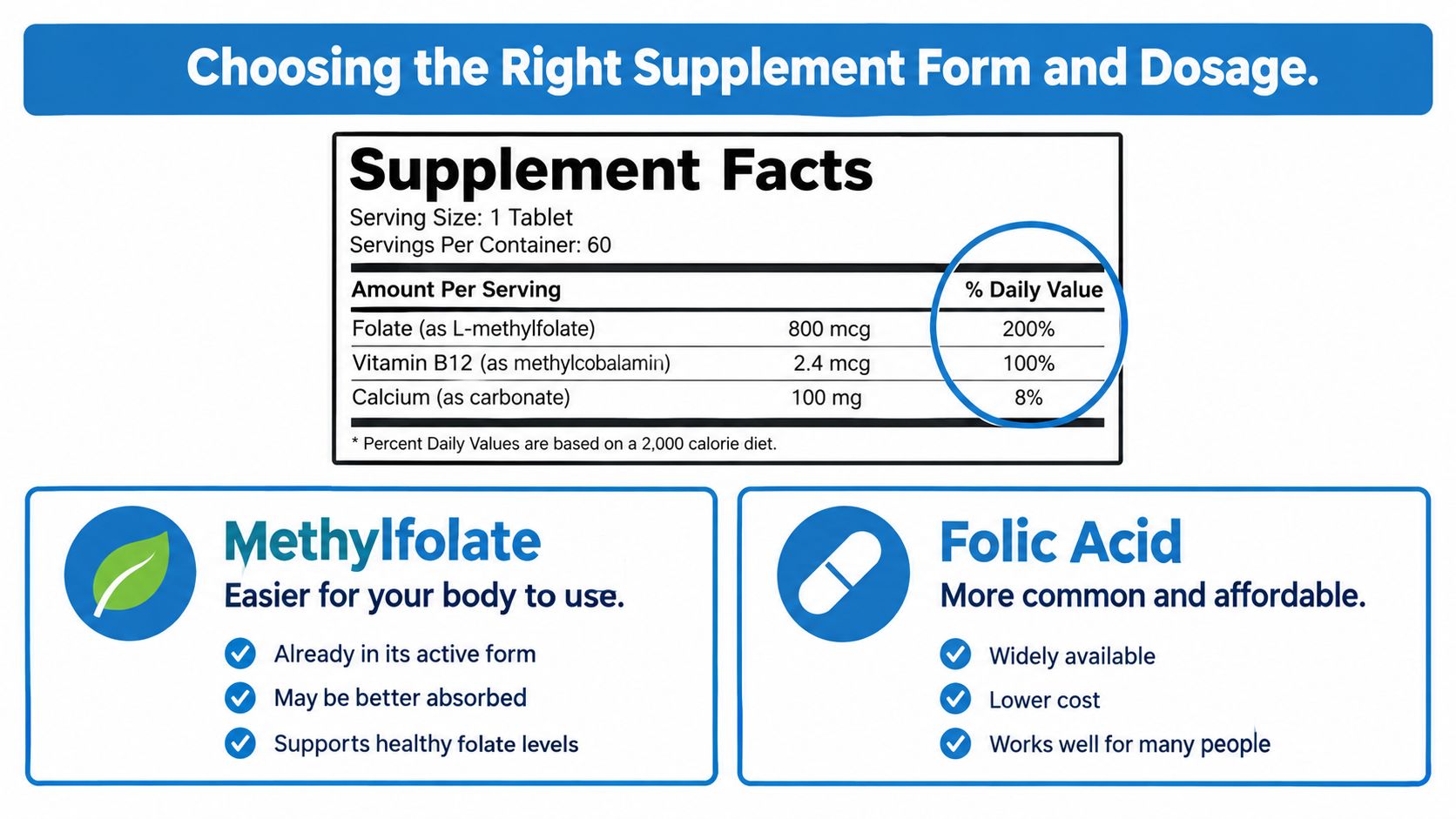
Start with the Supplement Facts panel, not the front of the bottle. Look for the serving size, amount per serving, percent Daily Value, form of each nutrient, other ingredients, allergens, expiration date, and certifications that match your preferences.
Form can matter, but marketing often makes small differences sound universal. Folic acid is common and well studied for pregnancy-prevention guidance. Methylfolate may be preferred by some people, including those concerned about folate metabolism or an MTHFR variant, but a variant doesn't automatically mean you need a high dose.
Iron forms also differ. Heme iron is generally absorbed efficiently from animal foods, while non-heme forms such as bisglycinate may be considered when someone wants a gentler supplement. The dose should follow laboratory findings and clinical advice, not the assumption that more iron is better.
Match the form to the person
For B12, methylcobalamin and cyanocobalamin are common forms. For vitamin D, cholecalciferol, also called D3, and ergocalciferol, also called D2, appear on labels. Omega-3 products may use different oil forms, so compare the actual EPA and DHA amounts rather than judging a product by the total fish-oil weight.
Capsules aren't the only option. Gummies, powders, softgels, vegan pullulan capsules, and gelatin-free or halal-certified products can help you choose a format you can use consistently. Convenience matters, but it shouldn't override dose accuracy or ingredient transparency.
Keep interactions in mind. Calcium can interfere with iron absorption when taken together, zinc and copper can compete for uptake, and fat-soluble vitamins are best taken with a meal containing some fat.
Use this quick label check:
- Confirm the serving size: Know whether the listed amount applies to one capsule or several.
- Compare the active dose: Look for folic acid, EPA and DHA, elemental iron, or vitamin D amount.
- Check duplicate ingredients: Review every product in your cabinet.
- Match certifications: Look for halal, vegan, or gelatin-free labeling when needed.
- Ask before therapeutic dosing: Higher doses of iron, folate, vitamin D, or other nutrients need professional direction.
Your Simple Seven-Day Action Plan
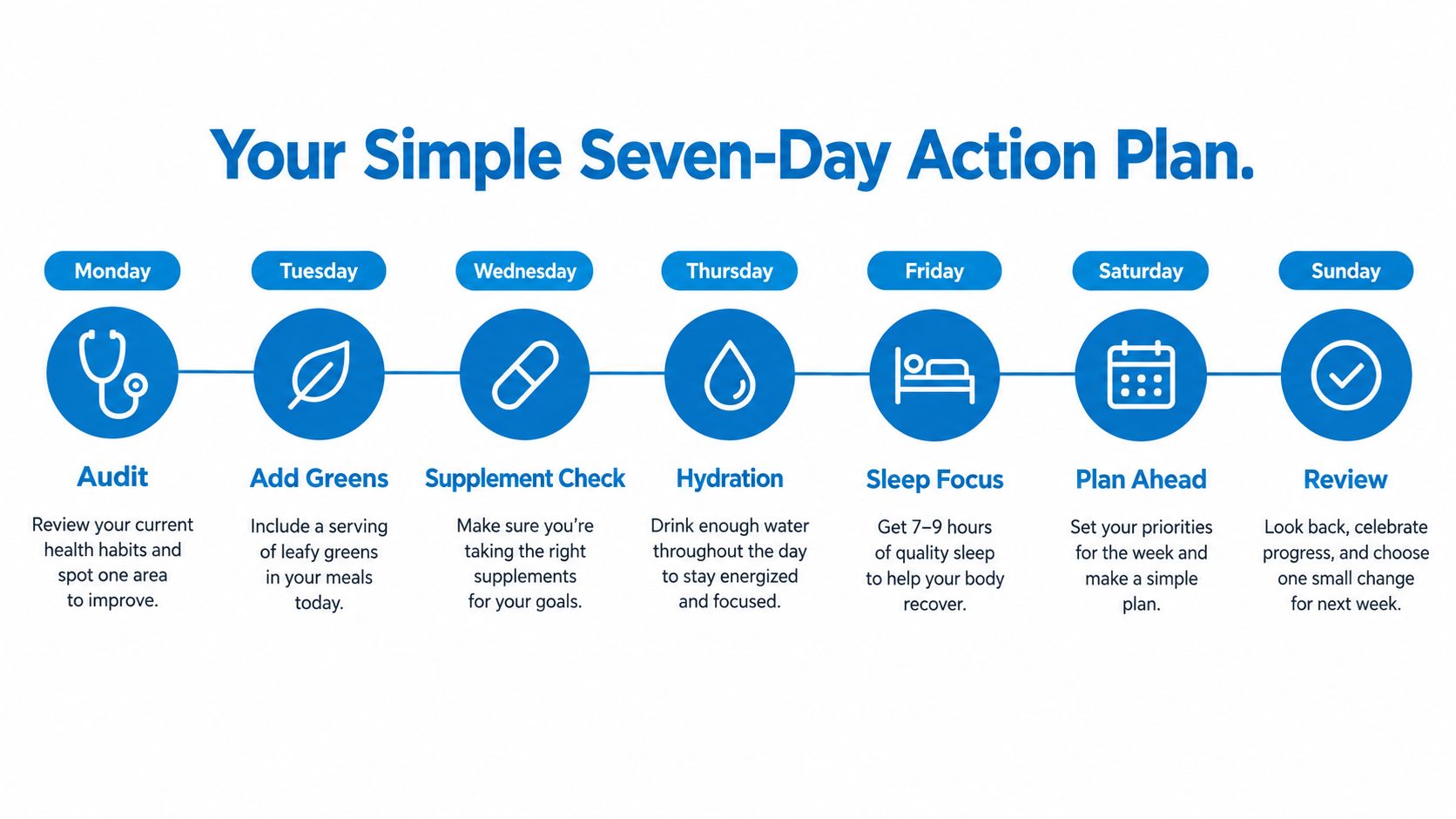
A good plan should reduce decision fatigue, not create seven new chores. Use one small task each day to connect your symptoms, meals, labels, and goals.
Monday, audit. Write down your usual meals, menstrual pattern, sun exposure, dietary restrictions, and symptoms. If fatigue or heavy bleeding concerns you, schedule a clinician conversation rather than guessing.
Tuesday, add one anchor meal. Choose an iron-rich or folate-rich dish, such as lentils with peppers and leafy greens, or tofu with beans and avocado.
Wednesday, pair exposure with dinner. Take a daylight walk if appropriate for your skin and local conditions, then include a vitamin D food such as fortified milk, eggs, or fatty fish.
Thursday, read the cabinet. Photograph every Supplement Facts panel and note duplicate iron, vitamin D, calcium, magnesium, or B vitamins.
Friday, choose your route. Decide whether food first, a targeted supplement, or a full multivitamin best matches your situation. Pregnancy intentions and heavy periods deserve particular attention.
Saturday, check form and fit. Review folate form, iron form, B12 form, vitamin D type, omega-3 EPA and DHA, serving size, and halal or gelatin-free status.
Sunday, reflect. Record energy, mood, digestion, sleep, and cycle-related symptoms without treating a short-term change as proof of success or failure.
CalVitamin offers vitamins, minerals, multivitamins, gummies, capsules, and other wellness formats so you can compare options against your diet and personal requirements. Visit CalVitamin to review the available products, check labels, and choose a supplement plan that supports your specific goals rather than following a generic stack.