
Are you choosing a beta glucan supplement because the label says “immune support,” without checking whether the beta glucan comes from oats, barley, yeast, or mushrooms? That common shortcut matters because these ingredients share a name but differ in structure, biological pathway, studied dose, and strongest use case.
Beta glucan has a long research history. Researchers have studied glucans since the 1940s, and a review indexed in PubMed Central's scientific literature notes more than 80 clinical trials evaluating their biological effects. The practical lesson isn't that every beta glucan product works for every goal. It's that you need to match source, molecular form, dose, and delivery format before judging what a product can realistically do.
Table of Contents
- What a Beta Glucan Supplement Actually Is
- How Beta Glucans Work in the Body
- Evidence-Backed Benefits and Where It Falls Short
- Oat, Barley, Yeast, and Mushroom Forms Compared
- Dosage Ranges That Match the Research
- Safety, Side Effects, and Interactions
- How to Choose a Quality Beta Glucan Product
- Putting It Together for Your Goal
What a Beta Glucan Supplement Actually Is
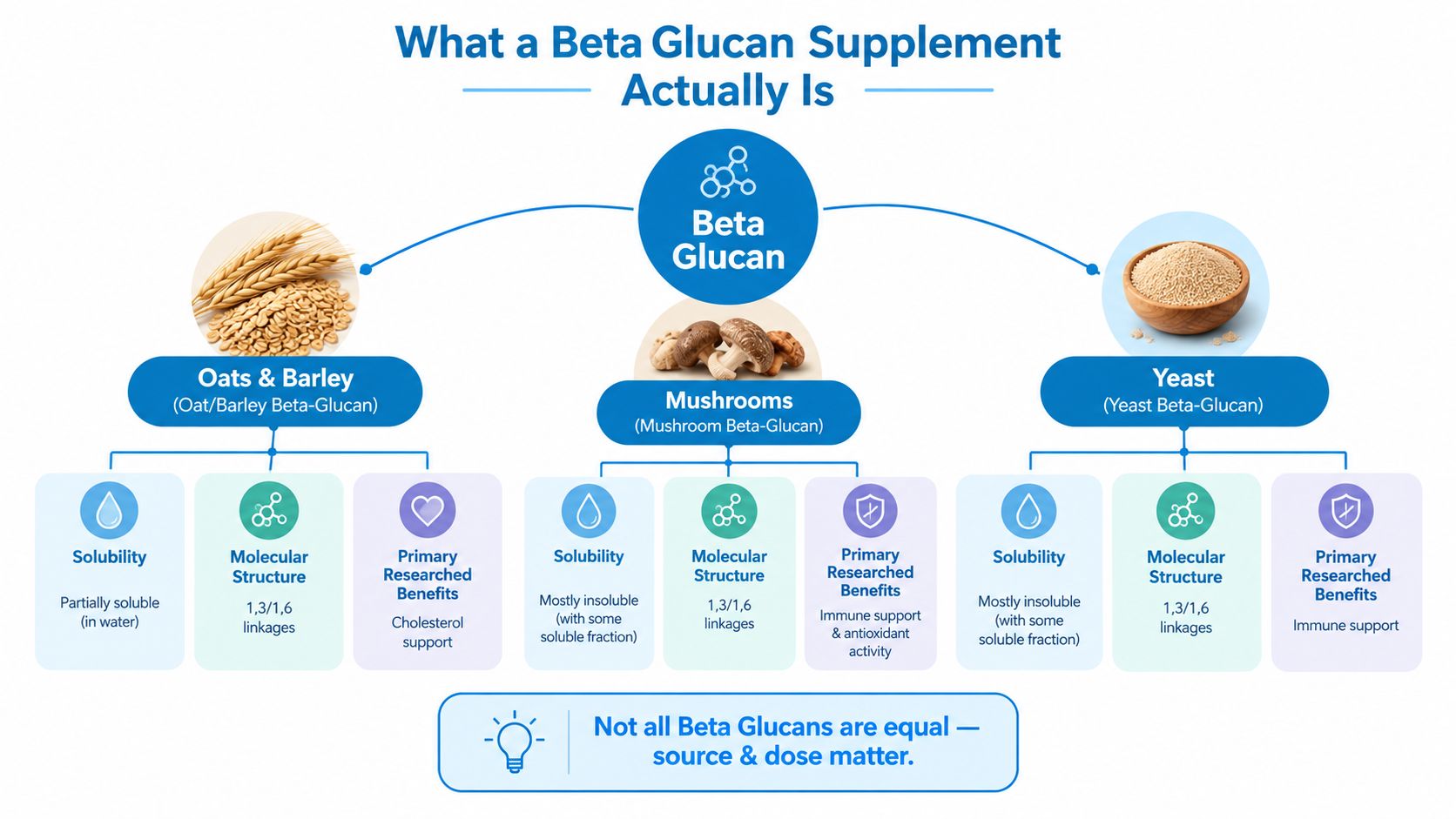
The first mistake is treating beta glucan as one ingredient with one predictable effect. Beta glucan is a family of soluble fibers and polysaccharides found in oat and barley bran, baker's yeast cell walls, and certain mushrooms. A label may use the same broad term for cereal beta-1,3/1,4 glucans, fungal beta-1,3/1,6 glucans, and yeast beta-1,3/1,6 glucans.
Think of “beta glucan” as a surname shared by several relatives. They have related chemistry, but their branching patterns and physical behavior can differ. Those differences influence whether the ingredient mainly forms a viscous material in the digestive tract or interacts with immune-cell receptors.
Source changes the practical question
Oat and barley beta glucans are cereal fibers. Their most established role is connected with the digestive tract, viscosity, bile acid handling, and cholesterol metabolism. Yeast and mushroom beta glucans are generally discussed for interactions with innate immune cells, although their preparations aren't interchangeable either.
That distinction also explains why a large amount of mushroom powder isn't automatically equivalent to a smaller amount of purified yeast beta glucan. The label's total extract weight may include material that isn't beta glucan, while a cereal product may emphasize total fiber rather than a receptor-active preparation.
Oat beta glucan and soluble fiber also have institutional recognition. The U.S. FDA has a qualified health claim relating oat beta glucan and soluble fiber to heart disease risk, but that recognition applies to a specific relationship between soluble fiber intake and cardiovascular health, not to every product marketed under the beta glucan name.
Practical rule: Read “beta glucan” as a category label first, then identify the source and structure before thinking about benefits.
The rest of the evidence becomes easier to interpret once you stop asking whether beta glucan works in general and start asking which form, at what dose, in which delivery system, for which outcome.
How Beta Glucans Work in the Body
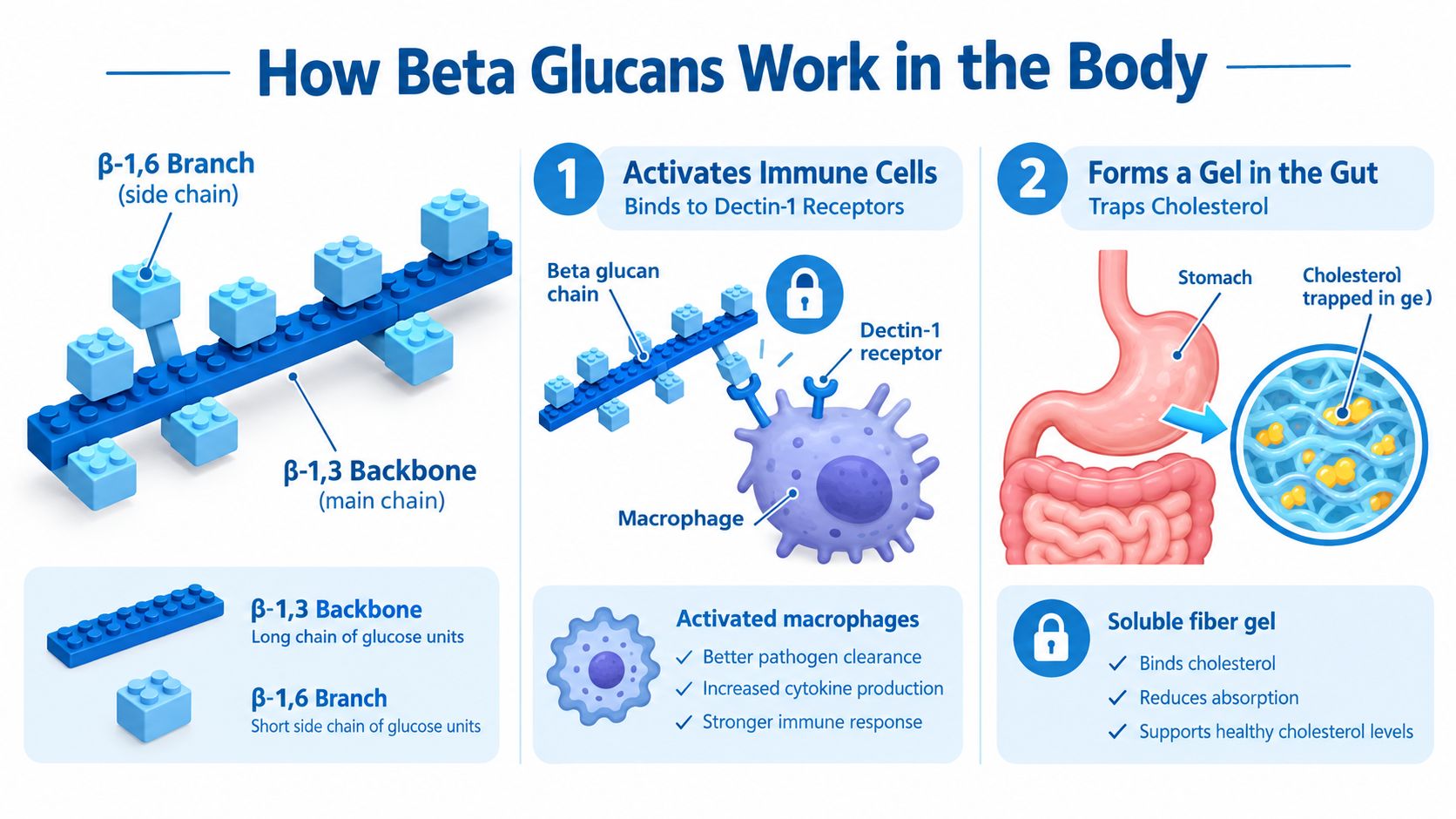
Why can two products labeled beta glucan behave so differently? The answer begins with molecular structure. In cereal glucans, beta-1,3 and beta-1,4 describe links along the main chain. Yeast and fungal glucans commonly have a beta-1,3 backbone with beta-1,6 branches, creating a different shape.
That structure affects solubility, viscosity, digestion, particle behavior, and receptor recognition. The label therefore gives only a starting point. Source, preparation, and dose determine which biological route is plausible.
One family, two main biological routes
Cereal beta glucans primarily act in the digestive tract. Soluble oat and barley fibers can make intestinal contents more viscous and help retain bile acids. Since the liver uses cholesterol to produce replacement bile acids, this process can increase its demand for cholesterol and support removal of LDL cholesterol from circulation. The effect depends on enough beta glucan reaching the gut in a form that maintains this physical property.
Yeast and fungal beta glucans follow a different route. Their branched structures can interact with pattern-recognition receptors such as Dectin-1 and CR3 on macrophages, dendritic cells, and neutrophils. These receptors function more like a sprinkler system than a light switch. They help coordinate readiness in particular immune pathways rather than keeping the entire system at maximum activity.
That distinction makes immune booster an imprecise label. Receptor recognition does not guarantee protection from every infection, and it cannot replace vaccination, adequate sleep, nutrition, or medical care.
The same reasoning prevents a common mix-up. Cereal beta glucans should not be treated as immune equivalents of yeast or mushroom forms, because their strongest biological rationale usually concerns the gut and lipid metabolism. Yeast and fungal products should not be expected to lower LDL because they contain beta glucan. Their effects depend on preparation, particle structure, dose, and the outcome being measured.
The embedded overview below connects molecular shape with these gut and immune pathways.
Evidence-Backed Benefits and Where It Falls Short
The strongest human evidence clusters around specific outcomes, especially LDL cholesterol for oat and barley forms. A meta-analysis of randomized trials found that consuming at least 3 g/day of oat beta glucan for at least 3 weeks reduced total cholesterol by 0.27 mmol/L and LDL-C by 0.26 mmol/L, as reported in this review of randomized trials. A broader review in the same source reported that median barley beta glucan intakes around 6.5 to 6.9 g/day for about 4 weeks reduced LDL-C by about 7% versus control diets.
The important qualifier is dose and matrix. A viscous food matrix can behave differently from a tablet or capsule. In one placebo-controlled trial summarized by the review, tableted beta glucan at 1.5, 3, or 6 g/day didn't significantly reduce LDL-C in hyperlipidemic subjects. That finding doesn't prove tablets can never work, but it does show why the number on the front label isn't enough.
Where immune claims fit
Yeast beta-1,3/1,6 glucans are more closely associated with innate immune defense research. The evidence is better framed around immune readiness, respiratory defense, or illness experience in particular settings than around a universal “boost.” A systematic review of fungal beta glucans found they were generally well tolerated and mainly supported immune-defense outcomes, but the products and protocols varied.
Fatigue is an emerging, narrower evidence pocket. A 2025 systematic review reported that beta glucans reduced fatigue with a modest effect size, while a separate 2025 trial found that 2,000 mg/day of yeast beta-1,3/1,6 glucan was safe for 12 weeks in healthy adults, as reported in the published review and related evidence. These findings support careful, outcome-specific discussion, not a promise of instant energy.
| Benefit | Strongest source | Evidence strength | Typical effect |
|---|---|---|---|
| LDL cholesterol support | Oat and barley beta glucan | Strongest and most consistent | Lower LDL under suitable dose and matrix conditions |
| Immune defense | Yeast beta-1,3/1,6 glucan | Moderate and context-specific | Immune-readiness and respiratory-defense outcomes |
| Fatigue and vigor | Selected yeast or fungal preparations | Emerging | Modest fatigue reduction and improved vigor in some protocols |
| Cancer outcomes | Various fungal and yeast preparations | Thin and inconsistent | Not suitable for broad treatment claims |
| Blood sugar control | Mainly cereal forms | Mixed | May vary with the wider diet and product format |
| Skin health | Various topical and oral products | Limited | Evidence is less settled than cholesterol research |
Readers comparing immune formulas may encounter products such as NOW Immune Renew Astragalus Mushroom, but the presence of a mushroom blend doesn't establish the same evidence base as a defined yeast or oat preparation.
Oat, Barley, Yeast, and Mushroom Forms Compared
Choosing a beta glucan supplement should begin with the goal, not the marketing adjective. Oat and barley forms are primarily cereal fibers with beta-1,3/1,4 linkages. Yeast and many mushroom preparations commonly feature beta-1,3/1,6 structures, but extraction methods and molecular characteristics still differ between products.
The table below is a practical comparison. “Typical dose studied” should be read as a research context, not a universal prescription, because product matrices and trial populations vary.
| Form | Polymer type | Typical dose studied | Best-supported use |
|---|---|---|---|
| Oat beta glucan | Beta-1,3/1,4 | Around 3 g/day for lipid-focused research | LDL cholesterol support |
| Barley beta glucan | Beta-1,3/1,4 | Several grams daily in lipid studies | LDL cholesterol support |
| Yeast beta glucan | Beta-1,3/1,6 | Often discussed around 250 to 500 mg/day for immune-focused use | Innate immune and respiratory-defense research |
| Mushroom beta glucan | Commonly beta-1,3/1,6, depending on species and extraction | Often lower-dose extracts, with less consistent protocols | General immune modulation and wellness |
Matching source to purpose
For cholesterol, oat or barley is the clearest starting point because the mechanism depends on soluble fiber behavior in the digestive tract. A capsule containing a small quantity of purified yeast glucan shouldn't be substituted casually for a food or powder capable of delivering a meaningful cereal-fiber dose.
For immune defense, a characterized yeast beta-1,3/1,6 product is a more direct match to the relevant research than an undefined “mushroom complex.” This still doesn't mean it guarantees fewer infections. It means the source is better aligned with the biological question.
Mushroom blends can be reasonable for people seeking a broader wellness formula, but they're the least evidence-anchored option when the label doesn't identify species, extraction method, or actual beta glucan content. A product such as Miracle Reishi Mushroom Gummies should therefore be judged by its declared beta glucan amount and source details, not by the word “reishi” alone.
Dosage Ranges That Match the Research
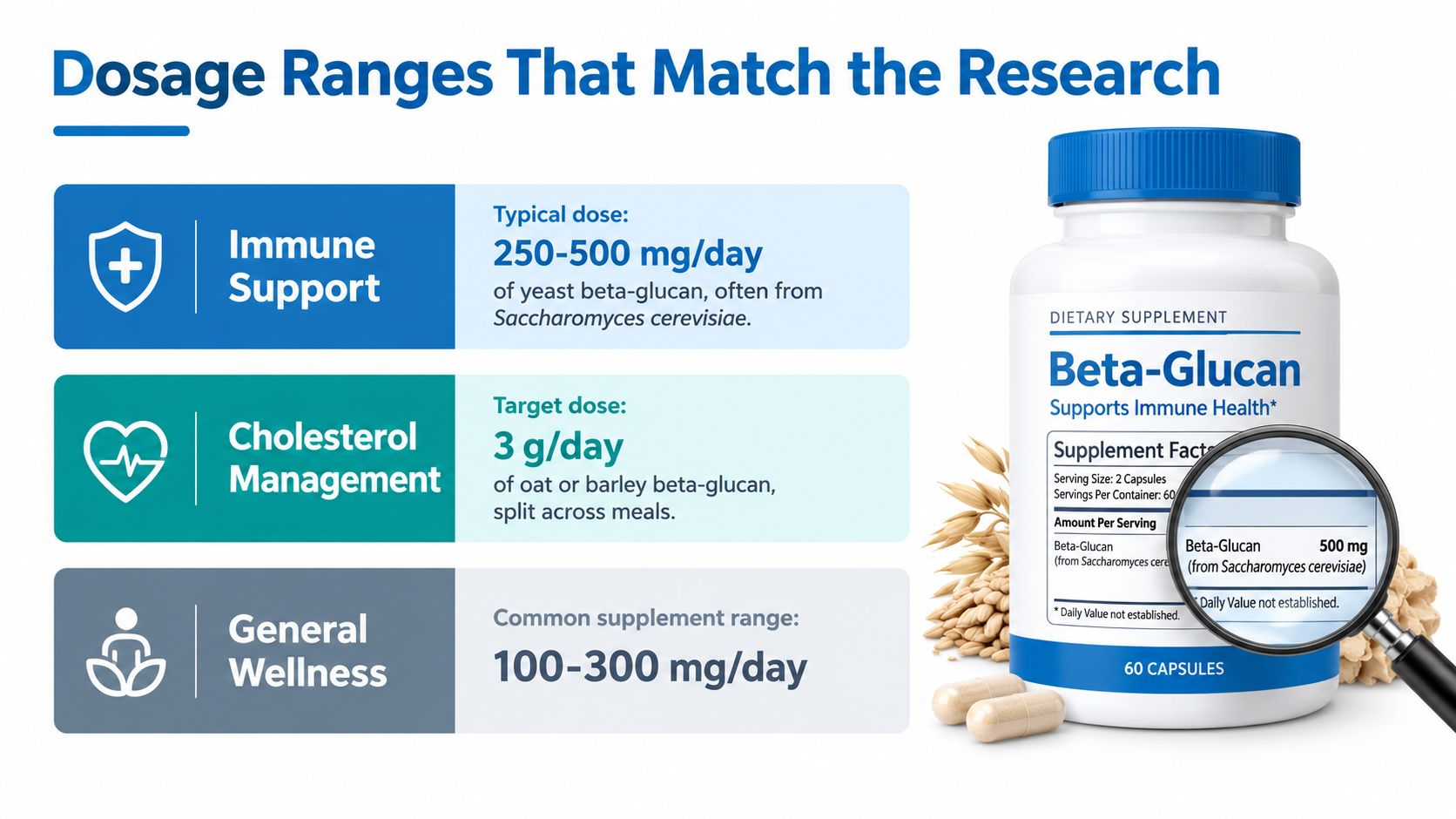
A label saying “take one capsule” tells you almost nothing until you find the actual beta glucan amount per serving. Trial-level doses differ sharply by purpose. Cholesterol research uses gram-level cereal fiber, while immune-focused yeast products are commonly discussed in milligram-level amounts.
Three useful label-reading bands
- Cholesterol support: Research commonly centers on 3 g/day of oat beta glucan, with Health Canada and EFSA discussions of oat beta glucan use spanning roughly 2 to 10 g/day, as reflected in Health Canada's beta glucan monograph. This is a substantial amount, so a capsule serving may not provide enough on its own.
- Immune-focused yeast products: Research and product protocols often discuss 250 to 500 mg/day of well-characterized yeast beta-1,3/1,6 glucan. The exact preparation matters as much as the milligram figure.
- Mushroom-derived products: Many products sit in a lower milligram range, but evidence is thinner and labels may report mushroom extract rather than beta glucan itself. Treat the stated amount as meaningful only when the active polymer is declared.
Delivery matrix can change results. The LDL evidence summarized earlier shows that a tablet may not behave like a viscous food. For immune products, particle size, processing, and physical structure can influence receptor access, so two products with identical weights may not be biologically equivalent.
A simple Supplement Facts example
Suppose a bottle lists 600 mg of mushroom extract per serving, but the panel doesn't say how much of that is beta glucan. You can't assume the full 600 mg is active beta glucan. A clearer label might state the extract weight, the measured beta glucan content, the mushroom species, and the extraction method separately.
Label check: Total capsule weight is not the same thing as active beta glucan weight. Look for the declared polymer content, not just the size of the serving.
Safety, Side Effects, and Interactions
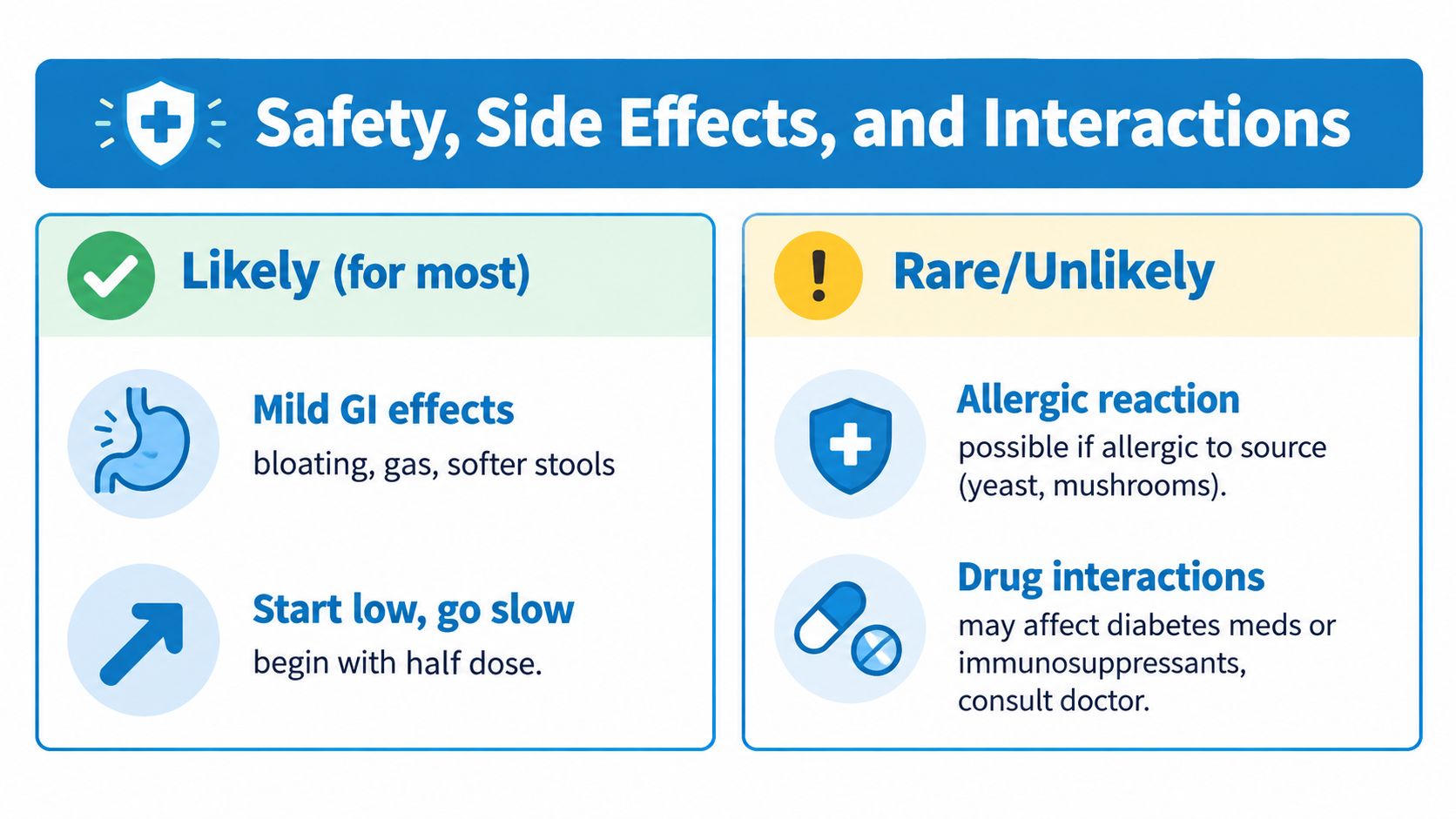
For many healthy adults, the most likely unwanted effects are gut-related. Bloating, gas, and softer stools can occur when someone increases soluble fiber or starts a concentrated extract. Taking the product with food and splitting the daily amount can make the transition easier.
Start with a smaller amount only if the label and your clinician's advice allow it, then assess tolerance before increasing. Persistent discomfort isn't a sign that the product is “working harder.”
Situations requiring extra care
Immune-modulating yeast and mushroom products deserve professional review if you take immunosuppressants, are awaiting an organ transplant, or have active autoimmune disease under treatment. The concern is not that every product will cause harm. It's that immune receptor activity may not be appropriate to add without considering the underlying condition and medication plan.
Soluble oat and barley beta glucans can also affect the movement and absorption of oral medicines when taken at the same time. Separating them by at least two hours is a cautious practical approach, but medication-specific advice should come from a pharmacist or physician.
Seek medical input for persistent gastrointestinal symptoms, a new rash, or fever after starting a product. Pregnancy, breastfeeding, and pediatric use have insufficient product-specific data, so the absence of proven risk shouldn't be interpreted as proof of safety.
People with allergies should check the source carefully. Yeast and mushroom ingredients can present different allergen considerations, and a blend may contain several sources that aren't obvious from the front panel.
How to Choose a Quality Beta Glucan Product
A reliable buying routine starts with the Supplement Facts panel, not the front-of-bottle promise. Use these checkpoints before comparing brands:
- Find the measured beta glucan amount. A product may list oat fiber, yeast extract, or mushroom powder by total weight without stating how much beta glucan it contains. Those figures aren't interchangeable.
- Confirm the source and structure. Look for wording such as oat beta-1,3/1,4 or yeast beta-1,3/1,6 from Saccharomyces cerevisiae. A named source connects the product to a more relevant evidence base.
- Check independent quality controls. USP, NSF, Informed Choice, or testing through an ISO 17025 accredited laboratory can provide useful verification of identity, beta glucan content, heavy-metal limits, and microbial safety when the testing scope is disclosed.
- Match the format to the dose. Capsules and tablets can simplify a measured daily routine. Powders may be more practical when a research target requires gram-level cereal beta glucan. Gummies are only useful for comparison when the beta glucan amount per piece is clearly stated.
Red flags on the label
A proprietary blend that hides individual amounts makes dose matching difficult. “Immune blend” language without a named source or active beta glucan quantity is another warning sign. Vague “mushroom complex” wording leaves you unable to tell whether the product contains the species or extraction method used in relevant research.
For shoppers comparing a defined mushroom-based option, Life Extension Mushroom Immune with Beta Glucans is one product listing to evaluate using the same checklist. The key question remains whether its label provides enough source and active-content detail for your goal.
Putting It Together for Your Goal
A sensible choice begins with a narrowly defined objective. Don't buy a generic beta glucan supplement and hope its effects cover cholesterol, immunity, energy, and skin at once. Match the source and dose to the outcome that matters most.
| Primary goal | Recommended source | Daily dose range | Expected timeline |
|---|---|---|---|
| LDL cholesterol reduction | Oat or barley beta-1,3/1,4 | Around 3 g/day | Several weeks, with clinical follow-up |
| Seasonal immune support | Yeast beta-1,3/1,6 | Around 250 to 500 mg/day | Used consistently during the relevant period |
| Exercise-related fatigue | Characterized yeast beta-1,3/1,6 | Around 250 mg/day in relevant protocols | At least two weeks around demanding training |
| Skin or wound support | Topical beta glucan formulation | Product-specific | Depends on the condition and formulation |
For LDL cholesterol, choose a cereal beta glucan product capable of delivering a meaningful gram-level amount, or use oat-based foods as part of the dietary pattern. A supplement isn't a substitute for a lipid evaluation, prescribed treatment, or dietary changes that your clinician has recommended.
For general immune support during cold and flu season, a characterized yeast beta-1,3/1,6 product is a closer match to the research than an undefined blend. The practical goal is immune readiness, not instant immunity. Athletes considering fatigue support should also remember that the relevant evidence is narrower and depends on training stress, recovery, and the specific product.
Topical beta glucan is a more logical route for skin or wound-focused use than an oral capsule. Any wound that's deep, infected, slow to heal, or associated with a medical condition needs professional care rather than self-treatment.
Keep three guardrails in place: use a consistent dose, expect changes over weeks rather than hours, and reassess the product every six months as evidence and formulations evolve. If you're taking medication or managing an immune, metabolic, or gastrointestinal condition, review the label with a qualified clinician before starting.
CalVitamin offers dietary supplements in forms including capsules, veggie capsules, and gummies, with product listings that let you compare source and serving information. Visit CalVitamin to review beta glucan and related wellness products, then choose only a formula whose active content matches your specific goal.






