
You eat a satisfying dinner, push your plate away, and then the uncomfortable part starts. Your stomach feels heavy. Your waistband suddenly seems tighter. You wonder whether you ate too fast, chose the wrong meal, or just need “something for digestion.”
That's the moment many people reach for chewable papaya enzymes. They're popular because they're easy to take, often taste pleasant, and sound natural. But the part that confuses most shoppers is this: not all digestive support works the same way, and papaya enzymes are not the same thing as a full digestive enzyme formula.
That distinction matters more than most labels make clear. If your meal was centered on chicken, steak, eggs, or another protein-rich food, papaya enzymes may fit the job better. If your discomfort tends to happen after pizza, pasta, fried foods, or dessert, a papaya-focused product may not be the match you think it is.
Table of Contents
- Feeling Full After a Meal? Here's How Papaya Enzymes Can Help
- Understanding Papain and Your Digestive System
- The Science Behind Post-Meal Relief
- Weighing the Pros and Cons of Papaya Enzymes
- How to Take Chewable Papaya Enzymes Safely
- A Smart Shopper's Guide to Papaya Enzymes
Feeling Full After a Meal? Here's How Papaya Enzymes Can Help
A common story goes like this. Lunch is quick, maybe a sandwich with deli meat, maybe grilled chicken and rice, maybe a heavy restaurant dinner squeezed between meetings. You don't feel bad while eating. The discomfort shows up later, when your stomach feels slow and stubborn.
That's why chewable papaya enzymes have become a familiar after-meal habit. People like them because they're simple. No shaker bottle, no complicated routine, no timing that feels hard to remember. You chew a tablet after eating, and the idea is straightforward: give your body extra enzyme support when a meal feels like it's sitting there.
For the right person, that can make intuitive sense. Enzymes are like kitchen tools. If your meal includes a lot of protein, a protein-focused enzyme can help cut big food particles into smaller ones that are easier to handle. That's the basic appeal of papaya enzymes.
But many people get tripped up by the label. They see the word “digestive” and assume it covers everything. It doesn't always. Some products center on papain, the protein-digesting enzyme from papaya. Others combine papain with enzymes that work on carbohydrates and other meal components.
Practical rule: Match the supplement to the kind of meal that usually bothers you, not just to the word “digestive” on the bottle.
That small shift can save a lot of frustration. If your trouble starts after a steak dinner, papaya may make more sense. If it starts after creamy pasta, fries, pastries, or a high-carb snack, you may need broader enzyme support instead of relying on papain alone.
Here's the key mindset: think less about “good supplement” versus “bad supplement,” and more about right tool for the meal.
Understanding Papain and Your Digestive System
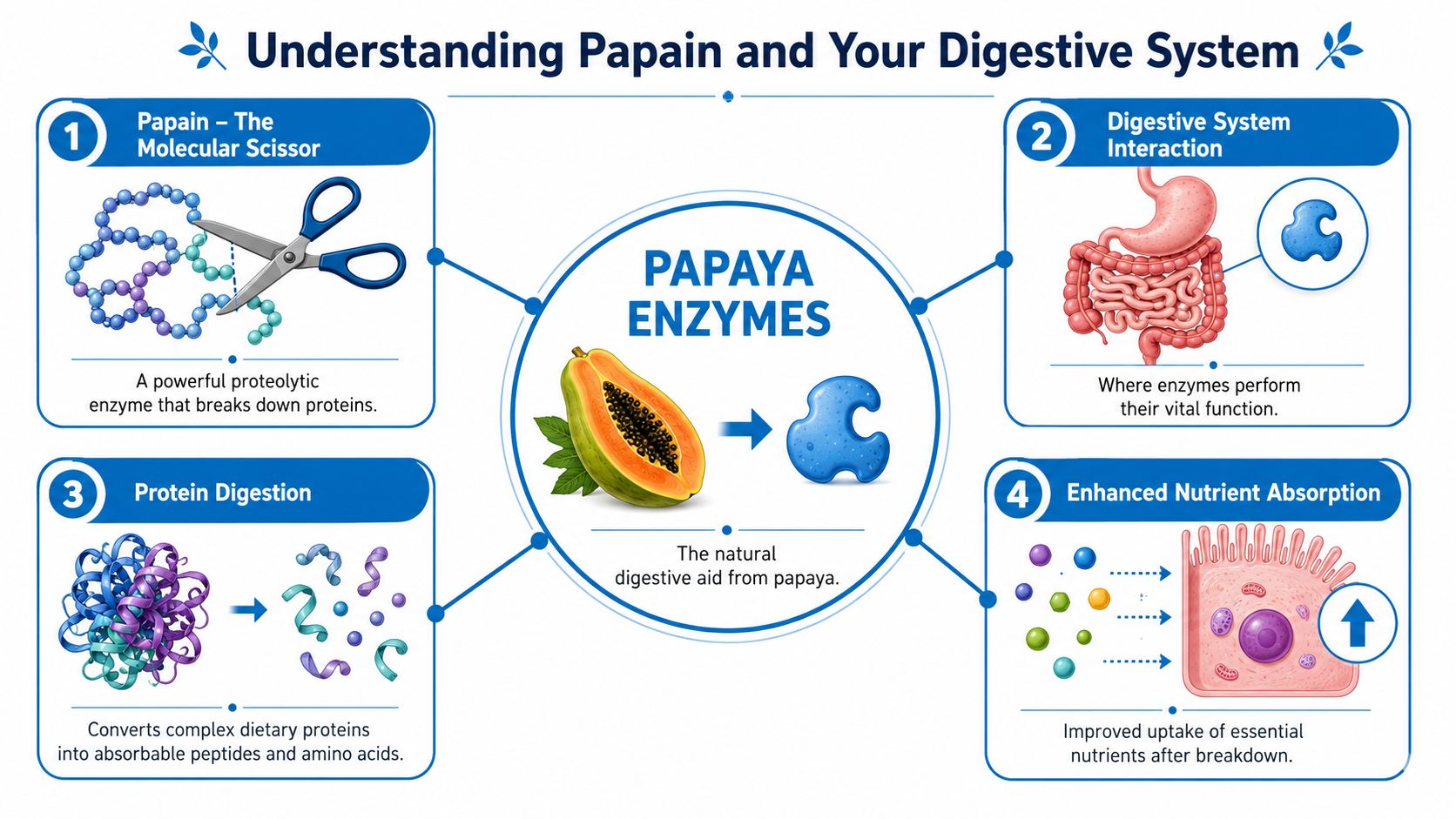
Papain is the star ingredient people mean when they talk about papaya enzymes. It comes from papaya and belongs to a group of enzymes called proteases, which means its main job is breaking down protein.
A simple way to picture papain is to imagine molecular scissors. Protein in food starts out as long, folded chains. Papain helps snip those chains into smaller pieces, which can make them easier for your digestive system to process.
Papain is the main worker
When you eat protein-rich foods like meat, eggs, or dairy, your body has to break large protein structures into smaller building blocks. Papain helps with that step. It doesn't “fix” digestion on its own, but it can support one part of the process.
This is why chewable papaya enzymes often appeal to people who feel especially full after meals centered on protein. The supplement is aimed at a specific job, not every digestive job.
The confusion starts because many shoppers hear “digestive enzymes” and assume all enzymes do the same work. They don't. A helpful explanation from Zenwise on papaya enzymes versus digestive enzymes notes that papain is strictly proteolytic, meaning it breaks down protein, while fats, carbs, and dairy require other types of support. The same source also says a common consumer question is whether papaya enzymes work effectively with a high-carb or high-fat meal, and answers that they do not, because papain cannot digest non-protein components.
If you're comparing labels, a broader formula such as Life Extension Extraordinary Enzymes illustrates the kind of product people often mean when they want wider meal coverage rather than a papain-centered chewable.
What papain does not do
This is the nuance often needed. Papain is not a universal cleanup crew for every heavy meal. If your dinner was buttery pasta, chips and dip, or a rich dessert, papain is like bringing scissors when you needed several different tools.
Here's a simple comparison:
| Meal type | Papain fit | Why |
|---|---|---|
| Grilled chicken, steak, eggs | Better fit | Papain works on protein |
| Bread, pasta, rice-heavy meals | Limited fit | Papain doesn't target carbs |
| Fried or very fatty foods | Limited fit | Papain isn't a fat-digesting enzyme |
| Mixed meals with many components | Depends on formula | A blend may be more useful than papain alone |
Papaya enzyme supplements make more sense when the meal problem is protein-heavy, not when every kind of digestive discomfort gets lumped into one category.
There's another practical point. Papaya enzyme supplements are not the same as eating whole papaya. Whole fruit brings fiber and nutrients. The enzyme isolate focuses on a narrower function.
The Science Behind Post-Meal Relief
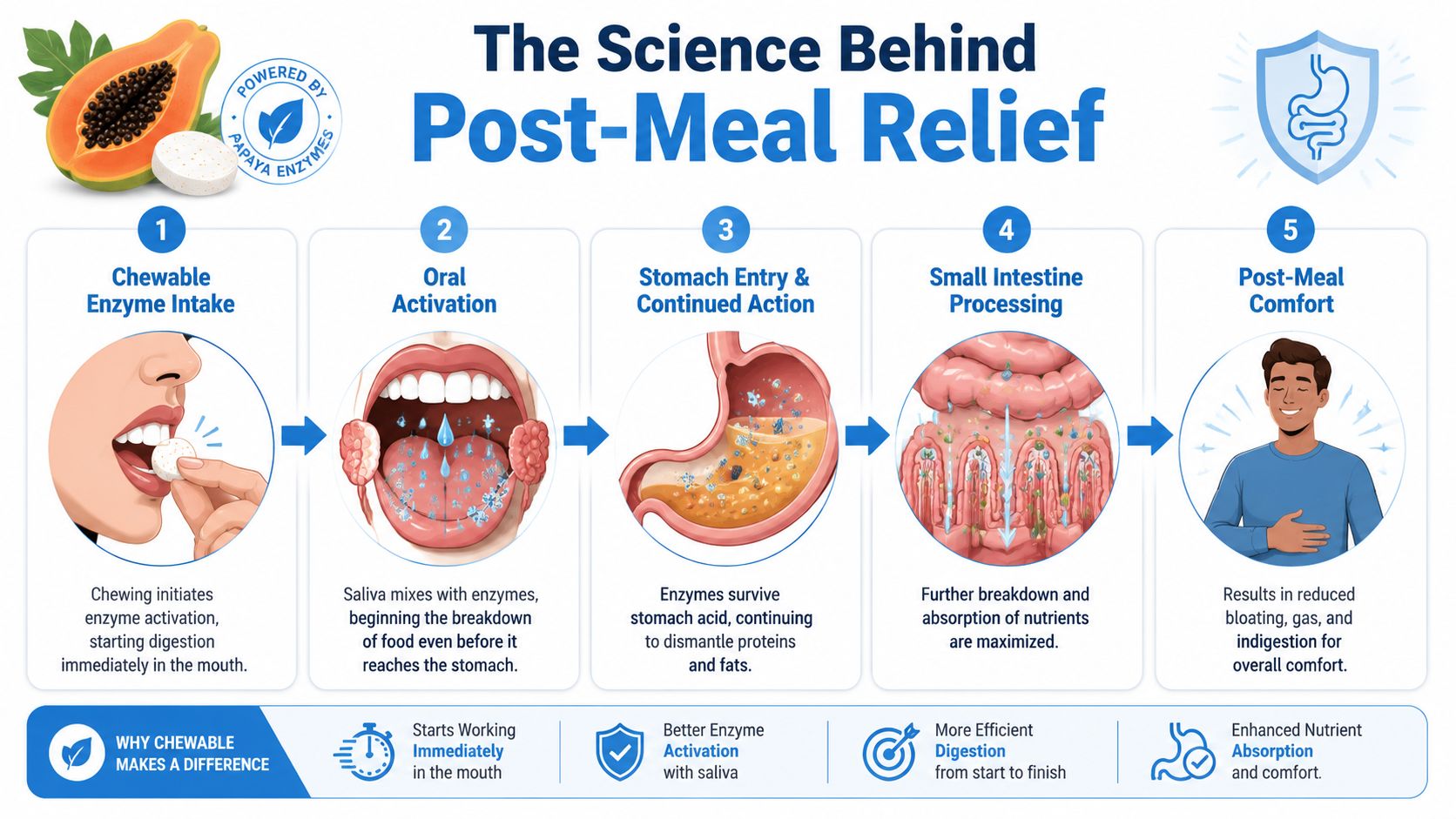
Chewable papaya enzyme products are popular partly because the delivery method is easy, but also because the chewable format starts working early. According to Solaray's papaya enzyme product information, chewable formulas typically provide 2–6 mg of papain with enzymatic activity listed as 100,000 FCC PU+, and may also include amylase (1 mg), protease (100 mcg), bromelain, and alpha-amylase. The same source explains that the chewable form dissolves rapidly in the mouth, mixes with saliva, and begins partial digestion before the enzymes move into the gastrointestinal tract.
That mouth-first step is easy to overlook, but it helps explain why chewables feel different from a supplement you swallow directly. Digestion doesn't begin only after food reaches the stomach. Chewing, saliva, and early mixing matter.
Why the chewable form feels practical
Think of a chewable enzyme tablet like crushing ice before it goes into a blender. The smaller and more mixed-in it is from the start, the easier the next steps can be.
With a chewable, you're not waiting for a capsule shell to open. You're already breaking the tablet apart in the mouth, and the enzymes meet saliva right away. For some adults, that format feels easier to use after meals because it fits naturally into the end of eating.
That doesn't mean chewables are automatically stronger. It means they start their work in a way that matches how digestion naturally begins.
Later in the digestion process, visual learners may find this helpful:
Why some formulas do more than papain alone
The importance of labels is clear. Solaray's product description highlights a multi-enzyme formulation rather than papain by itself. In that kind of blend, papain handles protein, while amylase works on carbohydrates, and bromelain adds additional proteolytic support. The source describes this as a synergistic effect that can support nutrient absorption after meals and help reduce occasional bloating and gas.
In plain terms, a blend works more like a small team:
- Papain: handles protein breakdown.
- Amylase and alpha-amylase: address starches and carbohydrates.
- Protease and bromelain: add extra protein-digesting support.
That's an important distinction. When people say a papaya supplement “worked,” they may be talking about a product that wasn't papain alone. It may have included other enzymes doing part of the heavy lifting.
If you remember one idea from the science side, make it this: chewable papaya enzymes can be narrow or broad, depending on the full label. The word “papaya” on the front doesn't tell the whole story.
Weighing the Pros and Cons of Papaya Enzymes
You finish a steak dinner, chew a papaya enzyme tablet, and feel better on some nights but not others. That pattern makes sense once you know what papain does. It mainly helps break down protein, so the fit depends a lot on what was on your plate.
Where chewable papaya enzymes may help
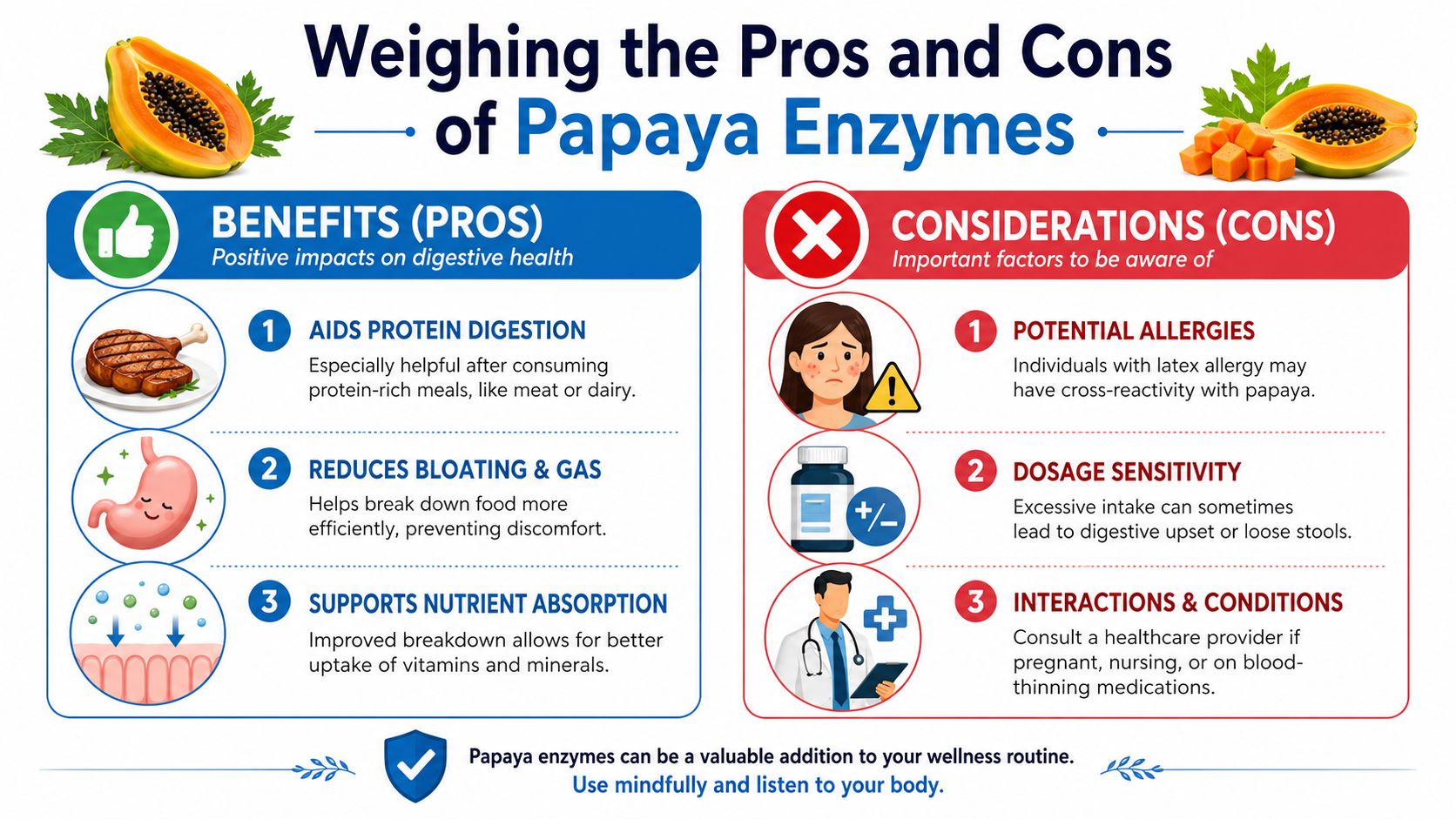
Papain works like a pair of kitchen scissors for protein. If your discomfort tends to show up after heavier foods such as meat, eggs, or a high-protein meal replacement, a papain-containing chewable may be a reasonable match.
That does not automatically make every “papaya enzyme” product equally useful. Some formulas are narrow and mostly centered on papain. Others include enzymes that also work on starches or add extra protein-digesting support. That label difference matters more than the word “papaya” on the front.
The main advantages are practical:
- Targeted support for protein-heavy meals: Papain is most relevant when protein is the main digestive job.
- Easy format: Chewables are simple to use after a meal and easier for some people to remember than capsules.
- More flexibility in blends: A formula with added enzymes may suit mixed meals better than papain alone.
For comparison, some shoppers also look at products with added proteolytic support, such as bromelain digestive aid tablets, to see how papaya-centered options differ from other digestion supplements.
Where the downsides show up
The biggest problem is mismatch. If your meal was mostly pasta, bread, dessert, or fried food, papain may not be the star player you need. A protein-focused enzyme is a narrower tool. It can help in the right setting and feel underwhelming in the wrong one.
That is why broad claims can confuse people. A chewable may seem effective after a burger but less helpful after pizza and ice cream. The supplement did not suddenly stop “working.” The meal changed.
A few cautions also deserve a clear look:
| Potential issue | Why it matters |
|---|---|
| Limited meal match | Papain focuses on protein, so it may be less helpful for meals centered on fats or carbohydrates |
| Allergy concerns | People with latex or papaya sensitivity may react to papaya-derived ingredients |
| Irritation with overuse | Taking more than directed can irritate the mouth, stomach, or esophagus |
| Medication concerns | People using blood thinners or managing a medical condition should ask a clinician before using it regularly |
| Nutrition confusion | Enzyme tablets do not replace the fiber and nutrients you get from whole fruit |
Whole papaya and papaya enzyme supplements are not interchangeable. The fruit brings fiber and nutrients. The tablet is a more isolated tool.
Key takeaway: Chewable papaya enzymes make the most sense as a targeted option for protein-heavy meals. If you want support for mixed meals with starches or fats, a broader enzyme blend may be a better fit.
One more practical point matters. Pleasant-tasting chewables can feel harmless, so some people use them casually. A better approach is to match the product to the meal and keep expectations realistic. Supplements can support digestion, but they do not fix every cause of bloating, fullness, or stomach discomfort.
How to Take Chewable Papaya Enzymes Safely
You finish a steak dinner, feel that heavy post-meal fullness, and reach for a chewable papaya enzyme. That can be a reasonable use. Grabbing the same tablets after every snack, dessert, and coffee run is a different story.
Safe use starts with one simple idea: match the supplement to the meal, then follow the label. Papaya enzymes are often used after eating, especially when the meal includes a solid amount of protein. They are less likely to be the right tool for a meal built mostly around fats or starches. A probiotic gummy option for everyday digestive support fills a different role, so it helps to know which product is meant for meal timing and which is meant for broader routine support.
Start with the label, then start small
Chewable papaya enzyme products often suggest taking them after meals and using a modest amount. The exact serving can differ by brand, so the bottle should guide the dose, not habit or guesswork.
A careful approach usually looks like this:
- Use the product after a meal, not all day long: These tablets are commonly designed as post-meal support.
- Begin with the lowest suggested serving: That gives you a chance to see how your mouth and stomach respond.
- Chew them as directed: A chewable is meant to break down in the mouth, which is different from swallowing a tablet whole.
- Save them for the right meals: Papain works on protein, so it makes more sense after chicken, fish, beef, eggs, or a high-protein shake than after a pastry or a bowl of pasta.
That last point trips people up. “Digestive enzyme” sounds broad, but papain is more like a specialist than a general contractor. If dinner was centered on protein, the fit is clearer. If the meal was rich in cheese, fried foods, or refined carbs, a broader enzyme blend may be a better match.
Watch for signs that you are overdoing it
More is not better here.
Chewables can taste mild or fruity, which makes them easy to treat like candy. Too much can irritate the mouth, throat, or stomach. If a product causes burning, nausea, or worsening discomfort, stop using it and review the label directions before trying it again.
Regular use also deserves a pause. If you feel like you need enzyme tablets after nearly every meal, the bigger question may be why. Ongoing bloating, pain, reflux, or early fullness can point to a digestive issue that needs medical advice rather than more supplements.
Who should ask a clinician first
Some people need a little more caution before trying papaya enzyme chewables.
Talk with a pharmacist or clinician before regular use if any of these apply:
- You have a latex or papaya allergy
- You take blood thinners or other prescription medications
- You have diabetes or another condition that affects digestion
- You are pregnant or trying to conceive
- You have trouble swallowing or a history of esophagus irritation
A practical tip helps here. Bring the bottle, or a clear photo of the front and supplement facts panel, to your appointment. That gives your clinician the actual ingredient list instead of a fuzzy description like “the papaya chewables from the health aisle.”
Chewable papaya enzymes can be a useful, targeted tool. Used carefully, they may help after the right kind of meal. Used casually, they can create confusion, irritation, or false reassurance when your body is asking for a closer look.
A Smart Shopper's Guide to Papaya Enzymes
Most labels look friendlier than they are informative. Fruit imagery, tropical colors, and words like “natural” can distract from the question that matters most: what exactly is in this product, and what kind of meal is it built for?
That's where shoppers can make a much better decision with a few simple checks.
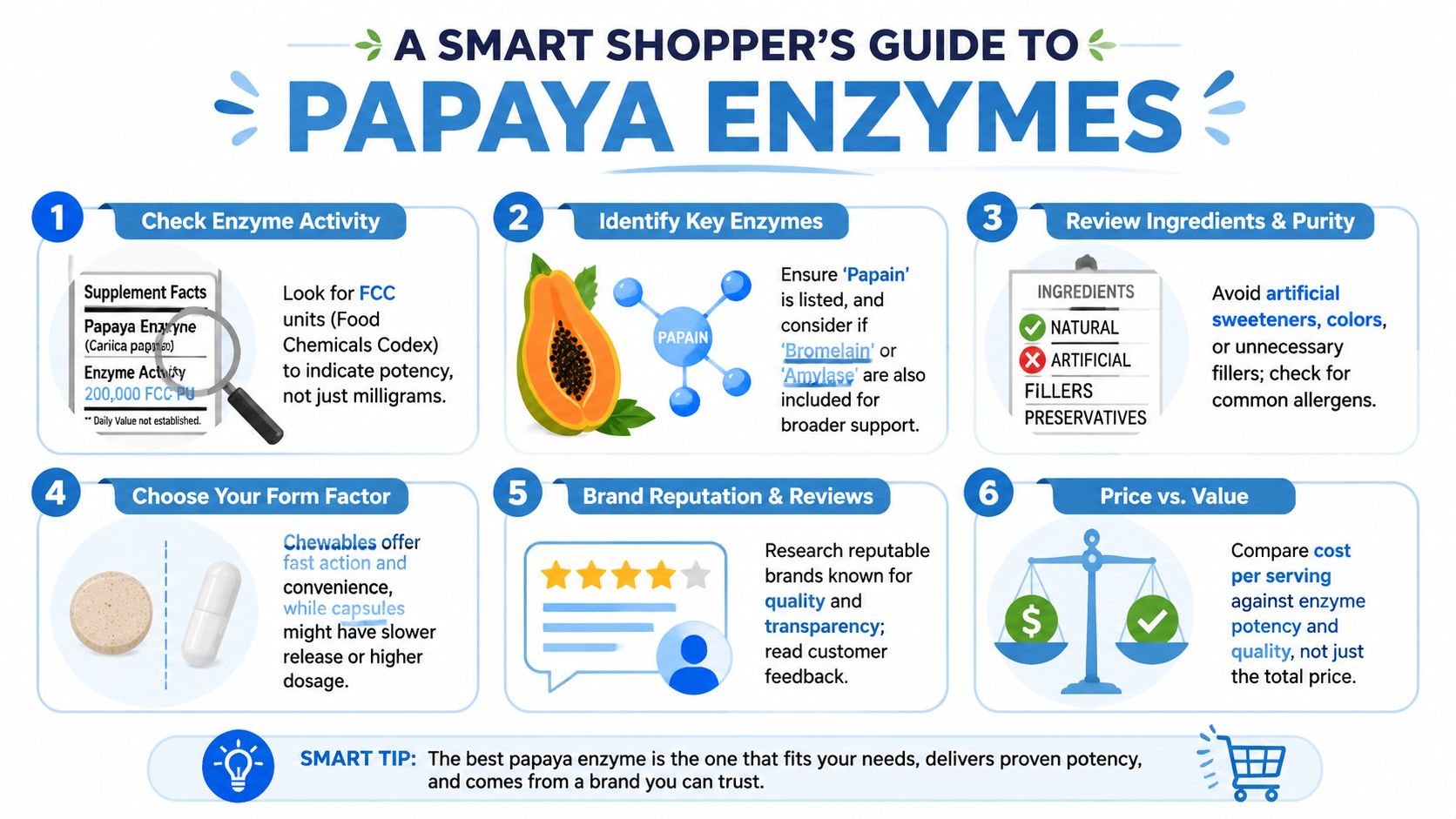
How to read the front and back label
Start with the supplement facts panel, not the marketing language.
Here's a practical shopping checklist:
- Look for papain by name: If the product says “papaya enzyme,” confirm that papain is listed.
- Check for enzyme activity units: If a label includes activity information such as FCC units, that often tells you more than ingredient weight alone.
- Scan for added enzymes: Amylase, bromelain, protease, or alpha-amylase suggest broader support than papain alone.
- Review the extras: Sweeteners, flavors, colors, and fillers can matter if you're sensitive to certain ingredients.
- Notice the format: Chewables are convenient and often easier after meals. Capsules may suit people who prefer less sweetness or fewer flavoring agents.
A good label doesn't just tell you what sounds appealing. It tells you what job the product is trying to do.
How to match the product to your meal pattern
The smartest purchase usually starts with a pattern you've noticed in your own body.
Ask yourself:
Do I usually feel uncomfortable after protein-heavy meals?
A papain-centered chewable may fit better.Do I struggle more after starchy or rich meals?
You may want broader digestive support rather than relying on papain alone.Do I want convenience or minimal ingredients?
Chewables win on convenience. Simpler capsules may win on fewer flavoring ingredients.Do dietary preferences matter to me?
Labels such as halal, gelatin-free, or cruelty-free can be meaningful if they align with your needs and values.Am I comparing price or value?
“As low as” pricing can be helpful, but only after you compare enzyme profile, serving size, and intended use.
For some people, a non-enzyme digestive option also belongs in the comparison set. For example, Digestive Advantage Probiotic Gummies represent a different category entirely. That doesn't make one better than the other. It means a probiotic gummy and a papaya enzyme chewable do different jobs, so shoppers shouldn't treat them as interchangeable.
A simple buying framework can help:
| Shopper question | What to look for |
|---|---|
| “I feel heavy after meat-heavy meals” | Papain clearly listed |
| “I want support for mixed meals” | Multi-enzyme formula |
| “I dislike swallowing pills” | Chewable tablets |
| “I avoid certain ingredients” | Attribute labels and full ingredient review |
| “I want the best value” | Compare cost per serving with the formula, not just bottle price |
Store the product as directed on its label, and don't keep it just because it looked good on the shelf. If you try it and your symptoms don't match the enzyme's job, the issue may be product mismatch rather than product quality.
If you're comparing digestive support options, CalVitamin offers a wide wellness catalog with enzymes, probiotics, vitamins, and clearly labeled product formats so you can choose what fits your routine, ingredient preferences, and budget more confidently.






