You're standing in the supplement aisle with two nearly identical bottles in your hands. One says gelatin-free, the other doesn't, and both promise the same vitamins. The label looks simple until you realize the question isn't “Is this a gummy?” It's “What's holding this product together?”
That's the part most first-time buyers miss. Gelatin free vitamins aren't just a marketing style choice, they're a formula choice, and the difference can show up in the capsule shell, gummy base, binder, or coating. If you care about vegetarian, vegan, halal, kosher, or allergy-conscious shopping, the Other Ingredients line matters just as much as the front label.
Table of Contents
- What Gelatin Free Vitamins Actually Mean
- Why Gelatin Still Dominates the Supplement Market
- Common Gelatin Alternatives and What They Do
- Choosing the Right Format for Your Routine
- How to Read a Gelatin-Free Label
- Certifications That Confirm the Claim
- Bioavailability, Allergens, and Performance Trade-Offs
- Shopping Checklist and Common Questions for CalVitamin Shoppers
What Gelatin Free Vitamins Actually Mean
A shopper reaches for two gummy bottles and assumes the one with fruit on the front must be plant-based. That's the trap. A product can look soft, sweet, and vegetarian-friendly while still using animal-derived gelatin in the base, shell, coating, or binder.
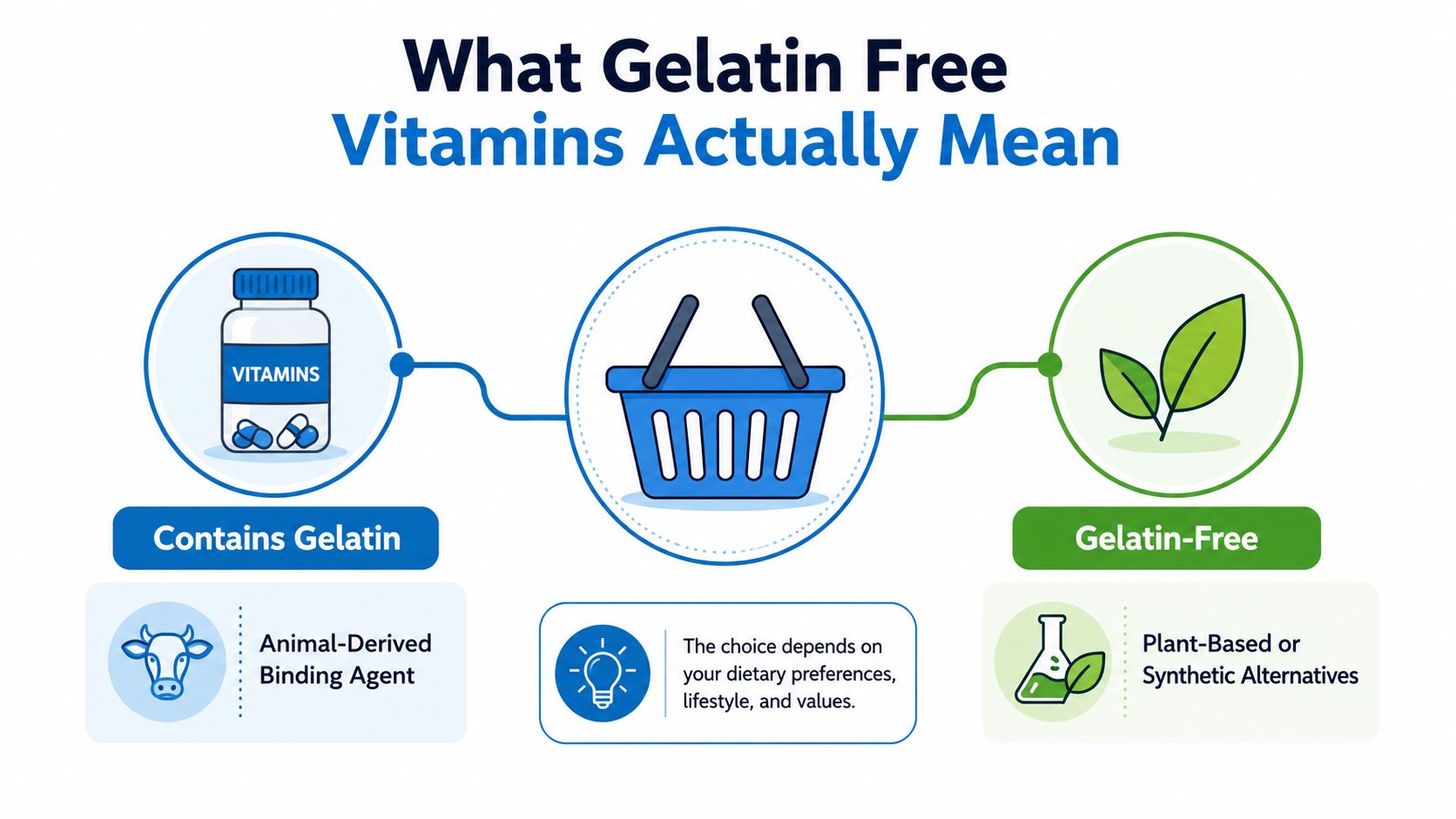
Gelatin-free vitamins mean the formula does not contain animal gelatin anywhere in those parts of the product. That matters because gelatin is used in more than one place, not just in the chewy center of a gummy. It can also appear in capsules and tablet coatings, so the front label alone doesn't tell the whole story.
What the term does and doesn't promise
The phrase gelatin-free is an ingredient-level claim, not a full dietary guarantee. It tells you what's not inside the formula, but it doesn't automatically prove the product is vegan, kosher, or halal.
A gummy can be gelatin-free and still use colors, flavors, or sweeteners a shopper may want to avoid. A capsule can be gelatin-free and still contain an animal-derived ingredient elsewhere in the formula. That's why the smartest habit is to treat the claim as a starting point, then confirm the full ingredient list.
Practical rule: If you need to avoid animal gelatin for any reason, read the complete ingredient panel, not just the front of the bottle.
For vegetarian shoppers, the term usually means a plant-based or synthetic capsule system instead of collagen-derived gelatin. For halal and kosher shoppers, it's also a sourcing question, because the origin of each component matters. For allergy-conscious buyers, the term helps narrow the field, but it still doesn't replace a full label check.
Why Gelatin Still Dominates the Supplement Market
Gelatin stayed in supplement manufacturing because production lines were already built around it. It is familiar to work with, easy to mold, and common in softgels and gummies, two formats shoppers see often on the shelf. Once a factory sets up around one shell material, changing the formula means new testing, new sourcing, and more cost.
The bigger picture is easy to miss when you are standing in front of a bottle display. A 2023 report summarized by VegNews found that about 50% of dietary supplements contain at least one animal-derived ingredient, and 44% of on-market supplements contained one of the two most common animal-derived ingredients, magnesium stearate and gelatin. The same report estimated that more than 24 billion fish and 18 million cows, sheep, and pigs are consumed each year to make supplement ingredients for the U.S. market, which shows how closely supplement formulas are tied to animal sourcing. Read the summary in VegNews' report on hidden animal byproducts in supplements.
Why the market keeps moving anyway
The market has not stood still. The global softgel capsules market was estimated at USD 7.67 billion in 2022 and is projected to reach USD 13.09 billion by 2030, with vitamins and dietary supplements dominating that segment, according to the same verified data. That tells us capsules remain a major delivery format even as more shoppers ask for non-animal options.
Gelatin became default infrastructure in supplement manufacturing because production lines were built around it, and reformulation requires time, testing, and cost. Gelatin-free positioning exists because shoppers want formulas that fit their diets without having to guess where the shell or coating came from.
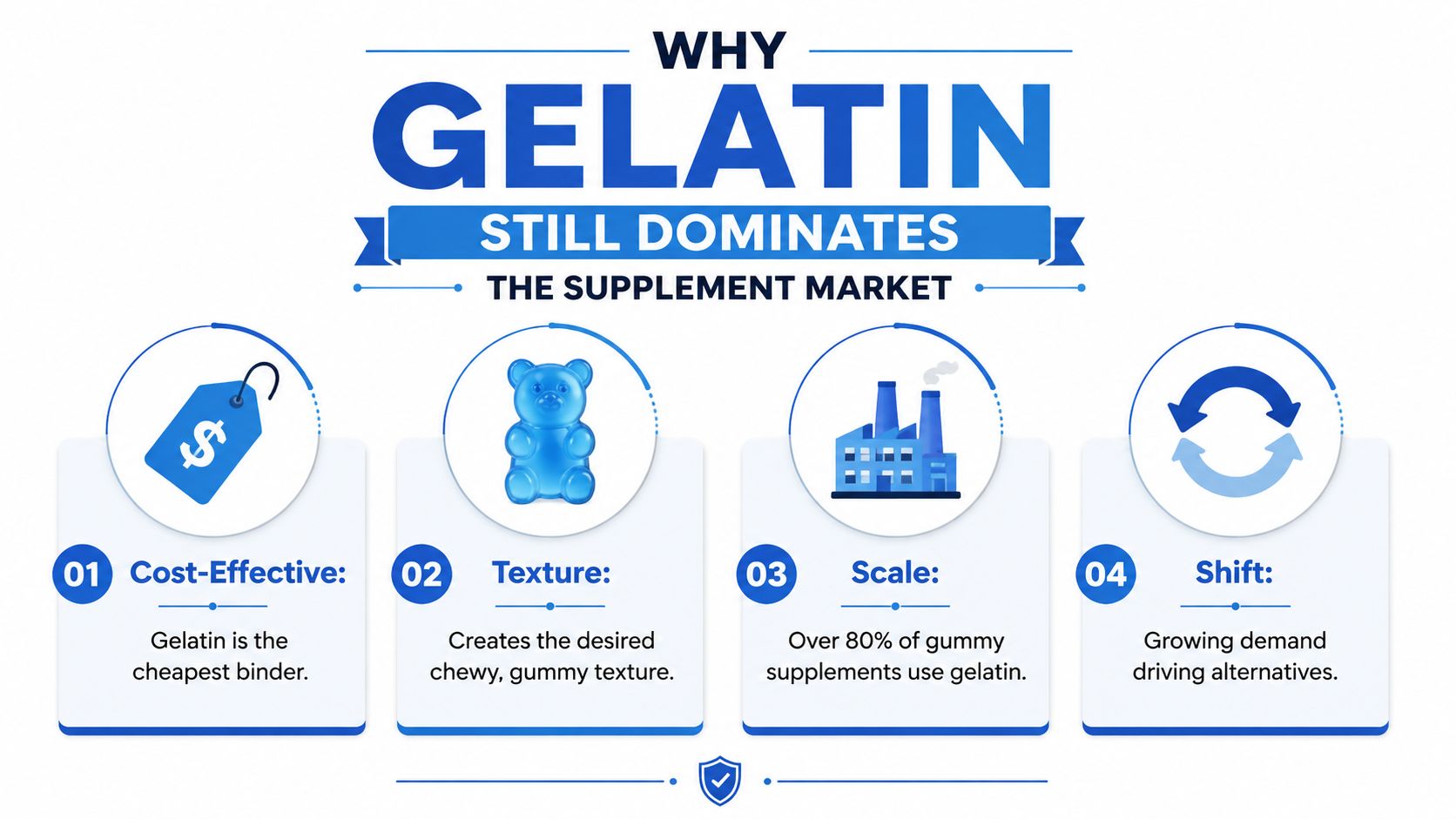
The label exists because the ingredient still dominates production, not because consumers are being overly cautious.
If you have ever assumed a capsule or gummy was plant-based by default, that is where confusion starts. The market still contains a lot of animal-derived material, so “gelatin-free” is a real specification, not decoration. It also helps explain why some shoppers compare a bottle's front label with the full Other Ingredients list, or even look up products like this Vital Proteins beef gelatin review to understand how gelatin shows up in supplement form.
Common Gelatin Alternatives and What They Do
A gelatin-free product is not a watered-down version of a supplement. It usually means the manufacturer changed the capsule shell, the gelling system, or the binder so the ingredient still reaches you in a different form.
HPMC and pullulan in capsules
HPMC, short for hypromellose, is one of the most common veggie capsule materials. It is cellulose-based, so it comes from plant material rather than collagen. Technical reviews note that HPMC capsules can remain stable at lower moisture levels than gelatin, which helps with moisture-sensitive powders and reduces water migration during storage and distribution PMC technical review.
Pullulan is another capsule material shoppers may see. It is a fermented starch film often used in premium capsules, especially when brands want a clean-label, plant-based story. On a label, it may appear as pullulan capsule or in a “vegetable capsule” statement. If you are comparing a few capsule products side by side, a veggie multivitamin capsule with biotin and ashwagandha can be a useful example of how a plant-based shell is described on the front and in the ingredient panel, such as this vegan women multivitamin biotin ashwagandha capsules.
Gummy and chewable alternatives
For gummies, pectin is the ingredient many shoppers notice first. It comes from fruit and is common in plant-based and organic gummies. Agar-agar is seaweed-derived and sets a firmer gel, while carrageenan also comes from red seaweed and is used in some gummy or liquid-gel systems. Gellan gum appears in certain chewables and helps create the right texture without using gelatin.
These ingredients matter because they change how the product feels in your mouth and how the formula is built. A gummy uses a different base than a capsule, so it may be easier to chew, but it can also leave less room for concentrated nutrients. That is why shoppers who want a gelatin-free option still need to read beyond the front label and compare the full ingredient panel, especially if they are choosing between a gummy, a veggie capsule, and a liquid.
What to look for on the label
- HPMC or hypromellose, if you want a veggie capsule
- Pullulan, if you want a plant-based film capsule
- Pectin, if you're buying gummies
- Agar-agar, carrageenan, or gellan gum, if the product uses non-gelatin gelling agents
- Cellulose-based binder, if you want a plant-derived tablet system
Simple label habit: If the front says “vegetarian” or “gelatin-free,” still scan the other ingredients for the actual shell or gelling agent.
One helpful detail for fat-soluble nutrients is that plant-based shell systems can still carry the same active ingredient class. BASF's technical sheet for Dry Vitamin D3 100 GFP states the product is gelatin-free and suitable for vegetarian, halal, kosher, gluten-free, and allergen-free applications. That shows the active ingredient does not have to change just because the delivery system does BASF technical information.
Choosing the Right Format for Your Routine
A product can be perfectly gelatin-free and still be wrong for your day-to-day life. If you hate swallowing pills, a capsule won't get taken consistently. If you want higher nutrient density, a gummy may not be the best fit.
The choice usually comes down to four formats, veggie capsules, tablets, liquids, and gummies. Each one solves a different problem, and each one creates a different trade-off.
| Format | Typical Shell or Base | Best For | Watch Out For |
|---|---|---|---|
| Veggie capsules | HPMC, pullulan, other cellulose-based shells | People who want a pill-style format without gelatin | May still need careful label reading for coatings or fillers |
| Tablets | Compressed powders with plant-based binders | Higher-dose formulas and simple daily routines | Some tablets use coatings, so check the full ingredient list |
| Liquids | Water- or oil-based formulas | Flexible dosing and people who dislike pills | Shorter shelf-life concerns and measuring accuracy |
| Gummies | Pectin, agar, carrageenan, or gellan-based systems | Chewable convenience and taste preference | May include sugar and often deliver less nutrient per piece |
A gummy can be a smart pick if the main barrier is compliance. But taste sometimes comes with trade-offs, and that's especially true when someone expects a candy-like product to behave like a concentrated capsule.
How to match format to real life
If you need portability, capsules and tablets are usually easier to pack. If you're buying for a child or someone who needs partial dosing, liquids can make more sense. If swallowing is the issue, gummies solve the problem fast, but they deserve the same label scrutiny as every other form.
The cleanest way to choose is to ask one question first, what will you take every day? Then match that answer to the format, instead of forcing yourself into a product that looks ideal but sits unopened.
For shoppers browsing sexual wellness or multitasking formulas, format matters just as much as ingredient style. A product like this gelatin-free gummy example shows how brands now build different routines around different delivery forms, not just different nutrients.
How to Read a Gelatin-Free Label
The front of the bottle is the sales pitch. The back is the truth test. If you only read the big badge on the front, you can miss gelatin hiding in a shell, coating, or binder.
Start with the front-of-pack claim. Look for words like gelatin-free, vegetarian, or vegan. Then move to the Supplement Facts panel and find the Other Ingredients list, because that's where the shell and non-active materials usually live.
Five checkpoints that prevent label mistakes
- Read the claim carefully. “Vegetarian” often suggests no gelatin, but it doesn't always tell you whether every component meets your standard.
- Find the Other Ingredients list. You'll spot gelatin, bovine gelatin, porcine gelatin, or a vegetable alternative like HPMC or pectin.
- Watch for coatings. A tablet can look simple and still use a coating system that includes gelatin or shellac.
- Check allergen and facility statements. “Manufactured in a facility that also processes fish or shellfish” matters if you're avoiding cross-contact.
- Confirm the exact polymer if needed. “Vegetable capsule” is helpful, but if you need full transparency, ask what the capsule is made from.
If the label doesn't name the capsule material, the safest move is to ask the manufacturer for the exact shell composition.
Some ingredient names are easier to decode than they look. Vegetable cellulose, HPMC, pullulan, pectin, and agar are the terms you're most likely to see in place of gelatin. Once you've seen them a few times, they stop feeling technical and start reading like a shopping map.
A lot of confusion comes from assuming gummies are automatically gelatin-free. They're not. The only reliable answer is the full ingredient list, especially on products with flavors, coatings, or multiple layers.
Certifications That Confirm the Claim
A label claim is useful. A certification is stronger because someone outside the brand has checked the product against a specific standard. That doesn't make every seal identical, but it does make the claim harder to fake.
Vegan certification usually means no animal-derived ingredients, including gelatin. That's the broadest fit for shoppers trying to avoid all animal inputs. Halal certification checks whether the product follows religious sourcing and processing rules, which generally rules out porcine gelatin and may require additional sourcing review for bovine ingredients depending on the certifier. Kosher certification does something similar under Jewish dietary law, with its own sourcing and processing requirements.
What each seal helps you answer
- Vegan. Is gelatin out, along with other animal-derived ingredients?
- Halal. Does the product meet religious sourcing and processing rules?
- Kosher. Does the product follow kosher ingredient and manufacturing standards?
- Gluten-free. Is gluten excluded from the formula?
- Allergen-free. Are common allergenic ingredients intentionally removed?
Some brands also publish ingredient-level declarations instead of relying on broad seals alone. BASF's Dry Vitamin D3 100 GFP is an example of a product described as gelatin-free and suitable for vegetarian, halal, kosher, and gluten-free applications, which gives shoppers more specificity than a general marketing phrase.
The important distinction is this. A seal can confirm that a standard was met, but it still won't tell you everything. You still need the ingredient list, because certifications and label claims answer different questions.
Bioavailability, Allergens, and Performance Trade-Offs
Skipping gelatin solves one question, but it opens another. The better choice still depends on how the nutrient is built, how the body can use it, and who is taking it. A gelatin-free product can still work well if the dosage form matches the ingredient inside it.
Vitamin D shows why this matters. It appears in softgels, capsules, and gummies, and one review found that gummies produced a higher measured absorption curve than tablets in a study arm, which shows that non-gelatin formats can still deliver meaningful results when the formula is built well gelatin and non-gelatin capsule review. That does not make gummies the best choice across the board. It shows that the delivery system changes how the ingredient performs.
Trade-offs people usually miss
Gummies often taste better, which makes them easier to take day after day, but they may bring added sugars and less nutrient content per piece. Tablets can pack more into one serving, though some people find them hard to swallow. Liquids make it easier to adjust the amount, which helps for children or for anyone who wants more flexibility. HPMC capsules can also be a smart choice for moisture-sensitive powders, and CalVitamin's gelatin-free men's gummies show how a gelatin-free format can still be built for a specific routine.
Allergen details deserve the same attention. Some formulas use soy, corn-derived starch, or carrageenan, and people do not always react to those ingredients the same way. Gelatin-free therefore does not mean problem-free. It means the formula has shifted to a different set of ingredients, and each of those ingredients needs its own check on the Other Ingredients list.
The safest way to choose is to separate the reason you want to avoid gelatin from the way the product works in the body. You can care about sourcing and still pick the format you are most likely to take consistently.
Shopping Checklist and Common Questions for CalVitamin Shoppers
A good shopping decision starts with the same four checks every time. First, look for the gelatin-free or vegetarian claim. Second, read the Other Ingredients line. Third, confirm the dosage form, capsule, tablet, gummy, or liquid. Fourth, verify the certification if you need one.
If you're using an online catalog, filter for the attribute that matters most, then open the product page and read the ingredient list before you add anything to cart. On product pages, reviews can help you spot practical issues like size, taste, or whether a capsule is easier to take than expected. If the listing says “vegetable capsule” but doesn't name the polymer, that's not a reason to panic, but it is a reason to ask for more detail.
Quick answers to the questions people ask most
- What if fish-derived omega-3s are present? A product can still be gelatin-free and contain fish oil or fish-derived actives. Gelatin-free only answers the gelatin question, not every animal-source question.
- Are children's vitamins easier to find in gelatin-free formats? Gummies and liquids often make dosing simpler for kids, but you still need to check the base, because chewable doesn't always mean plant-based.
- What if the label only says vegetable capsule? That usually points to a non-gelatin shell, but if you need certainty, ask whether it's HPMC, pullulan, or another material.
- How do I spot hidden gelatin in coatings? Look for coating language in the ingredient list and don't assume a tablet is uncoated just because it looks plain.
One product page can also tell you a lot about a brand's approach. A listing such as this gelatin-free male enhancer example shows how format, flavor, and ingredient positioning get combined on the shelf, which is exactly why the fine print matters.
If you want the simplest screenshot-worthy rule, use this: front claim, back label, shell material, certification, then dosage form. That order keeps marketing from talking you into a product your diet or routine can't use.
CalVitamin carries a broad supplement catalog with options that help shoppers narrow by gelatin-free, halal, and cruelty-free needs, so you can compare formats without guessing at the ingredient system underneath. If you're ready to shop with the label-reading checklist in hand, visit CalVitamin and look for the product details that match your dietary priorities before you buy.