
You're standing in the kitchen with a shaker full of water, a scoop of powder, and the same gritty result you had yesterday. You shake harder, open the lid, and find dry powder stuck to the cap while a thick foam layer sits on top. The problem usually isn't effort. It's the combination of liquid temperature, powder type, mixing order, and format.
The most reliable approach is to stop treating every protein shake the same. Whey, casein, plant proteins, milk, coffee, and thick smoothie ingredients each need a slightly different method. Once you match the technique to the drink, smoother mixing becomes much more predictable.
Table of Contents
- Choosing Your Liquid and Mixing Setup
- Mixing Protein Powder in a Shaker Bottle
- Blender Methods for Smoother Shakes
- Mixing by Liquid Type and Temperature
- Troubleshooting Clumps and Foam
- Dosing, Timing, and Goal-Based Recipes
- Quick Checklist and Final Takeaways
Choosing Your Liquid and Mixing Setup
Set up your mixing station before opening the protein tub. A shaker bottle handles portable drinks, a wide-mouth glass makes paste-first mixing easier, and a small frother can rescue a single serving when you don't want to use a blender. Keep a measuring cup nearby, and use a kitchen scale if you're tracking protein powder by weight rather than relying on a scoop.
Your liquid determines more than taste. A shake made with water and a 32-gram whey serving contains 113 calories and 25 grams of protein, while the same serving mixed with 1 cup of whole milk contains 262 calories and 33 grams of protein, according to this consumer-health review of protein powder drinks. Milk therefore makes sense for a thicker, more calorie-dense drink, while water keeps the mixture lighter and exposes the powder's natural texture.
Plant milks can vary considerably in sweetness, fat, and fiber, so expect different suspension and foam behavior from one carton to another. For more guidance on selecting protein products, you can browse CalVitamin's protein selection.
| Liquid | Calories per cup | Added protein (g) | Foam risk | Clump risk |
|---|---|---|---|---|
| Water | Varies by product | None from the liquid | Low to medium | Low to medium |
| Whole milk | 149 additional calories compared with water in the cited example | 8 additional grams compared with water in the cited example | Medium to high | Low to medium |
| Plant milk | Varies by product | Varies by product | Low to medium | Medium |
| Coffee or tea | Varies by drink | Usually none from the liquid | Medium | High if used hot without a paste |
Temperature matters because protein powders hydrate more readily in warmer liquid. A dairy-powder handbook reports that solubility rises as water temperature increases from 50°F to 122°F, or 10°C to 50°C, and identifies an optimum mixing temperature below 140°F, or 60°C. For a cold shake, the practical compromise is a cool or mildly chilled liquid rather than ice-cold water.
Mixing Protein Powder in a Shaker Bottle
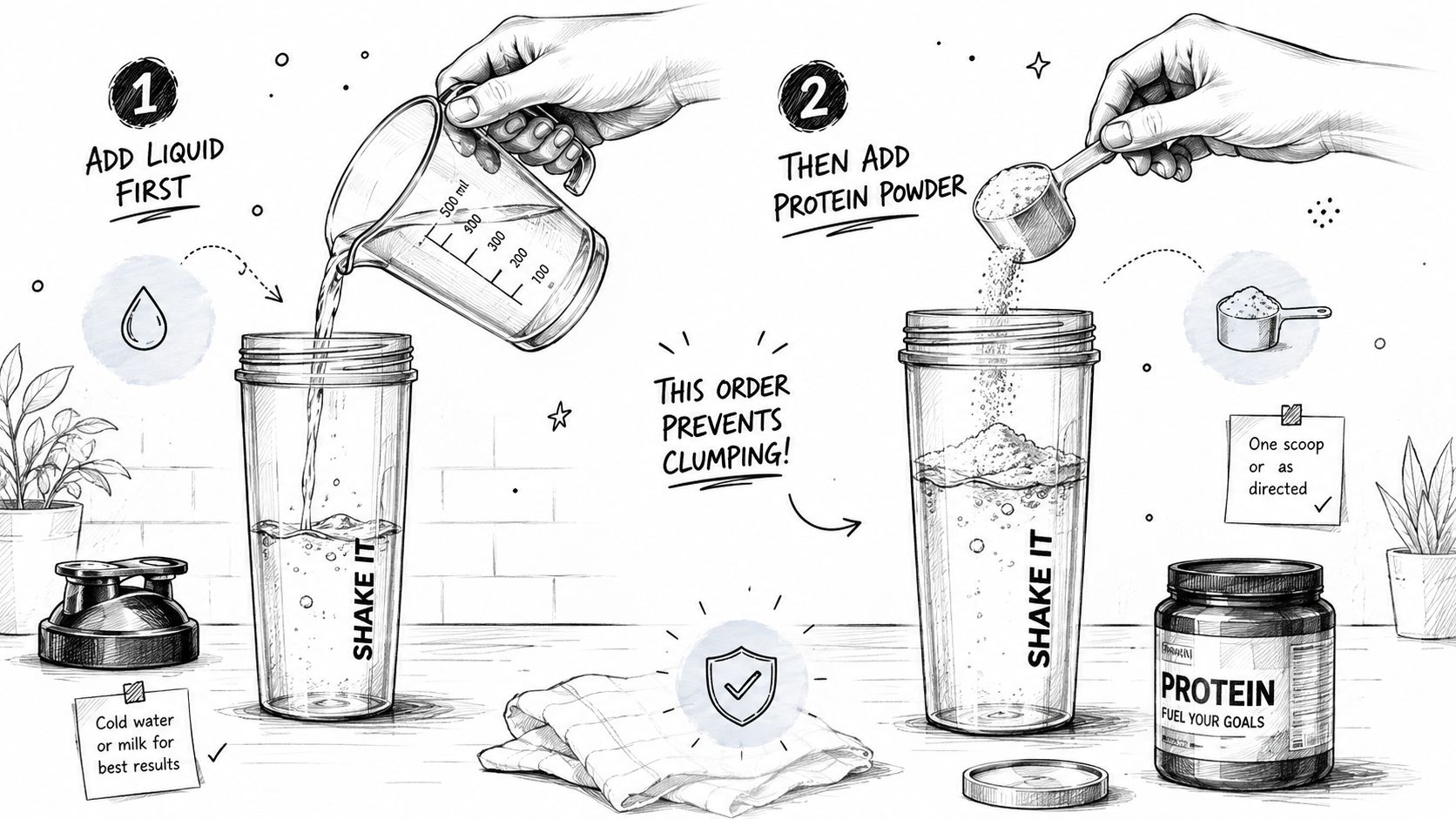
A shaker works well when you control the sequence. Start with the liquid, then add the powder. Reversing that order leaves powder pressed against the bottom, cap threads, and corners where water can't reach it efficiently.
Use enough liquid to let the powder circulate freely without filling the bottle to the brim. Add the powder after the liquid, close the lid firmly, and check the seal before shaking. A whisk ball or mesh insert helps break up wet pockets, but it can't compensate for powder that has already formed a dense layer at the base.
Use a staged shake
Shake firmly, then give the drink a short rest before shaking again. The first burst breaks apart visible clumps and wets the powder. During the rest, trapped air rises and slower-dissolving particles continue to hydrate. A second brief shake then handles the remaining sediment more efficiently than extending one aggressive shake.
A dairy-powder handbook reports that whey and milk-protein powders may need high-speed mixing followed by slower agitation to fully hydrate. It also states that powders should dissolve in 20 minutes or less when mixed with water at 104°F to 122°F, or 40°C to 50°C. Home preparation doesn't require industrial equipment, but the principle is useful: mixing intensity and hydration time both matter.
Whey generally handles cool liquid well, while casein and dense milk-protein blends often benefit from more time. Plant proteins may stay somewhat grainy because their ingredients don't all dissolve like whey. If you're comparing a product for regular use, the Life Extension Wellness Code Whey Protein Isolate review includes its preparation directions.
Practical rule: If a shake looks smooth immediately but feels gritty, let it rest briefly before assuming the powder has failed.
Foam is a separate issue from clumping. Tap the bottle gently on the counter to release large bubbles, or leave it undisturbed until the foam settles. Drink it soon after mixing if you prefer a thinner mouthfeel, because protein drinks can thicken as hydration continues.
Blender Methods for Smoother Shakes
A blender earns its cleanup when the drink contains frozen fruit, oats, yogurt, nut butter, ice, or a dense protein blend. It creates a more uniform texture than a spoon and gives fibrous or thick ingredients enough force to disperse properly. For a single serving, a personal blender is usually sufficient. A full-size blender becomes useful when you're preparing several portions together.
Build the mixture from wet to dry. Add the liquid first, followed by soft ingredients such as banana or yogurt, then place the protein powder on top. Start on low speed so the liquid wets the powder without sending a dry cloud into the lid. Pause briefly once the initial vortex forms, then blend at a higher speed until the drink looks uniform.
Add thickness deliberately
Ice should come last. It can create a thicker texture, but it also dilutes flavor as it melts and may encourage longer blending. Longer blending can add more air, especially with whey, leaving a foamy layer that makes the shake feel larger and less creamy than intended.
A blender also makes staged addition practical. If the recipe is very dense, add part of the powder, blend until incorporated, then add the rest. This gives the liquid a chance to reach each portion instead of forcing the entire dose into one concentrated pocket.
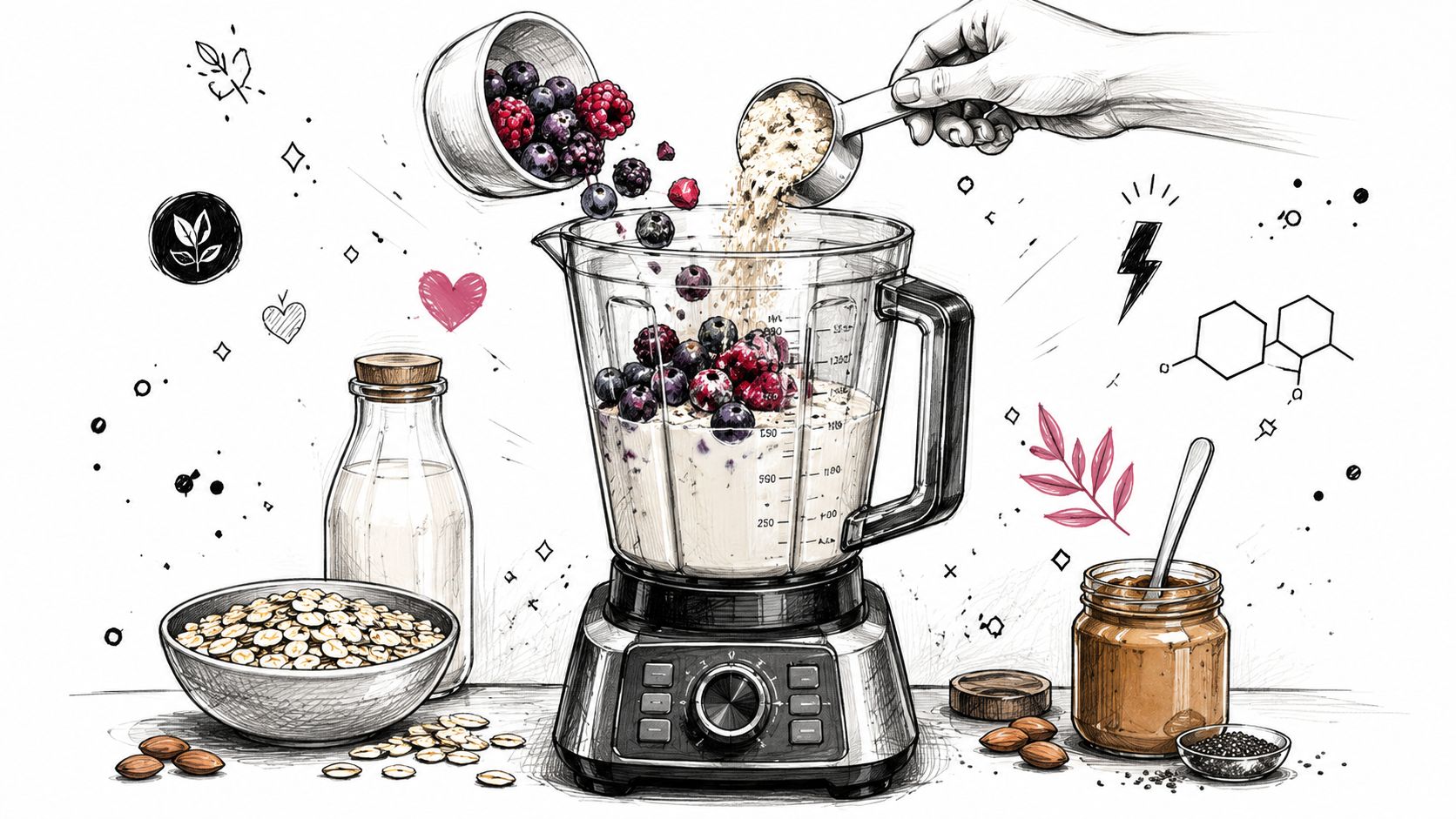
A blender solves clumps, but it doesn't automatically solve poor ratios. Too little liquid can turn a powerful motor into a machine for making thick paste.
Clean the blade base immediately after pouring the shake. Add hot water and a small amount of dish soap, then run the blender briefly to loosen residue around the blade and gasket. Rinse the parts before the protein dries into a stubborn film.
For more ideas that use the same staged approach, see CalVitamin's protein recipes category.
Mixing by Liquid Type and Temperature
Cold water is convenient, but it isn't always the smoothest choice. Independent dairy-powder guidance reports more undissolved residue in liquids held at 50°F to 68°F, or 10°C to 20°C, than in liquids held at 95°F to 113°F, or 35°C to 45°C, even after 24 hours. That doesn't mean every shake should be warm. It means extremely cold liquid can make hydration slower and leave more visible particles.
Water works best when speed, portability, and a lighter drink matter most. Whole milk adds protein and calories, creates a thicker body, and can produce more foam during shaking. Plant milk sits between those options, but its performance depends on the formula. Fiber and added thickeners can make the drink feel creamy while also increasing suspension or graininess.
Coffee requires the most care. Heat and acidity can change texture, especially when powder hits the drink directly. Make a paste first with 2 to 3 tablespoons of cool liquid, then add the hot coffee gradually. This method prevents the dry powder from contacting high heat all at once, which the dairy-powder reconstitution handbook identifies as a cause of clumping and texture changes.
| Liquid type | Best temp range | Clump risk | Foam risk | Best use case |
|---|---|---|---|---|
| Water | Cool to moderately warm | Low to medium | Low | Fast, light shake |
| Dairy milk | Cool or mildly warm | Low to medium | Medium to high | Thicker, calorie-dense drink |
| Plant milk | Cool to room temperature | Medium | Low to medium | Dietary preference and flavor |
| Cold coffee | Cool | Medium | Medium | Caffeinated cold shake |
| Hot coffee or tea | Below 140°F, or 60°C | High without paste | Medium | Warm drink prepared in stages |
A controlled study also found better solubility at a higher dissolution temperature, comparing 40°C and 48°C solutions at a 5% powder concentration. The useful home rule is simple: use cool liquid for a cold shake, but don't insist on ice-cold liquid when a formulation is dense or slow to hydrate.
Troubleshooting Clumps and Foam
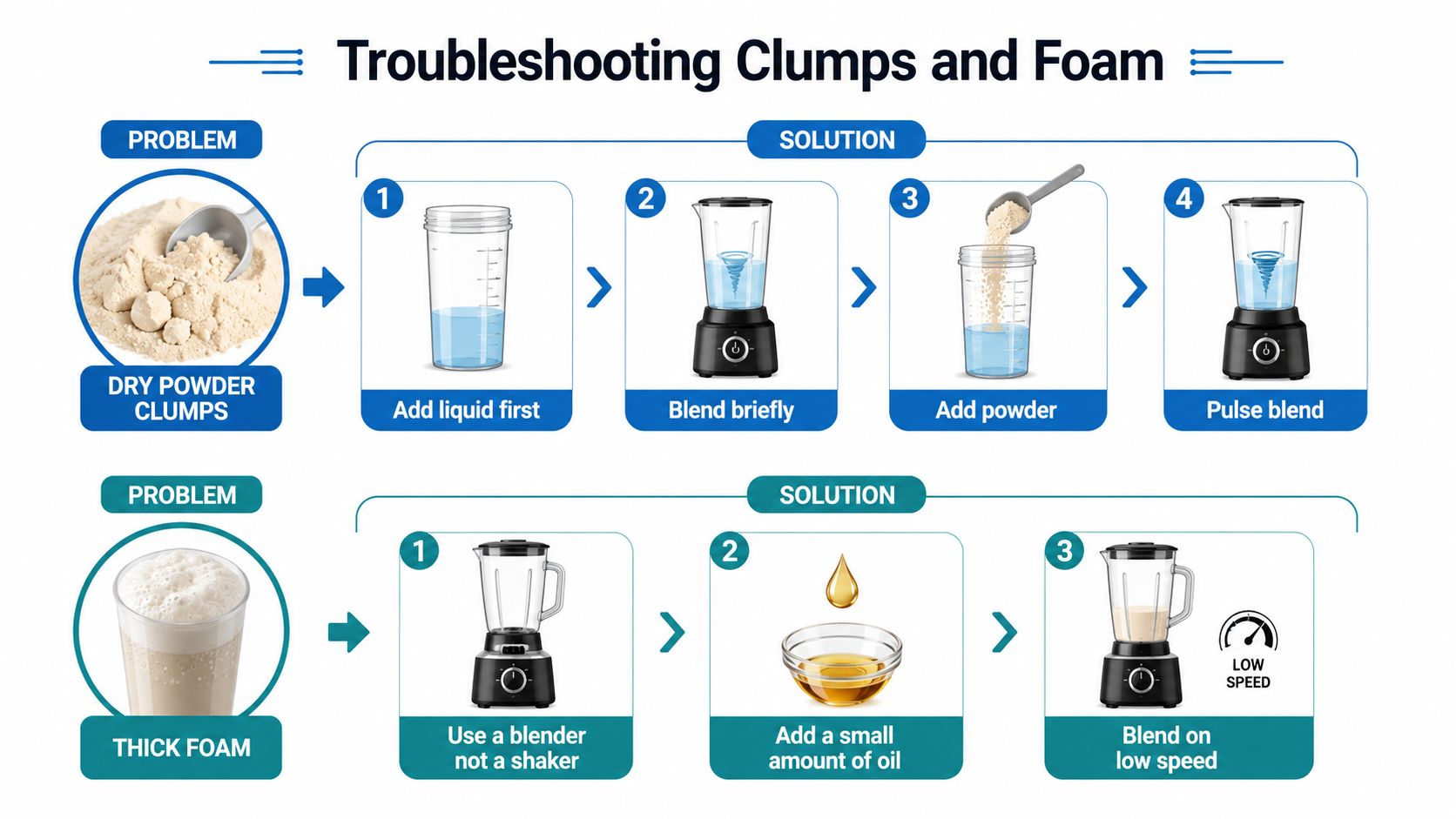
Shaking harder is not a complete troubleshooting plan. A dry clump often forms because powder hits a small amount of liquid and seals itself before the rest of the drink reaches it. Foam forms for a different reason, air becomes trapped during agitation and stays suspended in the protein mixture.
Fix the powder before you dilute it
For stubborn clumps, use a paste-first method. Put the powder in a wide-mouth glass, add a small amount of cool liquid, and stir until you have a smooth, thick slurry. Add the remaining liquid gradually while stirring, then transfer the mixture to a shaker if you need portability.
Staged addition works for larger servings or dense casein blends. Add the powder in portions rather than dumping it in one pile. After shaking, let the drink rest so the particles can continue hydrating. A milk-protein study found that controlled rehydration used high-speed mixing for 30 seconds at either 23°C or 50°C, and the broader literature reports that higher protein content can reduce solubility while warmer dissolution conditions improve it. That's why a thick, high-protein shake often needs more controlled preparation than a simple whey-and-water drink.
For powder that still refuses to disperse, use a mesh shaker insert, a handheld frother in a glass, or a blender. A spoon alone is usually the least reliable option for a full serving because it can't create enough circulation.
Reduce foam without ruining the drink
If foam is the main complaint, use a wider bottle or leave more empty space so the liquid has room to move without being forced through a narrow neck. Tap the container against the counter after mixing, then wait for the bubbles to collapse. Higher-fat milk can produce a rounder mouthfeel, while a small amount of oil may soften the sensation of a dry, bubbly shake, though it also changes the nutrition of the drink.
Avoid adding acidic ingredients before the powder has hydrated. Citrus juice can make texture less predictable, particularly when combined with heat or dairy proteins. Add fruit after the base is smooth, or blend the finished drink with the other ingredients.
A sour smell, unusual discoloration, persistent off-flavor, or powder that no longer behaves normally can indicate a storage or freshness problem. No shaker technique can repair a product that has degraded, so check the package condition and storage environment before troubleshooting the method.
Dosing, Timing, and Goal-Based Recipes
Measure protein powder by grams when accuracy matters. Scoop volume varies between products, and the number printed on one tub doesn't necessarily match another. Use the Nutrition Facts label to identify how much protein the serving provides, then adjust the powder amount to fit your overall intake rather than treating every scoop as interchangeable.
For practical goal-setting, a 20 to 30 gram protein dose suits a post-workout shake, 30 to 40 grams fits a more substantial meal-replacement format, and 10 to 15 grams can work as a smaller coffee addition. These ranges come from the requested preparation framework, not a universal prescription. Your body size, diet, training, and medical needs can change what's appropriate.
Match the recipe to the situation
- Post-workout: Use water and a whey powder when you want a fast, light drink. Add a banana in a blender if you need more substance and can tolerate extra thickness.
- Meal replacement: Combine protein with milk or plant milk, oats, and nut butter. Blend the liquid first, then the soft ingredients, then the powder, following the staged method described earlier.
- Coffee booster: Form the powder into a paste with cool liquid before slowly adding hot coffee. Keep the drink below 140°F, or 60°C, the temperature identified as optimal for dairy-powder mixing guidance.
Timing should serve your routine rather than create unnecessary pressure. A post-training shake can fit within 60 minutes after exercise when that schedule is convenient, while a drink between meals may help you build a more filling eating pattern. Morning use can also spread protein across the day, but the mixing technique won't compensate for a diet that consistently misses your total daily target.
Quick Checklist and Final Takeaways
Use this seven-step checklist when you're preparing a shake away from the kitchen or testing a new powder:
- Choose the liquid: Pick water for a lighter drink, milk for added calories and protein, plant milk for dietary fit, or coffee only with a paste-first method.
- Choose the format: Use a shaker for portability, a blender for thick ingredients, or a glass and spoon for a small amount.
- Pour liquid first: Give the powder an open, moving environment instead of letting it settle against the bottom.
- Make a paste when needed: Use this for hot drinks, dense casein, plant proteins, or any powder that repeatedly clumps.
- Mix with control: Shake in stages or blend from low speed to high rather than relying on one frantic burst.
- Allow hydration time: A brief rest can improve texture, especially when the powder contains slower-dissolving proteins.
- Control temperature: Avoid very low temperatures when solubility is poor, and keep hot dairy-based mixtures below 140°F, or 60°C.
The single habit that prevents many mixing failures is pre-hydrating the powder in a small amount of liquid. A smooth paste gives the powder a chance to absorb liquid evenly before you dilute it, which is more dependable than dumping dry powder into a full bottle and hoping turbulence does the work.
Measure by grams when the dose matters, choose the liquid according to your calorie and texture goal, and reserve the blender for recipes that genuinely need it. If a shake still smells sour or behaves abnormally after you've corrected order and temperature, replace the powder rather than trying to overpower the problem with more agitation.
CalVitamin offers proteins alongside vitamins, minerals, probiotics, herbal formulas, and other wellness products, with product pages that include preparation details where available. Visit CalVitamin to compare options and choose a protein product that fits your preferred liquid, format, and daily routine.






