
If you've ever been told to “load up on immune boosters” the moment you feel run down, that advice needs a reset. Your immune system doesn't work like a volume knob that you can crank higher on demand. In healthy people, more supplements don't automatically mean fewer infections, and taking large doses “just in case” can create new problems instead of solving old ones.
A better question is simpler and more useful. Do you need a supplement, and if so, when does it help most? That's where most immune support advice goes wrong. It focuses on dramatic ingredients and emergency-dose routines, when the story is steadier and less flashy: identify gaps, support the body consistently, and avoid treating vitamins like rescue medicine.
That shift matters because immune health is built from daily inputs. Food, sleep, stress, movement, and only then targeted supplementation when there's a real reason for it.
Table of Contents
- Your Practical Guide to Immune Support Vitamins
- Understanding Your Body's Natural Defenses
- Essential Vitamins and Minerals for Your Immunity
- Are Immune Support Vitamins Right for You
- How to Use Immune Vitamins Safely and Effectively
- Choosing the Right Supplements at CalVitamin
- A Smart Approach to Long-Term Immune Wellness
Your Practical Guide to Immune Support Vitamins
Individuals often want the same thing from immune support vitamins. They want to get sick less often, recover well, and feel like they're doing something useful for their health. That's a reasonable goal. The problem is that the supplement market often answers that goal with slogans instead of clear guidance.
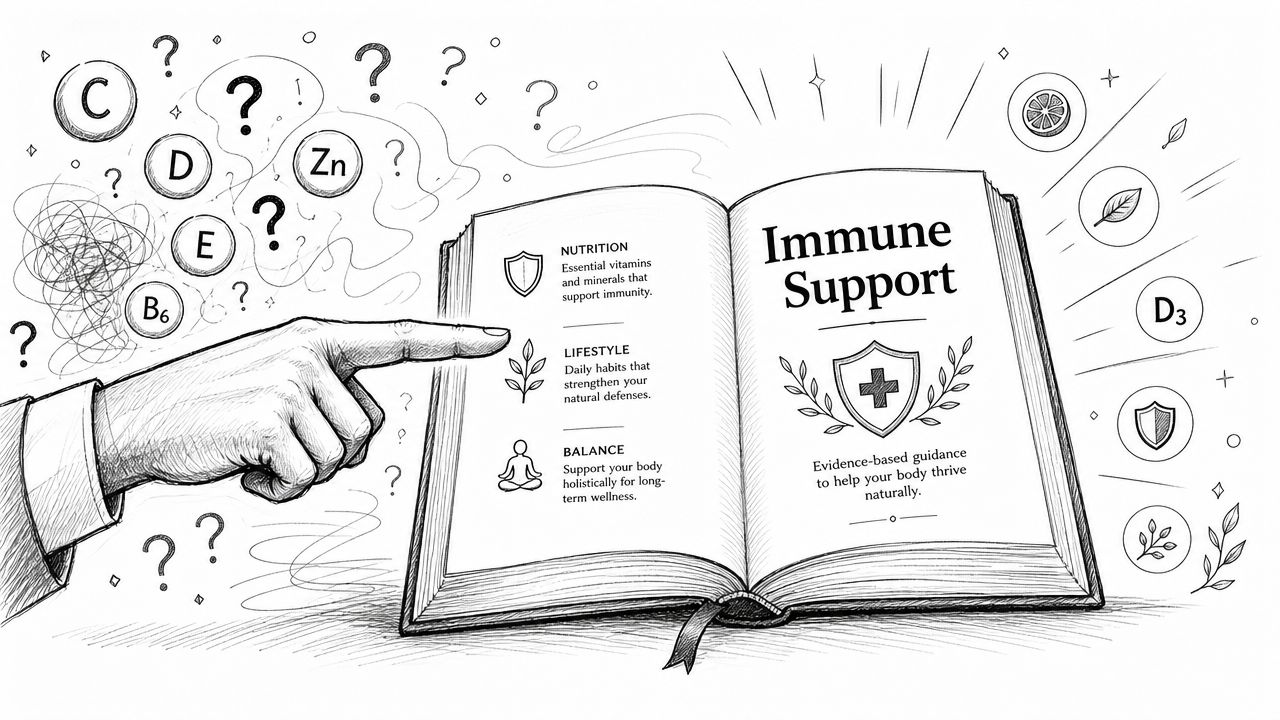
The most helpful way to think about immune support vitamins is this: they fill gaps, they don't create super-immunity. If your body is low in a nutrient that helps immune cells do their job, fixing that gap can matter. If your diet already covers your needs, adding more usually won't give you extra protection.
What people often get wrong
A lot of confusion comes from mixing up three very different ideas:
- Supporting normal function means giving the body the nutrients it needs to run well.
- Correcting deficiency means addressing a shortage that may weaken normal immune processes.
- Boosting immunity sounds appealing, but it oversimplifies how the immune system works.
Those ideas aren't interchangeable. If you treat them as the same thing, every bottle starts to look necessary.
A more practical lens
Think about supplements the way you'd think about prescription glasses. If you need them, they can make a big difference. If you don't need them, wearing a stronger pair won't improve healthy vision. It may just create discomfort.
Practical rule: Start with the question “What gap am I trying to fill?” If you can't answer that, you probably shouldn't start with a supplement.
Food still does the heavy lifting because it brings nutrients in combinations the body is used to handling. Supplements are best used as tools. Helpful tools, sometimes necessary tools, but still tools.
That's why the “when” matters so much. Some nutrients work best when taken regularly over time. Others are best approached cautiously, especially if you're tempted to take high doses when you feel a cold coming on. The rest of this guide focuses on that decision-making process, not on hype.
Understanding Your Body's Natural Defenses
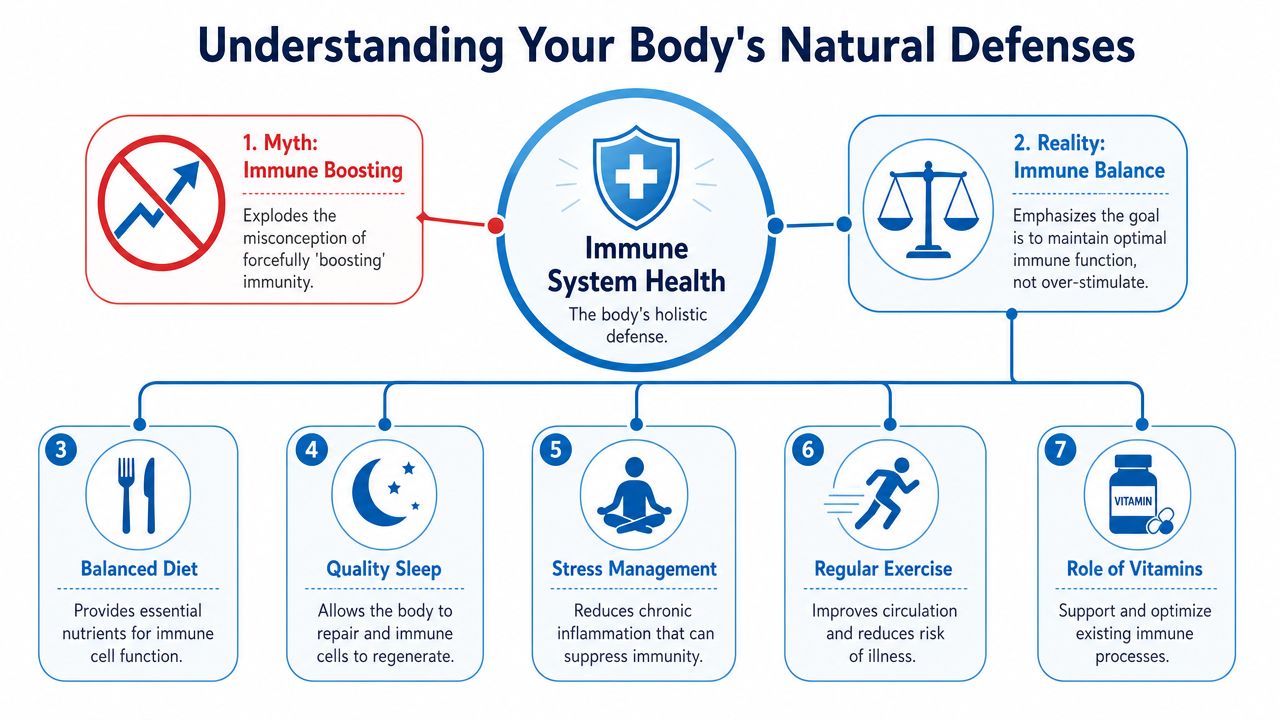
The phrase “boost your immune system” sounds harmless, but it's misleading. According to the NIH consumer guide on immune function, experts from the National Institutes of Health and Harvard Health note that “boosting” the immune system is a physiological impossibility, and for healthy people without a specific deficiency, supplements offer negligible added benefit. That same guidance also warns that mega-dosing can be toxic or interfere with medications.
Why balance matters more than intensity
Your immune system is closer to an orchestra than a muscle. You don't want one section playing louder and louder while the others fall out of sync. You want coordinated timing, clear communication, and the right response for the situation.
That's why support is the better word. Balanced nutrition, steady sleep, physical activity, stress management, and sometimes targeted supplementation help the system do its job without pushing it into unnecessary overreaction.
If gut health is part of your bigger wellness plan, some people also look at probiotics and prebiotics options alongside vitamins, but they should still think in terms of overall support rather than “turning immunity up.”
Two immune systems working together
Your body relies on two linked defenses.
- Innate immunity acts first. It responds quickly to things the body sees as foreign.
- Adaptive immunity is more specialized. It helps the body recognize specific threats and respond with greater precision.
Nutrients don't wave a magic wand; rather, they support real jobs inside these systems. Some help maintain tissue barriers. Some help immune cells grow and communicate. Some help regulate inflammation so the response stays appropriate.
A healthy immune response isn't the biggest one. It's the right one.
That single idea can save you money, prevent risky supplement habits, and make label claims easier to evaluate. If a product promises dramatic immune “activation” for everyone, pause. The body usually benefits more from enough, not from excess.
Essential Vitamins and Minerals for Your Immunity
When people talk about immune support vitamins, they often make a long list with very little explanation. The list matters less than the job each nutrient performs. Once you understand the job, it becomes easier to see why some supplements may help certain people and why others may not.
Vitamin D and Vitamin C
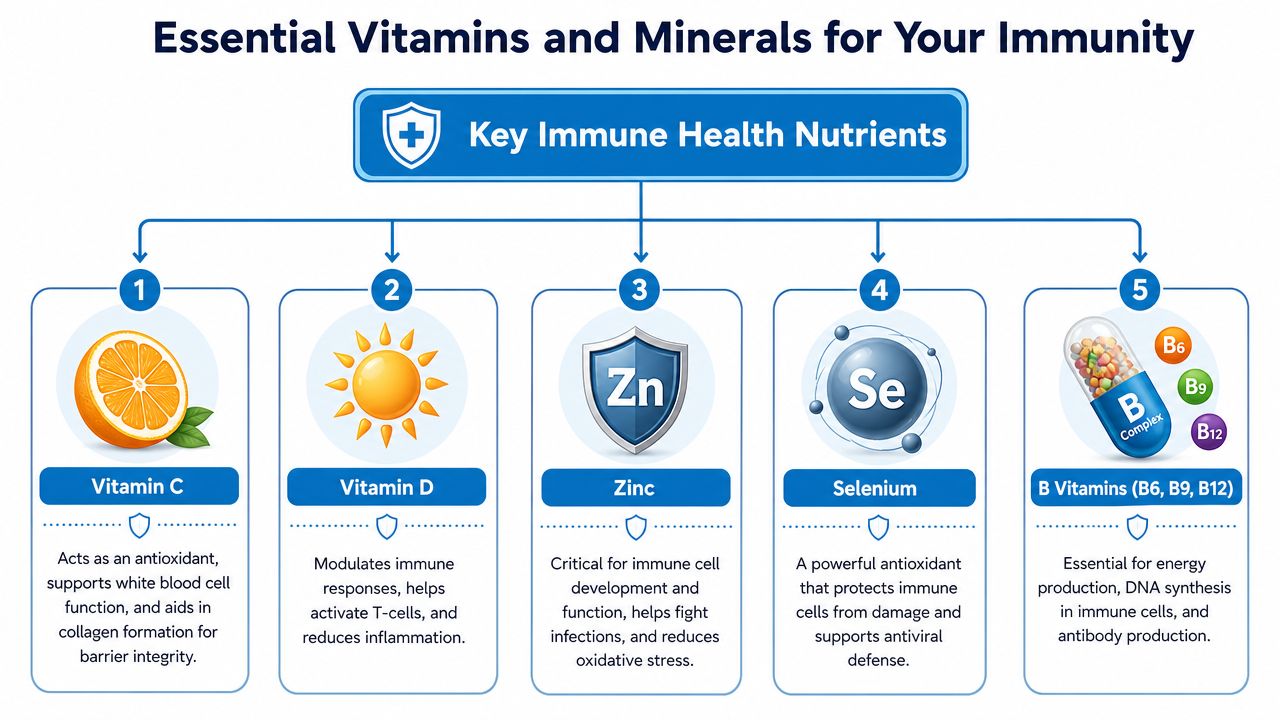
These two get the most attention, and for good reason. The NIH fact sheet on immune function reports that a 2021 systematic review and meta-analysis of 20 clinical trials involving 9,902 adults found that vitamin D supplementation reduced the risk of acute respiratory infections by 3% and shortened symptom duration by 6%. The same resource explains that vitamin D helps lower viral replication rates, suppress inflammation, and increase T-regulatory cells, which help maintain immune balance.
Vitamin C plays a different role. It helps maintain epithelial integrity, which means it supports the body's physical barriers. It also helps with the differentiation of B and T cells, both of which are important parts of immune defense.
In plain language, vitamin D helps regulate immune behavior, while vitamin C helps maintain barriers and supports immune cell development.
For everyday eating, common food sources include:
- Vitamin D foods such as fortified dairy or alternatives, eggs, and fatty fish
- Vitamin C foods such as citrus, berries, peppers, broccoli, and kiwi
If you prefer a single-product approach for vitamin C, some shoppers compare options like Nature Made Vitamin C 500mg softgels with their usual diet before deciding whether a supplement fills a real gap.
A visual walkthrough can help if you like learning in mixed formats.
Vitamin E and B Vitamins
Vitamin E doesn't get the same marketing attention, but its role is interesting. In older adults, research summarized in this peer-reviewed review shows that vitamin E supplementation can decrease production of pro-inflammatory markers such as TNF-α and IL-6. The same review explains that vitamin E suppresses PGE2 and lowers pro-inflammatory cytokine production in LPS-stimulated peripheral blood mononuclear cells, which helps modulate the inflammatory response.
That's useful because immune health isn't only about attacking pathogens. It's also about regulating the response so it doesn't become excessive.
B vitamins matter for a different reason. They support basic cell processes, including energy use and the creation of new cells. Immune cells need those routine building blocks to function normally. You may hear the most about B6, folate, and B12 in this context.
What about zinc and selenium
Zinc and selenium are widely included in immune formulas, and they matter nutritionally. The key point is still the same: their value depends on whether your intake is adequate to begin with.
A practical way to think about the nutrient list is to group it by function:
| Nutrient | Main support role in immunity |
|---|---|
| Vitamin C | Helps maintain barriers and supports B and T cell development |
| Vitamin D | Helps regulate immune activity and maintain balance |
| Vitamin E | Helps moderate inflammatory signaling |
| B vitamins | Support cell production and routine immune cell work |
| Zinc and selenium | Help cover broader nutritional needs tied to immune function |
Don't let a long ingredient panel fool you. A formula with more items isn't automatically better than a simpler option that addresses your actual need.
Are Immune Support Vitamins Right for You
Not everyone needs a supplement routine. That's worth saying plainly because the default advice online often makes it sound as if every adult should take an immune formula every day.
For many people, a food-first approach is enough. If you eat a varied diet, get regular meals, tolerate a range of foods, and don't have a known deficiency or a higher-risk situation, supplements may not change much. In that case, the smart move is often to focus on consistency in meals, sleep, and daily habits instead of buying a bigger stack of bottles.
Signs a food-first approach may be enough
You may not need dedicated immune support vitamins if most of these sound like you:
- You eat broadly across fruits, vegetables, proteins, grains, and fats rather than relying on a very narrow menu.
- You don't avoid major food groups unless there's a medical or ethical reason.
- You're not trying to compensate for poor routine habits with a supplement shortcut.
- You haven't been told about a deficiency by a clinician.
That doesn't mean supplements are bad. It means they should match a reason.
When targeted supplementation makes more sense
Some situations make nutrient gaps more likely.
- Limited sun exposure can make vitamin D intake more relevant.
- Older age can change dietary intake patterns and nutrient status.
- Vegan or highly restricted eating patterns may increase the need to think carefully about certain nutrients, especially if intake isn't planned well.
- Certain health conditions or medications can affect absorption, needs, or safety.
- Poor appetite or inconsistent eating can make it harder to meet needs from food alone.
If your routine, health status, or diet makes a nutrient gap likely, supplementation becomes a targeted strategy rather than a wellness ritual.
A useful self-check is to ask two questions. First, is there a plausible reason I'm not getting enough of this nutrient? Second, do I plan to use a supplement consistently enough for it to make sense? If the answer to both is no, you probably don't need to start there.
How to Use Immune Vitamins Safely and Effectively
The safest supplement plan is usually the least dramatic one. Most problems happen when people treat vitamins like over-the-counter emergency medicine and start taking large amounts only when they feel sick.
Consistency beats crisis dosing
Jefferson Health's review of immune myths and facts highlights an important detail people often miss: vitamin D's protective effects against respiratory infections were seen with daily or weekly intake, not sporadic high doses, with 2000 IU per day given as an example. That's a strong reminder that timing matters. Regular intake supports the body differently than random, reactive dosing.
The same source notes that some vitamins, such as B3 (niacin), can activate the innate immune system up to 1000-fold, which is one reason dosage guidelines deserve respect. More isn't automatically better. With certain nutrients, excess can push biology in directions you don't want.
A simple safety checklist
Use this checklist before adding immune support vitamins:
- Match the supplement to a likely gap. Don't choose based only on a front-label claim.
- Take it on a schedule you can follow. A moderate, consistent routine often makes more sense than occasional high doses.
- Check for medication interactions. This matters most if you take regular prescriptions or use multiple supplements.
- Remember that fat-soluble vitamins require extra caution. They aren't handled the same way as nutrients the body readily excretes.
- Stop assuming “natural” means harmless. Potency still matters.
Some of the worst supplement habits come from good intentions. People want fast relief, so they take more than they need.
Key Immune Nutrients at a Glance
The table below is a label-reading tool. It's useful because the RDA tells you roughly what daily adequacy aims for, while the UL tells you the maximum daily level that may increase risk if you routinely exceed it. Use product labels and clinician guidance to compare your intake against these benchmarks.
| Nutrient | RDA (Recommended Daily Allowance) | UL (Tolerable Upper Intake Level) |
|---|---|---|
| Vitamin D | Varies by age, sex, and health status | Varies by age and product form |
| Vitamin C | Varies by age, sex, and smoking status | Varies by total daily intake |
| Vitamin E | Varies by age and life stage | Varies by total daily intake |
| Niacin (Vitamin B3) | Varies by age and sex | Varies by form and total daily intake |
If you're unsure how to use that table, the practical answer is simple: compare your label, your diet, and your reason for taking the product. If that still feels murky, ask a clinician or pharmacist before layering supplements together.
Choosing the Right Supplements at CalVitamin
Shopping gets easier when you ignore flashy claims and focus on fit. The right product is the one you'll tolerate, understand, and use correctly.

How to compare forms
Capsules, softgels, gummies, liquids, and powders all solve slightly different problems.
- Capsules or softgels often suit adults who want a straightforward format and clear label dosing.
- Gummies may help with adherence if you dislike swallowing pills, but they're still supplements, not candy.
- Liquids or shots can be convenient for people who want flexible serving sizes or easier swallowing.
- Veggie capsules may fit shoppers looking for gelatin-free options.
The best form is the one that removes friction from a consistent routine without encouraging casual overuse.
How to shop with fewer mistakes
When browsing vitamins, supplements, and nutrition products, slow down and check four things before adding anything to your cart.
- Look at the nutrient amount. Ask whether it fits your goal or overshoots it.
- Check the serving size. Some labels look simple until you notice the listed dose requires multiple capsules or gummies.
- Use dietary filters when needed. If you care about halal, gelatin-free, or similar attributes, build that into your search early.
- Compare price formats carefully. “Special Price” and “As low as” can be useful, but only if the serving count and dosage match exactly what you plan to take.
A good shopping decision is rarely about buying the strongest formula. It's about buying the one that matches your need, your diet, and your ability to use it correctly.
A Smart Approach to Long-Term Immune Wellness
The most reliable immune strategy isn't dramatic. It's steady. Eat well most days, sleep enough, manage stress, stay active, and use supplements when there's a real gap to fill.
That's the central lesson with immune support vitamins. If you need them, they can be useful. When you use them matters just as much as what you choose. Daily consistency usually makes more sense than panic dosing, and more is not the same as better.
You don't need to chase the idea of an “ultra-strong” immune system. You need a well-supported one that can respond appropriately, recover well, and stay in balance over time.
If you're ready to choose supplements more thoughtfully, browse CalVitamin for options that fit your routine, dietary preferences, and wellness goals, then use what you've learned here to shop with a clearer, safer plan.






