

You're standing in the supplement aisle, comparing two bottles that both appear to promise magnesium glycinate 200 mg. One has a large “200 mg” on the front, while the other lists a much larger amount of magnesium glycinate in the ingredient panel. You take one capsule each evening, yet the experience doesn't match what you expected.
The problem may not be the form of magnesium or your routine. It may be the label. “200 mg” can describe the weight of the entire magnesium glycinate compound, or it can describe the elemental magnesium your body receives. Those are very different amounts, and understanding that distinction should come before choosing a product, setting a dose, or judging whether magnesium glycinate is helping.
Table of Contents
- The 200 Mg Label Trap Most Shoppers Miss
- How Magnesium Glycinate Actually Works in Your Body
- What the Evidence Says About Magnesium Glycinate Benefits
- Dosing and Timing for Magnesium Glycinate 200 Mg
- Safety, Side Effects, and Who Should Avoid Magnesium Glycinate
- Magnesium Glycinate vs Other Magnesium Forms
- How to Choose and Buy Magnesium Glycinate Online
The 200 Mg Label Trap Most Shoppers Miss
Two people can take a product labeled “magnesium glycinate 200 mg” and receive very different mineral doses. If the label means 200 mg of the raw magnesium glycinate compound, the product provides roughly 28 mg of elemental magnesium, because pure magnesium glycinate is about 14% elemental magnesium by weight. If the label means 200 mg of elemental magnesium, it delivers the full mineral amount stated in the label.
The difference comes from the glycine attached to magnesium. The compound contains both the mineral and its glycine carrier, but elemental magnesium is the part that counts when you compare nutritional intake and supplement doses. A technical explanation of elemental magnesium in glycinate describes the same practical distinction.
Read the Supplement Facts panel first
Ignore the large number on the front until you find the Supplement Facts panel. Look for a line similar to:
Magnesium, as magnesium glycinate, 200 mg
That wording generally identifies 200 mg of elemental magnesium. By contrast, wording such as magnesium glycinate, 200 mg may refer to the total compound weight, especially when the label doesn't separately identify elemental magnesium.
A 200 mg elemental serving would require roughly 1,418 mg of magnesium glycinate compound, based on the compound's approximate elemental content. In practical terms, the compound weight can be about 7-fold to 10-fold different from the mineral amount, depending on the formulation and labeling approach, as explained in this magnesium glycinate label analysis.
| Label Claim | Actual Elemental Magnesium | Effective Dose? |
|---|---|---|
| 200 mg magnesium glycinate compound | Roughly 28 mg | A relatively small elemental dose |
| 200 mg magnesium, as magnesium glycinate | 200 mg | A full 200 mg elemental serving |
Practical rule: Dose magnesium based on the number next to “magnesium” in the Supplement Facts panel, not the larger compound weight elsewhere on the bottle.
If a product doesn't make the elemental amount clear, don't compare it directly with a product that does. The ambiguity can make a seemingly strong supplement provide far less magnesium than you intended to take.
How Magnesium Glycinate Actually Works in Your Body
Magnesium glycinate is a chelated form of magnesium, meaning magnesium is attached to glycine. Think of glycine as a bodyguard or escort. It travels with the mineral through digestion, helping the compound remain stable before the body separates and uses its components.
The chemistry matters because some inorganic magnesium salts are less soluble and more likely to cause gastrointestinal discomfort. Literature describing magnesium glycinate or bisglycinate generally characterizes it as a well-tolerated oral form, with fewer digestive complaints than some less soluble salts, as discussed in this peer-reviewed review of magnesium supplementation. That doesn't mean everyone will tolerate it perfectly, but it helps explain why people often choose glycinate for regular use.

Magnesium and glycine contribute different things
After digestion, the body uses magnesium as a mineral involved in nerve signaling, muscle contraction, and many other physiological processes. Glycine is an amino acid that participates in its own biological pathways and is commonly associated with relaxation and sleep support.
That combination gives magnesium glycinate its familiar reputation: magnesium supplies the mineral, while glycine helps make the form appealing for an evening routine. Still, the presence of glycine doesn't turn the supplement into a sedative, and it doesn't guarantee that every user will sleep better.
The practical advantage is often comfort and consistency. A supplement that's gentle enough to take regularly may be more useful than a form that provides magnesium but repeatedly causes stomach upset. The amount of elemental magnesium remains the deciding factor, because a comfortable product can still be too weak if its label refers only to a small compound weight.
What the Evidence Says About Magnesium Glycinate Benefits
Magnesium glycinate is most often chosen for sleep, relaxation, muscle comfort, and filling a dietary gap. The strength of evidence isn't identical for each use, so it helps to separate established biological roles from outcomes that remain more individual or uncertain.
Sleep is the most relevant reason many adults choose glycinate. A 2025 randomized trial involving adults with poor sleep used 250 mg of magnesium bisglycinate daily and reported improvement in sleep-related measures over the study period, according to the clinical summary of magnesium glycinate for sleep. That finding supports interest in bisglycinate, but it doesn't prove that every person taking a 200 mg elemental serving will experience the same result.
What has a reasonable basis
Muscle and nerve function have a clear biological connection to magnesium. The mineral participates in normal nerve signaling and muscle contraction, so people with inadequate intake may be more likely to consider supplementation for cramps, twitching, or general muscle comfort. That doesn't mean glycinate prevents every cramp, particularly when other factors contribute.
Relaxation and stress support are plausible uses because magnesium and glycine both interact with pathways involved in nervous-system regulation. The evidence is more encouraging for people with low magnesium intake or mild symptoms than for treating a diagnosed anxiety disorder. Magnesium glycinate shouldn't replace professional mental-health care.
Bone, metabolic, and cardiovascular support should be described more cautiously. Magnesium contributes to normal body functions related to bone structure and metabolism, but a supplement isn't a universal treatment for blood sugar problems, high blood pressure, or bone disease. Food intake, existing health conditions, medication use, and overall diet still matter.
Match the claim to the evidence
A sensible expectation is modest and personal. If your intake is already adequate, adding magnesium may produce little noticeable change. If your diet is low in magnesium or you specifically want a gentle evening supplement, glycinate may be a reasonable option, but the label must first confirm the elemental dose.
Dosing and Timing for Magnesium Glycinate 200 Mg
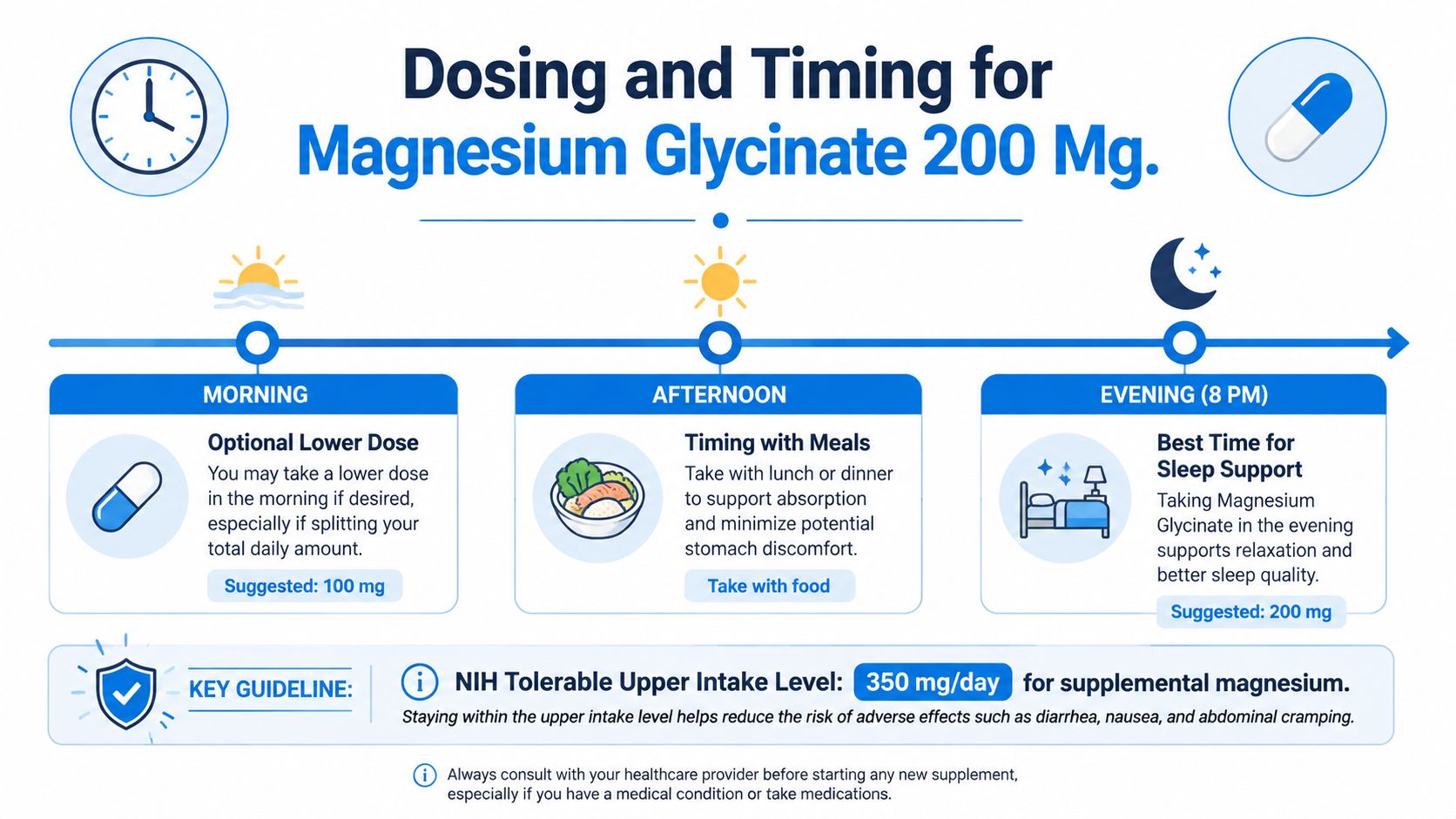
For adults, the NIH tolerable upper intake level for supplemental magnesium is 350 mg per day. That ceiling applies to magnesium from supplements and medications, not magnesium naturally present in food. A serving containing 200 mg of elemental magnesium supplies 57% of that supplemental ceiling, according to the NIH Dietary Supplement Label Database information.
That makes 200 mg a moderate starting point for many healthy adults, provided the label means elemental magnesium. The total from every supplement and magnesium-containing medicine counts, so check multivitamins, antacids, laxatives, and combination products before adding another serving.
A simple routine
Take one clearly labeled 200 mg elemental serving in the evening if your goal is relaxation or bedtime use. Glycine's calming reputation makes evening timing practical, but your response matters more than the clock. If it makes you feel uncomfortable or unusually drowsy, change the timing or discuss the reaction with a clinician.
Taking the serving with food may improve comfort for people with sensitive digestion. You can also split a serving between a meal and the evening if one dose doesn't feel comfortable, but don't increase the amount because the compound number looks small.
Keep a dose log: Record the elemental magnesium amount, time taken, other magnesium products, and any digestive or sleep changes. That simple record makes it easier to judge whether the product suits you.
Give your routine enough consistency to evaluate your response, rather than changing the dose every night. Before purchasing another magnesium product, compare its Supplement Facts panel with the Life Extension magnesium product listing, paying attention to how the serving amount is presented.
Safety, Side Effects, and Who Should Avoid Magnesium Glycinate
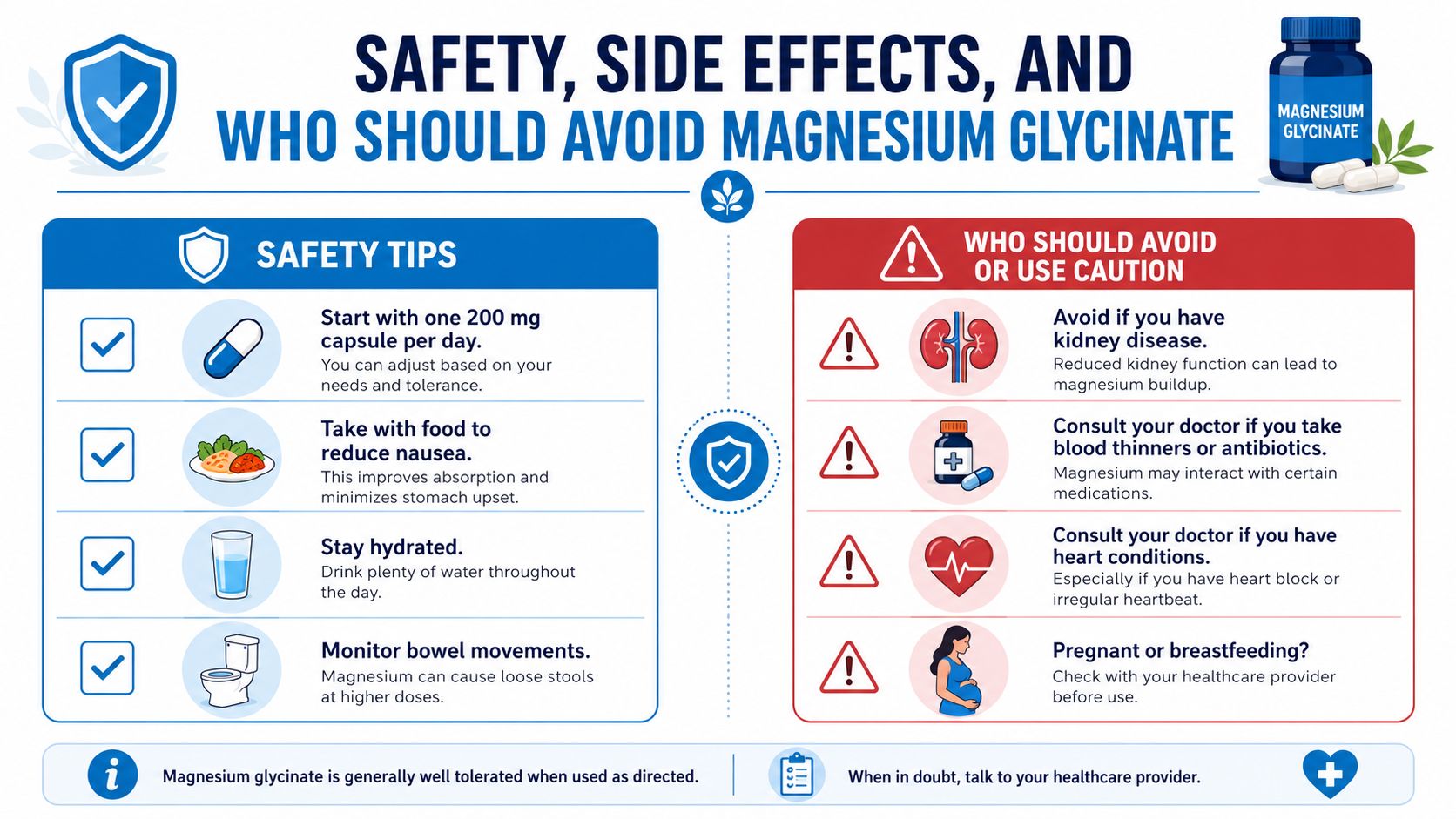
Magnesium glycinate is often selected because it tends to be gentler on the digestive system than some other forms. Even so, supplements can cause nausea, stomach discomfort, cramping, or loose stools, especially when the dose is high for the individual or when magnesium comes from several products at once.
Start with the label's serving information and monitor your bowel movements and general comfort. Taking it with food can help if your stomach reacts, but persistent symptoms are a reason to stop and seek advice rather than push through.
Medication timing requires attention
Magnesium can bind to certain medicines in the digestive tract and reduce how much of the medicine the body absorbs. This is particularly important with some antibiotics and bisphosphonates, medicines used for bone health. Ask a pharmacist for product-specific spacing instructions instead of guessing, because the correct interval depends on the medicine.
People with kidney disease need special caution. Healthy kidneys help remove excess magnesium, while impaired kidney function can change how the body handles supplemental magnesium. Anyone with kidney problems, significant heart-rhythm concerns, or a complex medication list should ask a clinician before starting routine supplementation.
Use a quick self-screen
Pause before buying if any of these apply:
- Kidney concerns: Get professional guidance before taking supplemental magnesium regularly.
- Prescription medicines: Ask about antibiotics, bisphosphonates, diuretics, acid-suppressing medicines, and other treatments.
- Multiple supplement sources: Add the elemental magnesium amounts together before deciding on a serving.
- Unexpected symptoms: Stop and seek advice if you develop persistent nausea, diarrhea, marked weakness, or unusual drowsiness.
A product can be well tolerated and still be unsuitable for a particular person. Safety depends on the dose, the label, kidney function, and the medicines you take.
Magnesium Glycinate vs Other Magnesium Forms
Choosing a magnesium form is less about finding one universally superior product and more about matching the form to your goal and digestive tolerance. Glycinate is commonly chosen for evening use and sensitive stomachs, while citrate may appeal to someone who also wants a laxative effect. Oxide is often used when price or a specific antacid application matters, but it may be less comfortable for some people.
| Form | Absorption | Tolerance | Best For |
|---|---|---|---|
| Glycinate or bisglycinate | Commonly described as well absorbed | Generally gentle | Evening use, relaxation, regular supplementation |
| Citrate | Soluble organic form | Can loosen stools | General supplementation when mild laxative action is acceptable |
| Oxide | Less soluble than organic forms | More likely to cause gastrointestinal upset | Budget-focused selection or antacid use |
| Threonate | Often marketed for cognitive support | Individual tolerance varies | People specifically exploring a brain-focused product |
| Taurate | Used in some targeted formulas | Product and dose dependent | Shoppers comparing combination or specialized formulas |
Choose by the problem you're trying to solve
If your priority is a comfortable nightly routine, glycinate is a logical starting point. If constipation is part of the picture, citrate's bowel effect may be useful, although that same effect can be unwelcome for someone seeking a calm stomach.
A budget-conscious shopper may encounter oxide in powders or combination products. The capsule or scoop weight still doesn't tell you the elemental amount, so the same label-reading rule applies across every form. For an example of how an oxide product is presented, see this magnesium oxide powder review.
The key comparison isn't “which form absorbs best?” It's which product gives you a clearly stated elemental dose that you can tolerate and use consistently.
How to Choose and Buy Magnesium Glycinate Online
Online shopping removes the chance to inspect a bottle in person, so use a repeatable label check before placing an order. Start with the Supplement Facts panel, not the product title or the largest number in the product description.
Use this purchasing checklist
Find the elemental amount. Look for “magnesium” followed by the amount and “as magnesium glycinate.” If the page only highlights the weight of magnesium glycinate compound, you may not know how much elemental magnesium you're buying.
Check the serving size. A stated amount may apply to one capsule, several capsules, or a scoop. Compare products only after adjusting for the complete serving.
Inspect the ingredient list. Look for transparent excipients, capsule materials, flavorings, and allergens. If you follow dietary or ethical requirements, confirm whether the capsule is gelatin-free or vegetarian rather than assuming.
Review quality information. Look for credible manufacturing details and independent testing where available. Testing can help identify products that don't match their label, although no certification replaces checking the actual dose.
Read reviews for practical clues. Customer feedback can reveal whether capsules are difficult to swallow, whether the label is confusing, or whether the product causes digestive complaints. Reviews can't establish medical effectiveness, so treat them as usability information rather than clinical proof.
Compare the product page with your routine
A clear product description should let you answer four questions quickly: How much elemental magnesium is present? How many capsules provide that amount? What form of magnesium is used? Are there ingredients you need to avoid? If you can't answer those questions, choose a listing with clearer information.
You can browse CalVitamin's minerals catalog alongside other reputable retailers and apply the same checklist to every option. The retailer's catalog includes mineral products in different formats, so the Supplement Facts panel remains more important than the category name or front-label marketing.
The right purchase is the one whose elemental dose, serving size, ingredients, and precautions fit your needs. Once you can read those details, “magnesium glycinate 200 mg” stops being a confusing promise and becomes a specific amount you can evaluate.
CalVitamin offers an online minerals catalog where you can compare magnesium products by form, serving information, and product details. Visit CalVitamin to review available options, then confirm the elemental magnesium amount before choosing a magnesium glycinate supplement.






