

You're standing in the kitchen at 10 p.m., holding a bottle of magnesium and hoping it will quiet a restless mind before bed. The label promises relaxation, muscle support, and better sleep, but the serving information is harder to interpret than it should be. Is magnesium glycinate different from other forms? Does it work because of the magnesium, the glycine, or both?
The honest answer is less dramatic and more useful. Magnesium glycinate is best understood as a tolerable daily driver, not necessarily the strongest or fastest magnesium supplement. Its main practical advantage is that many people can take it consistently without the digestive problems that make other forms difficult to use. The evidence for sleep is growing, while claims about mood, cramps, and cardiovascular health remain more dependent on overall magnesium status than on glycinate itself.
Table of Contents
- What Magnesium Glycinate Actually Is
- How Magnesium Glycinate Works in the Body
- The Most Evidence-Supported Magnesium Glycinate Benefits
- Dosing, Timing, and What to Look for on a Label
- Safety, Side Effects, and Who Should Be Cautious
- Comparing Magnesium Glycinate to Other Forms
- Who Magnesium Glycinate Is Best For and How to Choose a Product
What Magnesium Glycinate Actually Is
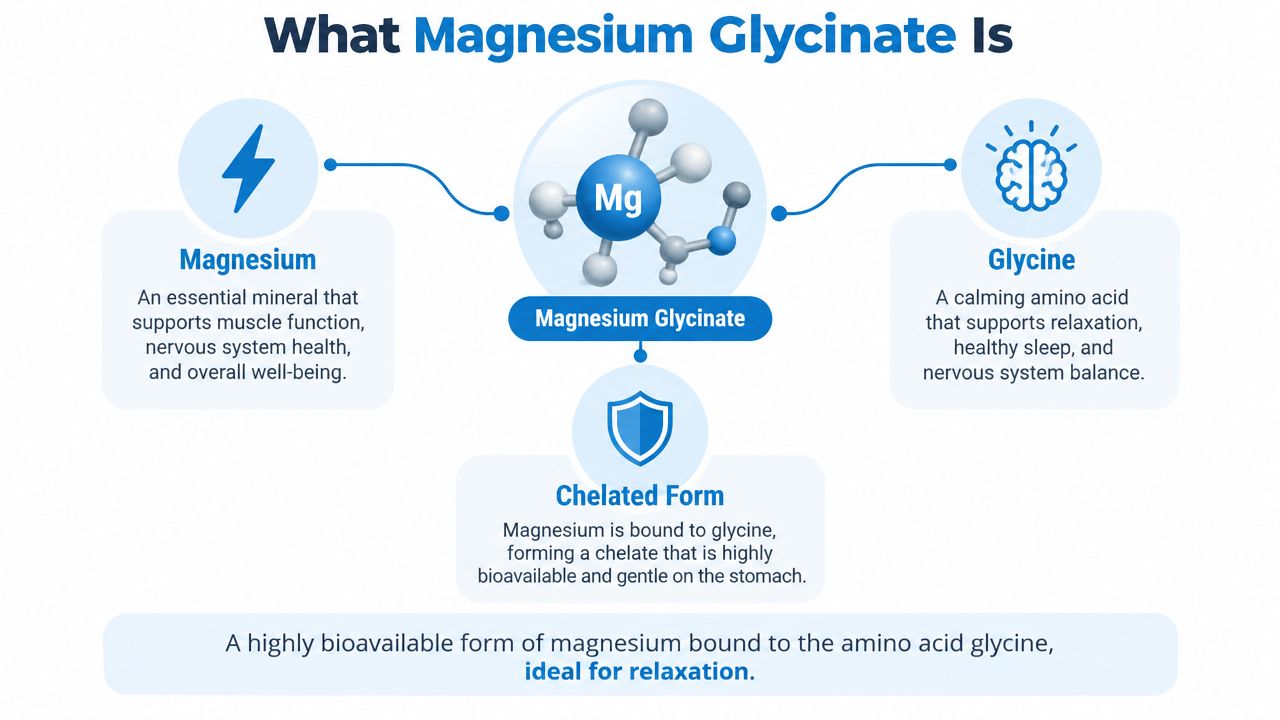
Magnesium glycinate is a chelated form of magnesium, meaning the mineral is bound to the amino acid glycine. In the commonly used bisglycinate structure, one magnesium ion is associated with two glycine molecules. This pairing helps create a compound that can be used to increase magnesium intake while often being gentler on the digestive system than some other magnesium salts, as described in this review of magnesium glycinate's absorption and tolerability.
The word chelated sounds technical, but the practical idea is simple. Glycine acts as the mineral's carrier, helping buffer magnesium as it moves through the gut. That doesn't make glycinate automatically superior for every purpose. It makes it a reasonable choice when tolerability and regular use matter more than a rapid laxative effect or the lowest possible purchase price.
You may see several names for a similar product:
- Magnesium bisglycinate: A common label for magnesium bound to glycine.
- Magnesium diglycinate: Another naming variation used for the same general chelated form.
- Buffered magnesium glycinate: A product that may combine glycinate with another magnesium form, so the label deserves closer inspection.
Magnesium glycinate comes in capsules, powders, and liquids. The total weight of the compound isn't the same as the amount of magnesium your body receives. A bottle might describe the weight of magnesium glycinate, while the Supplement Facts panel separately lists elemental magnesium, which is the number that matters for dosing.
That distinction explains why a large-looking serving can provide a much smaller amount of actual magnesium. Glycinate's value isn't that it delivers the most magnesium in the smallest capsule. Its value is that a manageable dose may be easier to take day after day.
Practical rule: Choose the form you can tolerate and use consistently. A theoretically attractive supplement that causes stomach upset is a poor daily routine.
How Magnesium Glycinate Works in the Body
After you swallow magnesium glycinate, digestion begins to separate the compound into magnesium and glycine. Magnesium is absorbed mainly in the small intestine. Researchers propose that the glycine component may allow some of the compound to interact with amino acid transport pathways, alongside routes that move minerals between intestinal cells. The exact pharmacokinetic picture for glycinate is still thinner than the evidence for more extensively studied forms such as oxide or citrate.
Once absorbed, magnesium joins the body's existing mineral pool. It serves as a helper for many enzyme reactions involved in energy production, nerve communication, muscle contraction, and protein formation. That doesn't mean taking more magnesium automatically improves every one of those functions. The clearest rationale for supplementation is correcting inadequate intake or supporting a person whose diet and health circumstances make low magnesium more likely.
Glycine adds a second biological angle. It functions as an inhibitory neurotransmitter in the central nervous system and interacts with NMDA receptors, pathways relevant to nervous-system activity and sleep. This provides a plausible explanation for why people associate glycinate with calmness, but a plausible mechanism isn't the same as a proven clinical outcome.
Why the gut experience matters
Some magnesium salts draw water into the intestine, which can lead to loose stools. A chelated form such as glycinate is generally considered less likely to cause this problem, although individual responses still vary. That gentler profile can support adherence, particularly for someone who has already stopped other magnesium products because of urgency, cramping, or stomach discomfort.
The path from capsule to cell isn't a special shortcut. Magnesium still has to be released, absorbed, transported, and taken up by tissues. Glycinate may make that process more comfortable for some users.
The following video offers a visual explanation of the supplement journey:
The Most Evidence-Supported Magnesium Glycinate Benefits
Sleep has the most specific current evidence for magnesium glycinate. A 2025 randomized, double-blind, placebo-controlled trial involving 155 adults with self-reported poor sleep found that 250 mg of elemental magnesium bisglycinate taken daily improved Insomnia Severity Index scores over 8 weeks compared with placebo, according to this summary of the magnesium bisglycinate sleep trial. The reported benefit was modest, so glycinate should be viewed as a sleep-support option, not a replacement for an insomnia assessment or treatment plan.
Muscle support is biologically credible because magnesium participates in nerve signaling and muscle contraction. However, much of the evidence concerns magnesium generally, not glycinate specifically. A person with low intake may notice more than someone whose magnesium status is already adequate, but recurring cramps can also reflect hydration problems, medication effects, or other health conditions.
Mood and stress claims need similar restraint. Glycine has calming biological properties, and magnesium status may influence nervous-system function, but evidence for anxiety remains sparse or inconsistent. Magnesium glycinate shouldn't be presented as a treatment for clinical depression or a substitute for professional care.
Cardiovascular support is plausible at the mineral level. A historical 2016 analysis found that magnesium supplementation could slightly lower high blood pressure, while a more recent randomized, placebo-controlled trial of 95 participants reported that magnesium glycinate combined with vitamin D maintained healthier systolic blood pressure over 12 weeks than vitamin D alone, as summarized by Medical News Today's magnesium overview. Those findings support interest in magnesium, but they don't establish glycinate as a standalone blood-pressure treatment.
| Benefit area | Type of evidence | Confidence level |
|---|---|---|
| Sleep support | Specific randomized trial of magnesium bisglycinate | Promising, modest |
| Muscle comfort | Magnesium research, with glycinate evidence often extrapolated | Plausible, mixed |
| Stress and anxiety support | Mechanistic rationale and limited human findings | Uncertain |
| Blood-pressure support | Broader magnesium research and a small glycinate-specific combination trial | Plausible, not definitive |
The most sensible ranking is sleep first, tolerability second, and broader benefits as conditional possibilities. Readers comparing sleep products may also find this comparison of melatonin and magnesium sleep gummies useful, especially when deciding whether they want a mineral-focused routine rather than a multi-ingredient product.
Dosing, Timing, and What to Look for on a Label
A practical starting point comes from the sleep trial described above: 250 mg of elemental magnesium daily for 8 weeks. That dose and duration belong to one clinical study, not a universal prescription. Your needs may differ according to dietary intake, age, kidney function, medications, and the reason you're considering supplementation.
For adults without medical guidance, supplemental magnesium from products and medicines should generally remain at or below 350 mg per day, a limit discussed in this magnesium supplement selection guide. Magnesium from food is counted separately from this supplemental limit. If you use a multivitamin, antacid, laxative, electrolyte powder, or another mineral product, add those sources before deciding how much glycinate to take.
Read the elemental magnesium line
The label may say “magnesium glycinate” in a large font, but the Supplement Facts panel should identify the actual elemental magnesium per serving. That value, not the total weight of the glycinate compound, determines how much magnesium you're taking.
Look for:
- Elemental magnesium: The amount supplied per capsule or serving.
- Serving size: Check whether the listed amount applies to one capsule or several.
- Form disclosure: Confirm that the product uses glycinate or bisglycinate rather than a blend dominated by another form.
- Quality documentation: A certificate of analysis or credible third-party testing can provide additional information about identity and purity.
Timing is flexible. Evening use makes sense for people who associate glycinate with relaxation, while a split dose may suit anyone who experiences stomach discomfort from taking the full amount at once. Taking it with food can also make the routine easier on the stomach.
Label check: If the bottle highlights compound weight but hides elemental magnesium, you don't yet know the dose.
Safety, Side Effects, and Who Should Be Cautious
Treat magnesium glycinate as a supplement that deserves a safety check, not as a harmless bedtime ritual. Many people tolerate it well, particularly compared with forms more likely to produce a laxative effect, but tolerance isn't guaranteed. Loose stools, nausea, stomach cramping, and drowsiness can occur, especially when the total supplemental dose becomes excessive.
The main concern isn't usually the glycine. It's the amount of magnesium entering the body, the person's kidney function, and the other products or medicines being used. Healthy kidneys help remove excess magnesium, while impaired kidney function can make accumulation more dangerous.
Review medicines before starting
Magnesium can bind to some medicines in the digestive tract and reduce their absorption. It can also affect mineral handling when combined with certain diuretics. Ask a pharmacist or clinician about timing and compatibility if you take:
- Tetracycline or fluoroquinolone antibiotics: Magnesium may interfere with absorption.
- Nitrofurantoin: Timing and compatibility should be checked with a prescriber or pharmacist.
- Bisphosphonates: Magnesium can reduce absorption of these bone medicines.
- Certain diuretics: These may alter magnesium excretion or change the balance between minerals.
Don't place magnesium into the same routine as every pill because the label says it's a mineral. A pharmacist can review the complete list, including over-the-counter medicines and combination products.
Who needs individual guidance
People with chronic kidney disease should speak with a healthcare professional before supplementing. The same applies to people taking potassium-sparing diuretics, anyone with myasthenia gravis, and people already using multiple magnesium-containing medicines or laxatives.
Stop and seek medical advice if a new supplement is followed by marked weakness, persistent vomiting, severe drowsiness, faintness, or a concerning change in heartbeat. Persistent cramps, fatigue, or poor sleep also deserve evaluation because magnesium may not be the underlying issue.
Comparing Magnesium Glycinate to Other Forms
Choosing a magnesium form means matching the supplement to the job. Glycinate generally suits regular use, digestive comfort, and an evening routine. Citrate can fit a plan that includes bowel support, while oxide may appeal when a lower-cost product or laxative effect matters.
| Form | Relative absorption | GI tolerability | Best-suited use case |
|---|---|---|---|
| Glycinate | Generally well absorbed | Usually gentle | Daily use when comfort and consistency matter |
| Citrate | Generally better absorbed than oxide | May loosen stools | People who also want mild bowel support |
| Oxide | Lower absorption than several organic forms | More likely to cause digestive upset | Lower-cost products or occasional constipation support |
| Malate | Evidence for the specific form remains limited | Often tolerated, but individual response varies | People interested in a daytime mineral routine |
| L-threonate | Human evidence remains early | Product-specific | Buyers focused on experimental cognitive positioning |
Magnesium citrate dissolves more readily than oxide and may suit someone who wants magnesium with a mild laxative effect. That benefit can become inconvenient for daily use, especially when loose stools make a routine harder to maintain. A product such as magnesium citrate from CalVitamin shows why the intended outcome matters more than choosing a form based only on the word “absorption.”
Magnesium oxide is widely available and often inexpensive. Its lower absorption and greater likelihood of gastrointestinal effects may work against a comfortable daily routine, although bowel support can make it useful in some situations.
Magnesium malate combines magnesium with malic acid and is commonly positioned for daytime or muscle-related routines. Claims about energy and fatigue often extend beyond the evidence specific to this form. L-threonate is marketed for brain and cognitive purposes, yet human evidence remains early. A higher price therefore does not establish a stronger result.
Glycinate may sacrifice speed and price competitiveness, but its advantage is the consistency with which users can maintain a daily routine without digestive side effects. It functions as a tolerable daily driver, rather than a form chosen for the strongest or fastest perceived effect. That distinction matters because a supplement that stays in the cabinet offers no practical benefit.
Who Magnesium Glycinate Is Best For and How to Choose a Product
Magnesium glycinate fits people who value steady use over intensity. An adult with sleep complaints may prefer an evening capsule that doesn't commonly act like a laxative. Someone with a sensitive stomach may choose it over citrate or oxide because the chelated form is generally easier to tolerate.
Regular exercisers sometimes consider glycinate for a simple mineral routine when muscle comfort and recovery are part of their broader nutrition plan. Older adults may also be interested when dietary intake is limited or the risk of low magnesium status is a concern. In each case, the supplement is only one part of the picture. Food, hydration, medication review, and evaluation of persistent symptoms still matter.
A practical buying checklist
- Confirm elemental magnesium: Ignore the impressive compound weight until you find the actual magnesium amount per serving.
- Look for independent testing: USP, NSF, or Informed Sport verification can offer useful quality information when available.
- Inspect the form: Check whether the product is pure glycinate, bisglycinate, or a blend containing other magnesium salts.
- Review the excipients: Prefer a transparent ingredient list if you're sensitive to colors, sweeteners, or unnecessary fillers.
- Compare value accurately: Calculate cost per amount of elemental magnesium, not cost per capsule.
- Choose a usable format: Capsules, powder, and liquid can all work if the dose is clearly disclosed and the routine is realistic.
CalVitamin lists a Magnesium Glycinate 350 VegCaps product among its mineral offerings, giving shoppers one example of a labeled glycinate supplement to evaluate alongside other brands. Compare its elemental magnesium disclosure, testing information, serving size, and total ingredient list with competing products rather than choosing by product name alone.
Start conservatively, take the product consistently, and track sleep quality, stomach response, and any change in symptoms over several weeks. If poor sleep or muscle symptoms continue despite a consistent routine, speak with a healthcare professional instead of continually increasing the dose.
| Reader profile | Why glycinate fits | Typical starting approach |
|---|---|---|
| Adult with sleep complaints | Evening-friendly and generally gentle | Use the label's elemental magnesium amount and assess the routine consistently |
| Sensitive stomach | Less likely than some salts to cause loose stools | Take with food and stop if symptoms persist |
| Regular exerciser | Convenient for a steady mineral routine | Pair supplementation with adequate food, fluids, and recovery |
| Older adult | May suit people concerned about low intake and tolerance | Review medicines and kidney health before use |
CalVitamin offers magnesium products alongside broader mineral and supplement categories, so you can compare forms and label details in one place. Visit CalVitamin to review magnesium glycinate and other options, then choose based on elemental magnesium, tolerability, testing, and your own healthcare needs.






