
You know the night: you fall asleep, then wake up at 3 a.m., stare at the ceiling, and start doing math in your head about how much sleep you've lost already. That's where melatonin extended release enters the conversation, not as a knockout pill, but as a formulation designed to keep melatonin circulating through the night when staying asleep is the main problem.
Table of Contents
- Why You Keep Waking at 3 a.m.
- How Melatonin Extended Release Works
- Extended Release vs Immediate Release at a Glance
- Who Benefits From This Formulation
- Dosing Strategies and Timing for Best Results
- Side Effects, Safety, and Who Should Avoid It
- Reading Extended-Release Labels Like a Pro
- Making the Right Decision for Your Sleep
Why You Keep Waking at 3 a.m.
You finally drift off, then your eyes snap open a few hours later. The room is quiet, your body feels tired, but sleep won't settle again, and the clock becomes the loudest thing in the room. That pattern is exactly why extended-release melatonin exists as a separate product category.
Sleep onset and sleep maintenance are not the same problem
A regular melatonin tablet is usually built to help with falling asleep, not necessarily staying asleep. Extended-release products are different because they aim for a steadier overnight profile, so melatonin doesn't disappear right after bedtime. That matters when the main complaint is waking too early or waking repeatedly.
The distinction sounds small, but it changes how the supplement behaves. Instead of a quick burst, the formulation is engineered to release melatonin more gradually, closer to the way the body's own nighttime rhythm works. Earlier prolonged-release products were described as releasing melatonin gradually over the following 8 to 10 hours after oral use, which matches the idea of overnight coverage rather than a short sleep-onset push (source).
Practical rule: if you mostly lie awake at the start of the night, immediate-release may fit better. If you can fall asleep but keep waking, extended-release is the formulation that makes more sense to evaluate.
Why the label matters more than the buzzword
People often treat all melatonin like one thing, but the label tells you a lot about the intended use. Extended-release, prolonged-release, and sustained-release all point toward a slower delivery profile, though marketers don't always use the terms consistently. The question is simple, does the product aim to keep levels up across the night, or does it dump the dose quickly and fade?
If your problem is a middle-of-the-night wake-up rather than sleep onset, that difference is the whole story. You don't need a stronger sleep pill in general, you need a formulation whose timing matches the pattern you're trying to change.
How Melatonin Extended Release Works
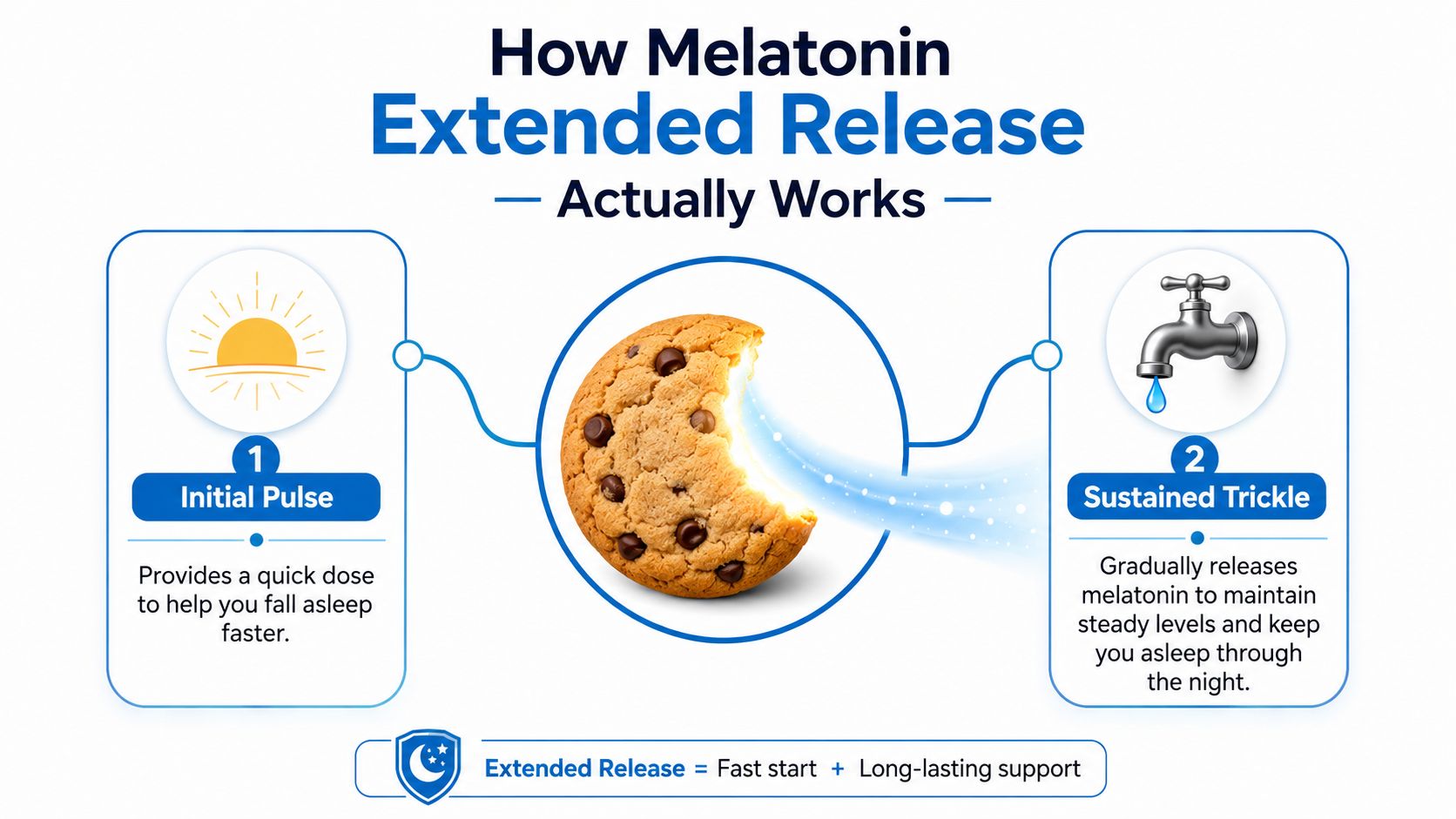
The slow-release cookie idea, translated into pharmacology
An extended-release tablet does not give up its contents all at once. It starts with an early release, then continues to let melatonin out more gradually, usually through a matrix, coating, or bilayer design that creates both an initial pulse and a longer tail of release (source).
That pattern matters because it matches the problem many people are trying to solve. If melatonin rises quickly and disappears quickly, it may help at bedtime but leave you uncovered later in the night. A slower formulation is built to keep levels available long enough to support staying asleep.
What the technology is trying to mimic
Your body's own melatonin signal normally rises after dark and stays mildly high for hours. Extended-release formulations are designed to echo that shape, rather than create a sharp spike and then fade. In a prolonged-release product, about 50% of the dose can be released in the first 20 minutes while the remaining 50% is maintained for up to 5 hours, and some formulations keep plasma levels sustained for 8 to 10 hours (source).
That release pattern is different from immediate-release tablets, which are built for a quicker rise and a quicker drop. For someone who mainly wants help falling asleep, a fast burst may be enough. For someone who falls asleep but then wakes in the middle of the night, the slower delivery profile is closer to the need.
The label matters here. Some products say prolonged-release, some say extended-release, and some say sustained-release, and those terms are not always used in the same way across supplements. The front of the bottle can sound reassuring while telling you very little about whether the tablet releases melatonin in stages.
A melatonin product can be “natural” and still be engineered. The delivery system is what separates a bedtime nudge from a formulation that tries to last through the night.
Why the science matters to how you feel
If the tablet releases too quickly, you may feel sleepy at bedtime and then wake later after the melatonin level has already dropped. If it releases too slowly, the effect may feel faint, or you may notice next-morning carryover. The design is a balancing act between enough release to matter and not so much that it lingers too long, and that is why melatonin extended release is about duration rather than force.
Extended Release vs Immediate Release at a Glance
A bottle can say “melatonin” on the front and still behave very differently at night. The question is whether the product gives you a short pulse or a longer tail, because that is what determines whether it helps you fall asleep, stay asleep, or both.
| Attribute | Extended-Release | Immediate-Release |
|---|---|---|
| Absorption pattern | Slower rise with sustained release | Faster rise with a sharper drop |
| Peak concentration time | Around 1.56 hours in one crossover study (source) | Around 0.6 hours in the same study (source) |
| Elimination half-life | About 1.63 hours (source) | About 0.95 hours (source) |
| Maximum concentration | 7,581 pg/mL (source) | 13,120 pg/mL (source) |
| Overnight profile | Levels rose within 15 minutes, stayed above 300 pg/mL for 6 hours, then fell below 50 pg/mL by 9 hours in one study (source) | More suited to sleep onset than overnight maintenance |
| Best fit | Sleep maintenance, fewer awakenings | Falling asleep faster |
What those numbers mean in real life
The lower peak with extended-release melatonin is not a flaw. It is the point. A steadier release acts more like a dimmer switch than a flash, so the signal lasts longer without producing the same early spike seen with immediate-release tablets.
That difference matters for the complaint you are trying to treat. A person who lies awake at bedtime often needs a faster rise, while someone who falls asleep and then wakes in the middle of the night usually needs coverage that lasts into the second half of the night. If you are comparing products, the label should help you decide whether you are looking at a bedtime nudge or a longer overnight profile. A practical example of how product design and sleep goals can diverge is discussed in this valerian root 500 mg review, which is useful as a reminder that supplement form matters as much as the ingredient name.
A second study observed peak plasma concentrations around 3 hours after dosing and dissolution release between 3 and 5 hours, which matches a sleep-maintenance pattern better than a pure sleep-onset pattern (source). That is why label words such as extended-release, prolonged-release, and sustained-release deserve a closer look. They can sound similar on the bottle, but they do not always mean the same release behavior.
So the right question is not, “Which one is stronger?” It is, “Which one matches the part of the night I keep losing?”
Who Benefits From This Formulation
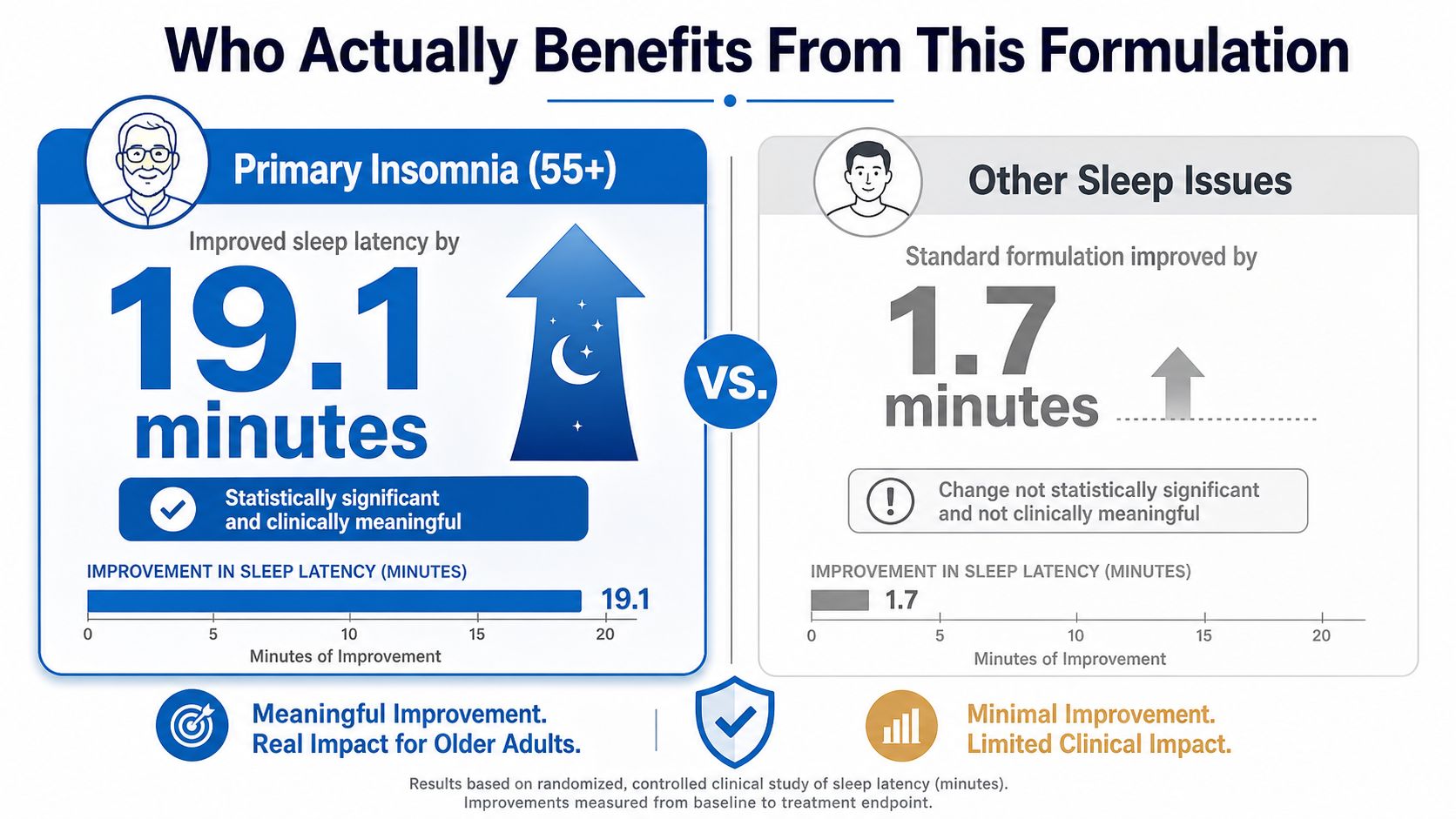
The clearest fit is primary insomnia in adults over 55, especially when the complaint is staying asleep rather than falling asleep. In a controlled study, a 2 mg prolonged-release formulation improved sleep latency in elderly patients by -19.1 minutes versus -1.7 minutes with placebo, with P = 0.002 (source). The same report showed a significant improvement in the 65 to 80 age group of -15.6 minutes versus placebo, also with P = 0.002 (source).
Older adults, sleep maintenance, and realistic expectations
That pattern matters because older adults often describe sleep differently than younger adults do. They may fall asleep at first, then wake earlier than they want, or wake several times through the night. Extended-release melatonin matches that complaint better than an immediate-release tablet, because the formulation is designed to keep releasing the signal after the first wave has passed. For many people, that is the difference between a bedtime nudge and coverage that lasts into the second half of the night.
There is also longer-term reassurance in the older-adult data. An open-label study reported that prolonged-release melatonin was effective and safe over 6 to 12 months of continuous therapy, with no withdrawal symptoms or suppression of endogenous melatonin production after discontinuation at 12 months (source).
Clinical takeaway: the best-fit user is often someone who can fall asleep, but cannot reliably stay asleep.
Where the evidence is thinner
The evidence base is narrower outside that group. A systematic review found the strongest support in primary insomnia in adults over 55, with possible but less certain benefits in mood disorders, neurodevelopmental disorders, and neurocognitive disorders (source). That does not mean the product has no role there. It means the confidence is lower, and the response is harder to predict.
Younger healthy adults who mainly want to fall asleep faster may not notice much from the extended-release version compared with immediate-release. For them, the formulation can be a poor match, because the problem is not overnight maintenance in the first place.
If you are comparing melatonin with other sleep supplements, a valerian root overview can help show why the label and release pattern matter as much as the ingredient name. The same decision rule applies in both cases, match the product to the sleep problem rather than assuming every sleep aid works the same way.
Dosing Strategies and Timing for Best Results
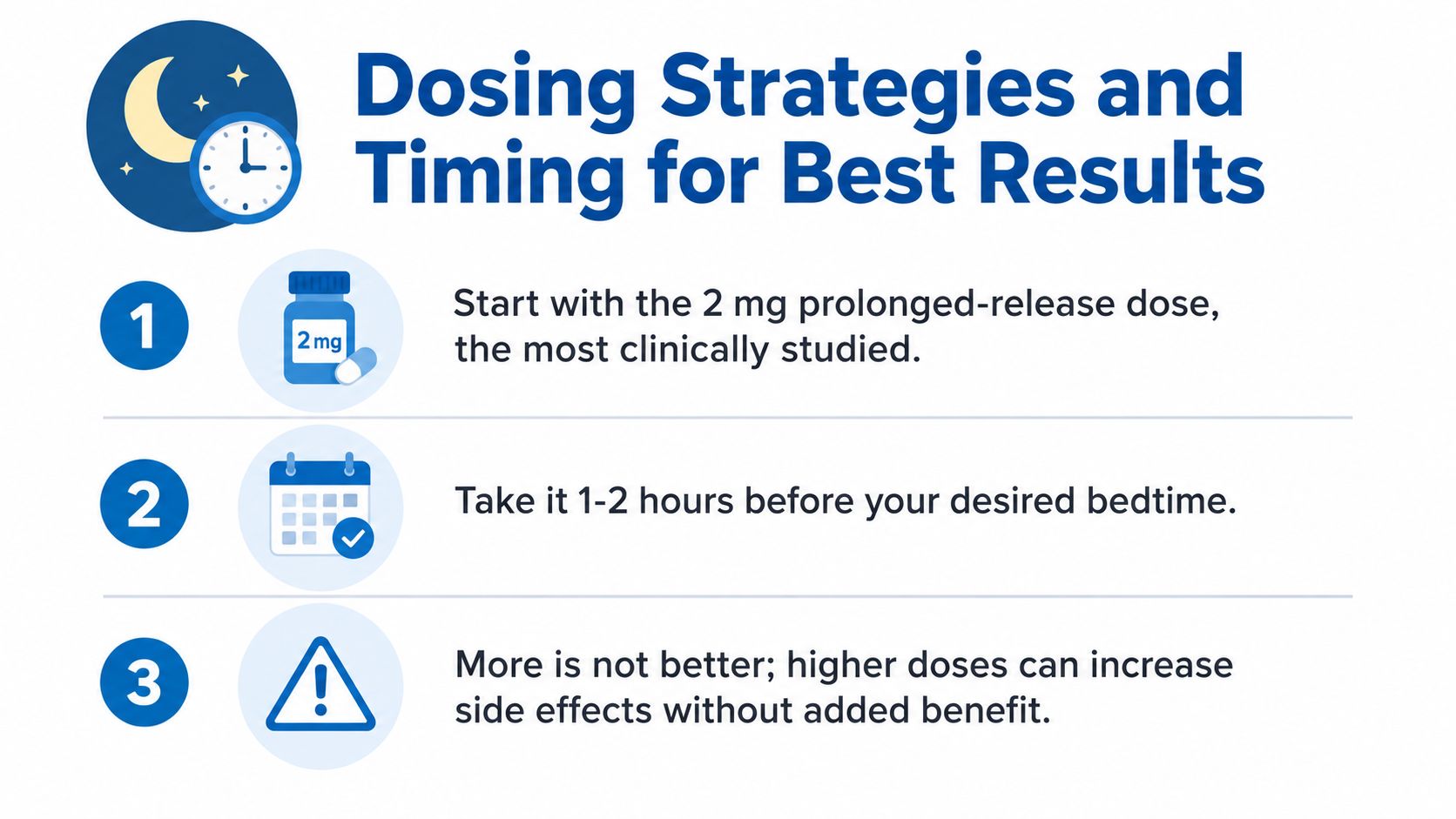
The most studied prolonged-release dose in the clinical literature is 2 mg nightly (source). That doesn't make it a magic number, but it does make it the most defensible place to start if a clinician has already agreed that melatonin is reasonable for you.
Timing that matches the body clock
Take it close to bedtime, usually about 30 to 60 minutes before sleep if you're trying to line up the initial pulse with your natural wind-down. Some people use a slightly wider window, but the point is to avoid taking it so early that the signal wears off before you go to bed.
Food can matter too. A light snack is usually less of an issue, but a heavy meal can slow absorption and blur the timing. That matters more with extended-release products because the whole idea is to coordinate the tablet's release pattern with your night, not with a random delay after dinner.
Practical rule: if you're using it for sleep maintenance, take it at the same time each night, then judge the effect over several nights, not one.
Start low, then stay consistent
Don't keep changing the dose every night. Extended-release melatonin is built around coverage, not intensity, so more isn't automatically better. A stable routine gives you a clearer read on whether the formulation is helping, especially if you're also working on sleep habits like a regular bedtime and less late-night screen time.
If you're looking at broader supplement routines, the same caution applies to combo products. A melatonin magnesium gummy guide can help you think about ingredient overlap, timing, and whether a mixed formula makes sense for your goals.
Side Effects, Safety, and Who Should Avoid It
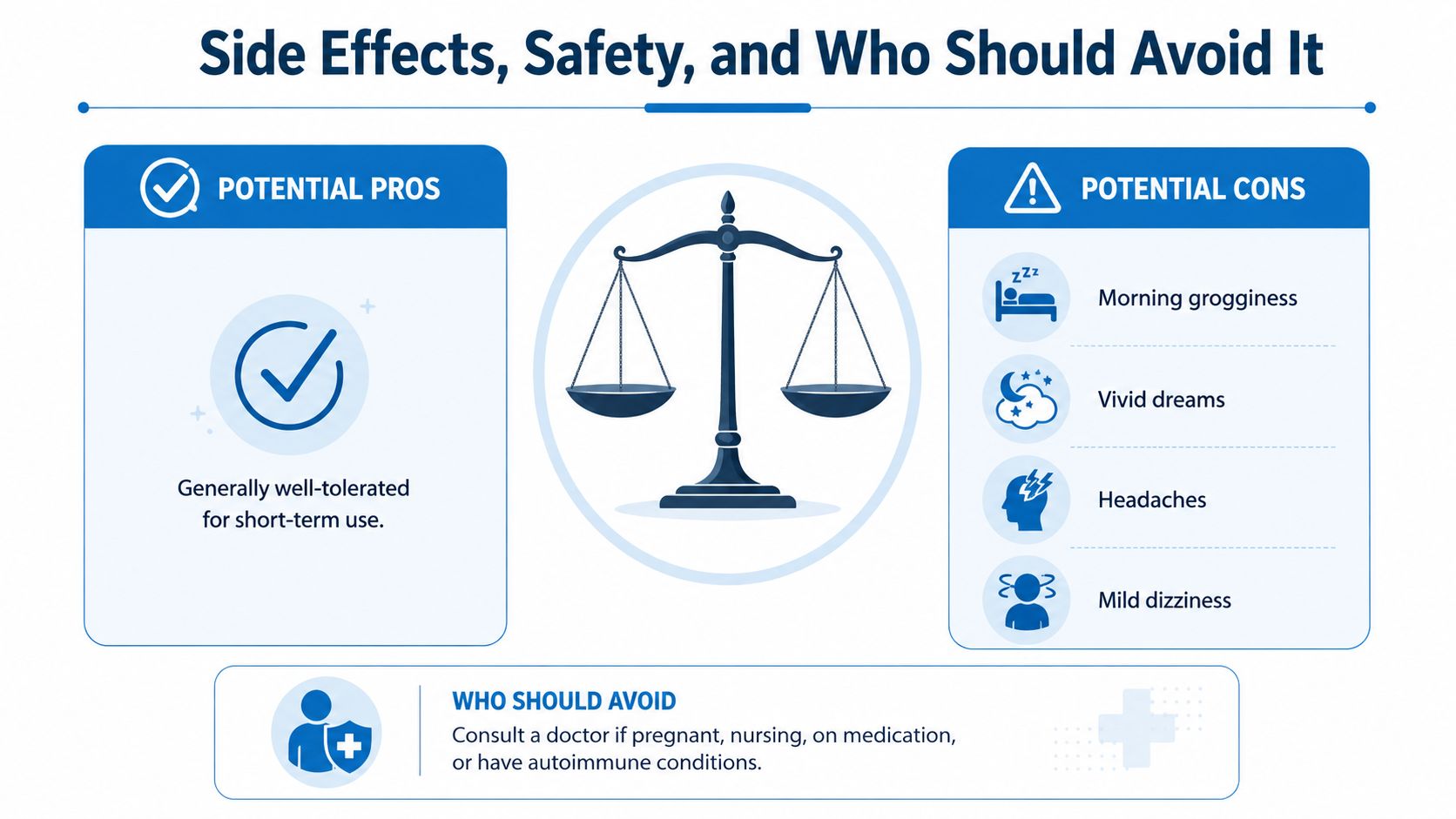
A sleep aid can feel harmless because it comes from a familiar hormone, but extended-release melatonin stays in the body longer, so it can overlap with morning hours if the dose or timing does not fit the person using it. The complaints people notice most are morning grogginess, vivid dreams, headaches, and mild dizziness.
Why longer action can mean more morning carryover
That longer release helps with staying asleep, yet it also leaves more room for melatonin to still be active when the alarm goes off. In the healthy-adult pharmacokinetic study, levels stayed above 300 pg/mL for 6 hours and then fell below 50 pg/mL by 9 hours, which helps explain why someone may sleep through the night and still feel slow to start in the morning.
A longer-lasting effect does not automatically mean a problem. It means the formulation is doing more than a short burst, so the next-day feel depends on how closely the product's release pattern matches the person's sleep window.
The reassuring part is that prolonged-release melatonin has long-term data showing no withdrawal symptoms or suppression of endogenous melatonin production after 12 months in one study of older adults. That does not remove the chance of side effects, but it does argue against the fear that the body becomes dependent on it in the way people sometimes assume.
Who needs extra caution
Some groups should talk with a clinician before using it, especially if they take sedatives, blood pressure medications, or anticoagulants, or if they have autoimmune conditions, or are pregnant or breastfeeding. Those are the situations where even a supplement deserves a medication-style review.
A simple label check helps too. If the bottle does not clearly say extended-release, prolonged-release, or sustained-release, you may be looking at a different product than the one you intended. That matters because a formulation meant for sleep maintenance should behave differently from a fast-release option, and a mixed supplement like a Life Extension extend-release magnesium capsule can raise extra questions about ingredient overlap and timing.
Keep melatonin away from children, tell your clinician that you use it, and do not assume that a bottle sold as a supplement has the same oversight as a prescription product.
“Natural” describes the source people imagine, not a guarantee of safety.
Reading Extended-Release Labels Like a Pro
A calm-looking bottle can still hide a poor sleep product. Melatonin labels are especially easy to misread because the front of the package may promise one thing while the fine print tells a different story. In one study of melatonin supplements, the actual melatonin content varied widely from the labeled amount, and some products also contained serotonin, a contaminant many shoppers would never expect to find (source).
That matters even more for melatonin extended release. The whole point of this format is a slower overnight release, so the label and the formulation have to match. If they do not, the product may act more like a different supplement than the one you intended to buy.
What to check before you buy
Start with the basics, then read the label like you would read a medication box.
- Confirm the exact dose per serving. Watch for unclear serving sizes or claims that make the amount hard to pin down.
- Look for third-party testing. Extended-release products depend on how the tablet or capsule is made, so quality control matters a great deal.
- Check the excipients. Gelatin, allergens, and coating ingredients can matter if you have sensitivities or dietary rules.
- Verify the release claim. The bottle should clearly state prolonged-release, extended-release, or sustained-release if that is the formulation you want.
- Avoid proprietary blends. If the label hides the actual melatonin amount, you cannot judge what you are taking.
Product literacy pays off. A sleep-maintenance formula only works the way it should if the release mechanism does what the label says it does. If a product is underdosed, overdosed, or poorly made, the overnight pattern can shift in ways that do not match your expectation from the front of the bottle.
Consumer rule: if the front label promises sleep maintenance but the back label stays vague, skip it.
Shoppers who want clearer product pages should look for details on dosage, form, and listed attributes. That helps with sorting by things like halal or gelatin-free status, but the main point is quality control, not convenience. The Life Extension extended-release magnesium capsule page is a useful example of a detail-rich listing that helps people compare formulations more carefully.
Making the Right Decision for Your Sleep
A person who falls asleep without much trouble but keeps waking in the second half of the night is looking at a different problem than someone who lies awake at the start of the night. Extended-release melatonin fits the first pattern better. It releases more slowly, so the signal is spread across the night instead of arriving all at once like a quick burst.
A bottle may say melatonin, but the release pattern can change what the person feels after bedtime. Immediate release is usually the better match for trouble getting to sleep, while extended release is aimed at staying asleep once sleep has started.
A practical way to choose is to start with the sleep pattern, then check the label against it. If awakenings are the main complaint, the extended-release form is the one to discuss. If the issue is delayed sleep onset, the slower formulation may not match the problem as well.
The label should also tell you whether the product is extended release, prolonged release, or sustained release. That wording matters because the formulation is part of the effect, not just the ingredient list. A person who buys a plain melatonin tablet and expects an overnight release can end up with a product that behaves very differently from what the front label suggests.
Timing comes next. Take it consistently before bed, so the release pattern lines up with the night, rather than using it only after you are already frustrated and exhausted. Using it the same way each night makes it easier to tell whether the product is helping or whether the dose and formulation need to be reconsidered.
Medication review matters too. Sedatives, blood pressure drugs, and anticoagulants deserve a careful look before melatonin is added. Pregnancy is another situation where caution is warranted, and some medical conditions can make melatonin a poor fit. A clinician can help sort out whether the problem is the sleep pattern itself or a medication issue that needs a different approach.
The studied starting point is 2 mg nightly (source). That does not mean every person should stay there, but it gives a clear reference point instead of guessing from a shelf of similar-looking products. For many readers, that is the part that reduces confusion, because a lower or higher number on the bottle is not the same thing as the right overnight pattern.
Buying carefully also protects the result. Transparent labeling and third-party testing help you judge whether the product on the shelf matches the release style you want. If the front label promises sleep maintenance but the back label is vague, that is a sign to keep looking.
The best use case is specific, not broad. Extended-release melatonin is for the person whose problem is waking during the night, especially when the goal is to support sleep maintenance rather than force sleep. It works best alongside regular sleep habits, because a release profile can support the night, but it cannot replace the conditions that let sleep hold.
CalVitamin gives shoppers a straightforward way to compare supplement formats, product details, and labeled attributes before they buy. If you are sorting through melatonin options and want a clearer way to judge extended-release products, visit CalVitamin and use its product pages to compare formulations with more confidence.






