
You're standing in the supplement aisle, phone in hand, comparing tubs that all promise “plant protein,” but the labels don't tell you why one powder mixes cleanly, another tastes earthy, and a third seems to sit heavier in your shaker bottle. Pea protein isolate is the ingredient behind a lot of those differences. It's not just a vegan checkbox, it's a processed protein ingredient with real formulation trade-offs, and those details matter if you care about taste, texture, or whether the powder fits your training routine.
Table of Contents
- What Pea Protein Isolate Actually Is
- How Pea Protein Isolate Is Made
- Nutrition Profile and Real-World Benefits
- Pea Protein Isolate vs Whey and Soy
- How to Use Pea Protein Isolate in Real Recipes
- Side Effects and Honest Trade-Offs
- How to Choose a Quality Pea Protein Isolate
What Pea Protein Isolate Actually Is
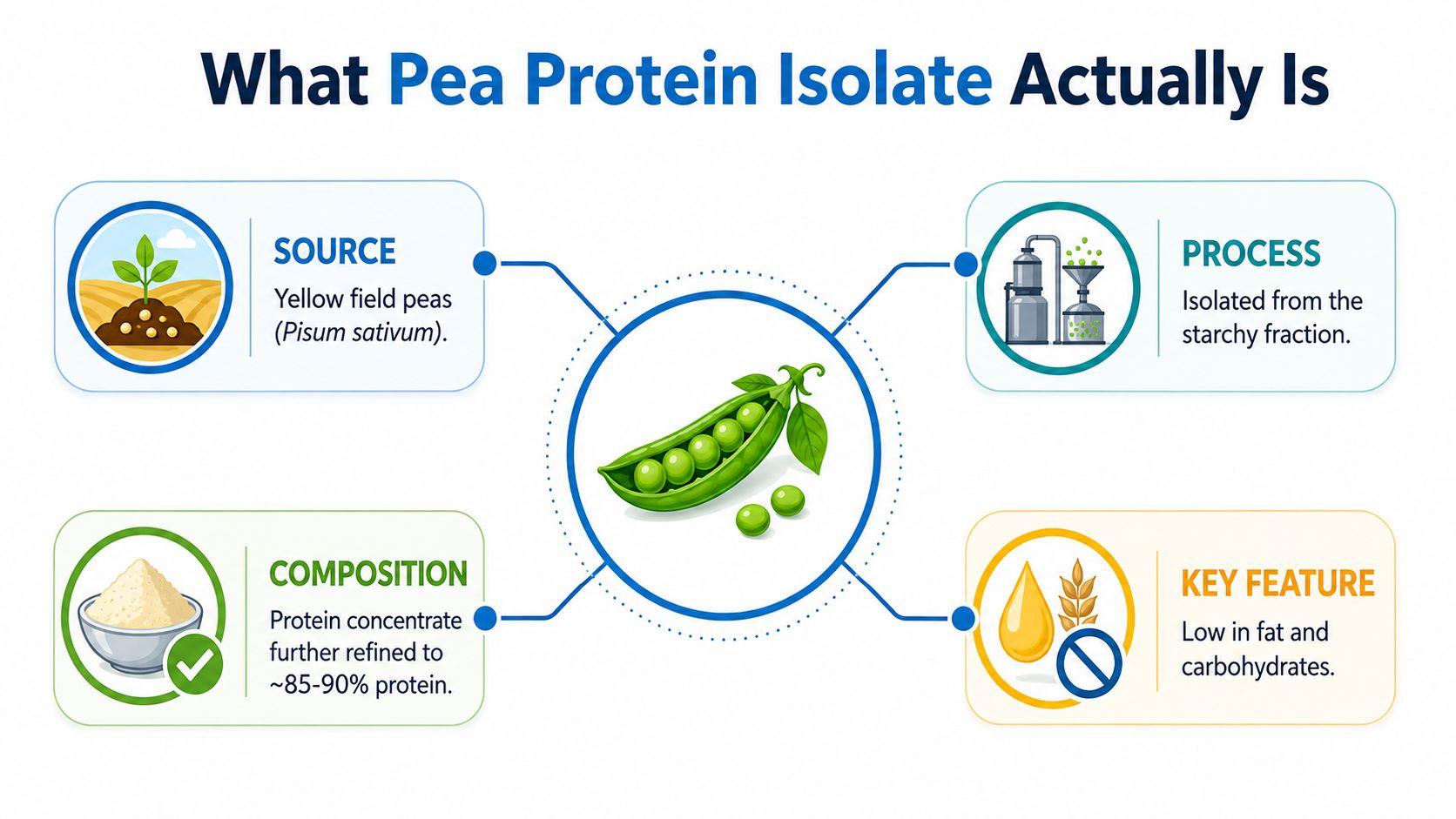
You open a supplement tub, see a simple beige powder, and it is easy to assume every pea-based protein works the same way. It does not. Pea protein isolate starts with yellow field peas, then the protein is separated from most of the starch, fiber, fat, and other parts of the seed, so the finished ingredient behaves more like a concentrated protein material than a whole-food powder. Commercial products are typically standardized to about 79% to 89% protein, with very little starch or fat left behind, which is why formulators use it in bars, shakes, and meat analogues that need protein without much extra bulk Canadian government review.
Is It the Same as Pea Protein
People often treat “pea protein” and “pea protein isolate” as the same label, but they are not always interchangeable. Pea protein is the broader category, while isolate means the ingredient has been refined further, so more of the pea's non-protein material has been removed.
That extra refinement changes how it behaves in real use. A less processed pea ingredient can feel heavier and carry more starch or fiber, while an isolate acts more like a building block in a recipe. The trade-off shows up in the cup and in the formula, since isolates usually cost more and are chosen when brands want a cleaner, more neutral powder.
Practical rule: if you want something closer to a protein building block than a whole-legume ingredient, isolate is the version to look at.
A shopper comparing labels will also notice the same pattern in how brands position the ingredient. In the Canadian government review, the most common consumer-facing claims centered on attributes such as low, no, or reduced allergens, gluten-free, and no animal ingredients Canadian government review. That helps explain why pea protein isolate keeps showing up in vegan, dairy-free, and allergen-conscious products, where a plant protein needs to do more than just raise the protein number on the panel.
The processing details matter here, because they help decide whether the powder mixes cleanly, tastes relatively neutral, or brings more of the bean-like character some shoppers notice in less refined ingredients. If you want a broader shopper-focused overview of how pea protein fits into everyday formulas, see this plant protein review.
How Pea Protein Isolate Is Made
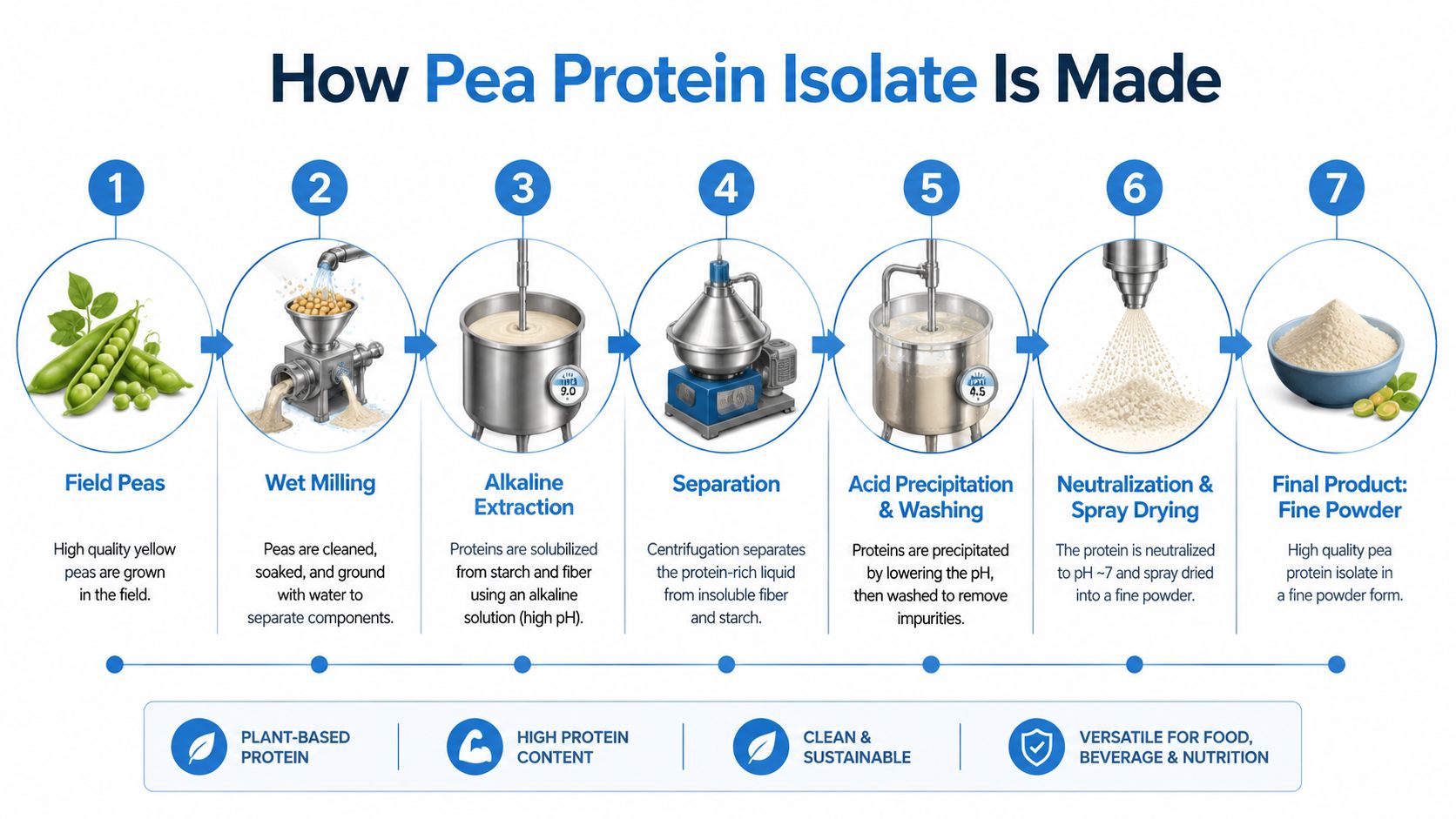
The manufacturing process is designed to separate protein from the rest of the pea seed, then turn that protein into a dry powder that can be used in food formulas. First, the peas are cleaned, dehulled, and milled. Then the protein is moved into solution, the starch and fiber are removed, and the liquid protein fraction is concentrated and dried. That sequence is why pea protein isolate behaves more like a functional ingredient than a whole food. Commercial specs often target 80% to 85% protein on a dry-matter basis, with low moisture and tight microbial limits, because a dry, stable powder is easier to ship, store, and blend into finished foods Ingredion technical specification.
Why Extraction Matters
Extraction is not just a factory detail. It changes how the powder behaves in a shaker bottle, a smoothie, or a baked good. A gentler process can leave more of the original functional traits intact, while a more aggressive process can raise protein concentration but also affect flavor, foam, or solubility. Two products can both carry the same pea protein isolate label and still mix very differently.
The difference starts with chemistry. Manufacturers usually adjust pH to move protein away from starch, fiber, and other seed components, then bring it back out of solution so it can be dried. That pH shift is one reason isolates can taste cleaner than less refined pea ingredients, but it also helps explain why some powders foam more, dissolve more easily, or leave less of the bean-like note shoppers sometimes notice in more minimally processed materials. For a closer look at how that functional gap shows up in whey, see this whey protein isolate review.
A technical specification for one commercial pea isolate describes a product with a high protein concentration and low moisture, along with only small amounts of fiber and mineral residue Ingredion technical specification. That kind of profile shows the goal clearly, keep the protein fraction dominant and strip away much of what would get in the way of mixing or shelf stability. It is useful in dry blends and ready-to-drink products, where extra starch or water can interfere with texture.
The shopper-facing difference is straightforward. Whole peas are eaten as a food, with their starch, fiber, and protein still together. Pea protein isolate is built as a formula ingredient, with the protein concentrated and the other parts of the seed reduced so the powder can do a specific job in the finished product.
The cleaner the isolate, the more the manufacturer has shaped the ingredient for a specific job, mixing, stability, or higher protein density.
Nutrition Profile and Real-World Benefits
A shopper usually notices the nutrition panel before anything else, and that panel tells a useful story. Pea protein isolate is built to deliver a concentrated protein hit, but the practical experience depends on how thoroughly the pea material was stripped down and how the powder was processed afterward. That is why two isolates can both look “high protein” on paper and still behave differently in a shaker cup, a smoothie, or a baked recipe.
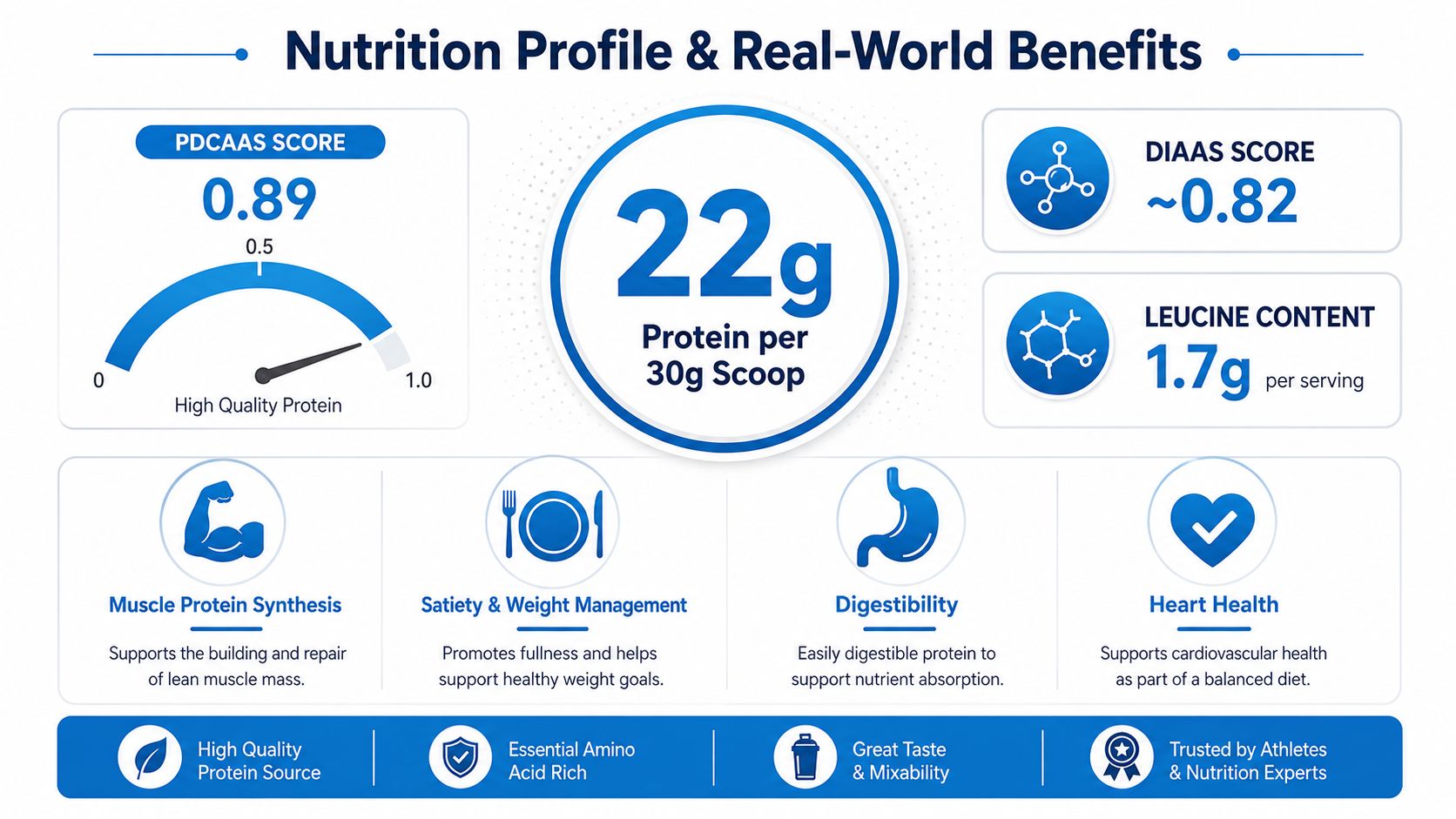
A recent review places pea protein isolate in the upper tier of non-soy plant proteins, with a PDCAAS of about 0.81 to 0.93 and a DIAAS of about 0.73 to 0.82. Those scores are not just lab jargon. They help explain why one powder may feel like a reliable food ingredient, while another only looks impressive on the front of the tub.
What Those Scores Mean
PDCAAS and DIAAS are ways to estimate how much of the protein you eat can be digested and used. A higher score usually means the body has easier access to the amino acids after digestion, which matters for sports nutrition, daily protein intake, and meal planning.
Processing choices shape those numbers in practice. Extraction method, pH, and heat exposure can change how much of the protein stays functional, how well it disperses in liquid, and how likely it is to taste grassy or chalky. That is why one isolate may mix like fine flour in a bottle and another may leave a sandy finish, even though both came from peas.
The same review reports about 4.7 to 5.7 g lysine per 100 g protein and 5.7 to 6.4 g leucine per 100 g protein. Lysine helps round out the amino-acid profile, and leucine is the amino acid many fitness-focused shoppers watch most closely because it helps signal muscle-building pathways. For that reason, pea isolate often shows up in post-workout shakes and everyday protein blends, especially when the goal is to raise protein intake without dairy.
Where It Fits in Daily Use
The useful takeaway is straightforward. Pea protein isolate is dependable for muscle-focused routines, satiety-oriented meal plans, and general protein top-ups, especially if you want a non-dairy option. It is also the kind of ingredient where quality details matter more than the headline claim. A cleaner extraction can help the powder disperse better, while a harsher process can leave more aftertaste or a thicker mouthfeel.
For shoppers comparing plant proteins, a closer look at your super plant protein review can help frame the trade-offs between different pea-based options. That matters because the same source crop can produce powders with different texture, taste, and mixability depending on how the isolate was made.
A public health discussion from the American Institute for Cancer Research notes that pea protein is less studied than whey or soy and that its amino-acid profile is not identical to whey's AICR discussion. That is a useful reminder to keep expectations grounded. Pea protein isolate can be a strong plant-based tool, but it still has its own ceiling and its own flavor profile.
Bottom line: it is strong enough to matter, but it is still a plant protein with limits shaped by processing and amino-acid balance.
A Quick Label Lens
- Protein quality: good, but not the same as whey.
- Amino acids: useful for training, with leucine and lysine worth checking.
- Use case: best when you want plant-based protein without dairy.
- Expectation: solid support, not magic.
For shoppers comparing everyday protein blends, the difference between “high protein” and “highly usable protein” is the part that separates a marketing claim from a powder you can live with.
Pea Protein Isolate vs Whey and Soy
A shopper standing in the protein aisle is usually comparing more than one label at the same time. Whey is the familiar dairy option, soy is the long-standing plant option, and pea protein isolate often becomes the middle path for people who want a vegan, lower-allergen formula without giving up too much on protein quality.
The differences start with how each protein is built and processed. A powder that looks similar on the shelf can behave very differently in a shaker cup, because extraction method, pH control, and drying choices affect taste, mixability, and how much of the amino acid profile stays useful in practice. That is why two pea isolates can feel like completely different products even when the front label looks nearly identical.
| Attribute | Pea Protein Isolate | Whey Protein | Soy Protein Isolate |
|---|---|---|---|
| Protein quality | Strong plant protein, with review data showing PDCAAS about 0.81 to 0.93 and DIAAS about 0.73 to 0.82 review | Often chosen for rapid amino-acid delivery and higher leucine density | A well-established plant protein with broad use in nutrition products |
| Allergen profile | Often used in hypoallergenic or allergen-conscious formulas Canadian government review | Not suitable for people avoiding dairy | Not ideal for shoppers avoiding soy |
| Diet fit | Vegan and dairy-free | Dairy-derived | Vegan and dairy-free |
| Digestive feel | Can be easier for some people who avoid lactose, though texture varies by brand | Some people tolerate it well, others don't | Often used when soy is already acceptable in the diet |
| Formulation role | Useful in shakes, bars, and blended foods | Common in sports nutrition shakes | Common in plant-based foods and supplements |
| Shopping logic | Best when you want a plant option with broad dietary compatibility | Best when whey's speed and familiar texture matter most | Best when soy fits your diet and you want a plant protein with a long history |
Where Pea Wins
Pea isolate usually wins when the buyer wants a protein that fits a wider range of dietary needs. It is the sort of ingredient formulators reach for when they need a powder that can work across vegan, dairy-free, and allergen-conscious products without changing the whole recipe around it. That flexibility matters because the same protein source can behave like a smooth base in one drink and a chalky one in another, depending on how carefully it was processed.
Where It Doesn't
Whey still has the edge when someone wants the classic dairy-protein feel or a very fast, familiar post-workout shake. Soy still matters when a shopper wants a plant protein with a long history and a strong functional role in foods. For a closer look at how whey is usually positioned in that comparison, this whey protein isolate review is a useful reference point.
The best choice depends less on hype and more on fit. If you are avoiding dairy, managing allergies, or buying for vegan compliance, pea isolate belongs in the conversation right away.
How to Use Pea Protein Isolate in Real Recipes
The easiest way to ruin a good powder is to use it like milk powder and expect it to behave the same way. Pea protein isolate likes enough liquid, a strong blender, and a little patience. It also tends to make more sense in recipes where body and protein density matter more than crystal-clear transparency.
Simple Mixing Rules
Start with cold or room-temperature liquid, then add the powder after the liquid is already in the blender or shaker. That helps reduce clumping. If you're using a shaker bottle, give it a hard shake, let it sit for a few seconds, then shake again so dry pockets can break up.
A practical approach is to use it in places where texture can work in its favor:
- Post-workout shake: blend with milk or a milk alternative, frozen fruit, and ice for a smoother drink.
- Overnight oats: stir into oats, chia, and yogurt or a dairy-free alternative for a thicker breakfast.
- Pancakes or waffles: mix into batter with flour and eggs or an egg substitute for a more filling meal.
When Isolate Makes More Sense
Isolate is usually the better choice for smoothies, ready-to-drink shakes, and baked recipes where you want more protein and less bulk. A more fiber-rich pea ingredient can make sense in heartier bars or savory foods, but isolate is the cleaner pick when the recipe depends on a finer powder.
Kitchen rule: if the recipe needs the protein to disappear into the background, isolate is usually the better fit.
For a broader set of meal ideas, this recipe collection can help you see how protein powders behave in ordinary food, not just in fitness shakes.
The biggest mistake is overcomplicating it. Treat pea isolate as a flexible ingredient, not a magic powder. Once you know how it behaves in liquid and batter, it becomes much easier to use consistently.
Side Effects and Honest Trade-Offs
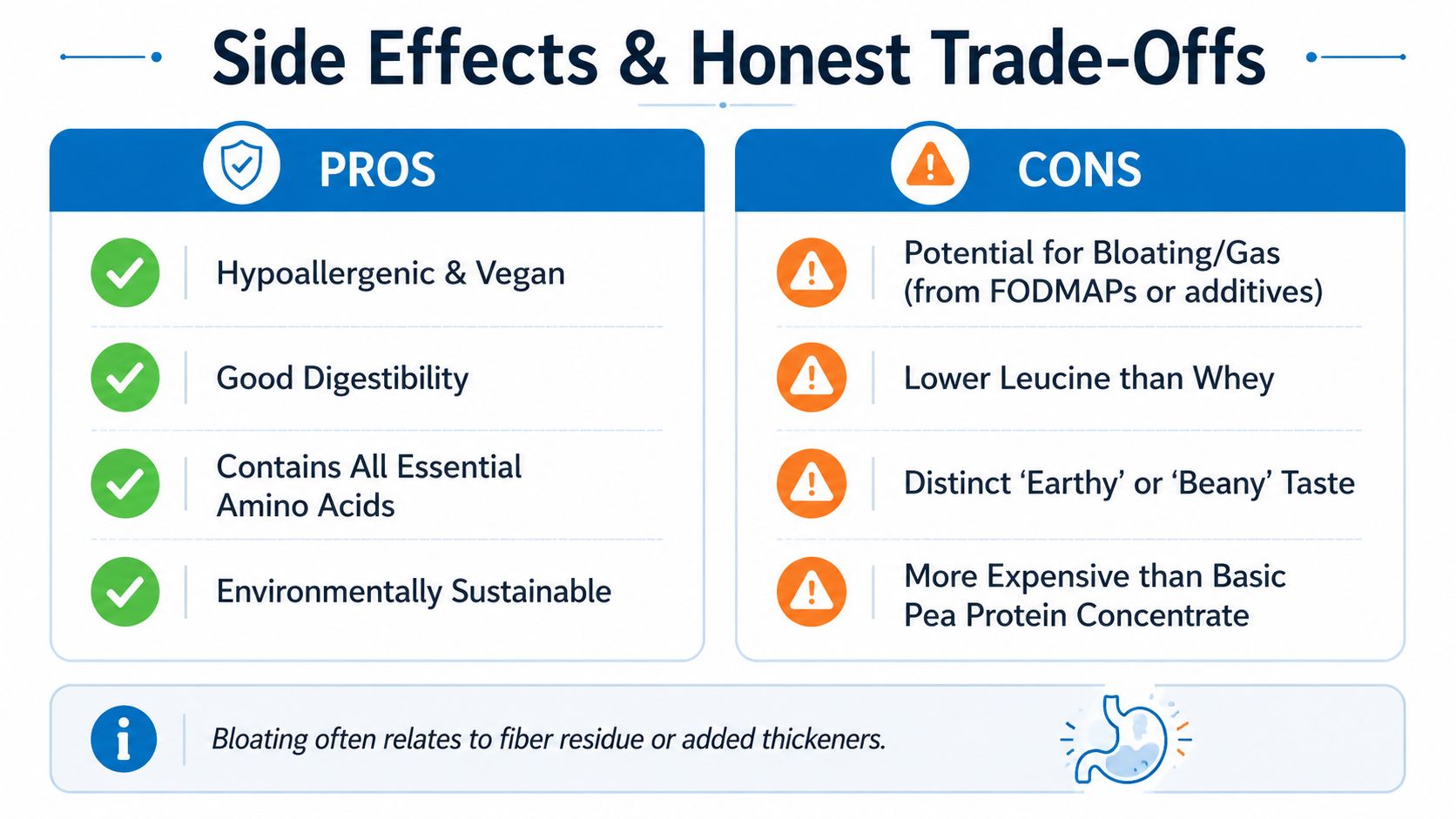
A scoop of pea protein isolate can be a clean fit for one person and a frustrating one for another. The differences usually show up in taste, mixability, or digestive comfort, not as a safety alarm. A powder can taste earthy or beany depending on how the protein was extracted and dried, and a formula with gums, fibers, or sweeteners can sit differently in the stomach than a plain isolate.
Common Comfort and Digestive Issues
Some of the discomfort people blame on the protein comes from the rest of the formula. Thickeners, sugar alcohols, and leftover fiber can affect the way a shake feels in the gut more than the isolate itself. If a product makes you feel gassy or bloated, the first place to look is the full ingredient list, because the extra ingredients are often the part that changes tolerance.
Processing matters here too. A more heavily refined isolate can mix more smoothly, while a less polished one may leave a chalkier finish or a stronger pea note. pH handling and extraction choices also shape the final powder, so two products with the same front-label claim can behave very differently in a shaker bottle.
The other honest trade-off is amino-acid balance. Pea protein has a useful profile, but it is still not identical to whey, and people who rely on plant proteins should look at the rest of the day's intake instead of judging one scoop in isolation. The AICR discussion points to both the promise and the open questions, which is why pea protein works best as one practical tool, not a stand-alone answer.
What About Heavy Metals
This concern shows up often in forums, and the safer response is to look for brands that publish third-party testing or quality documents. You are not trying to guess whether a powder is safe from the front label alone, you are checking whether the company verifies what is in the canister. That question matters across the supplement aisle, not only with plant proteins.
If a product hides the formula behind vague language, that is a better reason to pause than the word “pea” on the front label.
Most adults tolerate pea isolate well, especially when they start with a modest serving and choose a formula with a short ingredient list. The main job is to separate ingredient noise from real tolerance issues. Taste complaints are real, digestive complaints can happen, and neither one means the product is broken.
How to Choose a Quality Pea Protein Isolate
The fastest way to shop smarter is to read the supplement facts panel before you read the front label. Look for protein per serving, a short ingredient list, and clear labeling about sweeteners, thickeners, and flavor systems. If the panel buries the actual isolate dose inside a blend, you can't tell whether you're buying a serious protein serving or mostly flavoring.
What to Check First
- Protein amount per serving: higher protein density usually means less filler in the scoop.
- Ingredient list length: shorter lists are easier to evaluate and usually easier to troubleshoot.
- Third-party testing or quality seals: useful when you care about consistency and purity.
- Dietary certifications: especially helpful if you need vegan, halal, gelatin-free, or cruelty-free options.
- Allergen statements: important if you're shopping for a sensitive household.
A good label should answer a basic question quickly, what am I getting in this powder? If the product is vague, skip it.
Red Flags to Avoid
Avoid proprietary blends that hide how much pea isolate you're getting. Be cautious with products that overpromise with flashy claims but never explain the serving size or supporting ingredients. And if you're sensitive to texture or digestion, pay attention to whether the formula uses lots of gums or sweeteners, because those extras can affect how the powder feels more than the protein itself.
For shoppers who want a broad supplement catalog with protein and wellness options, CalVitamin is worth a look, especially if you're comparing ingredient formats and dietary attributes in one place. You can also call 1-888-510-9080 if you need help narrowing down a product choice.
If you want to compare pea protein isolate with other protein formats and shop with clear dietary filters in mind, start with CalVitamin. It's a practical place to browse protein and wellness products while keeping an eye on the details that matter, from ingredient style to dietary fit.






