
You're standing in the supplement aisle, comparing pea, rice, soy, hemp, and “complete” plant blends. Every tub promises easy mixing, clean ingredients, and muscle support, but the front label rarely tells you whether the formula itself is well designed. Vegan protein powder isn't one interchangeable category. The source, processing method, amino-acid profile, serving size, sweeteners, and contaminant testing all affect whether a product suits your diet and your goal.
The category has grown far beyond its early health-food niche. One industry estimate values the vegan protein powder market at USD 344.3 million in 2022, with a projection of USD 714.2 million by 2030, equivalent to a projected 9.5% CAGR from 2023 to 2030 (Grand View Research's vegan protein powder market analysis). The useful question now isn't whether plant protein “counts.” It's how to tell a carefully formulated powder from one that relies mostly on attractive packaging.
Table of Contents
- Understanding what vegan protein powder really is
- The main types of vegan protein powder explained
- How vegan protein compares to whey on nutrition
- Real benefits and honest limitations
- How to read a vegan protein powder label
- Dosing and timing for muscle gain weight loss and meal use
- Mixing tips and easy recipes that actually taste good
- Frequently asked questions and a smart buyer checklist
Understanding what vegan protein powder really is
A shopper named Maya might recognize the situation. She wants a dairy-free shake after training, picks up a tub labeled vegan protein, and sees a long list of unfamiliar terms: pea isolate, brown rice protein, natural flavors, gums, enzymes, and added amino acids. The word vegan answers one question, but not all of them.
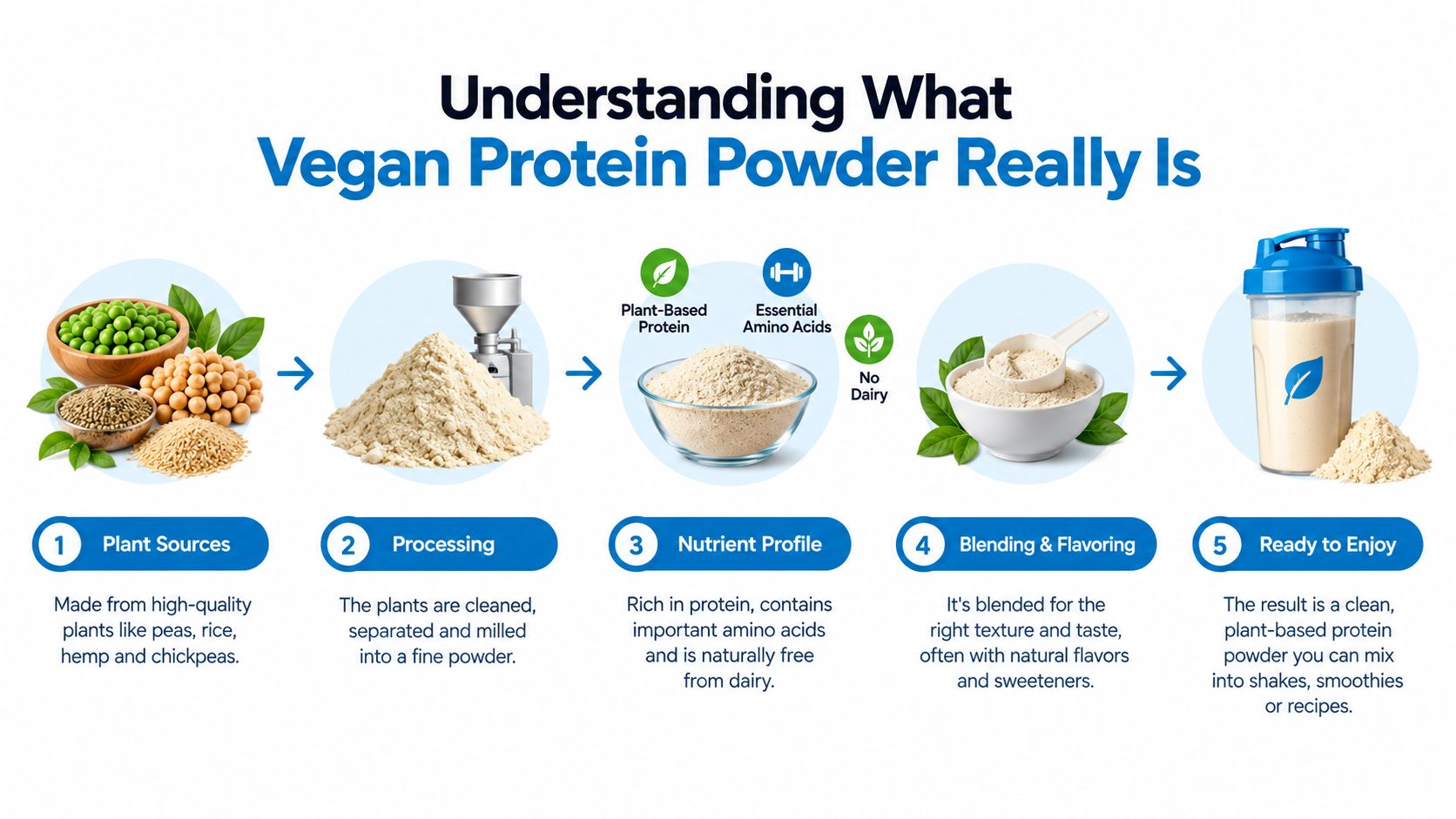
Vegan protein powder is concentrated protein made entirely from plant sources. Common raw materials include peas, rice, soy, and hemp. Manufacturers process the legumes, seeds, or grains to separate much of the original fat and carbohydrate from the protein fraction, then dry that fraction into a powder that can be mixed into water, milk alternatives, oats, or smoothies.
The process resembles turning whole milk into a more concentrated dairy powder, but the starting material is different. A plant ingredient is milled or processed, its protein is separated from other components, and the resulting material is dried and refined for use in a supplement. The amount of processing influences solubility, mouthfeel, protein concentration, and flavor.
Vegan does not mean automatically healthier
The label usually means the product contains no animal-derived ingredients and has been made to meet the brand's vegan standard. It doesn't automatically tell you whether the powder is low in sugar, easy to digest, nutritionally complete, or independently tested for contaminants.
That distinction is central:
- Protein quality concerns amino acids and digestibility, meaning how well your body can access and use the protein.
- Ingredient quality concerns sweeteners, gums, fillers, allergens, sourcing, and testing.
- Manufacturing quality concerns whether the label accurately reflects the contents and whether the product is screened for unwanted substances.
These qualities overlap, but they aren't the same. A pea-and-rice blend may have a thoughtfully balanced amino-acid profile while using a sweetener you dislike. A minimalist hemp powder may have a short ingredient list but provide less protein per scoop and a grittier texture.
The broader plant-based protein market was estimated at about USD 23.89 billion in 2025, with a projection of USD 38 billion by 2031 at an 8.10% CAGR, according to the market overview linked above. That scale gives shoppers more choices, but it also makes label literacy more important. A tub can be vegan and still be a poor fit for your training, digestion, or risk tolerance.
The main types of vegan protein powder explained
The simplest way to understand plant powders is to treat each source like a different building material. Each brings strengths, and each has a structural weakness that formulators may address through processing or blending.
Pea protein
Pea protein usually comes from yellow split peas. It has become a common base because it offers a relatively balanced amino-acid profile, mixes more smoothly than many grain-based powders, and avoids dairy and soy. Its limiting amino acid is commonly methionine, so a pea-only product may not be the most strategic choice for someone relying heavily on powder for strength-training nutrition.
Rice protein
Brown rice protein is often easy for people to tolerate and is useful in dairy-free and soy-free formulas. Rice protein is naturally lower in lysine, which is why formulators frequently pair it with pea protein. On its own, it may also feel chalkier or more powdery.
Soy protein
Soy is a complete plant protein and is comparatively strong on essential amino acids, including leucine. It can be an efficient choice, but people with a soy allergy need to avoid it. Concerns about soy's naturally occurring isoflavones also make some shoppers hesitant, although soy isn't unsafe for people when consumed as part of a normal diet.
Hemp protein
Hemp powder can contribute fiber and has a distinct earthy taste. It's usually less protein-dense and more textured than an isolate, so it often works better in oats, smoothies, or baked foods than in a thin shake.
Blended formulas
A blend is like a jigsaw puzzle. Pea may help supply lysine, while rice contributes amino acids that balance pea's weaker areas. The point isn't that every blend is automatically superior. The point is that the formula can be designed around the combined amino-acid pattern rather than the limitations of a single crop.
| Protein source | Typical protein per serving (g) | Amino-acid profile | Allergen notes | Texture and taste |
|---|---|---|---|---|
| Pea | Varies by product | Strong overall, lower in methionine | Usually dairy-free and soy-free | Creamy to chalky |
| Soy | Varies by product | Complete, relatively strong in leucine | Avoid with soy allergy | Smooth to creamy |
| Rice | Varies by product | Lower in lysine | Often useful in soy-free formulas | Powdery or chalky |
| Hemp | Varies by product | Less concentrated, includes more non-protein components | Check for cross-contact | Earthy and gritty |
| Pea and rice blend | Varies by product | Complementary profile | Check every ingredient | Often smoother than single-source powders |
For a real-world product page example, you can compare the positioning of KOS Organic Plant Protein Powder with the source-specific options on other shelves. Choose a single source if you value a short ingredient list and tolerate its texture. Choose a blend if you want a more deliberately balanced formula without having to combine powders yourself.
How vegan protein compares to whey on nutrition
The meaningful comparison isn't “plant versus animal” in the abstract. It's how much usable protein and how many essential amino acids a specific serving provides.
The Digestible Indispensable Amino Acid Score, or DIAAS, evaluates individual essential amino acids according to their digestibility at the end of the small intestine. That's more informative than looking only at the protein percentage on the front of a tub. Human digestion research has found oro-ileal nitrogen digestibility of about 89–92% for soy protein isolate and pea protein flour or isolate, compared with 91% for egg and 95% for milk protein (the human digestion study in PMC).
That finding changes the old assumption that plant protein is poorly absorbed. Properly processed isolates can support amino-acid absorption nearly as well as animal proteins when total intake is adequate. The remaining question is whether the amino-acid pattern, especially leucine and lysine, fits your objective.
Leucine and the practical muscle question
Leucine helps signal muscle protein synthesis. Whey naturally delivers a strong essential-amino-acid profile, which is one reason it has long been popular after resistance training. Pea and soy can perform well, while rice alone may need help from a complementary source or added amino acids.
A pea-and-rice formula can compensate for the limiting amino acids in each source. This is why a shopper should inspect the complete amino-acid profile rather than assume that a product with a high protein number will produce the same nutritional result. This guide to choosing vegan protein powder explains the relevance of DIAAS, complementary plant blends, and formulation choices.
| Metric | Whey isolate | Pea isolate | Rice isolate | Pea and rice blend |
|---|---|---|---|---|
| Digestibility | Typically high | About 89–92% in the cited human research context | Product-dependent | Product-dependent, often designed for complementarity |
| Essential amino acids | Complete | Strong, with limiting areas | Lower lysine | Designed to improve balance |
| Leucine | Naturally robust | Often adequate when the serving is properly formulated | May need support | Can be improved through blending or fortification |
| Best buying question | Is the product tested and tolerated? | Is the dose and profile adequate? | What is paired with it? | Does the label disclose the blend and amino acids? |
For most casual athletes and lifters, a well-formulated vegan powder can close much of the practical gap with whey. Someone training fasted, competing at a high level, or trying to optimize every post-workout variable may prefer a formula with a clearly disclosed amino-acid profile. A whey option such as Grass-Fed Whey Isolate from Onnit provides a useful comparison point, but the better choice still depends on allergies, ethics, digestion, and the rest of the diet.
Real benefits and honest limitations
A person avoiding dairy, eggs, or animal-derived processing aids may want a protein option that fits ordinary meals. Vegan protein powder addresses that practical need, and it can also suit people who experience lactose discomfort or prefer plant-forward eating.
The benefit is convenience rather than a special biological effect. Powder works like a shelf-stable protein ingredient: stir it into breakfast, carry it after training, or use it when appetite and cooking time are limited. Environmental and ethical considerations matter to many shoppers, but a product's footprint depends on its crop, processing, packaging, transport, and serving pattern.
Where the limitations show up
A single plant source may provide a less favorable amino-acid pattern than whey or a carefully formulated blend. That difference matters more when the powder supplies a large share of someone's protein and the rest of the diet lacks variety. Legumes, grains, nuts, seeds, and other protein foods can help fill those gaps.
Taste and texture create another barrier. Pea powder may feel thick, rice protein can seem chalky, and hemp often has an earthy flavor. Processing concentrates protein, but it may also remove components that normally contribute to the texture of a familiar food.
The concern many shoppers hear less often is contaminant screening.
Plant-based is not a heavy-metal guarantee
A 2025 Consumer Reports analysis found lead levels ranging from zero to 7.7 micrograms per serving across 23 popular protein products. It reported that plant-based powders contained about nine times more lead than dairy proteins, according to CBC's report on lead in protein powders. A separate 2025 study also found higher concentrations of potentially toxic elements, including cadmium and lead, in vegan powders than in whey samples.
These findings do not mean every plant powder is contaminated, and dairy powder is not risk-free. “Plant-based” describes the source, not the absence of environmental contaminants. Soil, crop location, flavor ingredients, processing, and manufacturing controls can all affect exposure risk.
Practical rule: If you're pregnant, buying for a child, or using multiple scoops every day, prioritize a brand that publishes current batch-level heavy-metal testing or a Certificate of Analysis.
Chocolate-flavored formulas deserve closer attention because cocoa-based ingredients have appeared in reports of higher contamination in some products. A single ingredient does not establish a problem. Check whether the finished product is tested and whether the company makes the results easy to verify.
How to read a vegan protein powder label
Read the label like a formulator, not like an advertiser. Start with the protein amount in relation to the scoop size. A serving that supplies 20 grams of protein from a 25-gram scoop is formulated very differently from one that supplies 20 grams from a 40-gram scoop. The larger remainder may consist of carbohydrate, fiber, flavoring, gums, or other ingredients.
Next, scan the ingredient list from top to bottom. Ingredients generally appear in descending order by weight, so the first listed protein source matters. A formula beginning with pea protein isolate communicates something different from one beginning with sugar, creamer, or a broad proprietary blend.
What belongs near the top
Look for a clearly named source such as pea protein isolate, soy protein isolate, brown rice protein, or a disclosed pea-and-rice combination. Then assess the supporting ingredients:
- Sweeteners: Stevia, monk fruit, sucralose, and cane sugar can each affect taste and suitability for your routine.
- Thickeners: Xanthan gum, guar gum, and acacia fiber can improve mouthfeel, though some people find certain gums uncomfortable.
- Fillers: Ingredients such as maltodextrin may change texture or carbohydrate content without adding much protein value.
- Amino acids: Added leucine or an essential-amino-acid blend can be useful, but the label should disclose the amounts rather than hide them inside a proprietary blend.
“Natural flavors” isn't automatically a problem, but it's a broad description. If you have strong sensitivities, contact the manufacturer rather than assuming the phrase tells you everything.
Seals answer different questions
| Claim or seal | What it verifies | What it does not cover |
|---|---|---|
| Vegan Society or Certified Vegan | No animal ingredients or animal-derived processing under that program | Protein quality, heavy metals, or overall healthfulness |
| Non-GMO Project | Verification related to non-GMO sourcing | Amino-acid completeness or contaminant-free status |
| NSF Certified for Sport | Screening for banned substances and label-related controls | A guarantee that the formula will suit your digestion |
| USP | Verification related to potency and purity standards | A promise of superior taste or plant sustainability |
| Halal or kosher | Compliance with relevant religious-process requirements | Protein adequacy or heavy-metal testing |
A vegan seal is not the same as a sports certification. A non-GMO claim isn't a leucine claim. Match the certification to the question you're trying to answer.
Label-reading shortcut: A transparent product names its protein sources, lists amino acids when they're a selling point, identifies the certifying organization, and makes current testing documentation available.
Be cautious with proprietary blends that conceal individual amino-acid doses. Also pause when a brand claims extensive testing but won't provide a current Certificate of Analysis or identify the laboratory and testing scope.
Dosing and timing for muscle gain weight loss and meal use
Protein powder works best as a tool for filling a dietary gap. It shouldn't replace the rest of your eating pattern, and the ideal amount depends on body weight, activity, age, appetite, and medical context.
For active adults focused on muscle gain, a practical daily range is 0.8–1.0 gram per pound of body weight. A commonly used maintenance floor for active adults is 0.6 gram per pound. People using vegan protein may choose the upper end of a range because some plant formulas are less digestible or less concentrated in key amino acids, but the product's formulation matters more than applying a blanket penalty.
Match the serving to the job
- Muscle gain: Use 20–30 grams after training, especially when the next meal won't be immediate. A blend with a disclosed amino-acid profile is a sensible choice.
- Lean-mass support for older adults: A serving of 15–25 grams between meals can help distribute intake across the day.
- Meal replacement: Use 25–35 grams only when the shake also contains meaningful calories, carbohydrate, fat, fiber, and micronutrient-rich ingredients. Protein alone isn't a complete meal.
The most important timing factor is consistency. Taking a shake within roughly two hours after training is convenient, but you don't need to treat the post-workout window as a narrow deadline. Pair protein with carbohydrate on demanding training days, especially if you need to replenish energy.
Weight management requires a bigger view
During weight loss, protein can support satiety and help preserve lean mass while calories are reduced. It isn't a magic fat-loss ingredient. A shake can also make it easier to consume calories quickly, particularly when blended with nut butter, sweetened milk alternatives, or large amounts of dried fruit.
For a pre-bed option, some people prefer a slower-digesting soy or hemp-containing blend. That choice is about appetite, routine, and tolerance rather than a requirement for results.
Stay hydrated according to thirst and activity. Healthy adults generally don't need to fear protein powder because it contains concentrated protein, but anyone with kidney disease, a history of kidney stones, pregnancy-related dietary needs, or a medically prescribed diet should ask a clinician or registered dietitian before increasing intake.
Mixing tips and easy recipes that actually taste good
Most complaints about vegan powder involve the drinking experience, not the idea of plant protein. Chalkiness, grit, foam, and a lingering earthy note often improve when you change the method rather than abandon the product.
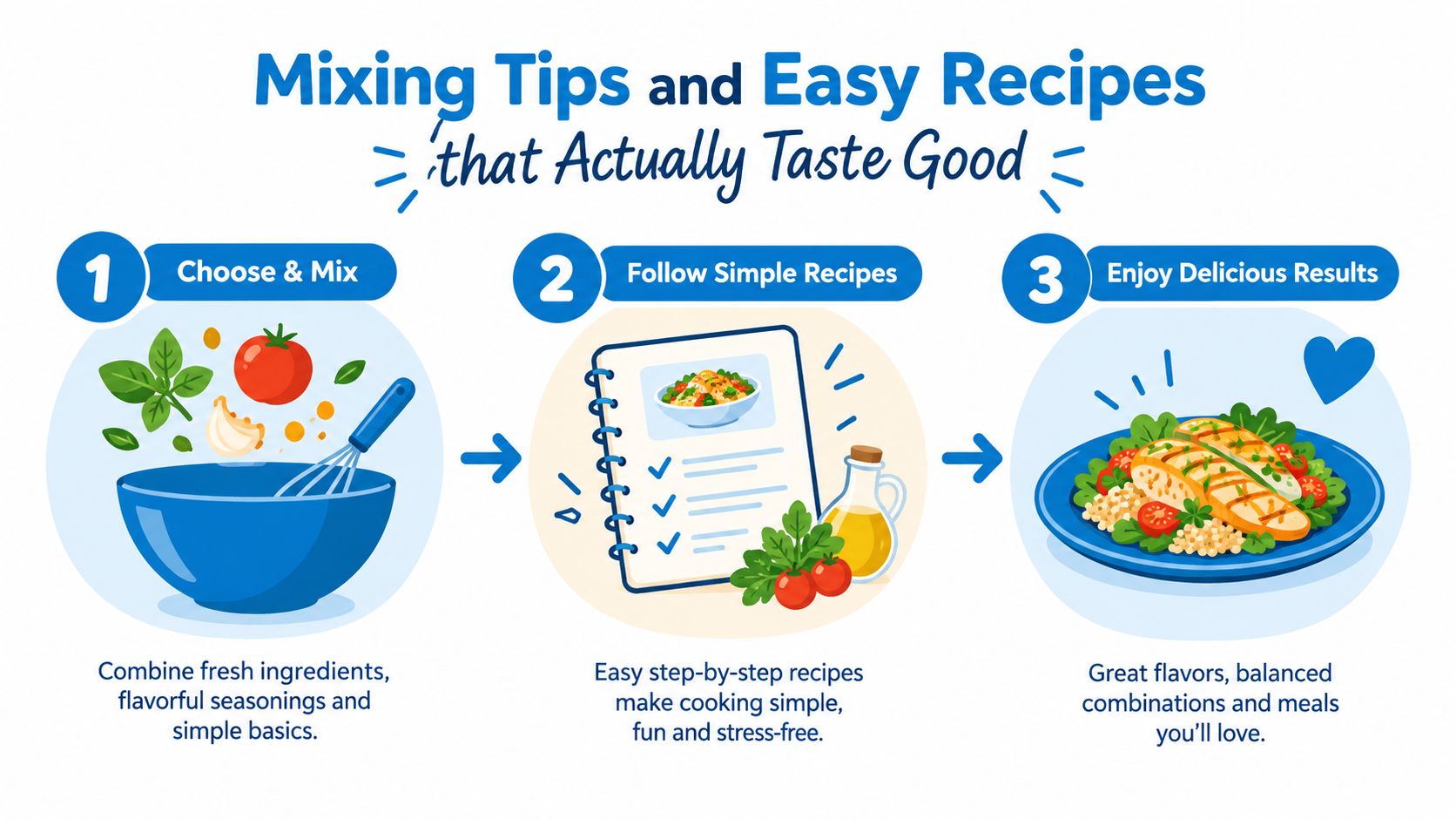
Start with cool or room-temperature liquid. Add the liquid first, then the powder, and shake before adding ice. If the mixture foams, let it rest briefly before drinking. A blender creates a smoother result, but high speed can also create more foam, so blend until combined rather than running it longer than necessary.
Three useful formats
Post-workout smoothie: Blend one serving designed to provide 25 grams of protein with a frozen banana, peanut butter, oat milk, and ice. Banana softens the texture, peanut butter masks earthy notes, and oat milk adds body. If the powder is already sweetened, skip extra syrup.
Overnight oats: Stir one scoop into oats, soy or oat milk, chia seeds, and berries. Refrigerate overnight. The oats and chia absorb excess liquid, so this format works particularly well for powders that feel gritty in water.
Protein pancakes or muffins: Replace part of the flour with protein powder, starting with 25–50% of the flour, then add enough liquid to keep the batter soft. Too much powder can make baked goods dry and dense. Heat can alter protein structure, but it doesn't automatically make the amino acids unusable.
A plain or lightly flavored powder gives you more flexibility in recipes. A strongly sweetened chocolate powder may work in oats but overpower savory foods or baked goods. For another plant-based mix option, Your Super Skinny Protein is described as an organic superfood powder that supplies plant protein for smoothies, shakes, or plant-based milk.
Frequently asked questions and a smart buyer checklist
Can vegan protein build muscle as well as whey?
Yes. A well-formulated vegan powder can support muscle gain when total daily protein and essential amino acids are adequate. Pea and soy isolates can digest at levels close to animal-protein comparisons described in human research, while complementary blends can help address amino-acid gaps. The label's formulation and serving details matter more than the word vegan alone.
Does it cause bloating?
Bloating can occur, but the powder is not always the only variable. Large servings, added gums, sugar alcohols, inulin-type fibers, or individual sensitivity may contribute. Try a smaller serving, a simpler ingredient list, or a product without added prebiotic fibers.
Is soy safe?
Soy is generally recognized as safe for healthy adults without a soy allergy when consumed as part of a normal diet. People with a soy allergy should avoid it. If medication use or a health condition affects your dietary choices, ask a clinician about your situation.
Can pregnant people use it?
Some can, but pregnancy calls for more careful supplement selection. Choose a powder with transparent ingredients and current contaminant testing, then check with your prenatal-care clinician before using it regularly.
What's the difference between isolate and concentrate?
An isolate undergoes more processing to remove non-protein components. A concentrate retains more of them, which can affect protein density, carbohydrates, fat, fiber, taste, and texture. Neither label guarantees better ingredient quality or better formulation.
A five-step buying checklist
- Verify testing: Look for named independent certification and current heavy-metal documentation. Plant-based ingredients can carry contamination concerns that a vegan label does not address.
- Check amino acids: Look for a disclosed DIAAS-related claim, leucine information, or a complementary blend.
- Scan the ingredients: Identify the protein source first, then assess sweeteners, gums, fibers, and fillers.
- Match certifications: Confirm that vegan, kosher, halal, non-GMO, or sports testing meets your actual need.
- Compare usable protein: Compare price per gram of protein, not price per scoop.
CalVitamin offers protein products alongside vitamins, minerals, probiotics, and other wellness supplements. Its product pages help shoppers compare formats and labeled attributes. Visit CalVitamin to review plant-based protein options and choose a product whose ingredients, serving size, and testing information fit your routine.






