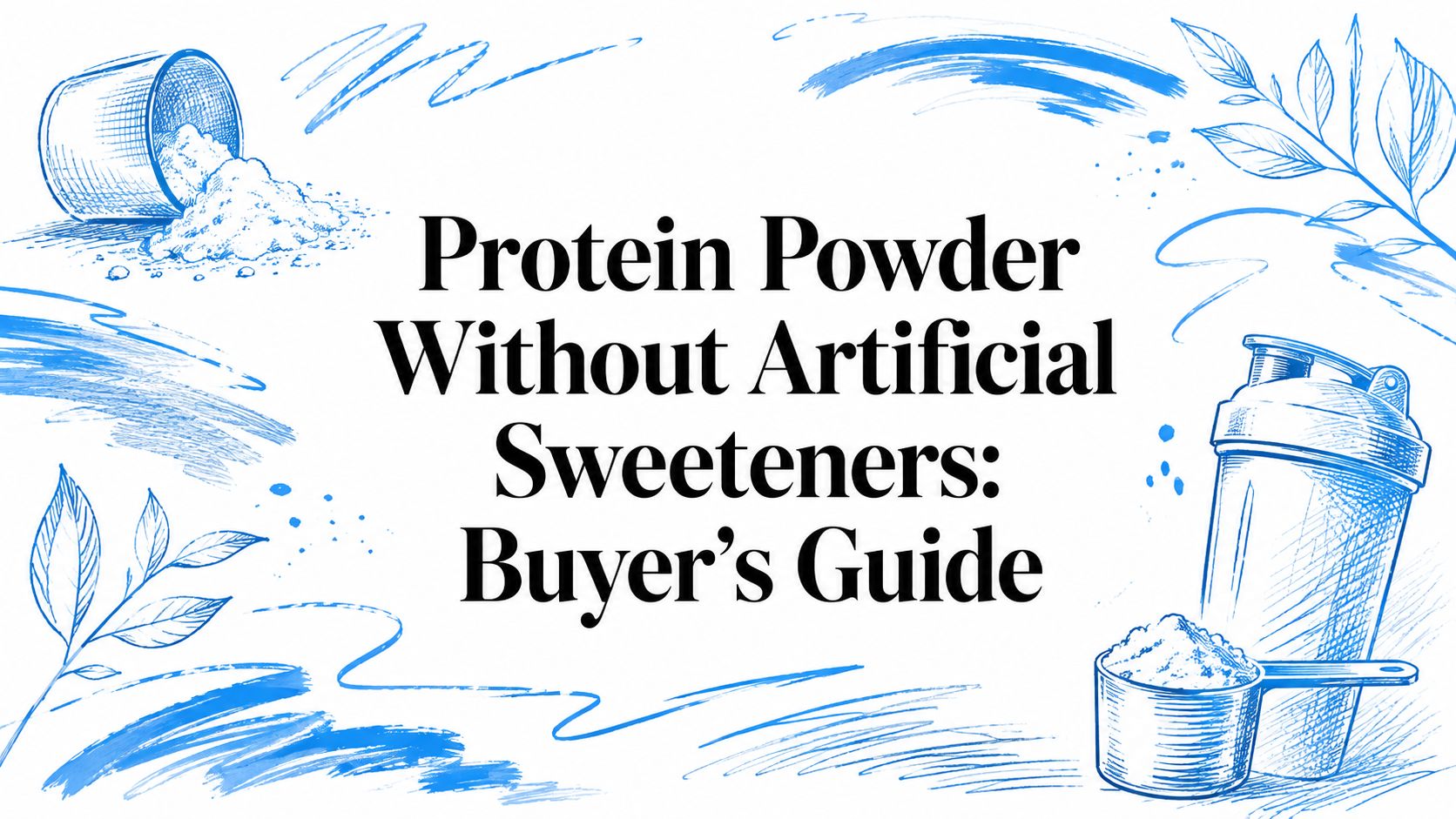
Most buying advice starts with “look for stevia or monk fruit.” That's incomplete. A protein powder without artificial sweeteners can still be hard to digest, overloaded with gums, too low in protein, or sweetened with an ingredient that doesn't suit your routine. The better question isn't what the tub excludes. It's what the complete formula uses instead, how much protein it delivers, and whether you'll enjoy taking it consistently.
Protein powders have evolved from niche sports products into a mass-market category. Commercial powders emerged in the 1950s and 1960s, whey became mainstream in the 1970s and 1980s, and the broader industry was estimated at about $20 billion by 2021, according to this history of protein powder. That scale gives shoppers more choice, but it also makes front-label claims less useful than a careful ingredient check.
Table of Contents
- The Clean Label Trap in Protein Supplements
- Artificial Sweeteners Commonly Found in Protein Powders
- Natural Sweetener Alternatives and Their Trade-Offs
- How to Read Labels and Spot Hidden Sweeteners
- Comparing Whey, Casein, and Plant Proteins Without Artificial Sweeteners
- Making Unflavored and Naturally Sweetened Proteins Taste Great
- Practical Buying Guidance and Final Recommendations
The Clean Label Trap in Protein Supplements
“No artificial sweeteners” sounds like a complete health decision. It isn't. The phrase only tells you that certain sweetening agents are absent. It doesn't tell you whether the powder is unflavored, sweetened with stevia, built around monk fruit, padded with sugar alcohols, or balanced with added sugar.
That distinction matters because manufacturers use sweeteners for a practical reason. Whey, casein, and plant proteins can taste bitter, earthy, chalky, or flat. A formula may remove sucralose and still rely on several other ingredients to create a dessert-like profile. A cleaner front label can therefore hide a complicated back label.
What the front label leaves out
A buyer should separate three ideas:
- No artificial sweeteners: The formula excludes ingredients such as sucralose, acesulfame potassium, aspartame, saccharin, and neotame.
- Unsweetened: The product contains no intentional sweetener, though it may still include flavoring or texture agents.
- Naturally sweetened: The product uses alternatives such as stevia, monk fruit, sugar alcohols, or sugar.
Those descriptions aren't interchangeable. A naturally sweetened protein may suit someone avoiding synthetic sweeteners, while an unsweetened whey isolate may suit someone who wants complete control over flavor and sweetness.
Practical rule: Treat “no artificial sweeteners” as a filter, not a quality verdict.
The protein source deserves equal attention. A minimally sweetened powder with a weak protein profile may be a worse fit for your goal than a more conventional product with a stronger base. Check whether the protein is an isolate, concentrate, casein, or plant blend, then assess the serving's protein content and the rest of the ingredient list.
For a broader look at protein options, CalVitamin's protein selection can be used as a shopping reference, but the same rule applies to every retailer: ignore the marketing badge until you've read the full formula.
The real clean-label test
A transparent product tells you what creates sweetness, flavor, texture, and mixability. It doesn't force you to infer those details from phrases such as “clean,” “natural,” or “zero sugar.” The absence of one controversial ingredient is useful, but it's only the first checkpoint in a buying decision.
Artificial Sweeteners Commonly Found in Protein Powders
Conventional protein formulas commonly use high-intensity sweeteners because they deliver strong sweetness with little or no contribution to calories. The names most relevant to a label check are sucralose, acesulfame potassium, aspartame, saccharin, and neotame. If you're avoiding artificial sweeteners, scan for those names rather than relying on the product's flavor description.
A 2026 ingredient analysis of 579 protein products found that artificial sweeteners remained common in whey formulas. 51.9% of whey proteins used artificial sweeteners, while sucralose appeared in 51.1% and acesulfame potassium in 27.5% of products, according to the analysis of sweetener use across protein products. Those figures explain why shoppers often need to inspect several products before finding a suitable whey.
Why formulators use them
Raw protein isn't naturally dessert-like. Sweeteners help mask bitterness and make flavors such as chocolate or vanilla more recognizable. Blending sweeteners can also soften an aggressive aftertaste, allowing manufacturers to create a familiar profile without adding much sugar.
That convenience doesn't make every consumer comfortable with the result. People may dislike the lingering taste, prefer shorter ingredient lists, or want to limit their exposure to high-intensity sweeteners while research on long-term effects continues. The concern isn't identical for every person, and tolerance varies, but the preference for simpler formulas is understandable for anyone drinking protein daily.
Names worth recognizing
Sucralose is one of the most familiar names in flavored protein. It's often paired with another high-intensity sweetener to shape the final taste.
Acesulfame potassium, also written as acesulfame K or Ace-K, can appear alongside sucralose. Look for the full chemical name and abbreviations.
Aspartame is another artificial sweetener to avoid if it conflicts with your personal requirements. Saccharin and neotame appear less consistently in protein powders, but they still belong on a careful screening list.
The ingredient guide to protein powder without artificial sweeteners also highlights why the ingredient panel matters more than the nutrition panel. A label can show very little sugar while using a sweetener you'd rather exclude.
Natural Sweetener Alternatives and Their Trade-Offs
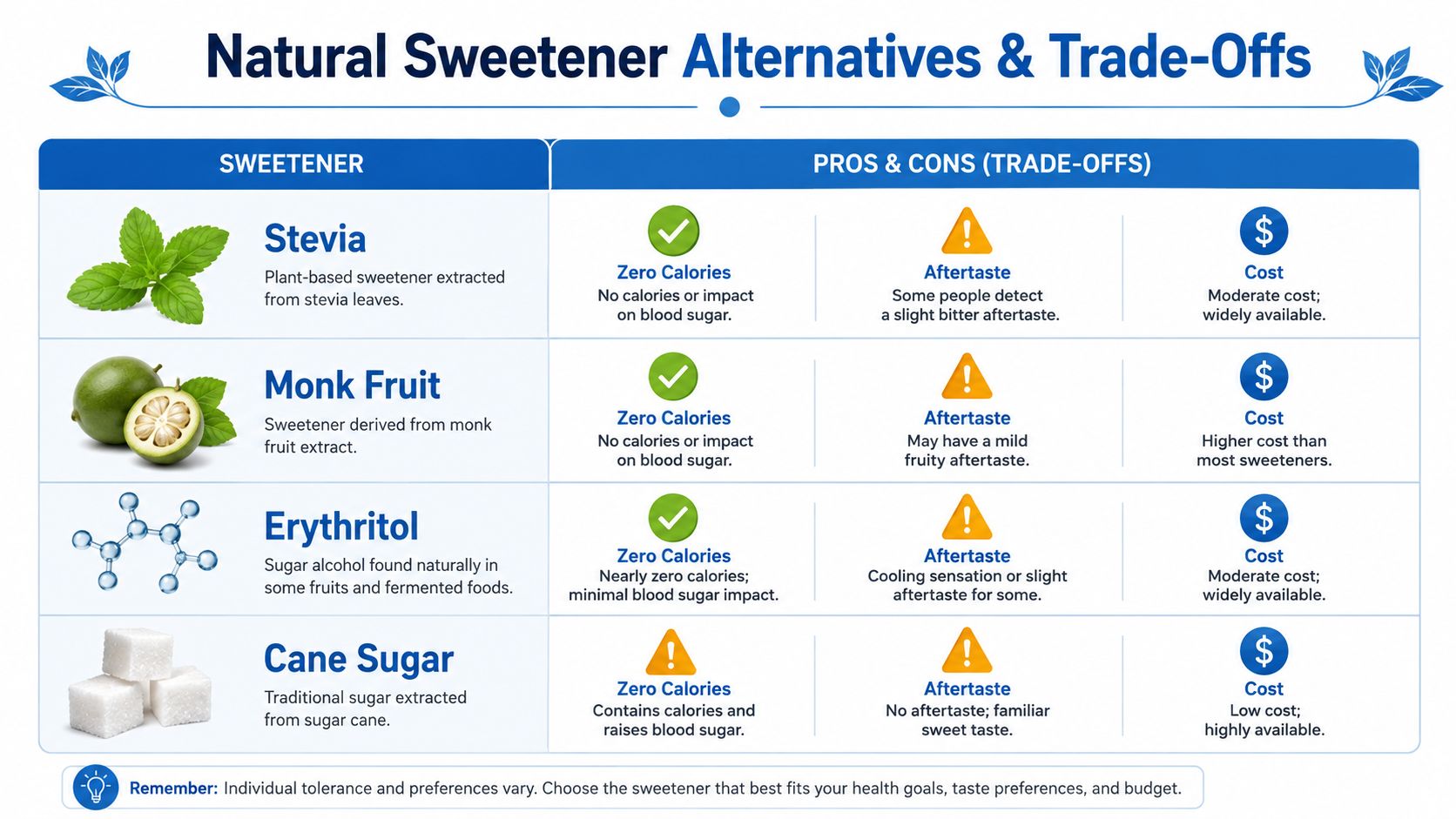
Natural sweeteners solve one problem, not every problem. They can remove sucralose or acesulfame potassium, but each replacement changes the powder's taste, texture, digestion profile, or carbohydrate content.
Stevia and monk fruit
Stevia works well when a brand uses a restrained amount and a suitable extract. Some formulas leave a herbal or licorice-like finish, especially when the protein's bitterness is already prominent. That aftertaste may be minor in a smoothie and distracting in water.
Monk fruit generally produces a softer sweetness, but it can still taste different from sugar. It's often blended with another ingredient to round out the flavor, so check whether the product uses monk fruit alone or as part of a larger sweetener system.
Neither option automatically makes a product nutritionally superior. You still need to check the protein source, flavoring, gums, and serving size.
Sugar alcohols
Erythritol, xylitol, sorbitol, and related ingredients can add sweetness and body. They're not the same category as high-intensity artificial sweeteners, but they can create digestive problems for sensitive users. Gas, bloating, cramping, or loose stools are possible when a person consumes more than their tolerance allows.
Erythritol may also create a cooling sensation that some people enjoy and others find artificial. Xylitol can make a formula taste closer to sugar, but it still may not suit a sensitive stomach. If you already react to sugar-free products, a protein powder containing several polyols is a poor experiment.
Digestive check: If your stomach reacts, test the sweetener system separately from the protein source. Changing both at once makes the trigger difficult to identify.
Cane sugar and other sugars
Cane sugar, coconut sugar, honey, or maple syrup can produce the most familiar taste. The trade-off is straightforward. These ingredients add sweetness through actual carbohydrate, so they may not fit a low-sugar, ketogenic, or tightly controlled calorie plan.
That doesn't make them automatically bad. An athlete who blends protein with fruit and oats may prefer a modestly sweetened formula, while someone using protein between meals may want an unflavored product with no added sugar. The right choice depends on how the powder fits into the rest of the day.
A powder can also use “natural flavors” without telling you much about the flavor system. That phrase doesn't mean the product is unsweetened. Read the actual ingredient list and decide whether you want no sweetener, a plant-derived high-intensity sweetener, a polyol, or sugar.
How to Read Labels and Spot Hidden Sweeteners
A “zero sugar” claim can still describe a sweetened protein powder. The front panel reports sugar under labeling rules, not the full sweetener system. Read the ingredient list before judging the formula.
A four-step label check
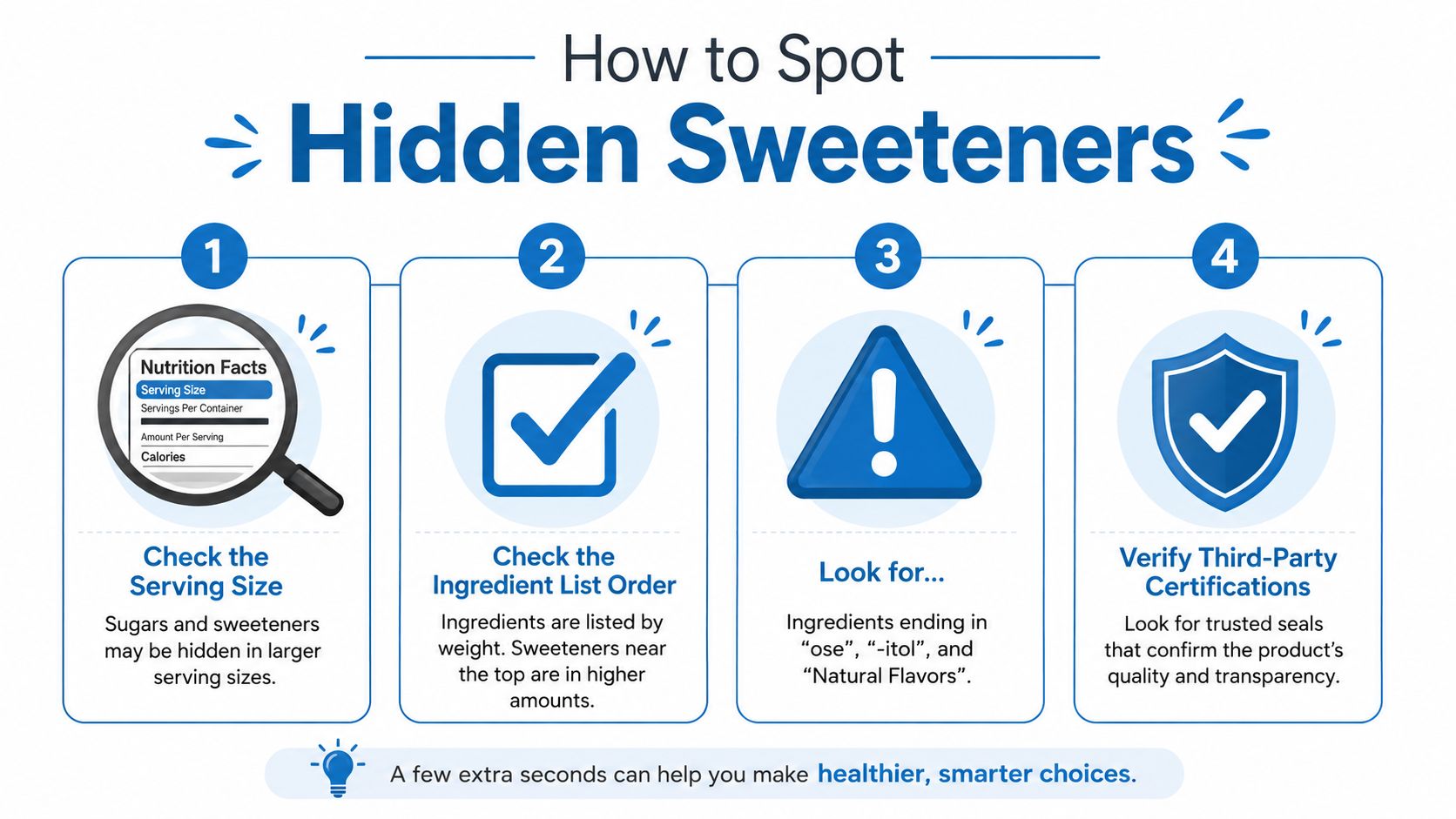
Identify the protein base. Look for whey isolate, whey concentrate, casein, collagen, pea protein, hemp protein, or a named plant blend. The first ingredient should match how you plan to use the powder.
Check for excluded sweeteners. Scan for sucralose, acesulfame potassium, aspartame, saccharin, and neotame. If you want to avoid concentrated sweeteners altogether, include stevia and monk fruit in that check. Their plant origin does not change their role in the formula.
Spot polyols and added sugar. Ingredients ending in “-itol,” including xylitol and erythritol, are sugar alcohols. They can lower sugar content while introducing digestive trade-offs for people who are sensitive to polyols. Cane sugar, coconut sugar, syrups, and similar ingredients provide sweetness through added carbohydrate, which may matter for a low-sugar, ketogenic, or tightly controlled calorie plan.
Read the flavor and texture system. Natural flavors, cocoa, vanilla, lecithin, xanthan gum, guar gum, and cellulose-based thickeners affect taste, mixing, and mouthfeel. They are not automatically problems, but they help explain why one powder feels thick or heavy while another mixes cleanly. “Natural flavors” also does not mean unsweetened.
Use serving size as a reality check
A small serving can make the sweetener quantity appear minor. Compare products using the scoop you will take, then ask how much protein that serving provides and which sweetening ingredients come with it.
Ingredient order adds context because ingredients generally appear by weight. A sweetener listed near the beginning deserves more attention than one near the end. Placement does not prove that a product is good or bad, but it indicates how central that ingredient may be to the recipe.
For shoppers evaluating xylitol separately, this xylitol powder listing shows why a standalone sweetener should be assessed independently from a protein blend. Separate dosing gives you more control over sweetness and tolerance, while also making you responsible for managing the amount.
Comparing Whey, Casein, and Plant Proteins Without Artificial Sweeteners
The unsweetened availability gap directly affects what shoppers can buy. The 2026 analysis cited earlier found that nearly 20% of plant protein products contained zero sweeteners, compared with 9.5% of whey proteins, so plant-based shoppers have more opportunities to choose a plain formula in the same ingredient analysis.
That advantage comes with a formulation trade-off. Dairy proteins often have milky or sulfur-like notes, while plant proteins may taste earthy, grassy, or legume-like. Removing artificial sweeteners does not remove those flavor challenges. It shifts more responsibility to the base ingredient, flavor system, gums, and your preparation method.
What changes by protein type
Whey isolate is usually the most practical performance-first option when you want high protein density and a relatively light texture. Formulation guidance places many clean-label whey isolates around 25 to 28 grams of protein per serving, while plant blends often provide around 20 to 25 grams, as described in this comparison of protein powders without artificial sweeteners. Check each label rather than assuming every product reaches those ranges.
Whey concentrate can provide a fuller mouthfeel, but it retains more of the milk's non-protein components than isolate. That difference may matter if dairy causes digestive discomfort or you prefer a leaner formula.
Casein generally mixes thicker and digests more slowly in practical use. It suits a bedtime shake or pudding-style recipe, although unflavored casein can feel heavy when mixed only with water.
Plant blends combine sources such as pea, hemp, and rice to improve the overall amino-acid balance and texture. The specific blend matters more than the word “plant” alone. Some formulas mix smoothly, while others remain chalky or gritty even after thorough shaking.
| Protein Type | Typical Protein per Serving | Unsweetened Availability | Best Use Case |
|---|---|---|---|
| Whey isolate | About 25 to 28 g | Less common than plant formulas | High-density shakes and post-training use |
| Whey concentrate | Varies by product | Available, but less consistent | Everyday shakes with a fuller texture |
| Casein | Varies by product | Available in selected formulas | Thick shakes, puddings, and evening use |
| Plant blend | Around 20 to 25 g | More common than whey | Vegan routines and flexible smoothie recipes |
Sweetener choice does not determine amino-acid quality or mixability on its own. Source, processing method, lecithin, gums, and particle size usually have greater influence. Choose the protein format that fits your digestion and use case, then select a sweetener system whose aftertaste and tolerance you can accept.
Making Unflavored and Naturally Sweetened Proteins Taste Great
Unflavored protein isn't a failed flavored protein. It's a base ingredient. That distinction changes how you use it. Instead of expecting water to turn it into a milkshake, build flavor around it with ingredients you already enjoy.
Start with the mixing liquid
Water exposes every weakness in a powder. Unsweetened almond milk, dairy milk, soy milk, or another preferred alternative can provide more body and soften harsh notes. Add the liquid first, then the powder, and shake immediately to reduce clumping.
For plant protein, a blender usually performs better than a shaker. Frozen berries, banana, cocoa, cinnamon, or vanilla extract can cover earthy notes while adding texture. If you're using a naturally sweetened powder, avoid piling on several sweeteners before you've tasted it. You may create an overly sweet drink with competing aftertastes.
Kitchen principle: Use whole-food flavor first, then adjust sweetness only if the finished shake needs it.
Three reliable uses
A berry smoothie works especially well with pea or hemp blends. Combine the powder with frozen berries, a creamy liquid, and cinnamon. The fruit supplies acidity and aroma, while the cold temperature reduces the perception of bitterness.
Protein oats are better with unflavored whey or collagen. Stir the powder into cooked oats after removing them from direct heat, then add cocoa, nut butter, vanilla, or chopped fruit. This approach avoids the need for a sweetened powder and lets you control the final taste.
Baking gives casein and whey concentrate a useful role. Mix the powder into muffins, pancakes, or baked oats, but keep the recipe moist because protein can make the finished texture dry or rubbery.
Unflavored collagen peptides can work in coffee, oatmeal, broth, or smoothies when you want protein with minimal flavor interference. Collagen isn't a direct substitute for a complete muscle-focused protein, so match the product to the job you need it to perform.
Taste adjustment also takes patience. If you're moving away from intensely sweet formulas, a lightly sweetened or unflavored powder may seem bland at first. Give yourself room to customize rather than judging the product after one rushed shake.
Practical Buying Guidance and Final Recommendations
The right purchase begins with a definition. “Without artificial sweeteners” might mean avoiding sucralose and similar compounds while accepting stevia or monk fruit. It might also mean avoiding high-intensity sweeteners altogether. In that case, choose an unflavored powder or one sweetened with a small amount of sugar. Sugar alcohols deserve their own check because they can preserve sweetness while causing digestive discomfort for some users.
Match the protein to the job. Whey isolate or concentrate suits a high-density dairy formula, while a plant product should be judged by its named blend and texture. Casein usually works better than thin whey in a thicker evening recipe. Check the label's serving weight against the tub's net weight and serving count. If those figures do not reconcile, treat the protein claim cautiously. Independent certification also matters for athletes subject to supplement testing, but verify exactly what the certification covers.
A buyer's final checklist
- Protein first: Confirm the source, ingredient order, and stated protein value.
- Sweetener second: Identify stevia, monk fruit, sugar alcohols, sugar, or no sweetener.
- Digestive tolerance: Be cautious with polyols if sugar-free products already cause discomfort.
- Texture expectations: Choose a powder suited to water, smoothies, oats, or baking.
- Quality controls: Look for relevant third-party certification and check its scope.
- Full transparency: Prefer labels that name flavors, thickeners, and processing aids instead of relying on broad marketing language.
Interest in simpler formulas continues to shape the protein powder market, including demand for products without artificial sweeteners or additives, as described in this protein powder market analysis. “Natural” still requires scrutiny. A formula must taste acceptable, mix consistently, and provide the protein profile your routine needs. A natural high-intensity sweetener may reduce artificial ingredients while leaving sweetness and aftertaste concerns unchanged.
Start with a small container when possible, especially when replacing an intensely sweet powder. Test it in the recipe you use, such as a smoothie or overnight oats, then assess taste, mixability, and digestion across your normal routine. The best choice is the powder whose ingredient standards fit yours and whose flavor makes regular use practical.
CalVitamin lists protein products alongside vitamins, minerals, probiotics, and ingredient-focused wellness options. Visit CalVitamin to compare unflavored and naturally formulated choices, review label details, and select a protein powder suited to your sweetener preferences and daily routine.