You're standing in the supplement aisle with a half-made decision in your hand. Powder looks practical, capsules look cleaner, and both promise the same broad idea, more fiber, better habits, maybe better numbers on your next lab report. The problem is that the bottle in front of you doesn't answer the key question: how much psyllium are you getting, and does that amount match the goal you have in mind?
That's where psyllium fiber capsules can be useful. They're easy to carry, easy to swallow for people who hate mixing powder, and simple to slot into a routine. But they also create a common mistake, counting capsules instead of reading grams. With psyllium, the meaningful unit is the amount of fiber per serving, not the number of shells in the bottle.
Table of Contents
- Why Shoppers Reach for Psyllium Fiber Capsules
- What Psyllium Actually Is and Why Capsules Work
- The Health Benefits Linked to Psyllium Fiber
- How to Read the Label and Dose Capsules Safely
- Side Effects, Interactions, and Who Should Be Cautious
- Psyllium Capsules Compared With Powders and Other Fibers
- A Practical Buying Guide for Psyllium Fiber Capsules
- Putting It All Together Into a Simple Daily Routine
Why Shoppers Reach for Psyllium Fiber Capsules
The usual decision starts in a rushed morning. Someone wants to improve bowel regularity, or they've been told to pay more attention to cholesterol, and they're staring at a shelf full of fiber products they don't really want to mix, stir, or taste. Capsules win that moment because they feel tidy, portable, and familiar, especially for people who already take other supplements with breakfast.
That convenience matters. A capsule bottle can travel in a work bag, sit beside a coffee mug, or stay in a bathroom drawer without needing a shaker cup or a spoon. For shoppers who hate the texture of drink mixes, psyllium fiber capsules feel like the easiest way to start.
The catch is that ease can hide the dose. A product can look generous because the bottle contains many capsules, while each capsule may hold only a small amount of psyllium. That's why the label matters more than the cap count. The supplement aisle rewards quick decisions, but psyllium rewards careful reading.
Practical rule: If the front of the bottle talks about capsule count and not grams of psyllium, keep reading the label before you buy.
This is also where capsules differ from sugary gummies or flavored blends. Many shoppers want a neutral option that doesn't taste like candy and doesn't require mixing. Capsules fill that niche well, as long as you treat them as a delivery format, not as proof that you're getting a clinically meaningful amount of fiber.
What Psyllium Actually Is and Why Capsules Work
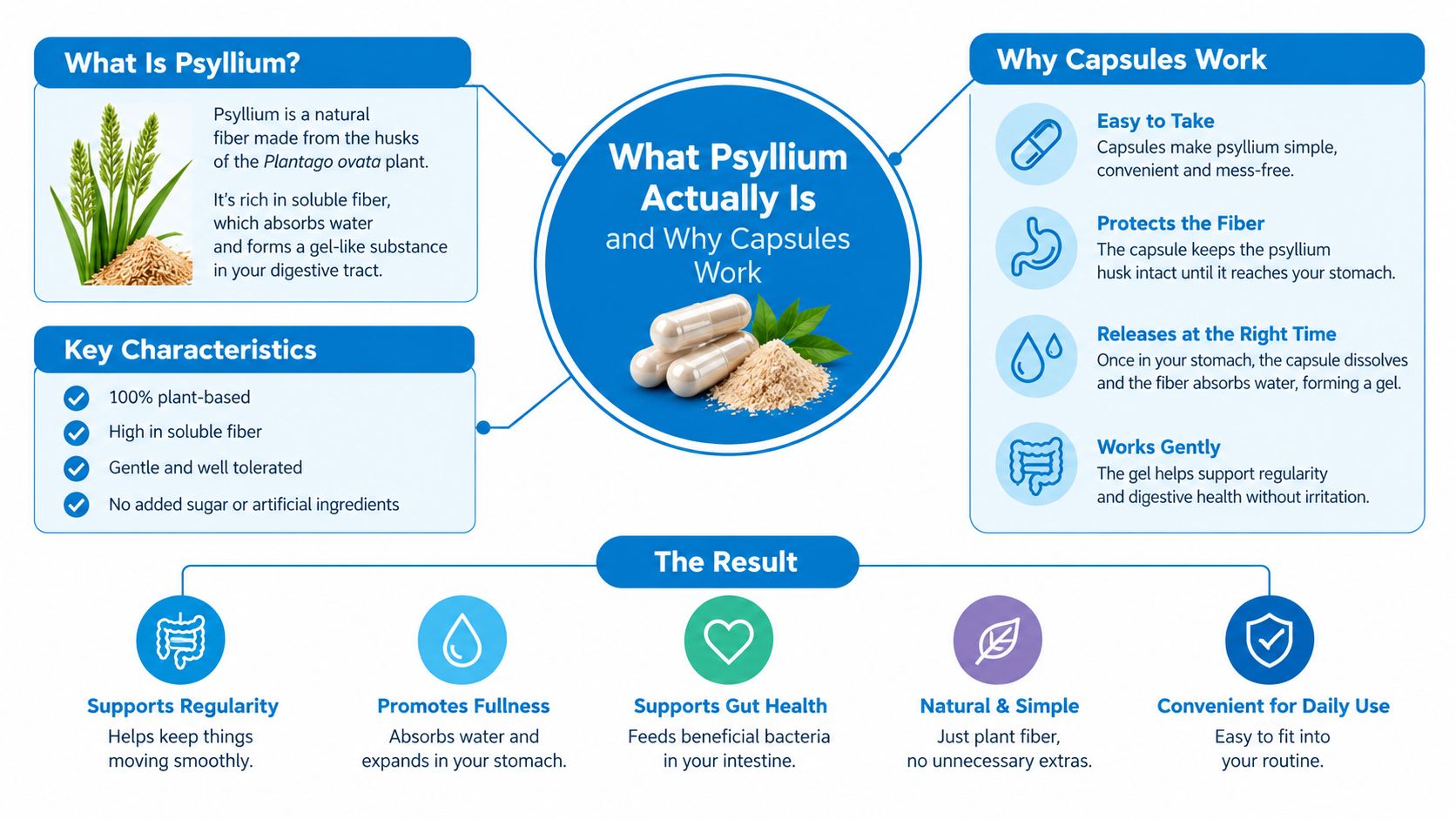
Psyllium comes from the husk of the Plantago ovata seed, and the husk is the part that matters. Inside the gut, it absorbs water and becomes a soft gel. A good everyday way to think about it is a sponge, except this sponge doesn't just soak up liquid, it changes the physical behavior of the contents moving through the digestive tract.
Same active fiber, different format
Whether psyllium appears as powder, husk, or compressed into capsules, the active ingredient is the same gel-forming soluble fiber. That's why the form doesn't change the underlying biology very much. What changes is the delivery.
In powder form, the gel starts forming in the glass. In capsule form, the shell dissolves first, then the psyllium hydrates inside the digestive tract. The function is still the same, but the timing shifts a little because the capsule shell has to break down before the fiber can expand.
Capsules are a convenience format, not a different kind of fiber.
That matters for dose planning. A capsule only holds a fraction of a gram, so a bottle can look substantial while still providing a modest total amount of psyllium per serving. For shoppers comparing products, the question isn't whether the ingredient is psyllium, it's whether the label gives you enough grams to fit the use you're after.
The Health Benefits Linked to Psyllium Fiber
Psyllium has a real evidence base, but its benefits are easiest to understand when you separate the goals. The same gel-forming fiber can support digestion, help lower LDL cholesterol, and soften the post-meal impact of carbohydrates, yet those uses don't all depend on the same routine or the same serving pattern. Clinical research on lipids, for example, has shown reductions in total cholesterol and LDL cholesterol with psyllium compared with placebo, including a 2008 meta-analysis of 21 randomized controlled trials with 1,030 participants receiving psyllium and 687 receiving placebo, where LDL cholesterol fell by 0.278 mmol/L and total cholesterol by 0.375 mmol/L in the pooled analysis, with results varying by dose, duration, baseline cholesterol, and diet (European Journal of Clinical Nutrition, 2008).
Digestion and regularity
For regularity, the key idea is bulk plus water. Psyllium helps stools hold the right amount of moisture and move more predictably. That's why people often notice softer stools or easier bowel movements when they take it consistently with enough fluid.
Cholesterol management
For cholesterol, the mechanism is different. Hydrated psyllium increases intestinal viscosity, binds bile acids, and pushes the liver to use circulating cholesterol to make new bile acids. A later dose-response review found that psyllium lowered LDL cholesterol by an average of 8.55 mg/dL and total cholesterol by 9.05 mg/dL across 41 randomized controlled-trial articles involving 2,049 people published from 1988 through 2022 (systematic review and dose-response meta-analysis).
Blood glucose support
Psyllium can also slow carbohydrate absorption when it's taken with food. That doesn't make it a substitute for diabetes care, but it explains why some people use it around meals instead of at random times of day. The effect is tied to the gel, so it makes more sense when psyllium is hydrated and present where digestion is happening.
Practical rule: Match the dose to the goal. Digestion, cholesterol, and meal-time glucose support all rely on grams of psyllium, not on a label that says “capsules.”
| Psyllium Benefits by Daily Dose Range | Typical Daily Dose | Evidence Strength |
|---|---|---|
| Regularity support | About 5 g to 10 g total daily | Established, dose dependent |
| LDL cholesterol support | About 7 g to 15 g total daily | Strong clinical evidence |
| Meal-time glucose support | Taken with meals, with enough grams to form a gel | Supportive, depends on timing and consistency |
How to Read the Label and Dose Capsules Safely
The most important number on the bottle is not the capsule count. It's the grams of psyllium per serving. That tells you whether the product is in the same ballpark as the amounts used in clinical studies, because the evidence is built on grams of psyllium consumed, not on how many capsules happen to be in the bottle.
Start low and let your gut adjust
A sensible approach is to begin with a small serving and give your digestive tract time to adapt. That matters because psyllium can be very effective and still feel uncomfortable if someone jumps too quickly to a full serving. Gas, bloating, or a sense of fullness usually means the fiber is doing what fiber does, but the dose may need to be built up more gradually.
The label should also tell you how much liquid to use. With capsules, that isn't optional. U.S. FDA labeling directs users to take each dose with at least 8 fluid ounces, about 240 mL, of water or another fluid, and warns that too little liquid can cause swelling, choking, or blockage in the esophagus (FDA labeling data).
Timing helps match the goal
If your goal is blood glucose support around meals, taking psyllium with or just before food makes sense because the fiber can gel where carbohydrate digestion is happening. For regularity, many people prefer evening use because it fits a predictable bathroom routine the next day. Prescription medicines deserve a buffer, since psyllium can interfere with absorption if it's taken too close together.
Practical rule: Treat capsules like a water-dependent gel, not like a standard pill. Swallow them with plenty of fluid, and never take them dry.
Side Effects, Interactions, and Who Should Be Cautious
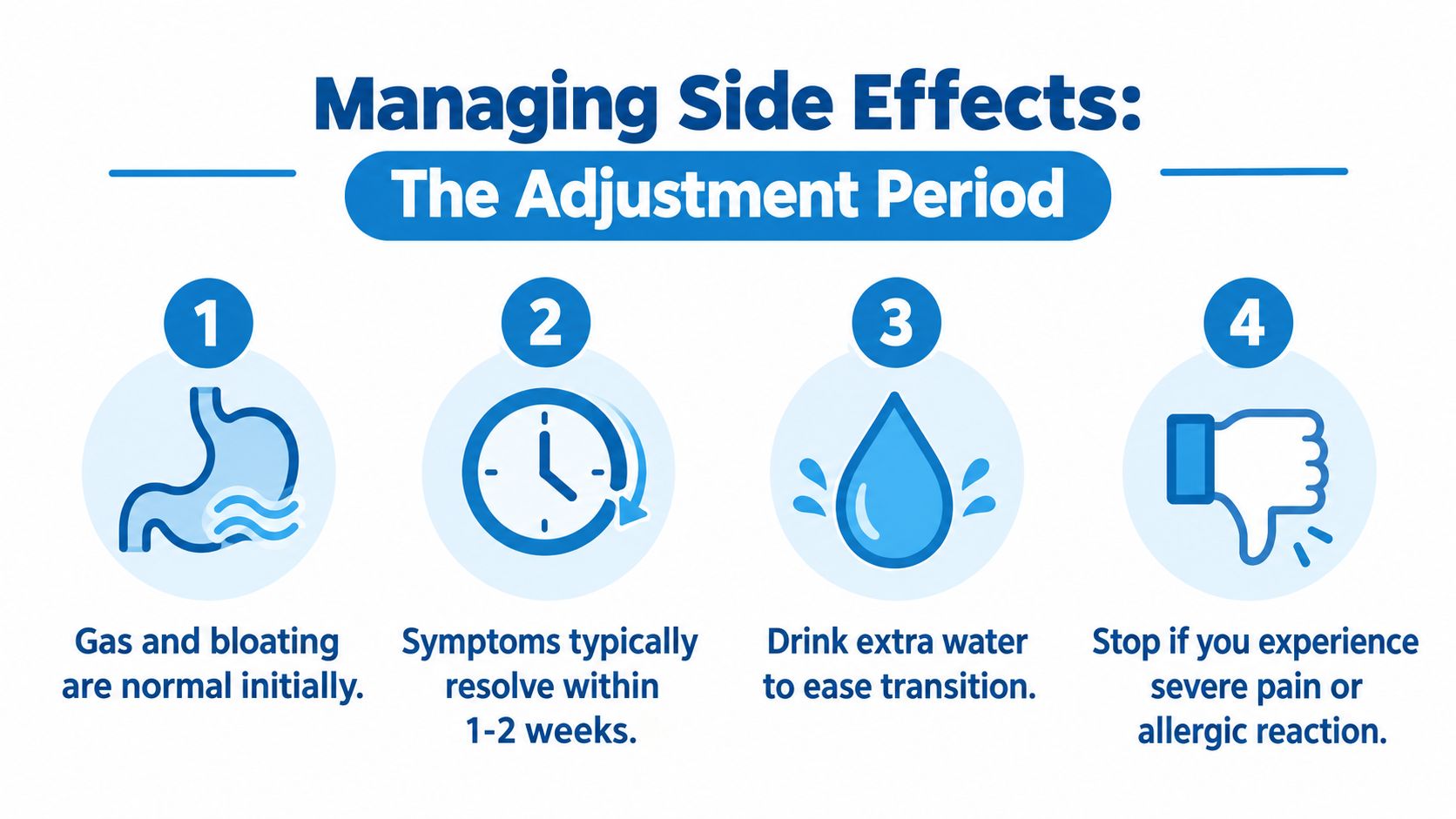
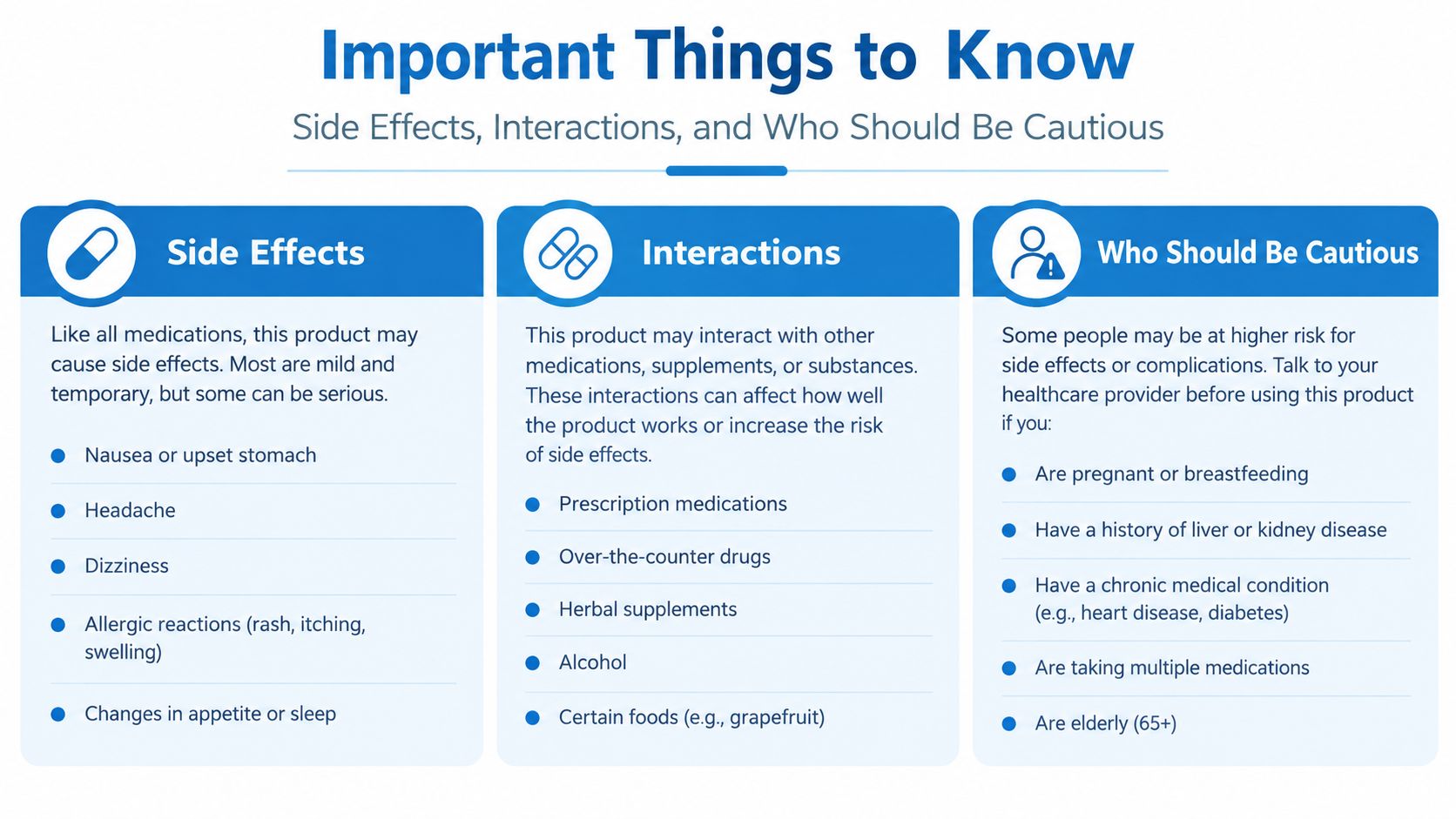
Mild side effects are often a sign that the dose increased faster than the digestive system could accommodate. Gas, bloating, or temporary fullness can occur as psyllium changes stool texture and gut activity. Constipation or hard stools may signal that the capsules were taken with too little fluid, so the fiber could not soften and move as intended.
Swallowing safety deserves particular attention. Psyllium absorbs water and expands, so capsules should never be taken dry or with only a small sip. Anyone with difficulty swallowing, esophageal narrowing, or another structural swallowing problem should ask a clinician before using them. A capsule count on the label does not change this requirement. The relevant question is how much psyllium fiber the serving supplies and whether that amount can be taken safely with enough liquid.
Medication spacing matters
Psyllium may slow or reduce absorption of some oral medicines when taken at the same time. Taking capsules and medicines at separate times is a practical precaution, especially for people using long-term treatment or drugs that require consistent absorption. Ask a pharmacist to set an appropriate schedule rather than assuming every medicine follows the same rule.
A clinician should review psyllium use if bowel obstruction or a narrowing of the intestine is possible. The same applies before colonoscopy preparation, when added bulk may conflict with the preparation instructions. Seek advice as well if new abdominal pain, persistent vomiting, or difficulty swallowing develops after taking the capsules.
For a broader reference on digestion support, see this diarrhea relief guide for better gut health. It can help place fiber choices within a wider gut-health discussion.
Psyllium Capsules Compared With Powders and Other Fibers
The easiest way to choose a format is to ask what problem you're solving. If the problem is travel, taste, or convenience, capsules are attractive. If the problem is getting enough grams without swallowing a handful of pills, powder usually wins. The active ingredient can be the same, but the user experience is very different.
Format matters as much as the ingredient
Psyllium capsules are the least fussy option, but they're also limited by how much fiber fits in each shell. Powder and husk give you far more flexibility, which makes it easier to reach a meaningful serving without building your routine around a large number of capsules. That's one reason people who begin with capsules sometimes switch to powder once they know the ingredient agrees with them.
Other soluble fibers take different paths. Methylcellulose is often chosen by people who want less gas, while inulin and partially hydrolyzed guar gum fit different digestive preferences. The trade-off is that psyllium has the clearest evidence base for LDL support, while some alternatives are more about tolerance and convenience than cholesterol goals.
| Fiber Format Comparison | Typical Psyllium Per Serving | Dose Flexibility | Taste | Portability | Best For |
|---|---|---|---|---|---|
| Psyllium capsules | Low to moderate, depends on capsule size | Limited | Neutral | Excellent | Travel, no-mix routines |
| Psyllium powder | Higher and easier to scale | High | Neutral to gritty | Good at home, less ideal on the go | Flexible dosing, cholesterol goals |
| Psyllium husk | Variable, depends on measuring | High | Neutral to earthy | Moderate | Custom routines |
| Methylcellulose | Not psyllium | Moderate | Neutral | Good | Lower-gas alternative |
| Inulin | Not psyllium | Moderate | Mildly sweet | Good | Prebiotic-focused routines |
| Partially hydrolyzed guar gum | Not psyllium | Moderate | Usually mild | Good | Gentle soluble fiber support |
If you want a broader look at a powder-style option, this psyllium husk organic 16 oz review is useful context for how the same ingredient behaves in a different format.
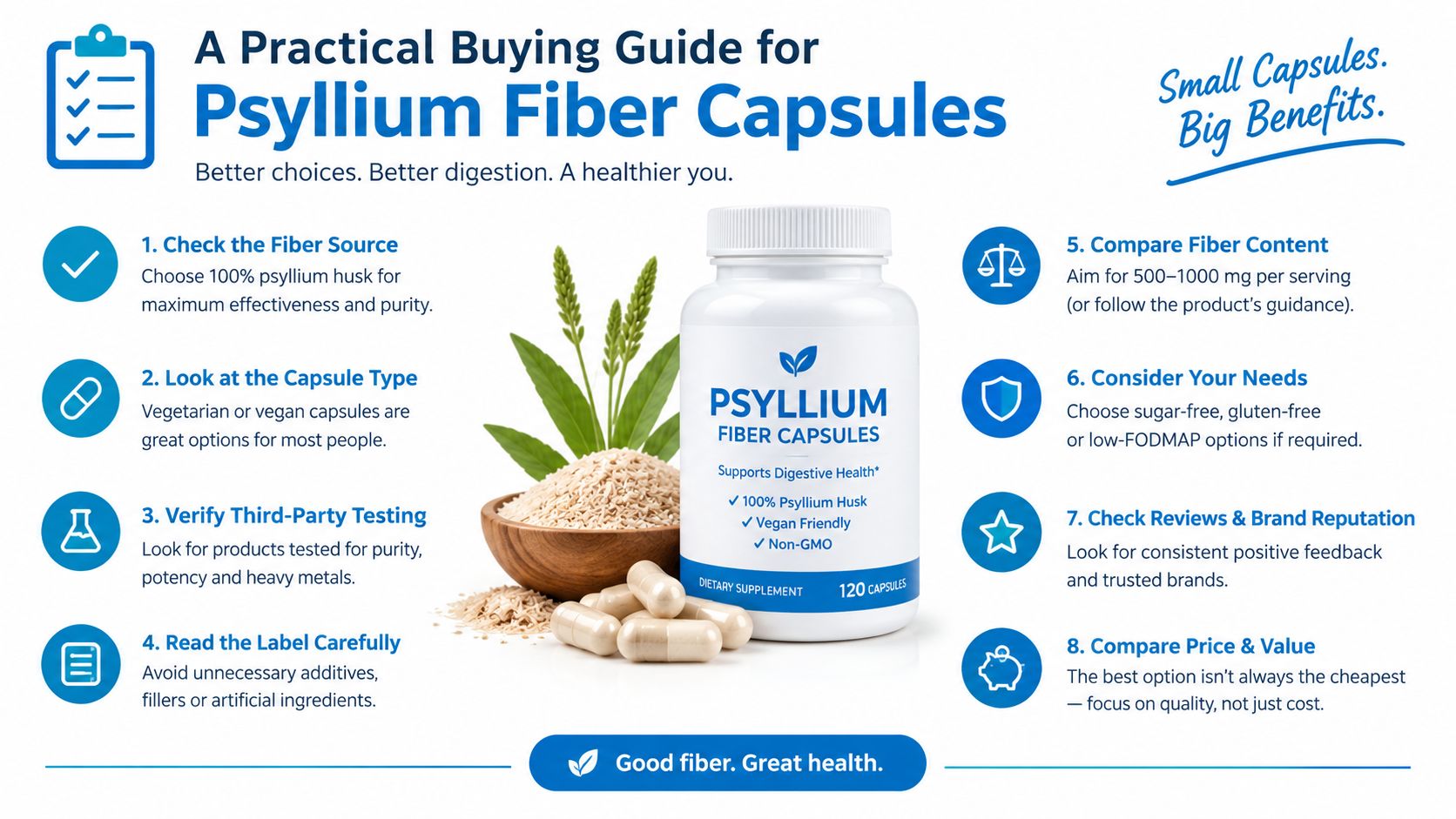
A Practical Buying Guide for Psyllium Fiber Capsules
The first thing to check is the Supplement Facts panel. You want the actual grams of psyllium husk per serving, not just a big capsule count on the front of the bottle. If the serving size is vague, or if the label blends psyllium with several other fibers, it becomes harder to know what you're really buying.
What to look for on the bottle
A straightforward product usually tells you three things clearly: the psyllium amount per serving, the type of capsule shell, and whether the bottle is free from unnecessary extras. That matters because people with dietary preferences or swallowing concerns may want gelatin-free shells or a smaller capsule size. A clean ingredient list also makes it easier to compare products fairly.
Third-party testing seals are worth looking for too. A recognized seal from USP, NSF, or ConsumerLab gives shoppers more confidence that the label matches the contents and that quality control has been checked independently.
Practical rule: Compare bottles by grams per serving, not by number of capsules or bottle size.
Price comparisons should also be done per gram, not per container. A bigger bottle can still be a weaker value if it delivers fewer grams of psyllium for each serving. That's especially relevant for shoppers deciding between a capsule product and a bulk fiber format.
For readers also comparing product styles, the Nature's Craft Fiber Gummies 60 Orange Berry listing shows why gummy formats can feel easy to take even when they don't fit the same use case as psyllium capsules.
Putting It All Together Into a Simple Daily Routine
The simplest routine starts small. Take one capsule or roughly 3 grams of psyllium with a full 8-ounce glass of water at breakfast, then increase by one capsule every few days if your stomach is tolerating it well. That gradual approach gives your gut time to adapt, which makes adherence much easier than jumping straight to a large serving.
Keep your medications separate by a couple of hours, and take an extra glass of water later in the day so the fiber stays hydrated. If regularity is your main goal, you'll usually notice stool changes first. If cholesterol or blood glucose is the reason you started, the more meaningful changes typically take steady use over several weeks.
The point of psyllium fiber capsules isn't to take the most capsules possible. It's to match the right grams of psyllium to the right goal, then use water, timing, and consistency to make that dose work.
If you're comparing capsule and powder options, CalVitamin gives shoppers a wide range of supplement formats and product styles to browse in one place. Visit CalVitamin to review the options that fit your routine, then use the label-reading tips above to choose the psyllium product that matches your goal, your schedule, and your swallowing comfort.