
Both types can work when you follow the label, but refrigeration is the strongest predictor of long-term viability. Shelf-stable probiotics have narrowed the gap through freeze-drying, moisture-barrier packaging, and strain selection built for room-temperature storage.
| Factor | Refrigerated Probiotics | Shelf Stable Probiotics |
|---|---|---|
| Core stability strategy | Continuous cold storage | Stabilization for ambient conditions |
| Viability over time | Best preserved with cold | Designed to hold potency without refrigeration |
| Sensitivity to heat and humidity | High | Lower, but still affected by poor storage |
| Convenience | Less flexible | Easier for travel and daily routines |
| Best fit | Sensitive strains and strict potency priorities | Portable use and simpler storage |
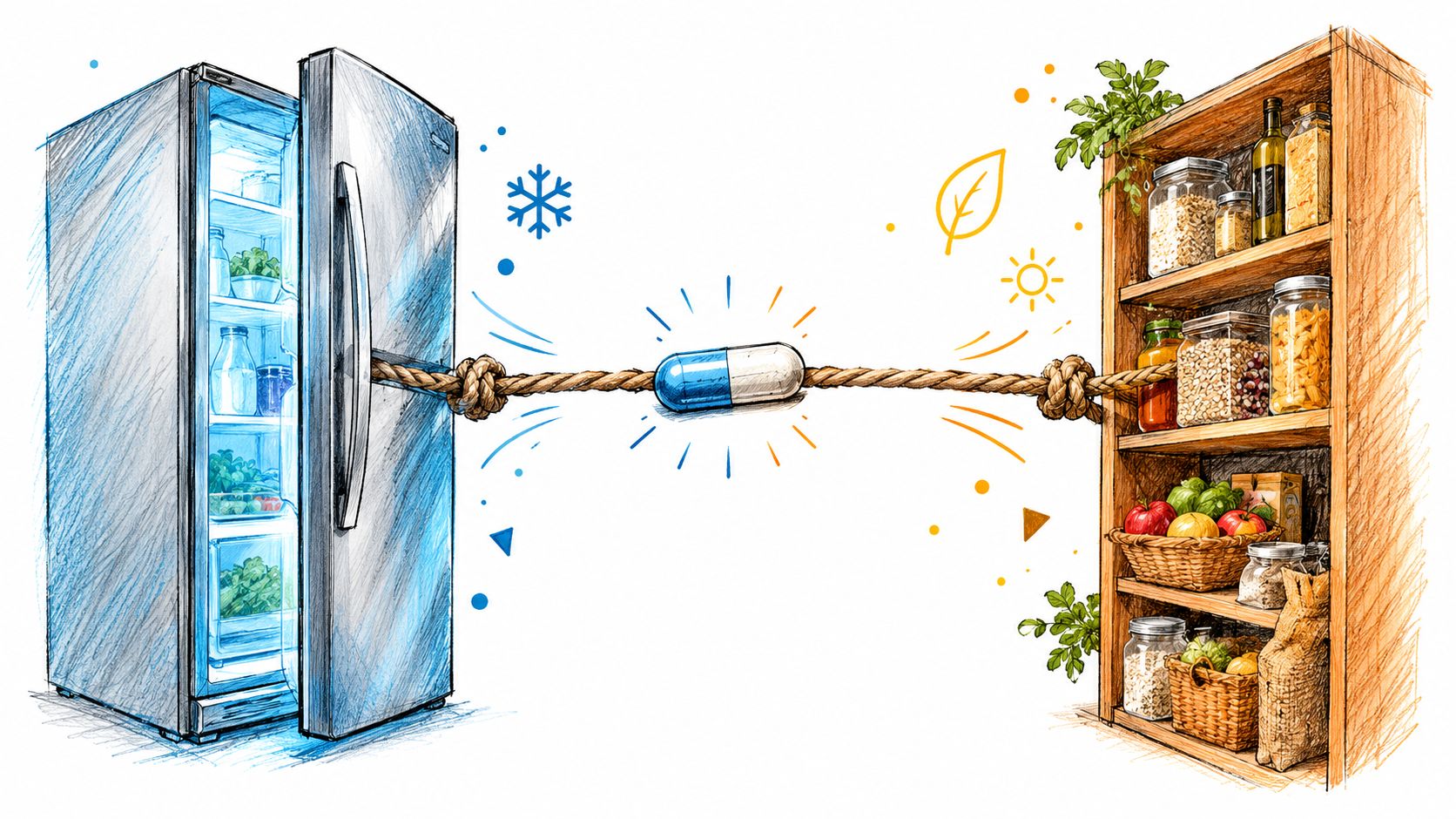
The old rule was simple: if a probiotic lived in the fridge, it was the serious option. That rule no longer tells the whole story. Modern shelf-stable products can be engineered to survive ambient storage, which means the key question is no longer whether a product sits cold or warm, but how its formulation protects the organisms inside.
That shift matters because both formats are trying to do the same job, deliver viable microorganisms to the gut. The difference is in the route they take from factory to consumer. Refrigerated products depend more heavily on cold-chain handling, while shelf-stable products rely on stabilization techniques that let them keep their labeled potency without a fridge, at least under proper conditions.
Browse CalVitamin's probiotic category for examples of both storage formats and compare how labels handle refrigeration, expiration, and potency language. Once you understand the formulation science, the storage instruction stops looking like marketing and starts looking like a manufacturing decision.
Table of Contents
- The Refrigerated vs Shelf Stable Probiotics Debate
- Understanding Viability and Stability Science
- Side-by-Side Comparison of Key Factors
- Real-World Efficacy and Strain Selection
- Storage Mistakes That Ruin Potency
- How to Choose the Right Probiotic for You
The Refrigerated vs Shelf Stable Probiotics Debate
A refrigerated probiotic isn't automatically superior just because it needs a cold shelf. The stronger claim is narrower, cold storage preserves viability better than ambient storage, and a 2026 Frontiers in Nutrition review says refrigeration and freezing most effectively preserve probiotic viability over time, with temperature acting as the main driver of long-term loss in comparative stability studies Frontiers review.
Why the debate got framed the wrong way
The public conversation often treats shelf-stable products like a compromise, as if they were a downgraded version of the same thing. That misses the manufacturing logic. Shelf-stable probiotics are typically built through freeze-drying, moisture control, and strain selection, while refrigerated products depend on a colder environment to slow die-off Frontiers PDF.
Practical rule: if a label does not specify refrigeration, the product is often intended to be shelf stable. If it does, the cold-chain instruction is part of the potency promise, not a suggestion.
The smarter way to think about the category is as a spectrum of stability strategies. One formula is designed to tolerate the pantry. Another is designed to stay potent in the fridge. Neither label tells you everything unless you also look at the strain list, the storage language, and whether the product guarantees counts at manufacture or at expiration.
That distinction matters in daily life. A travel-heavy shopper may do better with a carefully stabilized shelf product, while someone with reliable fridge space and a sensitive strain may prefer the cold-chain version. The winner depends on how the product was built, not on a blanket assumption that “cold means better.”
Understanding Viability and Stability Science
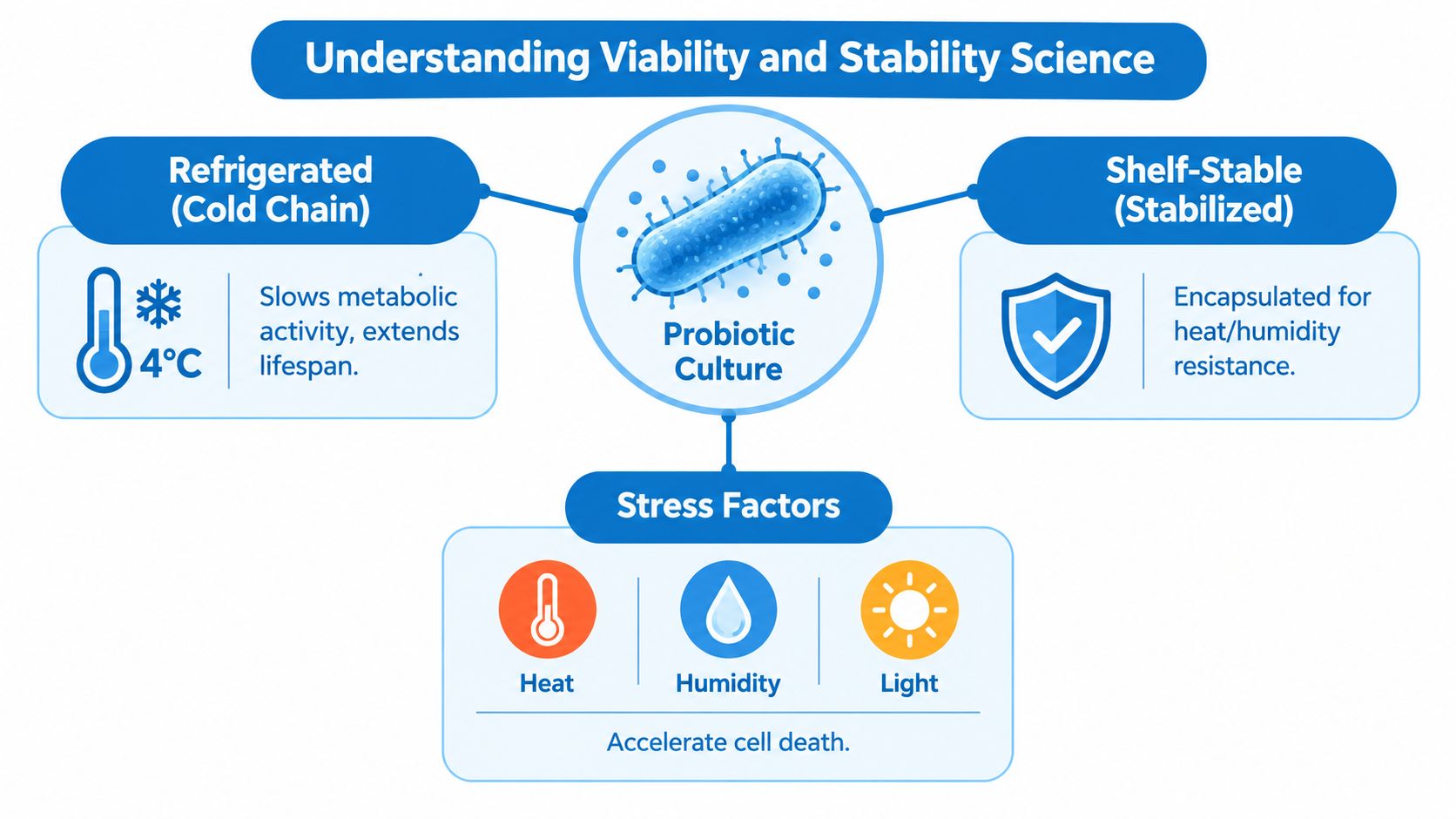
Viability means the organisms are still alive in a meaningful count when you take them. A label can advertise a large CFU number, but that number only matters if the microbes survive storage well enough to reach the gut in functional form. The point isn't the label alone, it's the survival curve behind it.
Why temperature changes the math
Cold storage slows bacterial metabolism, which helps preserve colony-forming units over time. Ambient storage does the opposite, especially when heat and moisture rise. The Frontiers review identifies temperature as the primary determinant of long-term viability loss, and notes that refrigeration and freezing outperform room-temperature storage for preserving probiotic counts Frontiers review.
That doesn't mean room-temperature products are weak by design. It means they need different engineering. In shelf-stable formulations, freeze-drying removes water, moisture-barrier packaging reduces exposure, and selected strains tolerate ambient conditions more reliably than fragile live cultures Frontiers PDF.
What product testing shows in practice
Controlled product-testing data make the difference concrete. In one refrigerated beverage study, Lactobacillus viabilities stayed above 10^6 CFU/mL for up to 4 weeks at 4°C, while the same organisms fell to zero within 2 weeks at 23°C PMC study. Refrigerated drinking-water preparations also achieved shelf lives greater than 6 weeks, which shows how much cold storage can extend functional dose retention.
Cold doesn't make probiotics “live” and shelf stability doesn't make them “dead.” Both formats aim to deliver viable organisms, but they use different protection systems.
That's the scientific bridge consumers usually miss. A probiotic is not useful because it once contained live bacteria. It's useful if those bacteria are still viable at the point of use. The storage rule is really a viability rule.
Side-by-Side Comparison of Key Factors
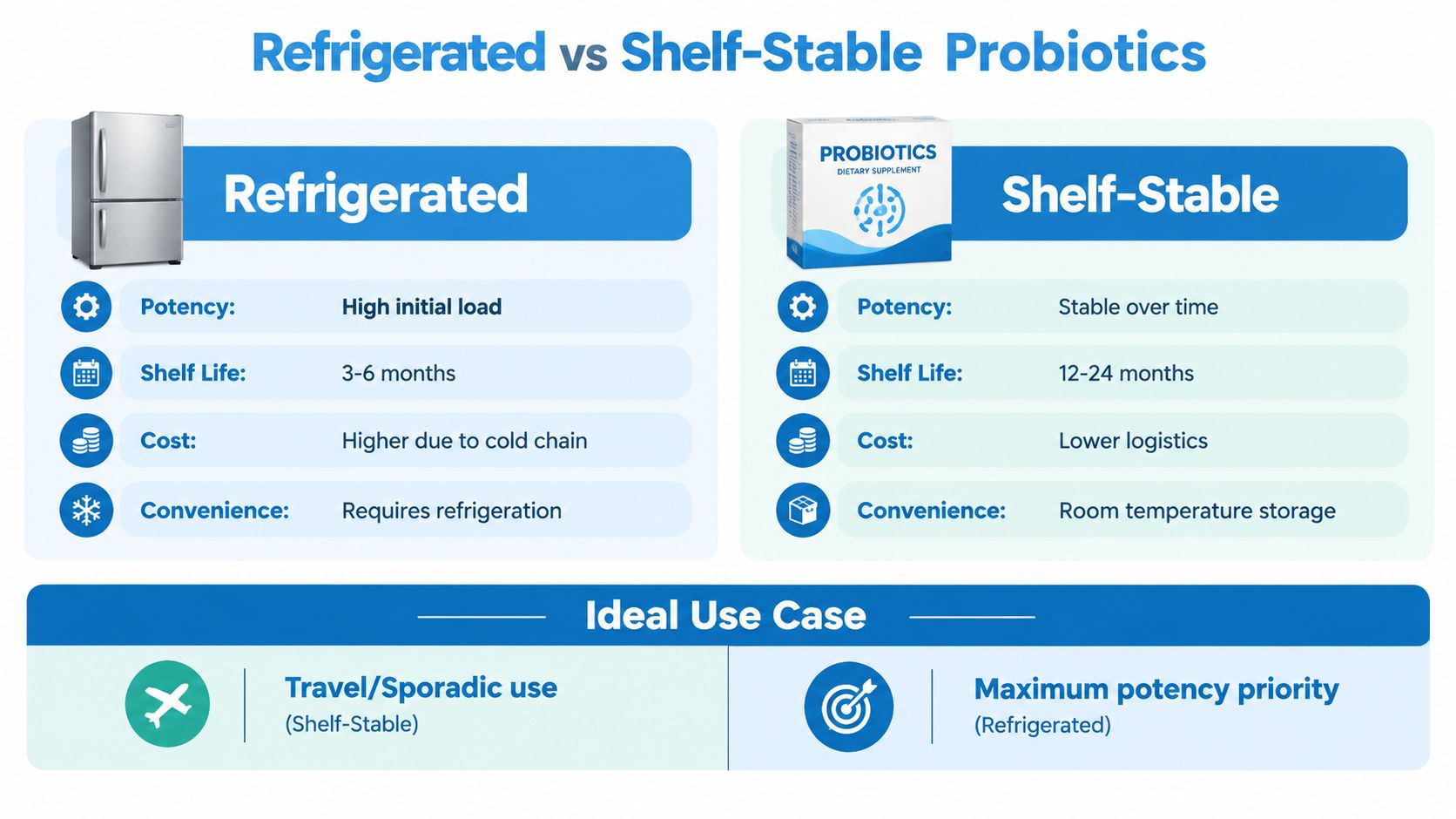
The most useful comparison isn't “which one is better,” it's which problem each format solves best. Refrigerated products are built for maximum protection of delicate cultures. Shelf-stable products are built for convenience and resilience during ordinary storage and transport.
Potency retention and storage window
A refrigerated formula is usually strongest when the cold chain stays intact from production to the point of use. Break that chain, and heat-sensitive strains lose viability faster. Shelf-stable formulas are designed to maintain counts through the labeled storage window without refrigeration, but that only works if the product was engineered well and kept in suitable conditions.
Convenience and day-to-day use
Shelf-stable products often win here. They fit into a bag, a desk drawer, or a travel kit without an ice pack. Refrigerated products ask more from the consumer, because the fridge becomes part of the product's quality control system.
| Decision factor | Refrigerated | Shelf stable |
|---|---|---|
| Potency strategy | Cold-chain protection | Ambient stability engineering |
| Exposure risk | Higher during transport and handling | Higher if stored in heat or moisture |
| Travel friendliness | Limited | Strong |
| Best fit | Sensitive, high-value strains | Routine use and portability |
Cost, logistics, and label language
Cold-chain products usually carry more logistics burden because storage has to stay controlled. Shelf-stable products skip much of that handling complexity. That difference is why shelf-stable options often feel easier to buy, store, and reorder, even when the goal is still to deliver viable organisms.
The label tells you how the manufacturer expects the product to perform. If it says refrigeration is required, that instruction is part of the formulation logic. If it says room temperature is acceptable, the manufacturer has built the product to tolerate it.
Real-World Efficacy and Strain Selection
The type of storage doesn't automatically determine whether a probiotic will work for you. Strain selection matters more than the packaging label, because probiotic effects are strain-specific and the same storage format can hold very different organisms.
Matching the format to the strain
Some strains tolerate ambient conditions well, especially when they've been freeze-dried and packaged against moisture. Others are more fragile and benefit from refrigeration. The review data make that distinction practical, not theoretical, because the main question is whether the strain can stay viable long enough to reach the consumer in useful numbers Frontiers PDF.
That's why a shelf-stable product can be a solid choice for general digestive support if the formulation is carefully built. It's also why a refrigerated product can be the safer route for delicate strains or protocols that depend on more exact potency retention.
Reading the label like a clinician
Check whether the CFU count is promised at time of manufacture or until expiration. Those two phrases are not interchangeable. A count guaranteed to expiration reflects a stronger storage commitment, while a count listed only at manufacture may decline during storage if conditions drift.
A second clue is the storage language itself. A product that says “keep refrigerated” is telling you that the cold chain is part of its potency design. A product that says no refrigeration is required has been validated for a different storage path.
CalVitamin's Renew Life Men's Care Probiotic 90 Billion review page is a useful example of how consumer-facing content can frame a shelf-stable product by storage requirement rather than by vague quality claims. That's the right lens, because the key question is not whether the bottle sits in a fridge, it's whether the strains stay viable long enough to matter.
If you can't tell whether the guarantee is at manufacture or at expiration, treat the label as incomplete.
Storage Mistakes That Ruin Potency
Even a well-formulated probiotic can lose potency if the storage environment works against it. Heat, moisture, and light all push viability in the wrong direction, especially when the product was designed to live near room temperature.
Common errors that shorten shelf life
- Leaving probiotics in a hot car: brief exposure can be enough to stress live cultures, especially in summer transport.
- Storing bottles in the bathroom: humidity and temperature swings make bathrooms a poor long-term storage spot.
- Using the fridge door as a home: the temperature shifts more there than in the main body of the refrigerator, so the center shelf is a safer default.
- Exposing capsules to direct sunlight: light adds another layer of stress, even for stabilized formats.
The same caution applies after opening. Some shelf-stable products are validated for unopened storage under ideal conditions, but once the seal is broken, protection drops. That's why the original container matters, and why portioning products into weekly pill boxes can reduce their defense against moisture.
What the storage rule really means
A room-temperature probiotic is not permission to ignore the environment. It means the formulation was tested to tolerate ordinary storage, not abuse. Refrigerated products are even less forgiving, because the cold chain is part of their design.
CalVitamin's Florastor Daily Probiotic review page sits in the same practical category of consumer education, since it points shoppers toward storage awareness instead of treating every probiotic as identical. That's the right habit to build, because potency isn't just about the ingredient list, it's about what happens between the factory and the gut.
How to Choose the Right Probiotic for You
Start with your life, not the marketing claim. If you travel often, forget what's in the fridge, or want a bottle you can keep in a desk drawer, a shelf-stable probiotic is usually the more realistic choice. If you have reliable refrigeration and you're buying a product with more fragile strains or a strict potency guarantee, the refrigerated option makes more sense.
A simple decision framework
- Choose shelf stable if portability matters: it's easier to maintain potency when the product is designed for ambient storage and you move around a lot.
- Choose refrigerated if strain sensitivity matters: colder storage gives fragile cultures a better chance of retaining viability.
- Choose based on the label promise: look for whether the CFU count is guaranteed through expiration or only at manufacture.
- Choose based on your habits, not your preferences: the best probiotic is the one you'll store correctly every day.
Why there isn't one universal winner
The evidence doesn't support a blanket verdict that one format is always superior. It supports a more useful conclusion, refrigeration is the strongest preservation method, but shelf-stable formulations can be highly practical when they're engineered well and stored correctly Frontiers review. That is the difference between a lab ideal and a consumer-friendly reality.
If you want the easiest rule, use this one. Buy refrigerated when potency preservation is your top priority and you can protect the cold chain. Buy shelf-stable when consistency, travel, and simple storage are what keep you taking the product.
CalVitamin offers probiotic products and review content that help shoppers compare refrigerated and shelf-stable formats by storage requirement and use case. If you want to evaluate options with that same practical lens, visit CalVitamin and look for products whose labels match your routine, your refrigerator space, and the strains you plan to use.