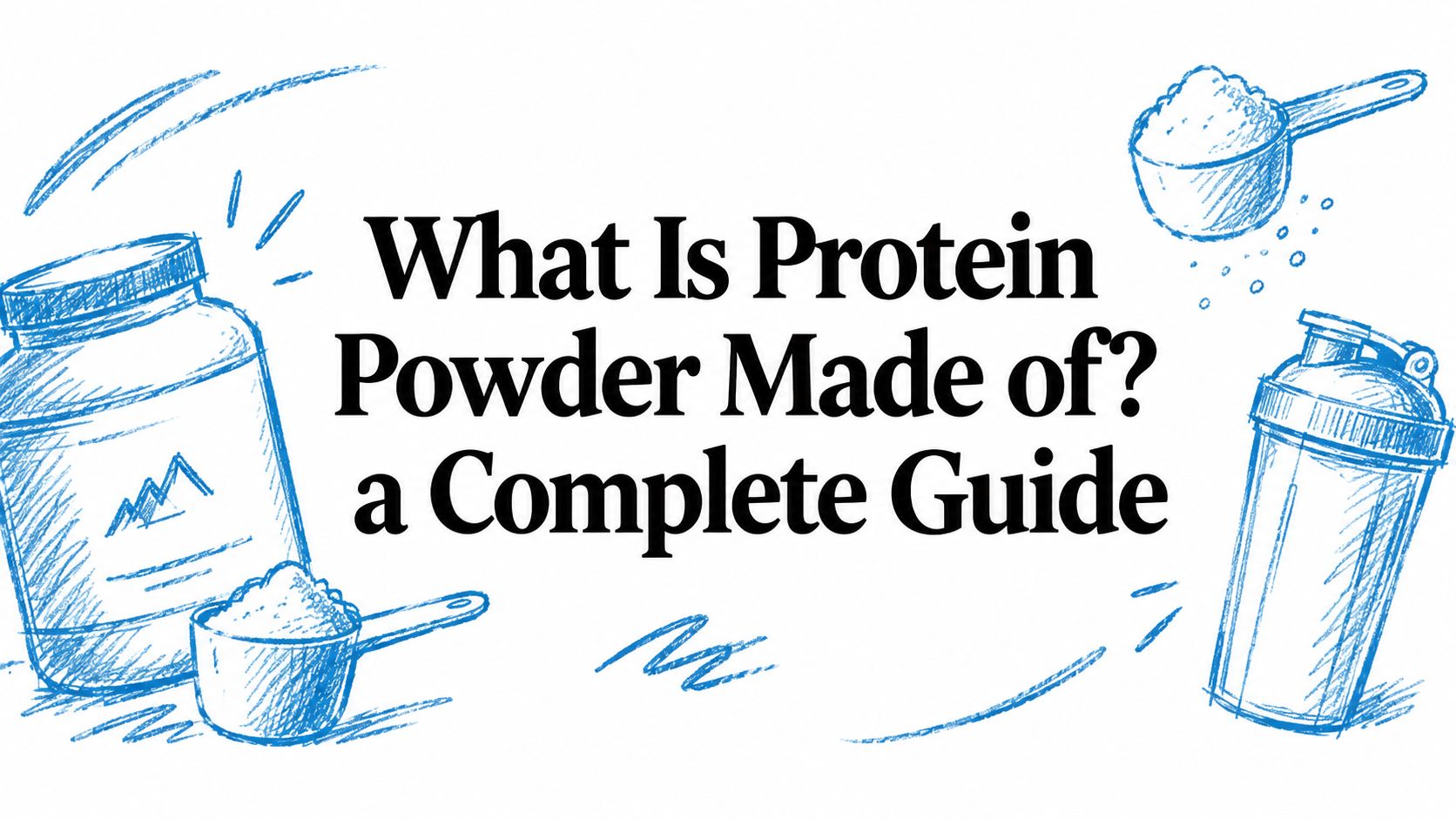
Protein powder is made from concentrated protein sources such as dairy whey, egg, or plants, plus processing aids and additives like lecithin, flavorings, and sweeteners. Whey protein isolate typically contains 90.0%–92.0% protein, with small residual amounts of moisture, fat, and lactose.
So why does one tub list two ingredients while another reads like a chemistry exam? The answer to what is protein powder made of isn't just “protein.” The powder in your shaker may also contain emulsifiers, thickeners, flavors, sweeteners, minerals, or other ingredients selected to change its texture, taste, shelf stability, and mixing behavior.
That distinction matters at the store. A short ingredient list isn't automatically better, and a long one isn't automatically problematic. The useful question is whether each ingredient has a clear purpose and fits your dietary needs, digestive comfort, budget, and training routine.
Table of Contents
- Reading the Real Answer Behind Every Label
- How Whey Protein Actually Gets Made
- The Hidden Ingredients Inside Your Shaker
- Whey Versus Plant-Based Proteins Side By Side
- Spotting Allergens and Dietary Red Flags
- Why Minimal Ingredients Are Not Always Better
- Choosing the Right Protein Powder for Your Goals
Reading the Real Answer Behind Every Label
You're standing in front of a supplement shelf, or scrolling through a product page, trying to compare tubs that all promise similar results. One label begins with whey protein isolate and lecithin. Another starts with a protein blend, followed by cocoa, natural flavors, sweeteners, gums, and several ingredients you don't recognize.
Both can be protein powders, but they aren't made the same way.
At its simplest, protein powder starts with a concentrated protein source. That source may be dairy whey, egg, or a plant such as pea, rice, hemp, or soy. Manufacturers then process the source to reduce water and other components, dry it into a powder, and add ingredients that make the finished product easier to use.
A plain formula might contain little more than whey protein isolate and lecithin. A flavored product may add cocoa for color and taste, natural flavors to shape the flavor profile, a sweetener to reduce sugar, and a thickener to create a creamier shake. These additions don't all exist to increase protein. Many exist because plain protein can taste bland, feel chalky, or clump in cold liquid.
The label tells two stories
The first story is nutritional. Look at the protein source and the nutrition panel to understand what the product is designed to deliver. The second story is technological. The ingredients after the main protein often explain how the powder dissolves, tastes, and feels.
The protein selection at CalVitamin can be approached with this two-part lens. First identify the protein family. Then read the complete ingredient list rather than relying only on the flavor name or front-label claims.
Practical rule: Read the ingredients from left to right. The first ingredient usually tells you what the formula is built around, while the later ingredients explain how the manufacturer made it pleasant and convenient to consume.
A shopper choosing an unflavored isolate for a smoothie may value a short list and neutral taste. Someone drinking a shake after training may prefer a flavored blend that mixes easily and tastes good enough to use consistently. Neither choice is universally correct. The right label is the one whose source and supporting ingredients match the job you need the powder to do.
How Whey Protein Actually Gets Made
Whey protein doesn't begin as a dry white powder. It begins as the liquid left after milk is processed into cheese. Manufacturers collect that whey, filter it to remove non-protein components, dry it, and turn the result into a powder that can be blended into drinks and foods.
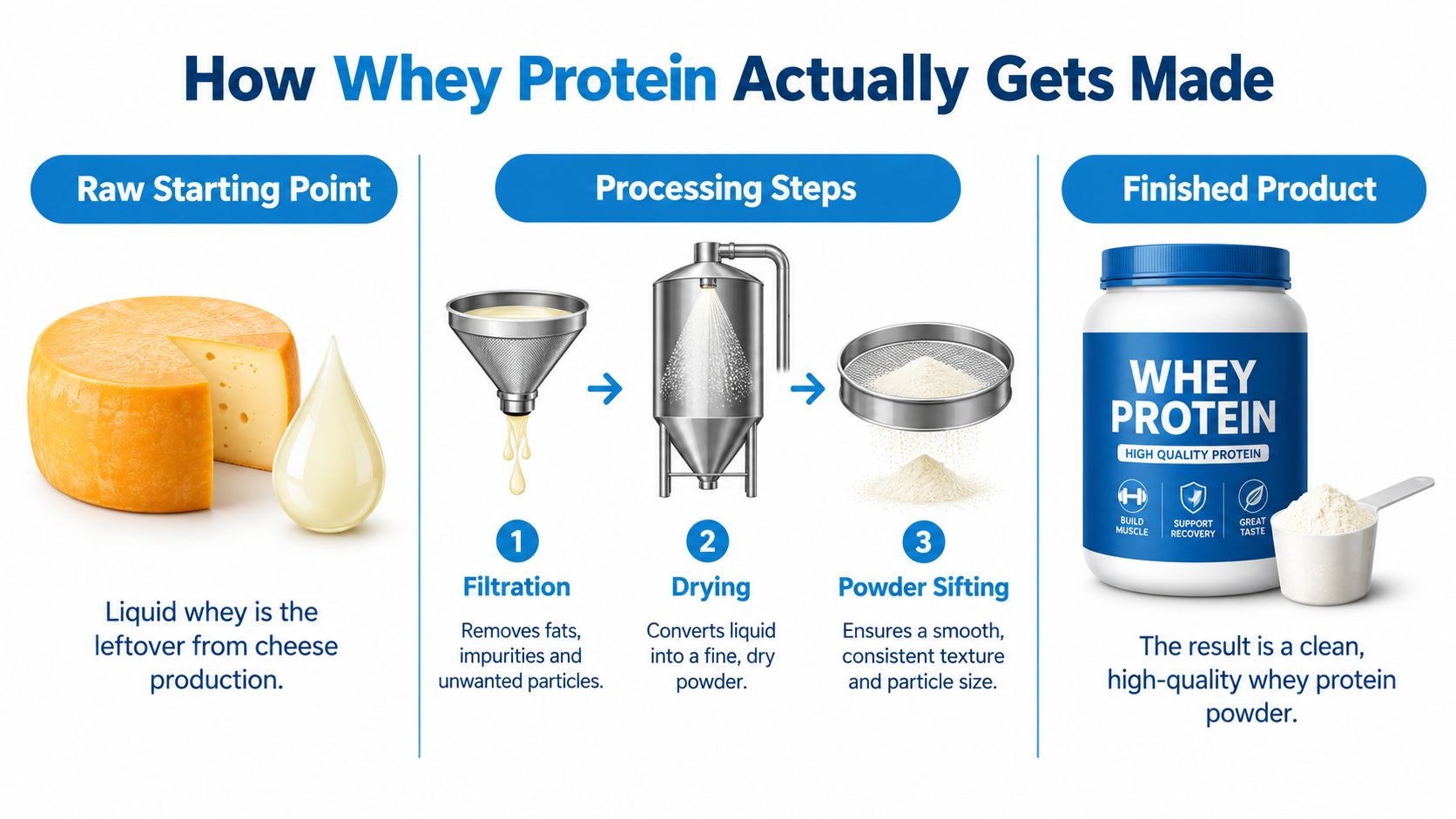
The degree of processing determines which whey product ends up in the tub. Whey protein isolate, or WPI, must contain at least 90% protein on a dry-matter basis. Typical WPI contains about 90.0%–92.0% protein, 4.0%–5.0% moisture, roughly 1.0% fat, and about 0.5% lactose, according to the ADPI whey protein isolate standard.
That composition explains why isolate appeals to people who want high protein density with very little lactose and fat. It also explains why the number on the front of a tub shouldn't be the only thing you inspect. The protein form tells you what remains after processing, while the ingredient list shows what the manufacturer adds afterward.
Isolate and concentrate serve different purposes
Whey concentrate generally retains more of the non-protein components that filtration removes from isolate. That can mean more lactose, fat, or carbohydrate in the finished product, although the exact profile depends on the formula.
| Form | Protein content | Lactose and fat level |
|---|---|---|
| Whey protein isolate | At least 90% protein on a dry-matter basis, with typical WPI around 90.0%–92.0% protein according to the ADPI standard | Very low residual lactose and fat after filtration |
| Whey protein concentrate | Lower protein density than isolate | More lactose and fat may remain |
| Whey blend | Depends on the ratio of forms used | Varies according to the blend |
For someone who tolerates dairy and wants a practical everyday shake, concentrate may be perfectly workable. For someone who notices digestive discomfort from lactose or wants more protein per amount of powder, isolate may make more sense. A product such as a whey protein isolate vanilla review can help you see how the protein form appears alongside flavor and texture ingredients on a real product page.
The manufacturing story also clarifies why whey isn't a single ingredient. Whey contains several protein fractions, including beta-lactoglobulin, alpha-lactalbumin, bovine serum albumin, lactoferrin, and immunoglobulins. Processing changes the proportion of non-protein material around those fractions, but the tub may still contain formulation ingredients added for performance in the shaker.
Here's a visual explanation of the journey from liquid whey to finished powder:
The Hidden Ingredients Inside Your Shaker
The protein source gets the largest type on the package, but the smaller ingredients often determine whether you enjoy using the product. A powder has to survive storage, pour cleanly, disperse in liquid, and taste acceptable. Manufacturers use secondary ingredients to solve those practical problems.
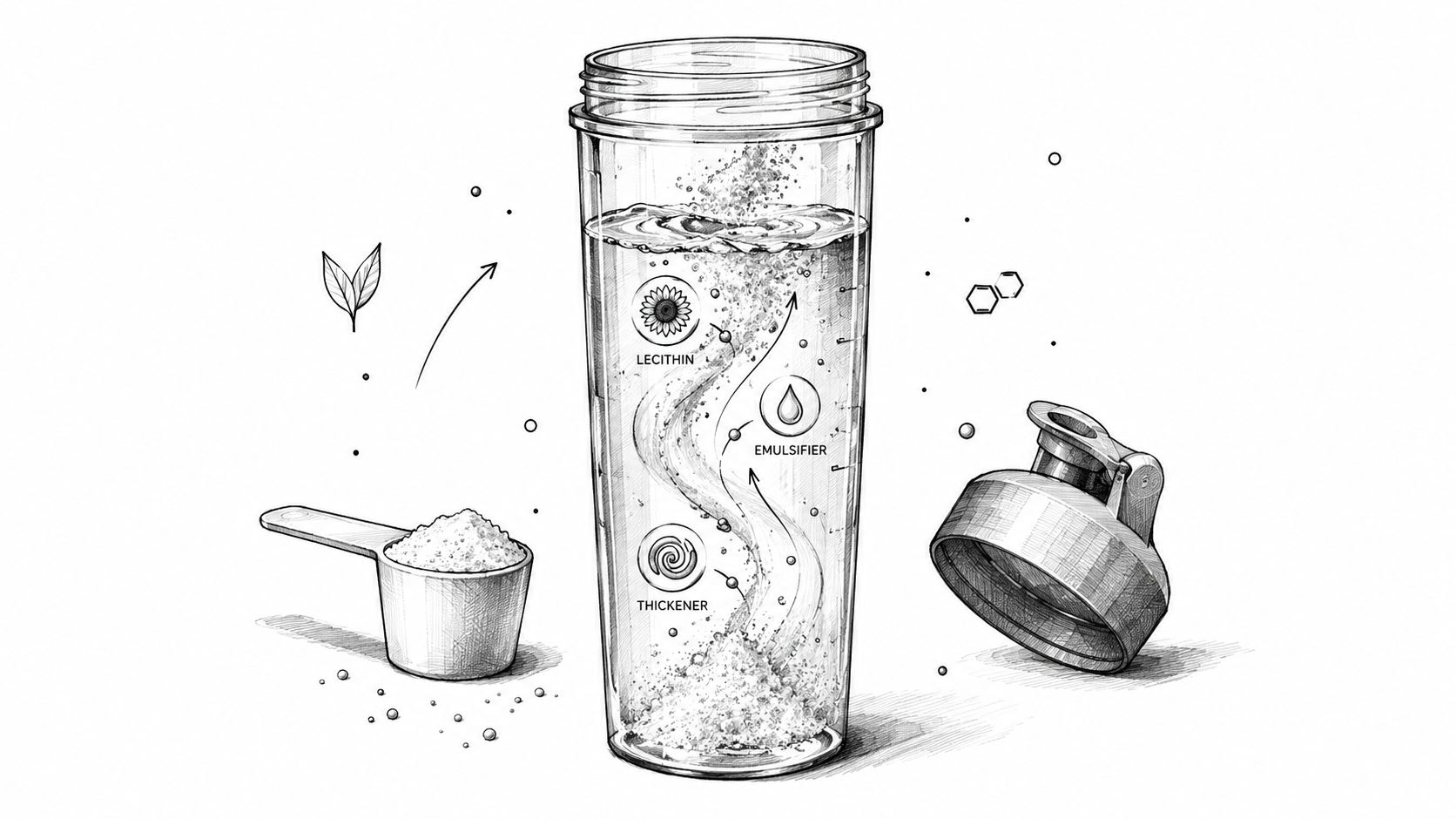
Lecithin is an emulsifier. In plain language, it helps ingredients disperse through liquid instead of floating, sticking together, or forming stubborn lumps. A small amount can make the difference between a shake that blends with a few turns of a shaker and one that leaves a layer of powder at the bottom.
The Colorado State University explanation of protein powder ingredients identifies common commercial additions such as lecithin, cocoa, natural flavors, and non-nutritive sweeteners. These ingredients support dispersibility, palatability, and mixing behavior, rather than serving as the primary protein.
What the supporting ingredients do
- Flavor systems: Natural flavors and cocoa help mask the plain, earthy, or dairy-like notes that can become noticeable after protein is concentrated.
- Non-nutritive sweeteners: These provide sweetness without making the formula rely on added sugar.
- Thickeners: Gums and similar texture ingredients can give a shake a fuller mouthfeel, especially when the base powder is very lean.
- Emulsifiers: Lecithin helps the powder interact with liquid and can reduce clumping.
- Anti-caking agents: These may help the dry powder remain free-flowing during storage and pouring.
A simple isolate formula can therefore have only a few ingredients because the protein has already been refined and the product isn't trying to imitate a dessert. A chocolate blend may need more support to create its intended taste and texture. A longer list can reflect flavor and texture engineering, not necessarily careless manufacturing.
The Anabol Naturals amino balance formula illustrates why shoppers should read the full formula rather than judge a product by the word “clean.” Ask what each ingredient contributes. If you don't want sweeteners, choose around them. If you need a shake that mixes smoothly, an emulsifier may be useful rather than suspicious.
Whey Versus Plant-Based Proteins Side By Side
Whey and plant-based powders solve different dietary problems. Whey comes from dairy and can offer high protein density, particularly in isolate form. Plant-based powders may use sources such as pea, rice, hemp, or soy, making them useful for people avoiding dairy or following a vegan diet.
The choice isn't only about protein content. Source and flavor can affect the product's contaminant profile. A 2025 analysis reported that plant-based products contained about nine times the lead found in dairy proteins, and roughly 70% of tested products exceeded a lead concern threshold. The same Consumer Reports testing found that chocolate-flavored and organic powders tended to test worse than vanilla and non-organic versions.
That finding doesn't mean every plant-based powder is unsafe or that every whey product is free from contamination. It means shoppers should treat source, flavor, and testing as part of the purchasing decision. A vegan formula may be the right fit, but the label and quality controls still deserve attention.
Protein source trade-offs at a glance
| Protein source | Typical purity range | Lactose risk | Contaminant profile |
|---|---|---|---|
| Whey isolate | High protein density | Very low residual lactose after processing | Recent testing found lower heavy-metal levels than plant-based products |
| Whey concentrate | Lower protein density than isolate | More lactose may remain | Varies by product and manufacturing controls |
| Pea, rice, hemp, or soy | Varies by source and blend | No dairy lactose | Recent independent testing found higher heavy-metal levels in plant-based products overall |
Plant formulas can also require blends to create a more balanced texture or flavor. Whey often dissolves in a way shoppers already recognize, while plant proteins may feel thicker, grainier, or more earthy depending on the source and formulation. Those are sensory trade-offs, not automatic signs of poor quality.
Choose the source you can use consistently, then compare the complete ingredient list and any available quality information within that category.
Flavor deserves its own line on your shopping checklist. If chocolate products have tested worse than vanilla in the cited analysis, choosing vanilla may be a reasonable way to reduce one variable. It isn't a guarantee, but it gives you a more careful basis for comparison than assuming organic or chocolate automatically means superior.
Spotting Allergens and Dietary Red Flags
A protein label can look simple and still contain an ingredient that doesn't suit you. Start with the primary source. Whey, casein, and other milk-derived proteins matter for people with milk allergies or dairy sensitivities. Egg-based powders need the same attention from anyone avoiding egg.
Then scan the supporting ingredients. Soy lecithin may appear in a formula as an emulsifier, even when soy isn't the main protein. A flavored blend may also contain ingredients derived from milk, grain, or other common allergens. Don't assume that a product described as “plant-based” avoids every possible trigger. Check the allergen statement and the complete ingredient list.
Use a repeatable label scan
- Identify the protein source. Look for whey, casein, egg, pea, rice, hemp, soy, or a blend.
- Check the declared allergens. The allergen statement is designed to highlight major triggers, but you should still read the full list if you have a serious allergy.
- Look for derivative terms. Milk proteins can appear as whey or casein, while soy can appear in ingredients such as soy lecithin.
- Review the flavor system. Sweeteners, cocoa, thickeners, and flavorings may affect digestive comfort even when they aren't allergens.
- Verify dietary certifications. If halal, gelatin-free, or cruelty-free status matters to you, look for a specific label or certification rather than relying on general marketing language.
A certification can answer a question that the ingredient list doesn't fully resolve, especially for processing aids or animal-derived components. If the package makes a broad ethical claim without showing a recognizable certification, treat the claim as something to verify.
Your decision can be simple: does the formula avoid your known triggers, clearly identify its protein source, and offer the certification you require? If not, move to another product. No flavor or discount makes an avoidable allergen worth testing.
Why Minimal Ingredients Are Not Always Better
“Only three ingredients” sounds reassuring, but ingredient count doesn't tell the whole manufacturing story. A short list may describe a highly refined isolate that required substantial filtration before it reached the tub. A longer list may describe a flavored product whose extra ingredients help it mix and taste the way the label promises.
Many simple formulas contain whey protein isolate plus lecithin. Flavored blends can include additives, flavorings, and thickeners, creating a visible difference between the ingredient list shoppers expect and the formula manufacturers build. The Everyday Health guide to protein powders reflects this broad range of formulations.
Replace ingredient counting with purpose checking
Ask three questions about every unfamiliar ingredient:
- What job does it perform? Lecithin supports mixing, while cocoa and flavors shape taste.
- Does that job matter to you? If you blend powder into a smoothie, you may care less about a dessert-like texture.
- Does the ingredient fit your tolerance? A sweetener or thickener can be convenient for one person and unpleasant for another.
A plain isolate with lecithin may be a practical choice for someone who wants high protein density and plans to add fruit, oats, or nut butter independently. A more elaborate blend may suit someone who needs a ready-to-drink option that tastes good without extra ingredients from the kitchen.
The phrase “clean label” also needs careful handling. It can describe a short ingredient list, but it doesn't automatically tell you how the protein was processed, how the product was tested, or whether the formula works for your stomach. Look at source, function, allergen status, and quality information together.
A short label is a useful starting point, not a final verdict.
Choosing the Right Protein Powder for Your Goals
Start with the constraint that matters most. If lactose is your concern, look toward a whey isolate and read the label for the complete formula. If dairy doesn't fit your diet, compare plant-based sources such as pea, rice, hemp, or soy, while paying closer attention to quality information and contaminant testing.
Your second filter should be use case. Someone making a quick post-workout shake may prioritize protein density, mixability, and a flavor they won't abandon after a few servings. Someone adding powder to oatmeal or a smoothie may prefer unflavored powder and fewer sensory additives. Someone buying for daily convenience may value a formula that tastes good enough to use consistently.
Match the formula to the decision
- For low lactose: Consider whey isolate and verify the rest of the ingredient list.
- For a vegan routine: Choose a plant-based source or blend, then review testing and flavor details.
- For a simple smoothie: An unflavored formula with a short ingredient list may give you more control.
- For easy drinking: Lecithin, flavor systems, and thickeners may improve the experience rather than undermine it.
- For dietary or ethical requirements: Check for clearly stated halal, gelatin-free, or cruelty-free attributes.
- For sensitive digestion: Introduce one formula at a time and note whether sweeteners, thickeners, dairy components, or the protein source itself cause discomfort.
Price also needs context. A less refined whey product may be suitable when you tolerate dairy and want a routine powder. A more refined isolate may justify its place when lower lactose and higher protein density are priorities. Plant-based products can be the right answer for dietary reasons even when their ingredient deck or texture differs from whey.
Before buying, read the first ingredient, scan the allergen statement, inspect the additives, and look for credible quality information. Then choose the tub you can digest, afford, and use regularly. Protein powder is a supplement, not a replacement for variety, so let the rest of your diet carry the broader nutritional load.
CalVitamin offers protein supplements alongside vitamins, minerals, probiotics, herbs, and other wellness products, giving you a place to compare formulas by protein source, format, and labeled attributes. Visit CalVitamin to browse protein products and use the ingredient-first checklist from this guide before choosing your next tub.