
The most repeated advice about Tribulus terrestris is also the least supported one. Take it to raise testosterone, run it in eight-week cycles, and expect libido, strength, and energy to follow. Human trials don't back that chain of effects, and the gap between the marketing and the data has widened rather than closed.
Labels make the problem worse. A bottle that promises "1000 mg tribulus terrestris" tells you the plant mass and nothing about the extract, the plant part, or the saponin content, which are the variables that decide whether a product resembles anything used in research.
The seven claims below are graded one at a time, from modest and uncertain at the top to laboratory-only at the bottom. Each grade comes with the trial detail behind it, the people who should skip the herb, and the medications that make it a conversation with a pharmacist rather than a checkout decision.
Table of Contents
- 1. Support for Sexual Desire (Libido) in Men
- 2. Possible Support for Mild Erectile Function
- 3. Possible Support for Sexual Desire in Women
- 4. Hormonal Effects and Testosterone Claims That Outrun the Data
- 5. Potential Support for Athletic Performance and Body Composition
- 6. Antioxidant and Anti-Inflammatory Activity in Preclinical Research
- 7. Traditional Uses for Urinary and Cardiovascular Wellness
- How the Claimed Tribulus Benefits Compare on Evidence and Safety
- Turning the Evidence Into a Smart Decision
1. Support for Sexual Desire (Libido) in Men
The libido claim is where most buyers start, and it's also where the trials lean hardest on self-report. Small randomized studies in men have reported modest improvements in sexual desire against placebo, typically after one to three months of daily use. The evidence sits somewhere between weak and modest, and it rests on how men describe how they feel.
The best-controlled trial in this population doesn't support the hormone story underneath those results. A Bulgarian randomized, double-blind, placebo-controlled study enrolled 172 men aged 18 to 65 with mild or moderate erectile dysfunction or secondary hypoactive sexual desire disorder and gave them 1,500 mg daily for 12 weeks. Total testosterone, free testosterone, DHEA-S, and SHBG came out no different from placebo, according to the European Medicines Agency herbal assessment report, and a separate 30-day study of 30 men on 800 mg daily found no difference in sexual function or testosterone either.
That leaves desire change as something men report rather than something hormones explain. Which is why the useful question isn't "does it work" but "what am I buying."
Keep a simple log, because self-reported desire is exactly the kind of outcome that's easy to imagine into existence.
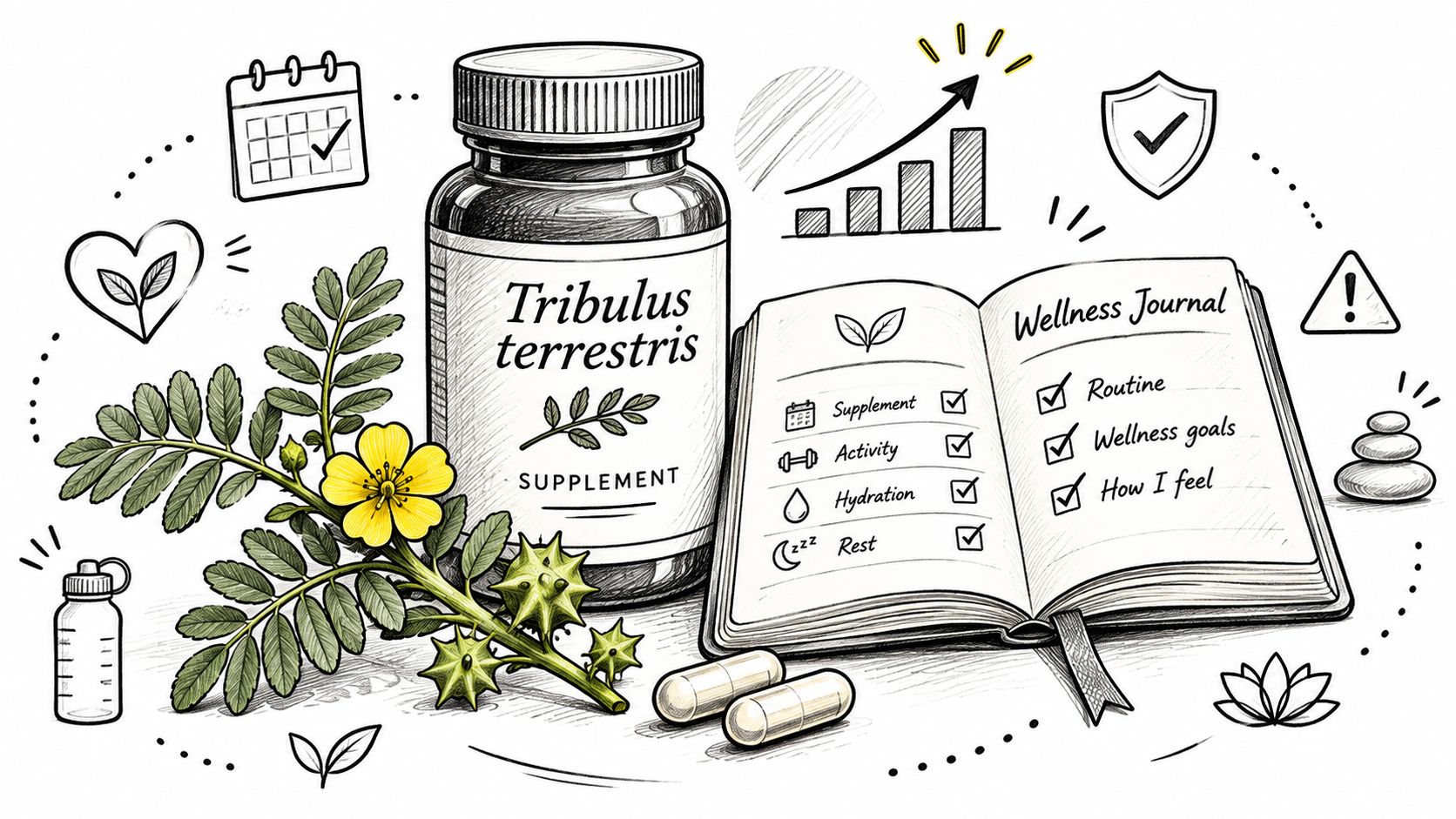
What to check before the first capsule
Two bottles can both read 1,000 mg and contain different plant parts, different extraction methods, and different saponin loads, so the milligram figure alone is close to meaningless.
- Extract and plant part: the fruit and the aerial parts aren't the same raw material, and the label should say which one it uses.
- A declared marker compound: protodioscin content is the closest thing to a quality signal on a bottle.
- A starting point and an end date: begin at the low end of the labeled range, give it four to six weeks, and decide.
What the label should say: the extract name, the plant part, and a standardized marker such as protodioscin. A bare "1000 mg tribulus terrestris" gives you nothing to compare.
If you're comparing categories rather than brands, our guide to best male libido supplements sets out how the options differ.
2. Possible Support for Mild Erectile Function
New or worsening erectile difficulties deserve medical attention before a supplement trial. They can reflect an underlying health problem, and the evidence for tribulus does not make it a reliable substitute for assessment.
A 2025 systematic review and meta-analysis of 8 randomized studies reported placebo-adjusted improvements in IIEF-5 erectile-function scores of 3.23 points and IIEF-15 scores of 14.44 points. It found no significant difference in total testosterone or adverse-event incidence, according to the published review record. The IIEF-5 is a five-question screen scored from 5 to 25. A 3-point change may improve the score without moving someone out of the same severity band. Older, small trials showed mixed results on erectile-function outcomes.
The signal is therefore encouraging but limited: it comes from questionnaire scores across studies using different extracts. It does not establish that tribulus reliably improves erectile function, or that its effects match a treatment that acts directly on vascular function.
The cardiovascular signal you shouldn't ignore
Erectile difficulties can accompany vascular or metabolic problems. Using a supplement instead of arranging an assessment risks leaving the underlying cause unaddressed.
Medication matters, too. If you take nitrates for chest pain, discuss tribulus with your doctor before using it, since blood pressure effects may be relevant. Raise the same question if you take alpha blockers or other antihypertensives. Seek urgent care for chest pain, an erection lasting hours, or sudden vision changes. Those symptoms need prompt medical attention, not a supplement trial.
3. Possible Support for Sexual Desire in Women
Women's evidence exists. It's just thinner, smaller, and graded lower than most roundups admit.
A systematic review identified 5 randomized controlled trials covering 279 premenopausal and postmenopausal women, with treatment periods of 1 to 3 months, per the review indexed in PMC. Participants receiving tribulus showed statistically significant improvements in sexual-function scores, and in premenopausal women 3 months of treatment also significantly increased serum testosterone. No serious adverse events were reported in the included trials, and none of them assessed health-related quality of life.
Then the caveat that changes how you read everything above. The reviewers rated the certainty of the evidence as very low, meaning better-designed research could substantially change the estimated benefit in either direction. Five trials, different extracts, different doses, and different outcome measures is a research starting point, not a settled result.
Very low certainty isn't a polite word for promising. It means the next well-run trial could erase the effect entirely.
What that means for a woman considering it
Treat it as a short-term experiment with a clear end date, not a daily habit you drift into. If low desire is the concern, the useful first step is a proper workup, because thyroid function, iron status, hormone levels, sleep, medication side effects, and stress all move desire more reliably than any herb.
Female blends often stack tribulus with maca, ginseng, and other botanicals, which makes it impossible to credit one ingredient for a change you notice. Our overview of maca root for women's libido is a better starting point when you're reading those combination labels.
4. Hormonal Effects and Testosterone Claims That Outrun the Data
Testosterone is the claim that built the category, and it's the one human trials have most consistently failed to confirm in healthy men. If you've seen tribulus sold as a natural hormone booster, the clip below covers the gap between the pitch and the trial data.
A 2025 systematic review of clinical trials in men is blunt about it. Across doses of roughly 400 to 750 mg a day given for 1 to 3 months, eight of ten studies found no significant change in androgen profiles, and only two reported increased total testosterone, with small increases of roughly 60 to 70 ng/dL in participants with hypogonadism, according to the review published in Nutrients. The reviewers concluded that the evidence for testosterone elevation wasn't strong.
Why the numbers stay flat
In healthy men, testosterone production runs on a feedback loop that a botanical doesn't easily override. The small increases that do appear cluster in men whose baseline is already low, and a shift of that size in that group is within the range you'd expect from better sleep, a change in body fat, or repeating the test on a different morning. For a healthy 30-year-old with normal labs, there's no plausible hormonal pathway here.
- Skip the "boost" language: a formula promising large testosterone gains is selling a mechanism its own ingredient list can't deliver.
- Test before you treat: if you suspect low testosterone, ask for morning total and free testosterone, LH, and SHBG before buying anything.
- Check third-party testing: an NSF Certified for Sport or Informed Sport mark tells you what's in the bottle, not that it works, and both questions matter.
- Don't stack: layering tribulus with other hormone-adjacent herbs raises your supplement load without adding evidence.
5. Potential Support for Athletic Performance and Body Composition
This is the claim with the least human support and the most shelf space. Tribulus appears in pre-workout, testosterone-support, and vitality blends beside amino acids, mushroom extracts, and shilajit, where it often functions as label decoration rather than a tested ingredient.
Trials in resistance-trained men exist, and some report small strength or lean-mass advantages over placebo. Read the designs and the picture narrows. Training programs differ between groups, diets are rarely controlled, follow-up is short, and the extract in the study usually isn't the one in the bottle you're holding. A small edge in a six-week trial of a couple of dozen men is not a training effect you can bank.
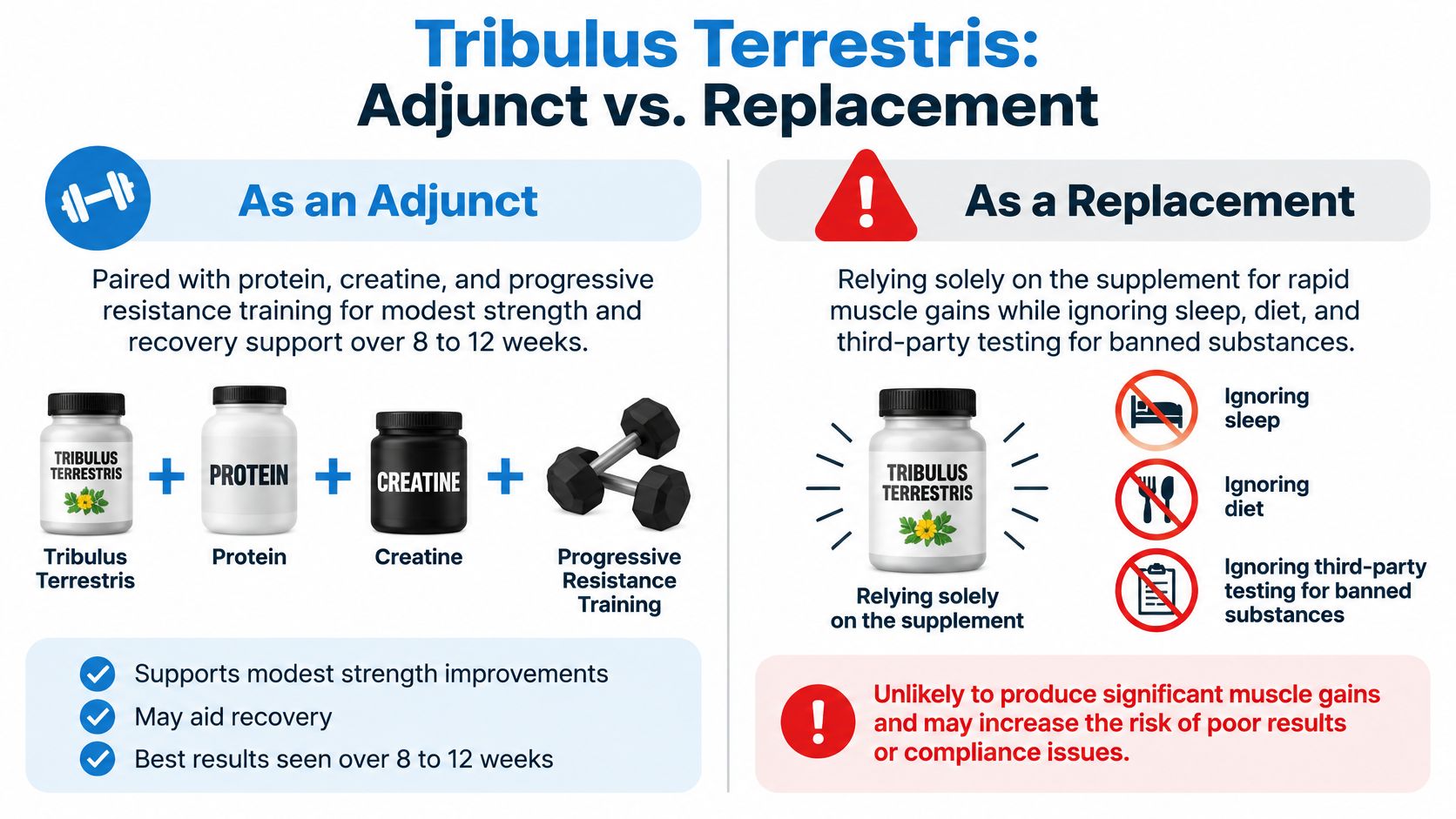
The comparison below is the one worth making before you buy.
Judging a performance claim like a coach
Ask what the trial measured, then ask whether that measure is the one you care about. A questionnaire about training vigor is not a squat personal best.
A worked example makes it concrete. A lifter runs twelve weeks of progressive overload, holds protein steady, sleeps seven to eight hours, and logs his top sets weekly. If he adds a tribulus product at week four and his numbers keep climbing at the same rate, the supplement didn't do the work. If they stall, he's saved himself another bottle.
- Log the inputs: training volume, body weight, and protein intake, not just how you feel.
- Give it a fixed window: eight to twelve weeks, then decide.
- Buy tested if you compete: drug-tested athletes need batch-level certification.
Practical rule: progressive overload, enough protein, and sleep carry the results. A supplement sits on top of those or does nothing.
6. Antioxidant and Anti-Inflammatory Activity in Preclinical Research
This claim is real in the lab and unproven in people. Extracts of the plant contain flavonoids, saponins, and phenolic compounds that scavenge free radicals in cell cultures and reduce markers of oxidative stress in animal models.
Most of what's published here comes from cell cultures and animal models rather than people.
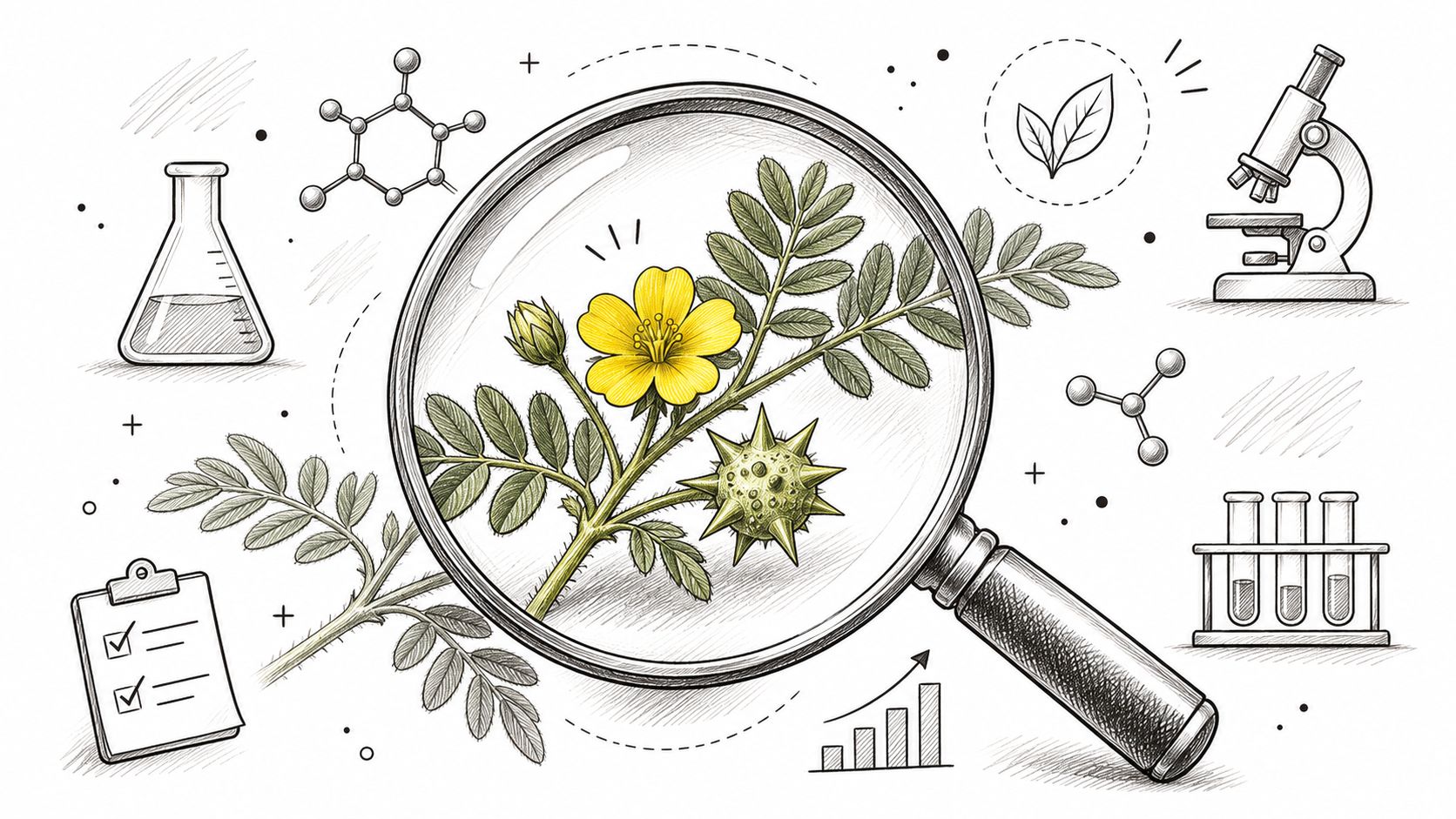
None of that establishes a human health outcome. A petri dish has no liver to protect, no blood pressure to lower, and no absorption problem to solve. Whether those compounds reach tissue at a meaningful concentration after you swallow them is the question the lab work can't answer.
What a lab assay actually measures
Radical-scavenging tests measure how well a sample neutralizes a specific reactive molecule under controlled conditions. They say something real about the chemistry of an extract. They say nothing about inflammation in your joints, your arteries, or your gut.
Content also varies enormously by plant part, growing region, harvest time, and extraction method, so a result from one extract doesn't transfer to a bottle of another. This is the weakest claim on the list for a consumer, and the strongest one for a researcher.
A worked example of how the language gets inflated. A product page says the formula is "rich in antioxidants." The honest translation is that the ingredient contains compounds showing antioxidant activity in laboratory assays. If you want antioxidant intake with human outcome data behind it, vegetables, fruit, and nuts remain the boring, well-supported answer.
7. Traditional Uses for Urinary and Cardiovascular Wellness
Tribulus has a long history in Ayurvedic and Chinese medicine for urinary complaints, kidney support, and cardiovascular tone. The traditional uses are worth understanding because they explain the modern marketing, not because they validate it. Animal studies have explored diuretic and blood-pressure-related effects, and small human studies hint at the same, but nothing here amounts to a treatment.
Don't use it to self-treat a urinary tract infection, kidney stones, or high blood pressure. Those conditions have effective management, and delaying it is a serious risk.
The safety boundaries worth knowing
A 2025 clinical review found no significant difference in adverse-event incidence between tribulus and placebo in the available randomized trials, but those trials mostly cover short interventions rather than years of daily use, as the review sets out. Prospective studies with regular liver-test monitoring haven't been conducted, and isolated reports of kidney injury and increased liver enzymes exist, though some cases may have involved ischemia or anabolic steroid use rather than the herb itself.
- Pre-existing kidney or liver disease: skip it unless a clinician who knows your labs says otherwise.
- Unexplained abdominal or urinary symptoms: get them assessed instead of supplementing around them.
- Pregnancy and breastfeeding: there's no safety data to support use.
- Prescription medicines: diuretics, blood pressure drugs, lithium, and PDE5 inhibitors all deserve a pharmacist's review.
"Standardized" means one marker compound is controlled. It doesn't mean two bottles from two brands are interchangeable.
If urinary tract comfort is what you're after, our nettle root supplement guide covers a botanical commonly used for that specific purpose.
How the Claimed Tribulus Benefits Compare on Evidence and Safety
The claims do not have equal support. Human studies provide limited, inconsistent signals for sexual function, while testosterone and performance claims remain unconvincing. Laboratory findings and traditional uses are still further from demonstrating benefits in people. The table separates what has been reported from what remains uncertain, alongside the main safety concerns.
| Item | Evidence Strength | Main Claim Basis | Key Safety Concern |
|---|---|---|---|
| Support for Sexual Desire (Libido) in Men | Limited and inconsistent; small, short-term trials | Some studies report modest improvements in self-reported desire; proposed saponin-related effects are unconfirmed | Possible interactions with blood pressure, blood sugar, and diuretic medications; caution with hormone-sensitive conditions |
| Possible Support for Mild Erectile Function | Limited and inconsistent; small trials | Some studies report improved erectile function scores; proposed vascular mechanisms are not established in humans | Erectile dysfunction may signal cardiovascular disease; avoid combining with erectile dysfunction drugs without medical supervision |
| Possible Support for Sexual Desire in Women | Very limited; five small trials rated very low certainty | Five small randomized trials (279 women) report improved sexual-function scores, with the reviewers rating certainty as very low | Avoid during pregnancy or breastfeeding; caution with hormone therapy and hormone-sensitive conditions |
| Hormonal Effects and Testosterone Claims: What the Evidence Shows | Human evidence largely negative or inconsistent for testosterone increases | Controlled studies generally find no meaningful rise in total or free testosterone in healthy men | Discuss hormone-related use with a clinician; not a substitute for prescribed hormone therapy |
| Potential Support for Athletic Performance and Body Composition | Mixed and limited; studies are often small and short | Some studies report modest strength or body composition changes, potentially confounded by training and diet | Combination products may contain stimulants; contamination is a concern for tested athletes |
| Antioxidant and Anti-Inflammatory Activity in Preclinical Research | Preclinical only; human benefits unconfirmed | Cell and animal research reports antioxidant and anti-inflammatory activity | Do not use as treatment for chronic inflammatory disease; consult a clinician about medication interactions |
| Traditional Uses for Urinary and Cardiovascular Wellness | Preliminary; modern clinical evidence is weak | Traditional use and early research on diuretic and vascular effects | Possible dehydration or electrolyte imbalance and interactions with lithium, diuretics, or blood pressure medication |
The women's findings are a signal, not confirmation: the reviewers rated certainty very low, so the reported improvement does not establish a reliable effect. Likewise, a reported change in men's self-rated desire or erectile-function scores does not demonstrate that a proposed biological mechanism is responsible.
The testosterone row is especially relevant because marketing often presents hormone effects as established. The controlled-study findings summarized here do not support that certainty. Athletic performance claims also remain difficult to interpret when training and diet may affect the reported changes.
Preclinical activity means effects observed in cells or animals, not proven benefits for people. Traditional use and early research likewise do not establish that tribulus prevents or treats urinary or cardiovascular conditions. Across the claims, the evidence grade should guide expectations, while the safety column identifies concerns to discuss with a clinician.
Turning the Evidence Into a Smart Decision
The evidence is uneven: libido and mild erectile function have modest, short-term support, while testosterone, athletic performance, and body composition claims are not supported by controlled trials. Antioxidant activity and traditional urinary use remain grounded in preclinical research and historical use, not established clinical benefit.
Medication checks may matter more than the ranking. Blood pressure drugs, diuretics, lithium, and PDE5 inhibitors could affect whether tribulus is appropriate or how a clinician monitors its use. Bring the product bottle to a pharmacist and ask about your prescriptions before taking it.
Check the label for a named extract, the plant part, and a standardized marker compound. Treat promises of hormone changes or fast results cautiously. Compare any sexual wellness formula's ingredient list with the evidence grades above, rather than assuming that a product's claims reflect established benefits.
Long-term use remains uncertain because trials have not lasted long enough to answer the question. If you decide to try tribulus, consider setting a short trial period and recording your baseline first. Review whether anything changed, and stop if you see no benefit.
CalVitamin sells sexual wellness products for men and women, alongside vitamins, minerals, proteins, and herbal supplements. Its Jacksonville-based online store offers product pages where shoppers can compare ingredient lists. Visit CalVitamin to browse the range and assess listed ingredients against the evidence, rather than relying on marketing promises.


