

The most popular advice about yohimbe bark extract is to “start low and see how you feel.” That advice misses the central safety problem. The amount of bark on a label doesn't reliably tell you how much yohimbine or total alkaloid the product delivers. A capsule can look modest by weight while exposing the user to a far more pharmacologically active preparation than expected.
Yohimbe's long traditional history doesn't resolve that uncertainty. Modern products sit at the intersection of potent adrenergic pharmacology, inconsistent botanical composition, and a regulatory split that leaves the raw extract widely available despite serious safety warnings. The right question isn't whether yohimbe can produce an effect. It's whether the product's active alkaloid exposure is known, whether the intended benefit is supported, and whether the user's cardiovascular and medication profile makes that exposure acceptable.
Table of Contents
- Understanding Yohimbe Bark Extract and Its Origins
- Active Compounds and Mechanisms of Action
- Clinical Evidence for Sexual Wellness and Weight Loss
- Safety Profile, Side Effects, and Contraindications
- Regulatory Status and How to Read Supplement Labels
- Safer Alternatives for Performance and Vitality
- Final Verdict and Practical Takeaways
Understanding Yohimbe Bark Extract and Its Origins
The story begins with the bark of the Pausinystalia yohimbe tree. Traditional West African medicine used yohimbe bark as an aphrodisiac and for general health, endurance, and athletic performance. That history matters, but it doesn't make a modern supplement equivalent to the preparations used traditionally. Traditional use describes a botanical context. It doesn't establish the concentration, purity, or safety of a contemporary capsule.
Modern pharmacology focuses on yohimbine, an indole alkaloid derived from the bark. The distinction between the whole bark extract and purified yohimbine became especially important in the United States. Yohimbine was previously available as a prescription treatment for impotence, but it was later removed from the prescription market because of safety concerns. Yohimbe bark extract, meanwhile, remained legal as a dietary supplement under the Dietary Supplement Health and Education Act of 1994, commonly called DSHEA 1994. WebMD's overview of yohimbe bark supplements describes this regulatory divergence and its consequences.
The regulatory label is not a potency guarantee. Legal availability as a dietary supplement doesn't mean that a product is suitable for treating erectile dysfunction or safe for every adult.
That split explains why consumers may encounter yohimbe products in a supplement aisle even though purified yohimbine isn't approved for over-the-counter treatment claims. Internationally, many countries have restricted or banned yohimbe supplements because of inaccurate labeling and the possibility of serious adverse effects. For shoppers browsing a broader herbal supplement collection, the relevant distinction is between historical botanical use and a quantified, quality-controlled commercial extract.
The historical narrative therefore has two sides. Yohimbe is neither an unknown plant nor a harmless traditional tonic. It's a botanical source of active alkaloids whose modern risk depends heavily on preparation, labeling, dose, interactions, and the user's underlying health.
Active Compounds and Mechanisms of Action
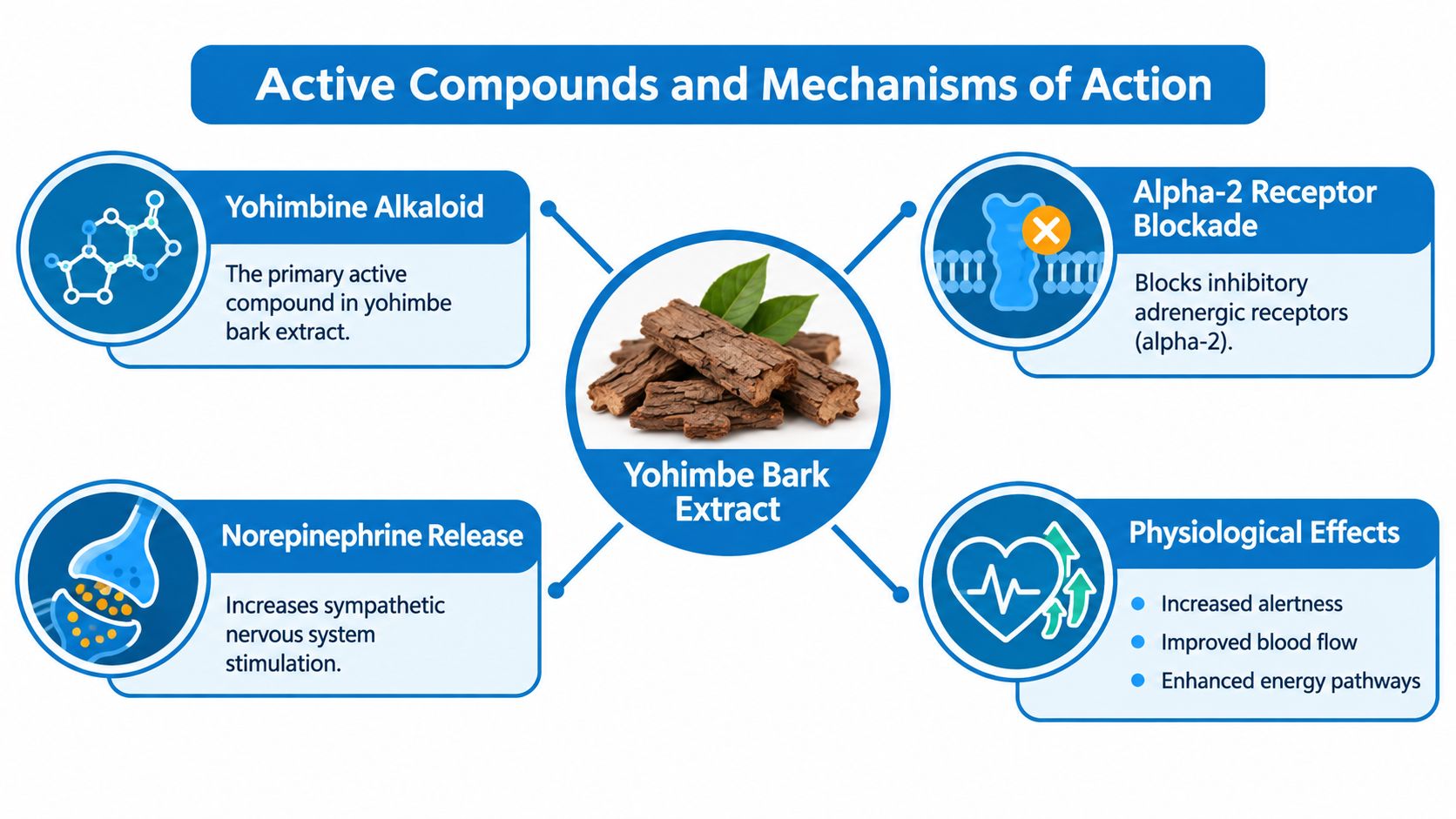
Yohimbe bark contains multiple alkaloids, but yohimbine is the compound most closely associated with its physiological activity. Its key action is alpha-2 adrenergic inhibition. Alpha-2 receptors normally help reduce norepinephrine release in parts of the nervous system. When yohimbine blocks that inhibitory signal, norepinephrine signaling rises.
That mechanism can produce sensations users may interpret as energy, alertness, motivation, or increased arousal. It also activates the sympathetic nervous system, the network involved in the body's rapid response to stress. The same biological pathway can increase heart rate, raise blood pressure, promote sweating and tremor, and intensify anxiety or insomnia. The OPSS review of yohimbe and yohimbine products connects this alpha-2 receptor activity with the extract's cardiovascular and neuropsychiatric effects.
Why the mechanism creates both attraction and risk
The appeal is understandable. Increased norepinephrine can make a person feel more stimulated, and altered vascular signaling may influence blood flow. But a subjective sense of activation isn't the same as a clinically meaningful benefit. A stronger sympathetic response can also narrow the margin between a desired sensation and an adverse event.
That margin becomes harder to estimate when the label reports only bark weight. The European Commission's technical material reports bark yohimbine levels ranging from 7 to 115 mg per gram, with a typical value around 10 mg per gram. It also describes prepared extracts standardized to approximately 95 to 105 mg per gram of total alkaloids expressed as yohimbine. The European Commission's yohimbe technical document shows why the same listed herb mass can represent very different active exposure.
A raw bark product and a standardized extract therefore aren't interchangeable. Extraction can concentrate alkaloids, while raw plant material can vary substantially before manufacturing even begins. The biological response follows alkaloid exposure, not the apparent size of the herb serving.
From receptor action to physical symptoms
The practical chain is straightforward:
- Alpha-2 receptor blockade removes part of the nervous system's restraint on norepinephrine release.
- Norepinephrine signaling increases, stimulating sympathetic activity.
- Heart rate and vascular tone change, which can affect alertness and blood pressure.
- The same stimulation can become harmful, producing palpitations, tremor, panic, insomnia, or more serious cardiovascular effects.
That's why a label that doesn't quantify yohimbine or total alkaloids leaves the user without the information needed to interpret the mechanism safely.
Clinical Evidence for Sexual Wellness and Weight Loss
Yohimbe's marketing often treats erectile function and fat loss as established outcomes. The clinical record is narrower. A plausible adrenergic mechanism does not compensate for variable alkaloid exposure, uncertain benefits, or cardiovascular risk.
For erectile dysfunction, research historically focused more on purified yohimbine than on raw bark preparations. Current guidance from the National Center for Complementary and Integrative Health's yohimbe fact sheet does not recommend yohimbe for erectile dysfunction. The concern is practical as well as clinical: the same listed weight of bark may deliver very different alkaloid amounts, so a consumer cannot assume that a larger serving represents a predictable dose.
That discrepancy makes label reading a safety skill, not merely a shopping preference. A compound may affect a physiological pathway without providing dependable treatment. Erectile dysfunction can involve vascular disease, medication effects, psychological factors, or other medical conditions. A stimulant-like product may alter sensation while leaving the underlying cause unaddressed.
Body composition and athletic use
Evidence for weight loss is weak and inconsistent. Clinical trials have produced conflicting findings, while one athlete study reported no change in body or muscle mass despite lower body fat. The available evidence does not establish meaningful weight loss for sedentary adults, people with obesity, or consumers using a variable bark product.
The outcome matters. A change in body-fat measurement within one athletic context is not the same as durable weight reduction, improved health, or a reliable consumer benefit. Nor does it show that sympathetic stimulation justifies the possible cardiovascular trade-off.
Readers considering nutritional support for sexual wellness should distinguish yohimbe from general micronutrient guidance. Information about vitamins for sexual health may help explain nutritional gaps, but it is not evidence that vitamins reproduce yohimbine's adrenergic effects.
A plausible mechanism isn't a clinical recommendation. The evidence supports caution rather than a broad promise for sexual performance, weight loss, or athletic motivation.
The narrow conclusion is the most defensible one. Yohimbine has pharmacological activity, but yohimbe bark extract remains an unreliable consumer solution because alkaloid yield can vary sharply while clinical benefits remain limited or inconsistent. Labels that omit yohimbine or total alkaloids leave users unable to judge exposure with confidence.
Safety Profile, Side Effects, and Contraindications
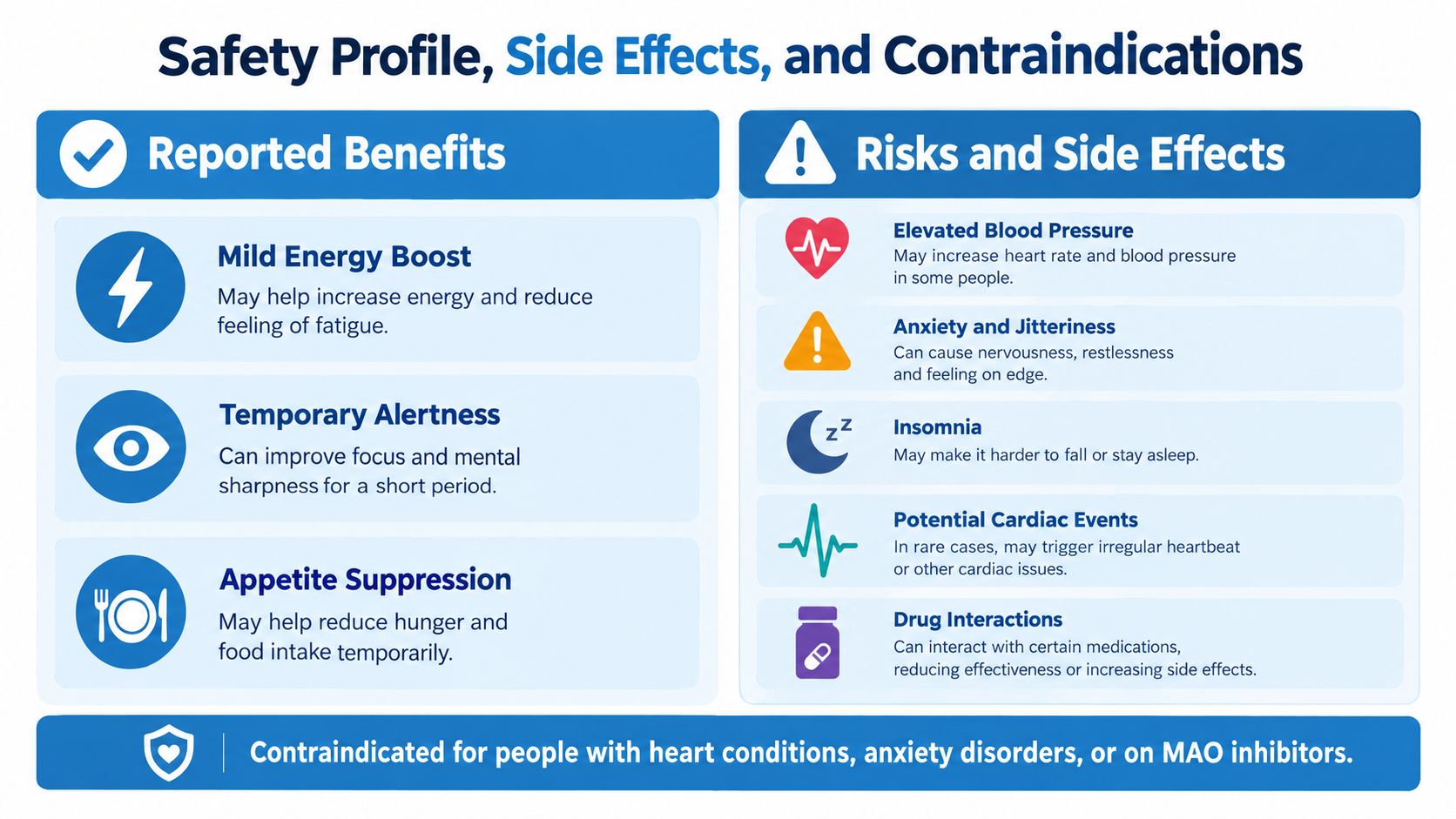
“Natural” describes origin, not risk. Yohimbe bark extract can affect the cardiovascular and nervous systems strongly enough to cause severe outcomes, and poison-control data show that these concerns aren't merely theoretical.
A California Poison Control System report recorded 238 over-the-counter yohimbine-related adverse drug events from 2000 to 2006, with 134 cases progressing to hospitalization. Another poison-data summary reported 60 yohimbine exposures among 277 total cases in 2007 that progressed to moderate or severe harm. These figures come from the safety review published in the National Library of Medicine.
Reported effects include anxiety, confusion, tremors, sweating, insomnia, palpitations, tachycardia, and severe high blood pressure. More serious outcomes include irregular heartbeat, heart attack, seizures, hypotension after overdose, and rare reports of psychosis. The FDA has warned that dangerously high yohimbine levels can trigger these reactions.
Who should treat yohimbe as unsuitable
The risk isn't distributed evenly. A person with a history of hypertension or an anxiety disorder may have less tolerance for an ingredient that increases sympathetic activity. People taking antidepressants, antihypertensives, ADHD medications, or other stimulants also need professional review before considering exposure.
High-risk combinations and conditions include:
- Caffeine, ephedra, and stimulant blends: These can add to sympathetic stimulation and intensify palpitations, anxiety, or blood-pressure changes.
- ADHD medications: Prescription stimulants can overlap with yohimbine's activating cardiovascular effects.
- Antidepressants: Interaction risk is especially important with drugs that affect norepinephrine or monoamine signaling.
- Antihypertensives: Yohimbine may oppose blood-pressure management or make readings less predictable.
- Renal or hepatic dysfunction: Impaired handling of active compounds can increase uncertainty around exposure.
- Pregnancy and breastfeeding: Safety concerns and insufficient evidence make avoidance the prudent choice.
A separate FDA-linked observation notes that adverse effects may occur even when yohimbe bark extract is combined with other cholinergic ingredients. That finding reinforces a broader point: combination formulas make attribution and dose prediction harder, not safer.
Symptoms that require action
Severe headache, chest pain, fainting, a racing or irregular heartbeat, seizure, marked confusion, or extreme agitation should be treated as urgent symptoms. Users shouldn't attempt to counteract them by taking another supplement or just waiting for the effect to pass.
Risk screening belongs before the first capsule. Checking medications, blood pressure history, anxiety history, and organ function is more useful than relying on tolerance after exposure.
Regulatory Status and How to Read Supplement Labels
The key label-reading task for yohimbe is separating plant mass from active-alkaloid exposure. A label stating “yohimbe bark, 500 mg” reports the ingredient's weight, not the amount of yohimbine delivered. Alkaloid content can vary widely between lots, as noted in the European Commission's technical review. A large bark quantity can therefore represent an uncertain pharmacological dose. Reading the label is a safety skill, not merely a way to compare products.
A standardized extract may instead state total alkaloids expressed as yohimbine at approximately 95 to 105 mg per gram. That information changes how the capsule should be interpreted, because extraction can produce substantially more active material relative to the ingredient's physical weight. Without a declared alkaloid amount and credible testing, capsule size alone cannot establish exposure.
A practical label sequence
Start with the Supplement Facts panel rather than the front-of-pack claim. Check for a declared amount of yohimbine or total alkaloids, the extraction ratio, and a recent assay or certificate from an identifiable laboratory. A proprietary blend that gives only the blend weight prevents a meaningful potency comparison.
Review the rest of the formula as well. Caffeine, ephedra, synephrine, pre-workout stimulants, and cholinergic ingredients can make the response harder to predict. The yohimbe line may therefore understate the activating burden of the finished product.
| Label Claim | What It Means | Risk Level | What to Look For |
|---|---|---|---|
| Yohimbe bark by weight | Reports plant material, not active exposure | Uncertain | Quantified yohimbine or total alkaloids |
| Standardized extract | Indicates an attempt to control active constituents | Depends on assay quality | Stated standardization and testing documentation |
| Proprietary blend | Hides the amount of individual ingredients | Higher uncertainty | Full ingredient quantities, not only blend weight |
| “Maximum strength” wording | Marketing language without a defined pharmacological meaning | Unclear | Actual alkaloid data and independent verification |
| Multi-stimulant formula | Combines yohimbe with other activating compounds | Elevated concern | Caffeine, ephedra, synephrine, and medication warnings |
A product review such as this yohimbe bark extract powder analysis can help shoppers inspect a specific label, but it cannot replace quantified testing. The decisive questions are how much active alkaloid is present and how was that amount verified?
Safer Alternatives for Performance and Vitality
A safer strategy starts by identifying the desired outcome rather than matching every goal to a stimulant. Someone seeking blood-flow support, sexual wellness, exercise capacity, or general vitality may not need alpha-2 adrenergic blockade at all.
L-citrulline is often considered for nitric-oxide-related blood-flow support. Its rationale differs from yohimbine's: it doesn't depend on blocking alpha-2 receptors and driving norepinephrine release. That mechanistic difference doesn't make every L-citrulline product automatically safe, but it avoids the specific sympathomimetic pathway that makes yohimbe concerning for people with cardiovascular or anxiety vulnerabilities.
Match the option to the goal
Maca root is commonly selected for libido and vitality, with a traditional and nutritional profile that differs from yohimbine's direct adrenergic stimulation. The evidence should still be assessed product by product, and people shouldn't assume that “herbal” removes the need to check medications.
Standardized Panax ginseng is another option consumers may investigate for vitality and sexual wellness. Standardization can improve consistency compared with an unlabeled raw bark, although it doesn't eliminate interactions or make medical evaluation unnecessary.
For performance, the lowest-risk foundation remains unglamorous but important: adequate food intake, regular training, recovery, sleep, and investigation of persistent fatigue or sexual dysfunction. Those steps can also reveal whether the problem is nutritional, psychological, medication-related, or medical rather than something that requires stronger stimulation.
The following video can provide general lifestyle context, but it shouldn't be treated as proof that any particular herb is safe or effective for an individual.
The comparison is therefore less about finding a one-for-one replacement and more about avoiding unnecessary exposure. If the goal is blood flow, explore non-adrenergic options. If the goal is energy, investigate sleep, diet, medication effects, and medical causes before adding a compound capable of provoking severe anxiety or cardiovascular symptoms.
Final Verdict and Practical Takeaways
Yohimbe bark extract has a genuine pharmacological history, but that history doesn't translate into a favorable risk-to-reward profile for general consumer use. The central concern is the combination of serious adverse-event potential and large variation in active alkaloid content. A product's bark weight may appear precise while leaving the most safety-relevant variable unknown.
The evidence for erectile dysfunction and body-composition benefits is limited, mixed, or focused on purified yohimbine rather than unpredictable raw preparations. The safety evidence is more decisive. Poison-control reports, cardiovascular warnings, interaction concerns, and restrictions in multiple countries all point toward the same practical conclusion: yohimbe isn't a routine wellness ingredient.
A decision checklist
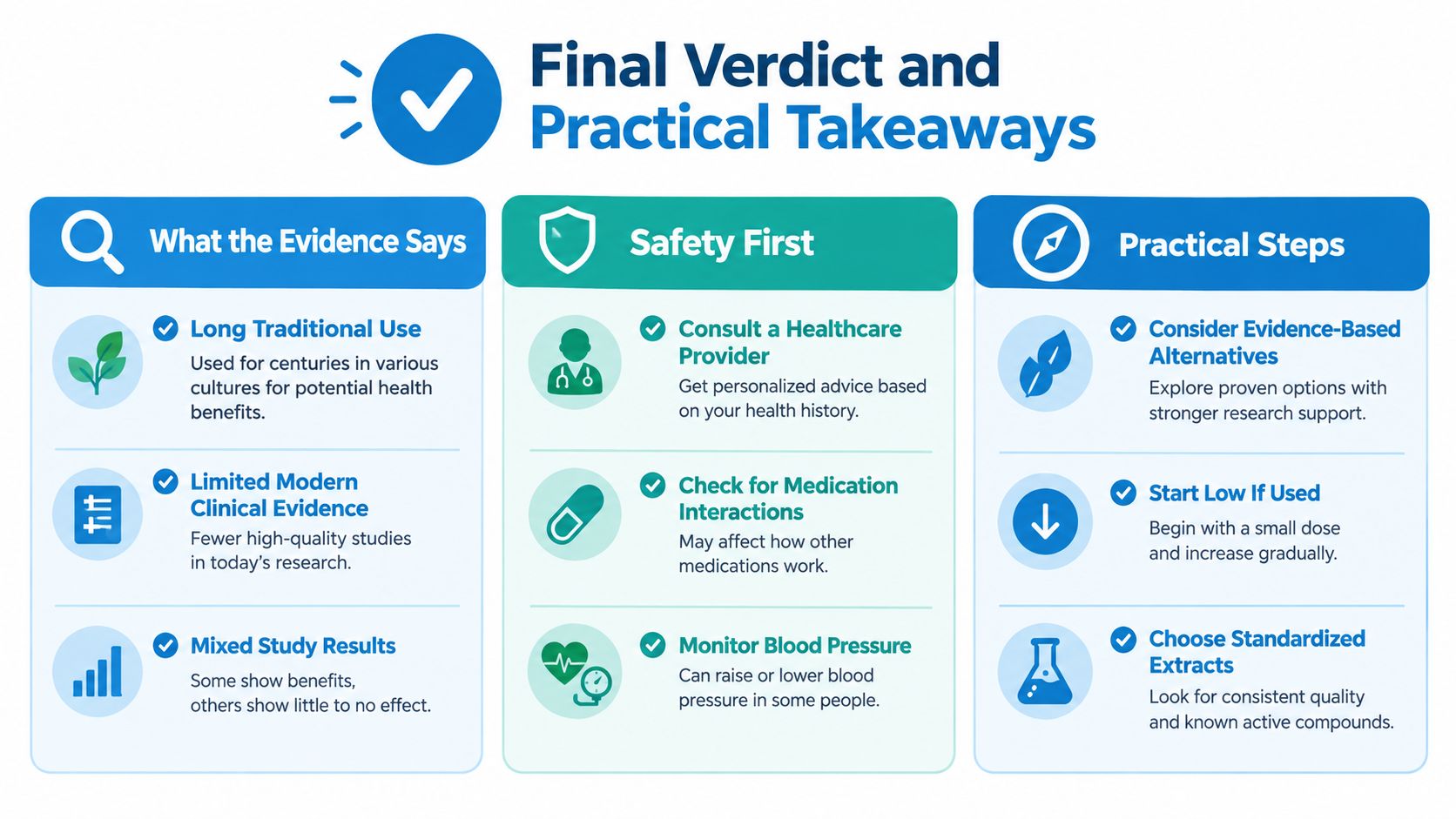
Before considering any yohimbe-containing product, ask:
- Is the intended benefit medically evaluated? Persistent erectile dysfunction can signal an underlying condition, so supplementation shouldn't replace diagnosis.
- Does the label quantify active alkaloids? Bark weight alone is inadequate for judging exposure.
- Are medications or stimulants involved? Antidepressants, antihypertensives, ADHD medicines, caffeine, ephedra, and related compounds require careful review.
- Are there cardiovascular, anxiety, renal, hepatic, pregnancy, or breastfeeding concerns? If so, avoidance and clinician input are more appropriate than self-testing.
- Is independent assay documentation available? Without it, the product's potency remains uncertain.
The safest label is one that lets you calculate exposure. If you can't identify the active alkaloid amount, you can't make a meaningful risk assessment.
For adults still considering use after professional review, choosing a quantified, standardized product is more rational than relying on raw bark mass. Even then, standardization reduces uncertainty. It doesn't erase the underlying cardiovascular and neuropsychiatric risks.
CalVitamin offers vitamins, minerals, proteins, probiotics, herbal products, and sexual wellness supplements, so readers can compare products by ingredient, format, and stated label information rather than treating yohimbe as the only route to vitality. Visit CalVitamin to review available wellness options and apply the same evidence and label scrutiny to every product.






