
High quality chia seeds should provide about 34–40 g of fiber per 100 g, while showing no signs of rancidity and coming with batch-specific contaminant testing (fiber benchmark). A darker seed or an organic badge doesn't prove quality. Look for documented nutrition, freshness controls, and a certificate of analysis that identifies what was tested in the batch you're buying.
Many buying guides focus on color or country of origin. Those details may help describe a product, but they can't tell you whether it's fresh or whether the specific batch passed relevant safety checks. A premium-looking label can't substitute for evidence.
Table of Contents
- What High Quality Chia Seeds Actually Mean
- Reading the Nutrition Label Like a Pro
- Whole Seeds Versus Ground Chia and What Changes
- A Simple Freshness Check You Can Do at Home
- Certifications That Matter and Ones That Do Not
- Storage Habits That Keep Chia Fresh for Months
- Buying Tips That Separate a Good Deal From a False One
- Your Chia Quality Checklist Before You Buy
What High Quality Chia Seeds Actually Mean
An organic or raw label cannot confirm that chia is fresh or safe. Judge the product by what you can verify: nutrition that matches chia's expected profile, oils protected by sealed, light-limiting packaging with a visible pack date, and safety records tied to the batch.
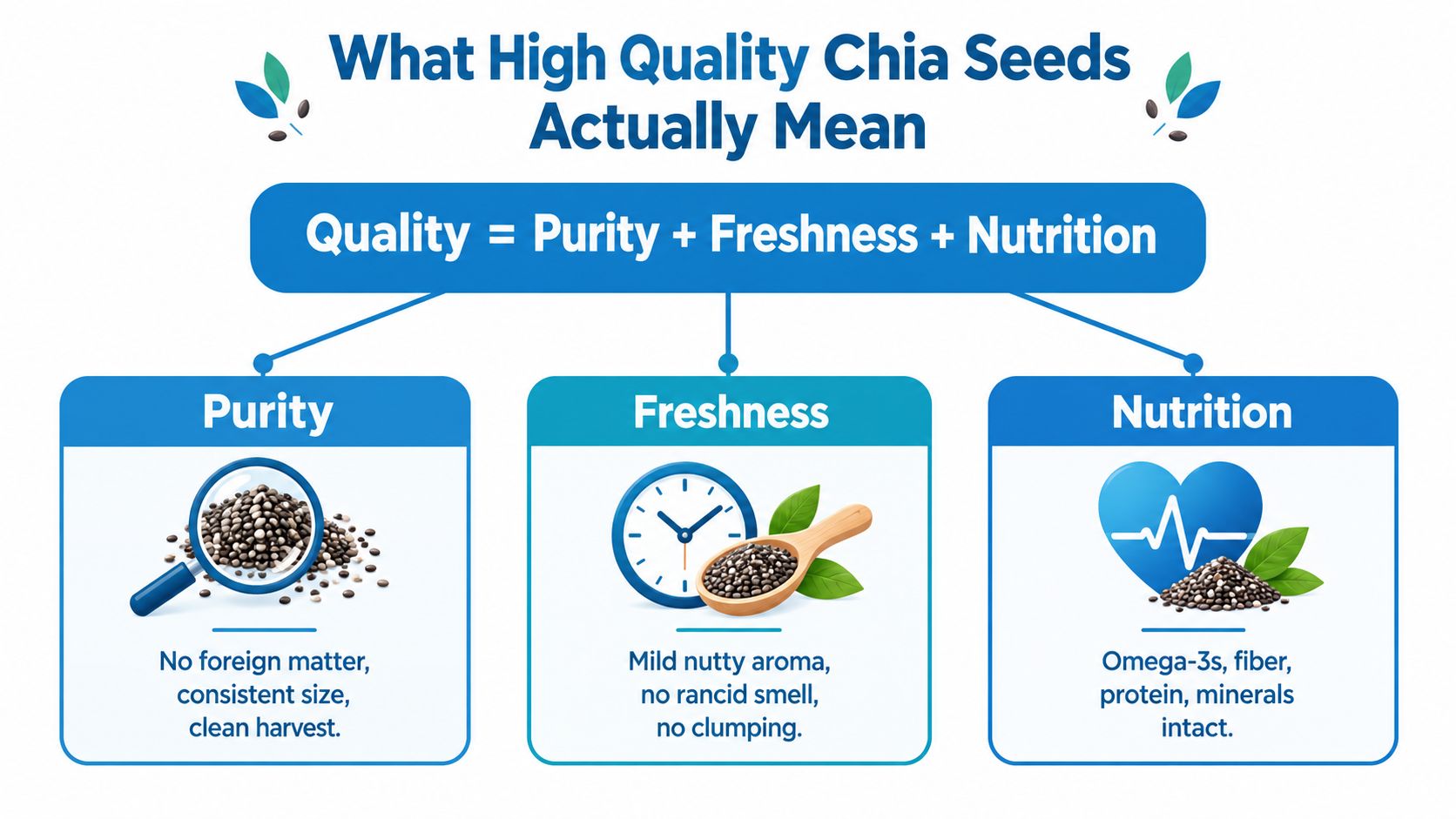
Nutrition gives you a useful baseline, not proof of overall quality. Dried chia contains 34.4 g of fiber per 100 g and 16.54 g of protein, with fiber making up more than four-fifths of its carbohydrate total (chia nutrition data). Use those figures to check whether a package's serving-size math looks plausible, then look beyond the panel.
Four useful quality signals
- Nutrition: Check the stated serving size and compare its fiber and protein figures with chia's typical profile. A clear label makes that comparison possible.
- Freshness: Chia's polyunsaturated oils can be affected by air, heat, and light. Check for an intact seal and visible pack-date information, and consider how the product was stored.
- Safety: Ask for a certificate of analysis (COA) linked to the package's lot number. It should identify tests performed on that batch, including relevant microbiological and heavy-metal checks.
- Packaging: Choose a sealed pack that limits light exposure. Ground chia needs particular care because milling exposes more oil to air.
Each signal answers a different question. A clean appearance cannot confirm that the batch passed safety tests, and a nutrition panel cannot show whether the oils have oxidized. Evaluate the evidence together rather than treating a badge or one attractive label as proof.
Practical rule: Match the COA to the lot number printed on the package before comparing premium claims or prices.
Darker seeds and a stated country of origin may describe the product, but neither establishes its safety or freshness. A batch-specific test record and packaging that limits exposure give you more useful grounds for choosing.
Reading the Nutrition Label Like a Pro
A nutrition panel is useful only when you compare the same serving size. Start there, then check whether the fiber and protein figures make sense for that amount of chia. A premium label means little without clear information and a batch-specific certificate of analysis for safety checks.
Start with fiber, then check the rest
A typical chia seed contains 34–40 g of dietary fiber per 100 g. About 85–93% is insoluble fiber and 7–15% is soluble, which helps explain why chia adds bulk and forms a gel when hydrated. A 25 g serving theoretically provides 8.5–10 g of fiber; cultivar, origin, processing, and analytical methods can affect the result (fiber composition and serving benchmark).
Protein offers another cross-check. A 28 g portion works out to about 4.6 g of protein using dried-seed nutrition figures. Compare that amount with the serving size printed on the package, not with a different-sized scoop. If the figures differ substantially from the expected profile, check whether the label describes another serving size or product form before deciding the product is unusual.
Understand the fat profile
Chia contains roughly 30–40% oil by weight, and alpha-linolenic acid (ALA), a plant omega-3 fat, generally makes up 55–65% of that oil. Linoleic acid commonly contributes 12–20% (chia oil composition). These polyunsaturated fats make chia nutritionally appealing and vulnerable to oxidation. The panel can show the nutrient profile, but it cannot confirm that the oils are fresh. Check the packaging and storage conditions, and ask for a COA that matches the package's lot number and covers relevant microbiological and heavy-metal tests.
Minerals matter, too. A 28 g portion provides about 177 mg of calcium, and dried chia also supplies magnesium, phosphorus, iron, and potassium (chia nutrition data). Chia contains no vitamin B12, so don't treat a general “nutrient-dense” claim as evidence that it can replace a complete diet.
Choose a product with a clearly stated serving size and figures you can compare. Use the nutrition panel to assess what's in the seeds, then rely on batch-specific testing for evidence of safety.
Whole Seeds Versus Ground Chia and What Changes
Choose whole chia for a pantry staple and ground chia for easy mixing. The forms differ most in convenience and how carefully you need to protect their freshness.
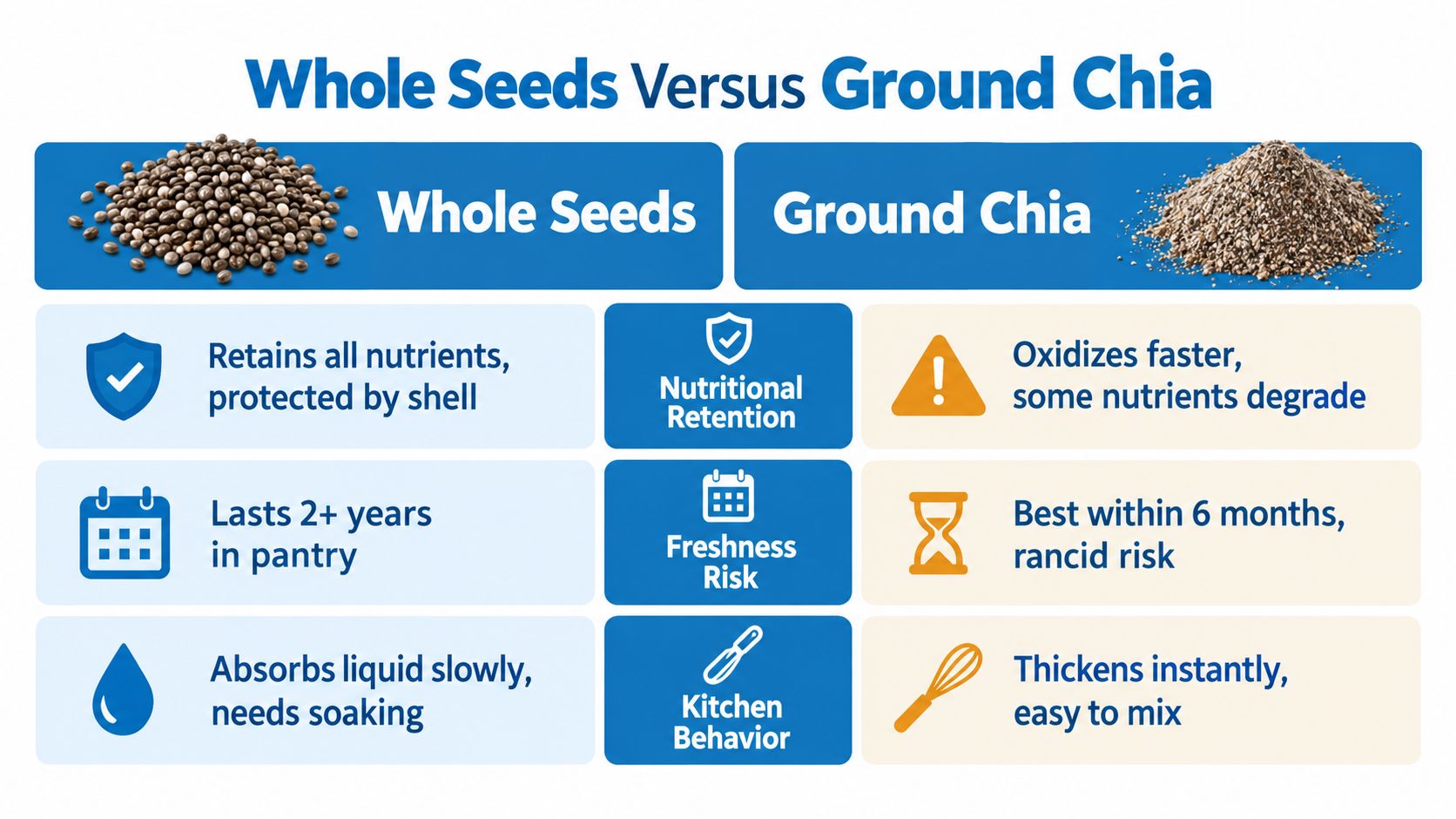
Grinding exposes more of the seed's surface to air, increasing the importance of packaging and storage. Choose ground chia in a vacuum-sealed or nitrogen-flushed pack, then refrigerate it after opening. A premium label alone says little about freshness or safety, so look for a lot-specific certificate of analysis for relevant microbiological and heavy-metal testing.
| Form | What it's good for | Main trade-off |
|---|---|---|
| Whole seeds | Toppings, puddings, and recipes where visible seeds suit the texture | Easier to store, but may need soaking or hydration in recipes |
| Ground chia | Blending into mixtures where you don't want whole seeds | Easier to incorporate, but more exposed to air and freshness loss |
For occasional use, whole seeds are the better default. Grind only what you need for a recipe, rather than keeping an opened bag of ground chia on the shelf. If convenience wins, buy ground chia in protective packaging and keep it refrigerated and tightly sealed after opening.
Neither form is automatically more nutritious based on appearance. Choose according to how you cook, and give ground chia extra protection from air.
A Simple Freshness Check You Can Do at Home
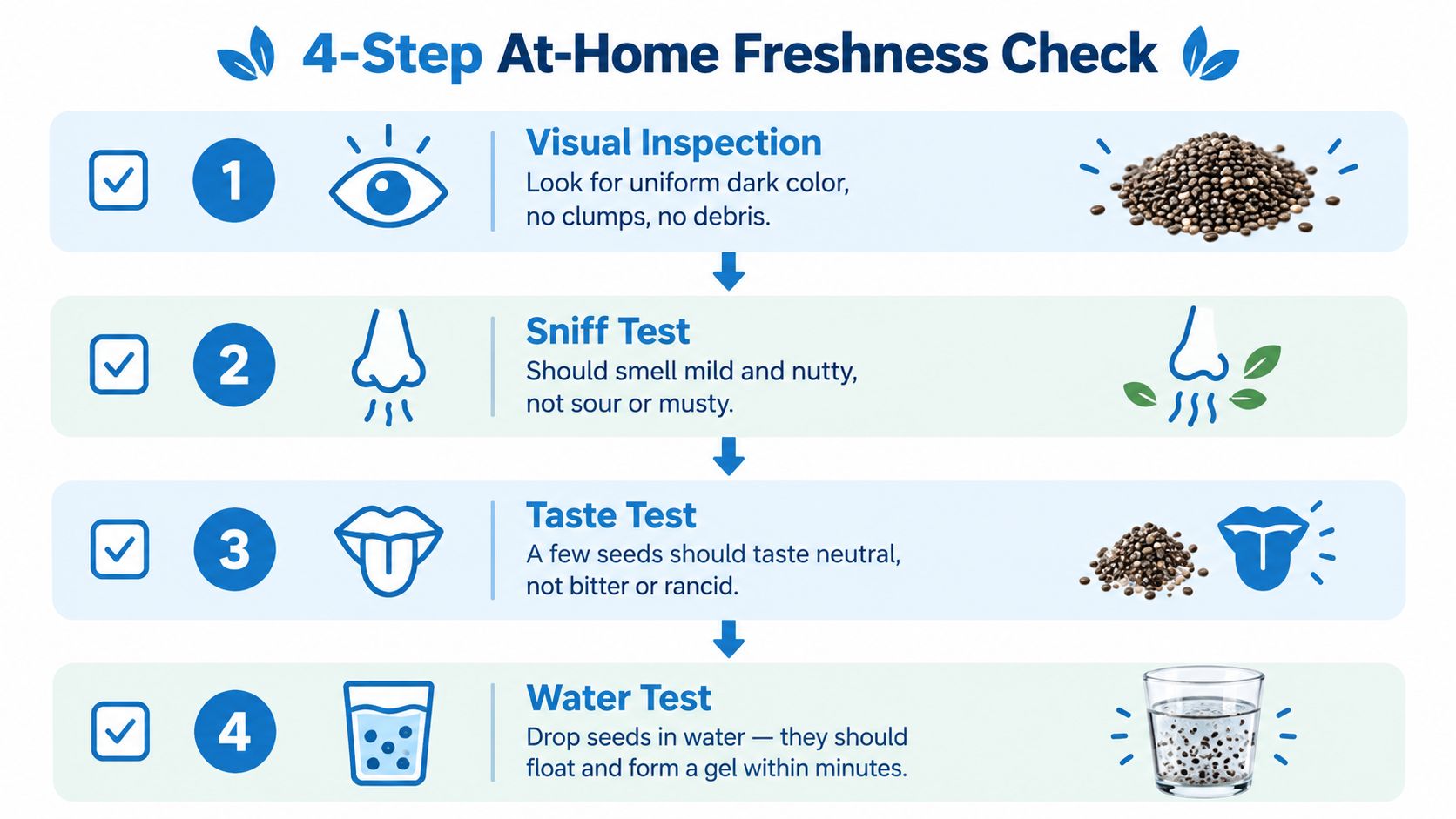
A premium label and attractive seed color cannot confirm freshness. A quick home check can catch obvious spoilage, but it cannot establish microbiological safety or rule out heavy metals. Use your senses for freshness, and rely on lot-specific test documents for safety questions a kitchen check cannot answer.
Check the seeds and their aroma
Look closely for moisture, clumping, debris, or an unusual appearance. A consistent look is reassuring, but it does not prove the seeds are safe. If the bag or seeds seem damp, or you spot visible spoilage, discard them.
Then smell a small amount. Fresh chia usually has a mild, neutral or nutty aroma. A paint-like, sour, fishy, or rancid odor is a clear reason to stop. Don't mask it with strongly flavored ingredients.
Taste and hydrate cautiously
Only taste a few seeds if they look and smell normal. Bitter, stale, or rancid flavor means stop using the product. Spit it out, and don't try to salvage the seeds by adding them to a recipe.
A gel check offers one more clue, not a safety verdict. Stir a small amount into water and see whether the seeds hydrate and thicken. If they do not behave as expected, or you have noticed another warning sign, discard them rather than treating the gel as proof of freshness.
Storage research has documented oxidation in chia, with packaging and storage conditions affecting how well the seeds keep (chia storage and oxidation findings). That lab evidence is separate from a home freshness check, and a best-before date cannot confirm how a bag was handled.
The video below shows another way to assess chia quality and freshness:
Certifications That Matter and Ones That Do Not
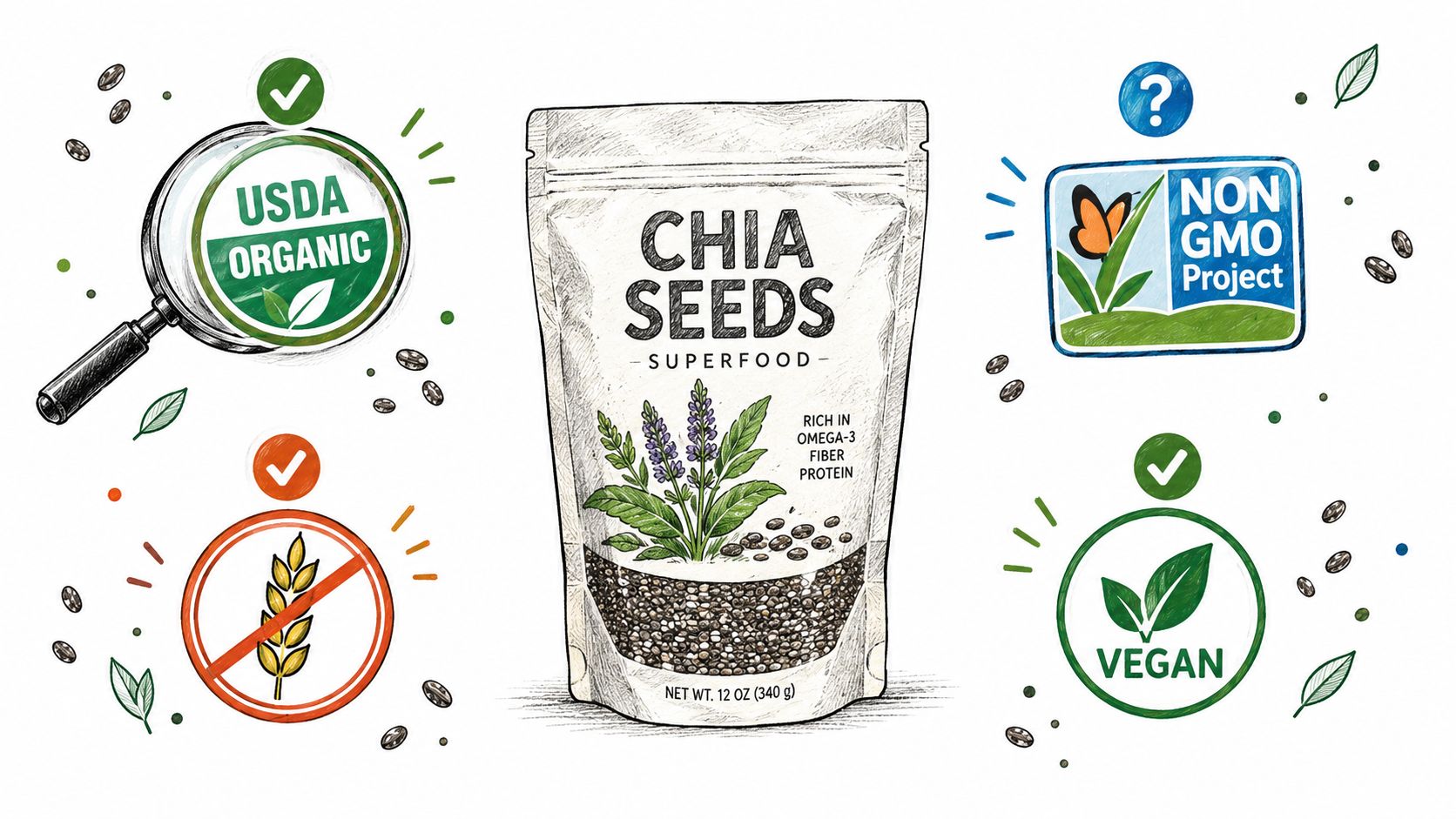
A certification can support a specific claim. It can't stand in for every quality test you'd want from a food product. Organic status, for example, concerns production standards, not whether a particular lot passed microbiological or heavy-metal testing.
What the badges can tell you
- Organic: Useful if you specifically want certified organic production. It doesn't by itself establish microbial safety, metal levels, freshness, or consistency between batches.
- Non-GMO: Addresses genetic modification claims, not oxidation or contaminants.
- Gluten-free, vegan, kosher, or halal: These may matter for dietary or religious requirements, but they aren't substitutes for a COA covering food-safety parameters.
The same distinction applies across wellness products: a label can describe an attribute without proving every other quality dimension. For a related look at how to evaluate ingredient claims, see this guide to organic chlorella powder.
Ask for batch-specific evidence
Request a COA that matches the lot number on the bag. For chia, ask whether the documentation covers Salmonella, E. coli, mold and yeast, moisture, and heavy metals such as lead and cadmium. A supplier may also be able to document other relevant metals or contaminants, depending on its testing program and the applicable requirements.
The distinction is practical: a general statement that a brand tests its products doesn't tell you whether the bag in your hand was tested. A lot-specific document provides a clearer link between the product and the test results. If the seller can't provide it, don't treat an organic or “premium” claim as a replacement.
Storage Habits That Keep Chia Fresh for Months
Protect chia from heat, light, and moisture. Keep unopened bags in a cool, dry, dark cupboard, away from a sunny window or the stove. Once opened, seal the package tightly or transfer the seeds to an airtight, opaque container.
Whole seeds are easier to store than ground chia. Milling exposes more of the oil to air, so ground chia needs closer attention. Refrigerate it promptly in an airtight container, and close the lid after each use. An opaque jar limits light; a tight seal limits air.
Storage routine: Seal whole seeds in an airtight container and store them cool and dry. Keep opened ground chia refrigerated. A zip seal helps, but it does not protect seeds as well as a well-sealed, light-blocking container.
The same care applies to other raw ingredients. This guide to storing raw turmeric root offers a useful comparison for keeping pantry ingredients in good condition.
Pay attention to how you eat chia, too. Dry seeds absorb water and expand, so hydrate them before adding them to a drink or eating them by the spoonful. If high-fiber foods are new to your diet, start with a modest amount and drink enough fluid. Proper storage protects freshness; hydrating the seeds helps you eat them comfortably.
Buying Tips That Separate a Good Deal From a False One
Buy the bag that can show its work. A low price, a polished label, or an appealing origin story doesn't tell you whether the specific lot was tested or how the seeds were protected from oxygen.
Independent testing reported two chia products with high mold counts that weren't approved, while one product contained substantially more lead than the others (independent chia product testing). That's a useful reminder that appearance and marketing language can't establish batch-level safety.
Use a quick shopping filter
- Look for traceability: Choose a package with a lot number, and ask whether the seller can provide a COA for that lot.
- Check freshness information: A pack date can help you assess how recently the product was packed. A best-before date is useful, but it doesn't tell you how the bag was stored before purchase.
- Match the pack to your habits: If you use chia occasionally, buy an amount you can finish while it still smells and tastes fresh. If you choose ground chia, favor protective packaging and plan to store it carefully.
- Read reviews for details: Comments about odor, bitterness, clumping, or texture are more helpful than star ratings alone. Reviews still aren't lab results, so use them as a practical clue, not proof of safety.
- Question dramatic claims: “Superfood” and “premium” don't explain what was tested. A missing lot number or a seller unwilling to share batch documents should give you pause.
Price matters, but it can't be your quality test. If a product is dramatically cheaper than alternatives, check its packaging, date information, and documentation before assuming it's a bargain. For another example of how product details should inform a pantry purchase, compare the listing for organic black cumin seeds with the information provided on your chia product.
Your Chia Quality Checklist Before You Buy
A premium label proves nothing about a batch. Prioritize traceable safety testing and packaging that limits exposure, not origin or organic claims.
- Lot traceability: Choose a product with a lot number and request its batch-specific certificate of analysis.
- Safety documents: Confirm the COA covers relevant microbiological tests and heavy metals. Skip products when the seller cannot provide batch documentation.
- Packaging: Choose a sealed, light-limiting pack with a lot number and pack date.
- Freshness: Check the package details, then smell the seeds. Reject any with a rancid odor or taste.
- Nutrition panel: Read the label and compare products using the serving information.
- Preparation and storage: Hydrate dry chia before eating. Keep the package airtight, and refrigerate opened ground chia.
Buy the product whose quality the seller can document, not the one with the strongest marketing.






